
On this page
Start here
Quick answer
Treat a clogged sump pump as a flooding and electrical-safety problem first. If water is rising rapidly, the pump is submerged in a way your model does not allow, the outlet or cord is wet, or you would need to stand in water, keep clear and call qualified help; never handle the pump or electrical parts while energized or wet. From a dry position, confirm whether the float is visibly blocked, the basin contains mud or debris, the pump inlet screen or opening is obstructed, or the discharge pipe is blocked or frozen. Government sump-pump guidance says screens or small inlet openings can plug, floats must move freely, and the discharge path must be open; maintenance guidance also requires disconnecting power before handling and avoiding direct contact with contaminated water. Clear only loose debris that is reachable from safe access and permitted by the model manual. If the pump still will not start or move water, the blockage is inside the pump, the check valve or discharge line needs disassembly, or the water level continues to rise, stop and arrange urgent plumbing or pump service.
Before you begin
Safety first
- No work in standing water, live electrical handling, pump removal by the cord, pit entry, pipe cutting, valve bypass, pump disassembly, or improvised intake/vent modification.
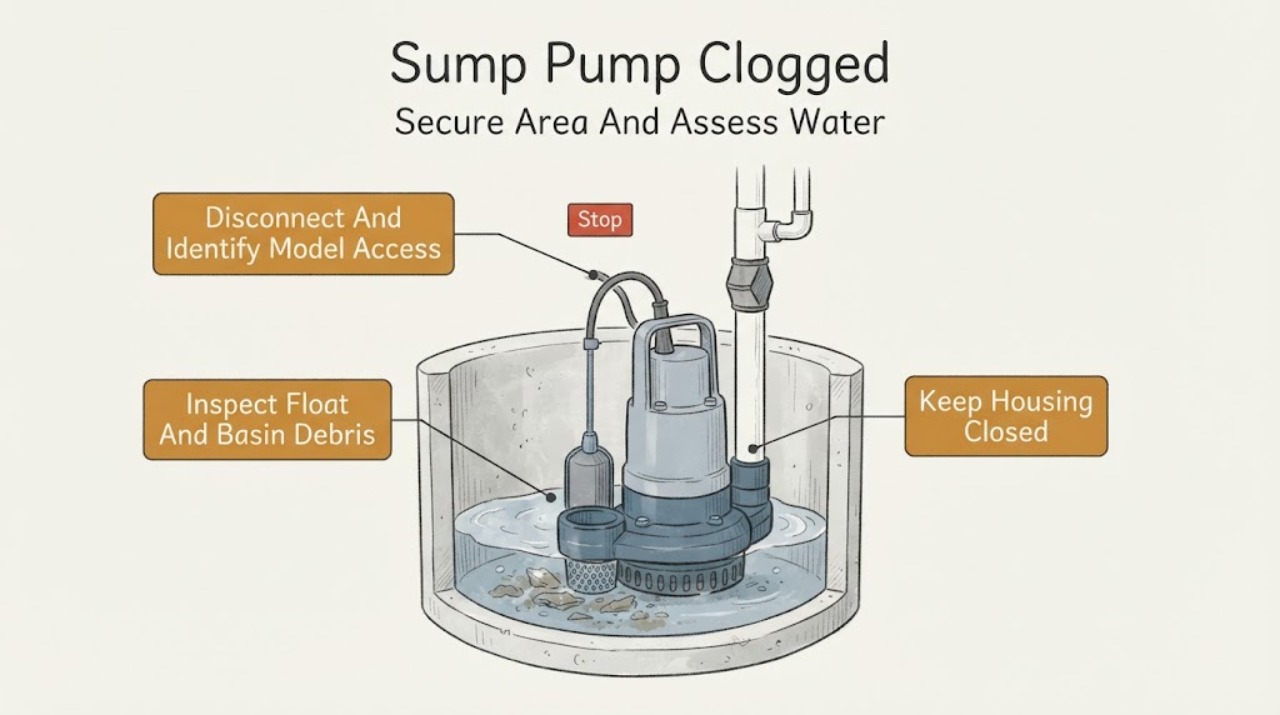
Work through in order
Diagnostic checks
Use only checks that match the exact appliance or system and its official guide.
-
Check 1
From a dry, stable location, look at the basin without stepping into water or touching the pump, cord, float, outlet, or control panel. Note whether water is rising, the pump is running continuously, the basin is overflowing, or water has reached electrical equipment.
Expected result: Record water level trend, whether the pump is silent or humming, whether the float is visibly trapped, whether the power area is dry, and whether the water may be contaminated by sewage, chemicals, or other material.
Next step: If water is rising or electrical parts are wet, keep people away and call qualified emergency plumbing/electrical help; isolate power only from a dry safe location if this can be done without approaching water. Otherwise continue only with visual checks described by the exact manual.
Stop if: Do not stand in water, touch wet electrical parts, reach into the pit, or keep the pump energized while investigating a suspected obstruction.
Why this matters
Why: Rapidly rising water or a wet electrical area is an urgent flood/electrical boundary, not a routine clog check. A silent pump can reflect power, switch, or motor trouble; a running pump that moves little water points toward an inlet, vent, discharge, check-valve, or internal restriction.
-
Check 2
If the area is dry and power can be disconnected without entering water, disconnect the pump from its power source as the manufacturer or installation manual directs. Photograph the model and the visible basin arrangement, and identify whether the pump is pedestal or submersible, whether there is a lid or inspection opening, and whether a battery backup is present.
Expected result: Classify the installation as safely accessible from above, inaccessible without removing a lid or fittings, a pedestal motor above the water, a submersible pump, or an unknown configuration.
Next step: Use the model manual to identify only approved inspection points; keep backup systems and their chargers within their own instructions and do not disconnect a backup that is needed to protect a rising basin without a service plan.
Stop if: Do not lift or carry the pump by its cord, remove wiring, cut discharge pipe, or remove a lid or fitting that exposes water or electrical components without model-specific safe access.
Why this matters
Why: Pump types and float arrangements differ, so an inlet, vent, or switch location cannot be assumed. An unknown or inaccessible installation requires the exact manual or a professional rather than improvised disassembly.
-
Check 3
Through the normal lid or inspection opening, inspect the visible float path and the bottom of the basin without putting hands into the water. Look for sludge, gravel, lint, mud, or stored items touching the float, pump body, or intake area; do not move the pump or float by force.
Expected result: Record whether the float has clear travel, is held against the basin wall or debris, the basin contains excessive sediment, the pump appears level, and the intake area is visibly blocked.
Next step: If the model manual permits removal of loose debris from dry-safe, reachable access, remove only what can be lifted without entering the water or disturbing wiring; otherwise request service. Keep the pit clean and the float clear after the repair.
Stop if: Stop for contaminated water, a deep or unsafe pit, a float that is mechanically damaged, a pump that has shifted, or any need to enter the basin or dismantle a switch.
Why this matters
Why: Official guidance identifies a stuck float and excessive basin debris as causes of a pump that does not activate or operates incorrectly. A clear float with a blocked intake supports a clog hypothesis; a free float and clean basin shift attention to power, discharge, check valve, or internal pump faults.
-
Check 4
With power disconnected and only from the access allowed by the exact manual, inspect the visible pump inlet screen or small intake openings and any model-specific vent hole for mud, gravel, lint, or other debris. Use a flashlight and visual comparison; do not insert tools, remove the pump, or drill a new hole.
Expected result: Classify the intake/vent as visibly open, visibly obstructed by loose debris, damaged, hidden, or impossible to inspect without pump removal.
Next step: If the manual permits safe cleaning at the visible opening, clear only loose debris without damaging the screen; if the obstruction is inside the pump or access requires removal, stop and arrange qualified pump service.
Stop if: Do not reach into a submerged pump, use a metal tool near wiring, remove a base or impeller, or drill or enlarge a vent or intake opening.
Why this matters
Why: North Dakota guidance says sump pumps have screens or small openings where water enters and that these can plug; Superior notes that a vent hole prevents air lock and must remain clear. A hidden or damaged inlet requires model-specific service, not a generic cleaning method.
-
Check 5
From outside the basin, inspect the visible discharge pipe and outlet for a closed or blocked valve, ice, crushed flexible hose, disconnected joint, or water returning immediately after the pump stops. Trace only accessible sections and do not cut, loosen, or remove the check valve or discharge piping.
Expected result: Record an open and intact discharge path, visible obstruction or freezing, a loose or leaking joint, a check-valve area that cannot be assessed, or water flowing back toward the pit.
Next step: Keep the pump out of service when the discharge path is blocked, leaking, or frozen and call a plumber; protect the basement with a backup plan if water is rising. Do not bypass or remove a valve as a test.
Stop if: Stop for a pressurized or leaking connection, frozen pipe, an outlet that discharges toward the building, or any need to cut or disconnect pipe while the basin is wet.
Why this matters
Why: A plugged or frozen outlet can make a good pump appear clogged or cause overheating; a failed check valve can allow water to return and increase cycling. Pipe or valve disassembly is a plumbing repair task, especially when the basin is filling.
-
Check 6
Only after the basin is safe to access from above, the pump and cord are intact, the float and visible intake are clear, and the discharge path is open, follow the exact model manual for a controlled water test. Stay out of the water and remain at the power disconnect; stop before the basin reaches a high or unsafe level.
Expected result: Observe whether the float activates the pump, the pump lowers the water, the float stops it normally, the motor hums without flow, or water returns or leaks at the discharge.
Next step: If the test is abnormal or the water level rises, stop testing, isolate the pump from a dry safe location, activate any safe backup plan, and request urgent plumbing/pump service.
Stop if: Do not test with wet electrical equipment, a damaged cord, contaminated water, a blocked discharge, an unsafe pit, or a pump that is hot, smoking, sparking, or running dry.
Why this matters
Why: A normal test supports that the visible restriction was cleared. A no-start result points to power, switch, or motor trouble; a running-no-flow result points to an inlet, impeller, vent, discharge, or check-valve fault that needs professional diagnosis.
Use your observations
Decision map
Find the observation that best matches what you see, then follow the next safe action.
-
PATH 01Safety boundary
What you see
The pump does not activate and the visible float is held by sludge, debris, or the basin wall.
Do this next
With power disconnected and only if the manual allows safe access, clear loose accessible debris without entering the water; otherwise call service.
Why this path and its safety boundary
Why it matters: A restricted float path can prevent the switch from reaching its on position.
Safety stop: Do not force, dismantle, or electrically bypass the float switch.
-
PATH 02Safety boundary
What you see
The pump runs or attempts to run, but its visible inlet screen or small intake opening is covered by loose debris.
Do this next
Clear only loose debris from the model-approved accessible opening with power disconnected; arrange service if the screen is internal, damaged, or still restricted.
Why this path and its safety boundary
Why it matters: A plugged intake can restrict water entry and make the pump move little or no water.
Safety stop: Do not reach into a submerged pump, remove the impeller, or enlarge the opening.
-
PATH 03Safety boundary
What you see
Mud, gravel, sediment, or stored objects are visible around the pump or float.
Do this next
Keep power disconnected and remove only loose, reachable debris by the exact manual's safe method; use a professional for contaminated, deep, or unsafe basin cleaning.
Why this path and its safety boundary
Why it matters: Debris can foul the float and restrict the intake; abrasive material can also shorten pump life.
Safety stop: Do not enter the pit, lift the pump by its cord, or disturb a pump that has shifted or is attached to rigid piping.
-
PATH 04Safety boundary
What you see
The float activates and the motor runs, but little or no water leaves, or water returns to the pit.
Do this next
Stop the test, inspect only visible external sections, and arrange qualified plumbing or pump service for any blockage or valve work.
Why this path and its safety boundary
Why it matters: The discharge pipe, check valve, vent path, or internal pump may be obstructed or faulty.
Safety stop: Do not cut pipe, remove a check valve, or dismantle the pump while the basin is wet or rising.
-
PATH 05Safety boundary
What you see
Water is rising rapidly, electrical equipment is wet, the pump is hot or sparking, the water may be contaminated, or the obstruction cannot be safely seen.
Do this next
Keep clear, isolate power only from a dry safe location if possible, use a safe backup arrangement if already installed, and call qualified emergency plumbing/electrical help.
Why this path and its safety boundary
Why it matters: The immediate risk is flooding, shock, burns, or contamination exposure; a clog diagnosis is no longer a safe homeowner check.
Safety stop: Do not enter water, handle the pump or cord, or continue testing.
Helpful context
Understand the symptom
First distinguish a blocked pump from a failed power or float condition
A high water level does not prove that the pump itself is clogged. The outlet may have no power, the float may be held by sludge or the basin wall, the inlet screen may be blocked, or a discharge line may be frozen or plugged. Look for the safest visible clue from outside the pit and do not use the pump's water level as a reason to work in wet electrical conditions.
The basin and discharge path matter as much as the impeller
Superior's maintenance guidance says to keep excessive debris out of the pit, keep the float free, and keep a model-specific vent hole clear. North Dakota guidance explains that pumps have screens or small inlet openings that can plug and that the outlet pipe must be open. These are observation points, not permission to cut pipe, remove a check valve, or dismantle a pump without the exact manual and qualified competence.
Do not turn a clog check into an electrical or contamination exposure
Before any handling, disconnect the pump from power only from a dry, safe location and keep clear of standing water. Wear protection for dirty water if the model instructions permit a safe accessible check, but do not reach into a pit, lift the pump by its cord, or operate a pump with a damaged cable. If the pump cannot be made safe to inspect, service is the correct next step.
Safety boundary
Stop conditions
- Stop immediately for rising water, standing water around electricity, a damaged cord, smoke, sparks, a hot pump, or suspected contamination; stay clear and request qualified help.
- Disconnect power from a dry safe location before handling any pump, float, basin debris, screen, or discharge component; never stand in water or lift a pump by its cord.
- Do not cut or disconnect discharge pipe, remove a check valve, dismantle the pump, bypass a float switch, drill an intake or vent hole, or reach into a submerged pit.
- Stop repeated testing when the pump still will not start or move water after safe visual checks, the basin level continues to rise, or the blockage is internal or inaccessible.
When checks do not resolve it
Need a professional?
Use qualified service for internal clogs, impeller or motor issues, float-switch faults, check-valve or discharge-pipe work, unsafe access, or any failed safe test.
Safety scope: No work in standing water, live electrical handling, pump removal by the cord, pit entry, pipe cutting, valve bypass, pump disassembly, or improvised intake/vent modification.
Have this ready
- Exact pump model and type, pit and discharge photos from a dry position, water-level trend, float behavior, intake/vent observations, discharge condition, backup-system status, and whether power or alarms changed.
Common questions
FAQ
What can clog a sump pump?
Mud, gravel, sediment, lint, or other debris can restrict an inlet screen or small intake opening, foul the float, or obstruct the discharge path. The exact pump manual determines which areas are user-accessible.
Can I reach into the sump pit to free the float?
Not as a general step. Keep power disconnected and stay out of standing or contaminated water; inspect from the normal opening and use qualified help when the float is not safely accessible.
Why does the sump pump run but move little or no water?
An inlet, vent, discharge pipe, or check valve may be restricted, or the internal pump may be damaged. Inspect only visible external sections and arrange service rather than cutting pipe or dismantling the pump.
Is it safe to test a clogged sump pump by adding water?
Only when the area is dry and safe, the model instructions allow the test, the visible intake and discharge are clear, and the water level can be stopped before it becomes unsafe. Never stand in the water or test with wet electrical equipment.
When should I call a plumber for a sump-pump clog?
Call urgently for rising water, a wet outlet or cord, contamination, a blocked discharge, a pump that will not start or move water, an inaccessible obstruction, or any need to remove the pump, valve, wiring, or pipe.
Read the exact guide
Official sources
- INSTALLATION INSTRUCTIONSZoeller Pump Company · Conditional manufacturer safety guidance relevant to comparable submersible sump installations; not a substitute for the user's model manual
- Sump Pump QuestionsCity of Morton, North Dakota · Pump inlet screens, outlet/discharge checks, float operation, and basic testing context
- General Sump Pump Maintenance and Cleaning TipsCity of Superior, Wisconsin · Float clearance, basin debris, intake/vent cleanliness, power disconnection, and contaminated-water precautions
- Sewer Smarts and Plumbing BasicsCity of Superior, Wisconsin · General sump-pump layout, float behavior, discharge, and maintenance context
- Model 441 Battery Back-up System 12 Volt Emergency Sump Pump System, Installation ManualLiberty Pumps · Conditional manufacturer guidance for backup systems: power disconnection, free float movement, check valve, and obstruction troubleshooting
- Pump Suction Inlet ScreenZoeller Pump Company · Conditional manufacturer example that inlet-screen blockage and maintenance access vary by pump design
Community feedback
Share a repair observation
Share a plain-text repair observation. Accepted observations are published automatically; this page may take a moment to update.