
On this page
Start here
Quick answer
Stop adding water and first determine whether one upstairs fixture is blocked or several fixtures are backing up. Remove only a visible stopper or hair if the water is ordinary wastewater and no chemical cleaner has been used; then try the correct plunger with the nearby overflow or other openings sealed. If the drain remains blocked and no chemical is present, a hand auger may be appropriate only when you can work without opening a wall or forcing a trap. Do not mix drain cleaners, use a plunger after chemical cleaner has been poured, or pour boiling water into a fixture with unknown piping. Multiple upstairs fixtures, gurgling toilets, sewage or gray-water backup, water staining the ceiling below, a leak, or a clog that returns after one safe attempt needs a licensed plumber. Protect people and pets from wastewater and leave chemical exposure to emergency or poison-control guidance.
Before you begin
Safety first
- User checks are limited to stopping water use, mapping affected fixtures, removing visible debris, using a correct plunger without chemical contamination, and making one gentle hand-auger attempt only where the fixture permits. Do not mix cleaners, plunge after chemical use, open traps with unknown liquid, use powered equipment, open walls or ceilings, touch sewage or wet electrical parts, or continue after a failed attempt.
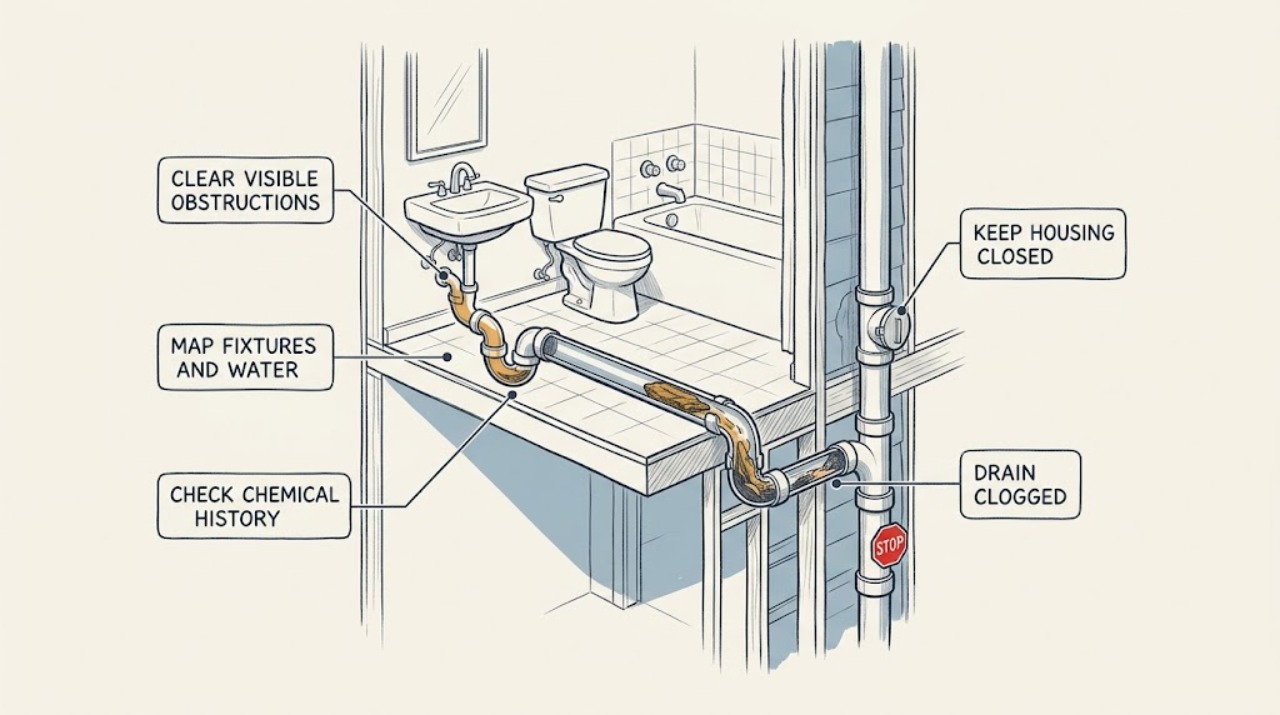
Work through in order
Diagnostic checks
Use only checks that match the exact appliance or system and its official guide.
-
Check 1
Stop using the upstairs bathroom and map the symptom without adding water: identify whether the sink, tub, shower, toilet, or more than one fixture is affected, and note slow flow, standing water, gurgling, odor, or visible backup.
Expected result: Only one fixture is slow or blocked, two or more fixtures share the symptom, a toilet gurgles when another fixture drains, or wastewater is backing up.
Next step: Photograph the water level and affected locations, stop all unnecessary water use, and follow the single-fixture or shared-line branch.
Stop if: Stop immediately for sewage overflow, water through a ceiling or wall, electrical contact, a ceiling bulge, chemical fumes, or an unsafe floor.
Why this matters
Why: A single fixture favors a local stopper, trap, or branch clog. Several connected upstairs fixtures or cross-fixture gurgling favor a shared branch, stack, or sewer restriction and require less aggressive homeowner testing.
-
Check 2
Before touching the drain opening, ask whether any drain opener, bleach, toilet cleaner, acid, caustic product, or homemade mixture has been poured into this fixture or a connected one; keep the product container and label available.
Expected result: No chemical has been used, a single labeled product was used and fully flushed, or an unknown, mixed, or still-standing chemical is present.
Next step: If chemical history is uncertain or exposure occurred, stop physical work, ventilate from a safe location, and obtain plumber or poison-control guidance; otherwise continue to the visible-obstruction check.
Stop if: Never mix products or plunge a drain containing drain opener. Leave for strong fumes, eye or skin pain, breathing difficulty, or other exposure symptoms.
Why this matters
Why: The no-chemical path may allow controlled physical tools. Residual or unknown chemicals can splash or react when plunging or opening a trap, so the safe next step is disclosure and qualified handling rather than another product.
-
Check 3
For a single fixture with no chemical history, remove only the accessible stopper, strainer, or hair near the opening while keeping the water contained; do not push debris deeper or open a wall, ceiling, or concealed pipe.
Expected result: Hair, soap buildup, paper, or another visible obstruction is removed and water begins to flow, or the opening is clear and the drain remains blocked.
Next step: Clean and replace the accessible cover, then run a small amount of water once. If flow is not restored, use the correct plunger only when no chemical is present.
Stop if: Stop for sewage, sharp or broken material, a damaged fixture, a leak under the floor, or water that threatens the ceiling below.
Why this matters
Why: A visible local obstruction can explain a single slow bathroom drain. A clear opening with retained water points deeper into the trap or branch, not to more scraping at the surface.
-
Check 4
With no chemical cleaner present, choose a plunger that seals the fixture, add only enough water for the cup to seal, cover the sink or tub overflow when applicable, and use controlled strokes without striking the fixture or forcing the drain.
Expected result: The water level drops and the fixture drains, the blockage shifts but returns, or the plunger cannot seal because of the fixture shape or standing wastewater.
Next step: Rinse with a small amount of water only after flow is restored and observe once. If the clog remains or returns, stop plunging and use the manual-auger or plumber branch.
Stop if: Do not plunge after chemical cleaner, into an overflowing fixture, against an unknown liquid, or while wastewater can contact skin, eyes, or electrical equipment.
Why this matters
Why: A local soft clog may respond to pressure. A temporary change or failed seal does not prove the clog is gone; repeated force can damage a seal or spread contaminated water.
-
Check 5
If the single upstairs fixture still has no chemical contamination and the exact fixture design permits it, use a hand drain auger gently from the opening or removable strainer; do not force it, drill through a trap, or dismantle concealed piping.
Expected result: The auger meets a soft obstruction and restores flow, hits a hard stop, cannot pass the trap, or brings back contaminated or chemically wet material.
Next step: If flow returns, test once with a small volume and monitor the ceiling below. If resistance or recurrence remains, stop and call a licensed plumber with the tool depth and chemical history.
Stop if: Do not use powered equipment upstairs without professional assessment, open a trap with chemicals present, or force a tool that could damage a pipe or fixture.
Why this matters
Why: A hand tool may clear a nearby local obstruction, but a hard stop, deep resistance, repeated clog, or contaminated material suggests a branch, stack, structural, or hazardous condition beyond a simple surface check.
-
Check 6
If multiple upstairs fixtures are affected, stop using all fixtures that may discharge to the shared line and check only from a safe, dry position whether the lowest affected opening is backing up; do not send more water through the system to test it.
Expected result: Several fixtures back up together, a toilet gurgles when the sink or tub is used, wastewater rises at another opening, or only one fixture remains affected.
Next step: For shared symptoms, protect openings, call a plumber, and ask building management or the utility whether neighboring units or the public sewer are affected; for one fixture, continue only with the physical path.
Stop if: Stop for sewage, ceiling or wall moisture, a bulge, electrical contact, or wastewater reaching living areas; keep people and pets away.
Why this matters
Why: Cross-fixture behavior favors a shared branch, stack, or sewer-line restriction and increases the risk that water added upstairs will emerge elsewhere. A single remaining fixture returns the issue to a local path.
-
Check 7
Inspect the room below and adjacent walls without opening them: look for a new stain, damp ceiling, bubbling paint, dripping light fixture, or soft flooring, and place a container only if it can be done without contacting contaminated water or electricity.
Expected result: No water damage is visible, a contained leak is present, or water is near electrical fixtures or inside a ceiling or wall.
Next step: Stop water use, document the area, and call a plumber and appropriate building or emergency service for any leak or structural concern; do not open the ceiling.
Stop if: Leave the area for a ceiling bulge, falling material, active leak near power, shock risk, or sewage contamination that cannot be safely contained.
Why this matters
Why: An upstairs blockage can cause hidden building damage even before a large backup is visible. Water near electrical equipment or a compromised ceiling requires immediate isolation and professional help.
-
Check 8
Stop DIY work and arrange a licensed plumber when one controlled physical attempt fails, the clog returns, more than one fixture is affected, the auger meets hard resistance, a leak or backup occurs, or any drain chemical has been used; provide the plumber with the fixture map and product history.
Expected result: The drain is restored once and remains clear without water damage, or the symptom is persistent, recurrent, shared, chemically contaminated, or unsafe.
Next step: Leave the affected fixtures unused, photograph water and damage, and tell the plumber exactly which products, tools, and attempts were used; seek emergency or poison-control help for exposure.
Stop if: Do not keep adding water, chemicals, pressure, or powered tools to an upstairs system with backup or unknown contamination.
Why this matters
Why: A one-time local obstruction can be monitored. Persistent, shared, or hazardous symptoms need branch, stack, sewer, pipe-condition, or cleanup diagnosis that a surface tool cannot establish.
Use your observations
Decision map
Find the observation that best matches what you see, then follow the next safe action.
-
PATH 01Safety boundary
What you see
Only one upstairs sink, tub, shower, or toilet is blocked and no chemical has been used.
Do this next
Remove visible debris, use the correctly sized plunger, and if necessary make one gentle hand-auger attempt.
Why this path and its safety boundary
Why it matters: A local stopper, trap, or nearby branch obstruction is plausible.
Safety stop: Stop for hard resistance, leakage, recurrence, contaminated water, or water damage below.
-
PATH 02Safety boundary
What you see
Several upstairs bathroom fixtures back up, gurgle, or change behavior together.
Do this next
Stop water use in the affected area, protect openings, and call a licensed plumber or building manager.
Why this path and its safety boundary
Why it matters: A shared branch, stack, or sewer restriction is more likely than one fixture's hair clog.
Safety stop: Do not add water, plunge multiple connected fixtures, or use chemical cleaner.
-
PATH 03Safety boundary
What you see
Drain opener or another cleaner has been poured into the affected or connected drain.
Do this next
Stop tools and products, retain the label, ventilate from a safe position, and tell a plumber or poison-control service what was used.
Why this path and its safety boundary
Why it matters: Physical pressure or disassembly may expose someone to corrosive liquid or fumes.
Safety stop: Leave for fumes, breathing difficulty, eye or skin pain, or chemical splash and seek emergency guidance.
-
PATH 04Safety boundary
What you see
Gray water, sewage, foul odor, or wastewater rises from a fixture or spreads to the floor.
Do this next
Stop all water use, keep people and pets away, protect the area without contact, and call a plumber; arrange qualified cleanup if contaminated surfaces are extensive.
Why this path and its safety boundary
Why it matters: The issue is a sanitation and building-protection problem, not a routine surface clog.
Safety stop: Do not pour products down the drain, flush toilets, or handle contaminated water without suitable protection.
-
PATH 05Safety boundary
What you see
Water stains, drips, a ceiling bulge, soft flooring, or moisture near an electrical fixture appears below the upstairs bathroom.
Do this next
Stop water use, isolate power only if safe, keep clear of a compromised ceiling, and call a plumber and appropriate building or emergency service.
Why this path and its safety boundary
Why it matters: The blockage may already be causing concealed or structural water damage.
Safety stop: Do not open the ceiling, stand under a bulge, or touch wet electrical equipment.
-
PATH 06Safety boundary
What you see
A visible obstruction, correct plunger, or one gentle hand-auger attempt does not restore lasting flow.
Do this next
Leave the fixture unused and give the plumber the tool resistance, fixture location, recurrence pattern, and any chemical history.
Why this path and its safety boundary
Why it matters: The obstruction may be deeper, structural, recurring, or outside the fixture's safe user-accessible path.
Safety stop: Do not force tools, use powered equipment, or keep adding chemicals or water.
Helpful context
Understand the symptom
An upstairs clog can become a water-damage problem
Before plunging, stop using the affected fixture and check whether the sink, tub, shower, or toilet is the only problem. Several upstairs fixtures that drain slowly, gurgle, or back up together can indicate a shared branch or building sewer restriction rather than hair at one stopper. Water that stains the ceiling below, reaches a light, or runs into a wall is a stop condition; protect the area and call a plumber.
Use physical removal before considering chemicals
EPA identifies a plunger or plumber's snake as ways to address a clog without pouring a drain opener down the line. Physical tools still require the right fixture tool and controlled force. If any chemical cleaner has already been used, do not plunge, disassemble the trap, or add another product until a qualified plumber has been told exactly what was used.
Treat wastewater and drain chemicals as hazards
Sewage can contain harmful bacteria and chemicals, and drain openers can injure skin, eyes, and airways. Keep children and pets away, wear appropriate protection for a contained cleanup only when there is no chemical contamination, ventilate without creating an ignition source, and never mix cleaners. If a cleaner splashes, fumes are inhaled, or someone feels unwell, leave the area and contact emergency or poison-control help.
When checks do not resolve it
Need a professional?
Safety scope: User checks are limited to stopping water use, mapping affected fixtures, removing visible debris, using a correct plunger without chemical contamination, and making one gentle hand-auger attempt only where the fixture permits. Do not mix cleaners, plunge after chemical use, open traps with unknown liquid, use powered equipment, open walls or ceilings, touch sewage or wet electrical parts, or continue after a failed attempt.
Common questions
FAQ
What should I do first when an upstairs bathroom drain is clogged?
Stop using the bathroom and identify whether one fixture or several are affected. Remove only visible debris when no chemical has been used, then try a correctly sized plunger. Multiple fixtures, wastewater backup, or water damage below needs a plumber.
Can I use drain cleaner in a clogged upstairs bathroom drain?
Avoid using chemical cleaner as a first step. Never mix products, and never plunge or open a trap after chemical use. EPA lists a plunger or plumber's snake as alternatives; disclose any product already used to the plumber.
Why are several upstairs bathroom drains backing up together?
Several fixtures that gurgle or back up together may share a branch, stack, or sewer restriction rather than one local hair clog. Stop adding water, keep people and pets away from wastewater, and call a licensed plumber.
Should I plunge a drain after pouring drain opener?
No. Residual drain opener can splash or release harmful fumes under pressure. Stop physical work, keep the product label, and obtain qualified plumber or poison-control guidance.
When is a clogged upstairs bathroom drain an emergency?
Treat it as urgent when wastewater is overflowing, water is entering a ceiling or wall, a ceiling bulges, water contacts electricity, chemical fumes or burns occur, or the clog affects several fixtures. Stop water use and obtain appropriate qualified or emergency help.
Read the exact guide
Official sources
- Drain opener poisoningMedlinePlus, U.S. National Library of Medicine · Medical exposure guidance; follow emergency services or poison-control instructions for an actual exposure.
- What to Do After a Sewer BackupCity of Portland Bureau of Environmental Services · Municipal sewer-backup guidance; local cleanup, reporting, and utility rules vary.
- Sewer Backups & OverflowsCity of Salem, Virginia · Municipal wastewater safety guidance; local utility and building responsibilities vary.
- Household Hazardous Waste (HHW)U.S. Environmental Protection Agency · EPA household chemical and disposal guidance; follow product labels and local rules for a specific cleaner.
Community feedback
Share a repair observation
Share a plain-text repair observation. Accepted observations are published automatically; this page may take a moment to update.