
Plumbing guides
Valves Repair Guides
Valve guidance for shutoffs, leaks, flow control, and replacement decisions.
Published valves guides
Choose the guide that best matches the equipment and symptom you are seeing.
-
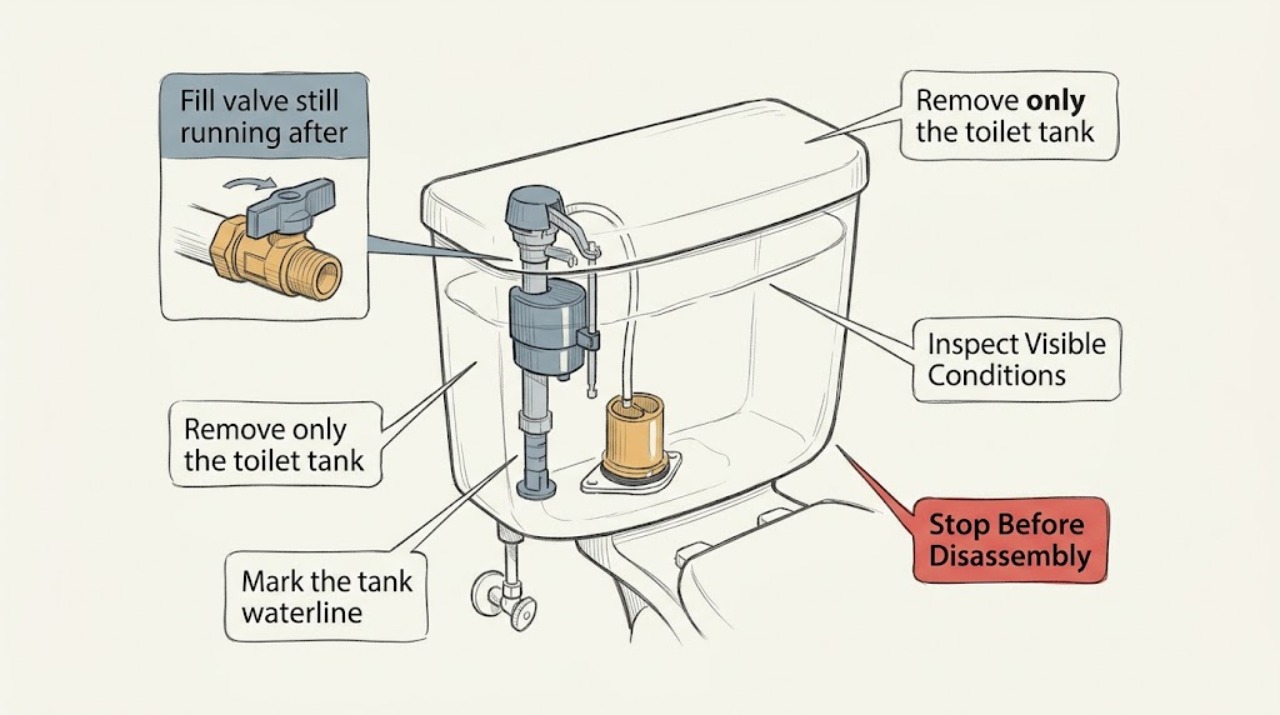
Fill valve still running after replacing the seal: what to check
If a toilet fill valve keeps running after its seal was replaced, first determine whether the fill valve is actually failing to shut off or is refilling because water is escaping through the flush valve seal, flapper, or overflow.
-
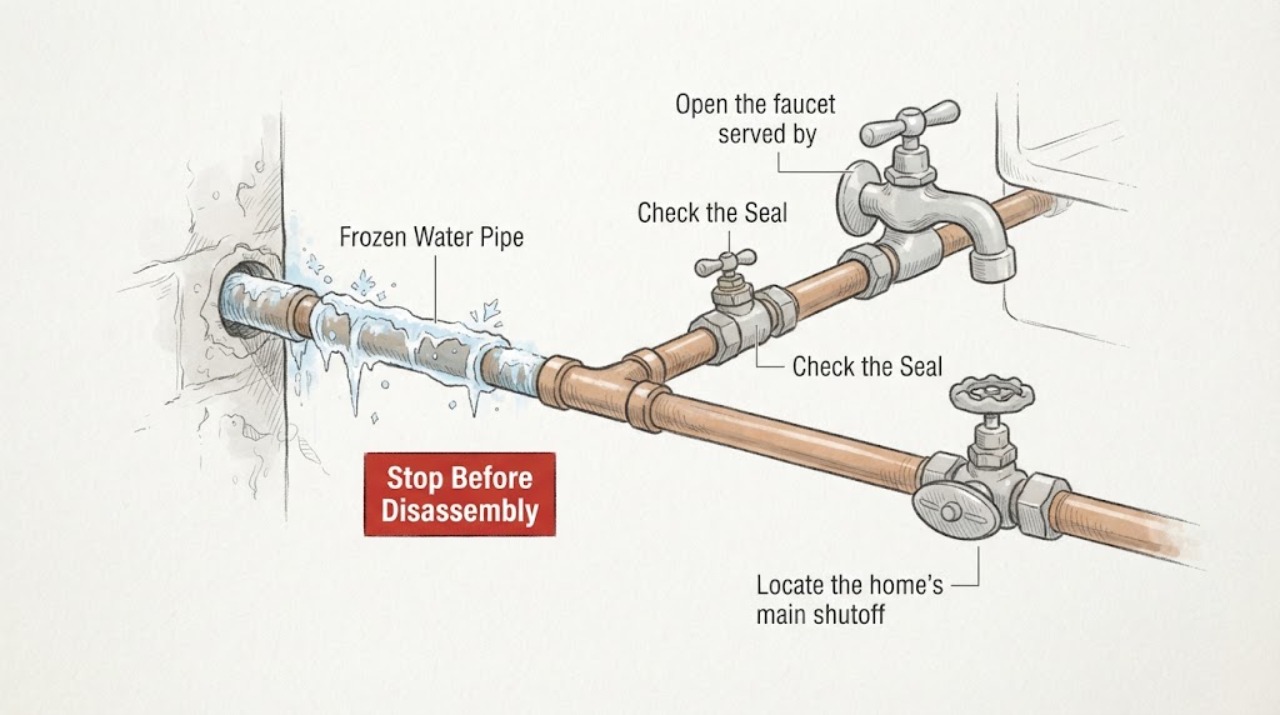
Frozen Water Pipe at a Shutoff Valve: Safe Checks
If a shutoff valve or the pipe beside it is frozen, do not force the handle or use a torch. First open a nearby faucet so melting water has somewhere to go, identify whether the pipe is accessible and intact, and be ready to close a normally operating main shutoff if thawing reveals a break.
-
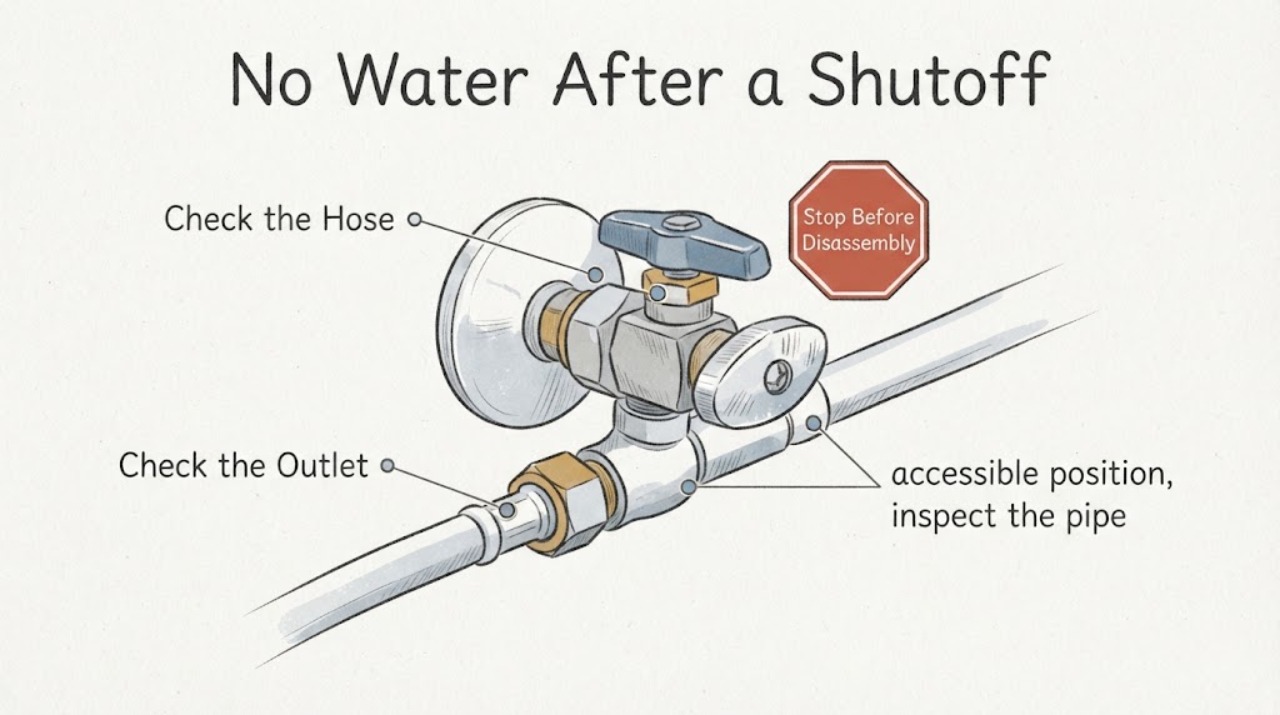
No Water After a Shutoff Valve: Safe Plumbing Checks
When no water comes through a valve, first compare the affected outlet with other fixtures to determine whether the problem is local or affects the whole property. Then identify the correct upstream shutoff and check its visible position and condition without forcing the handle.
-
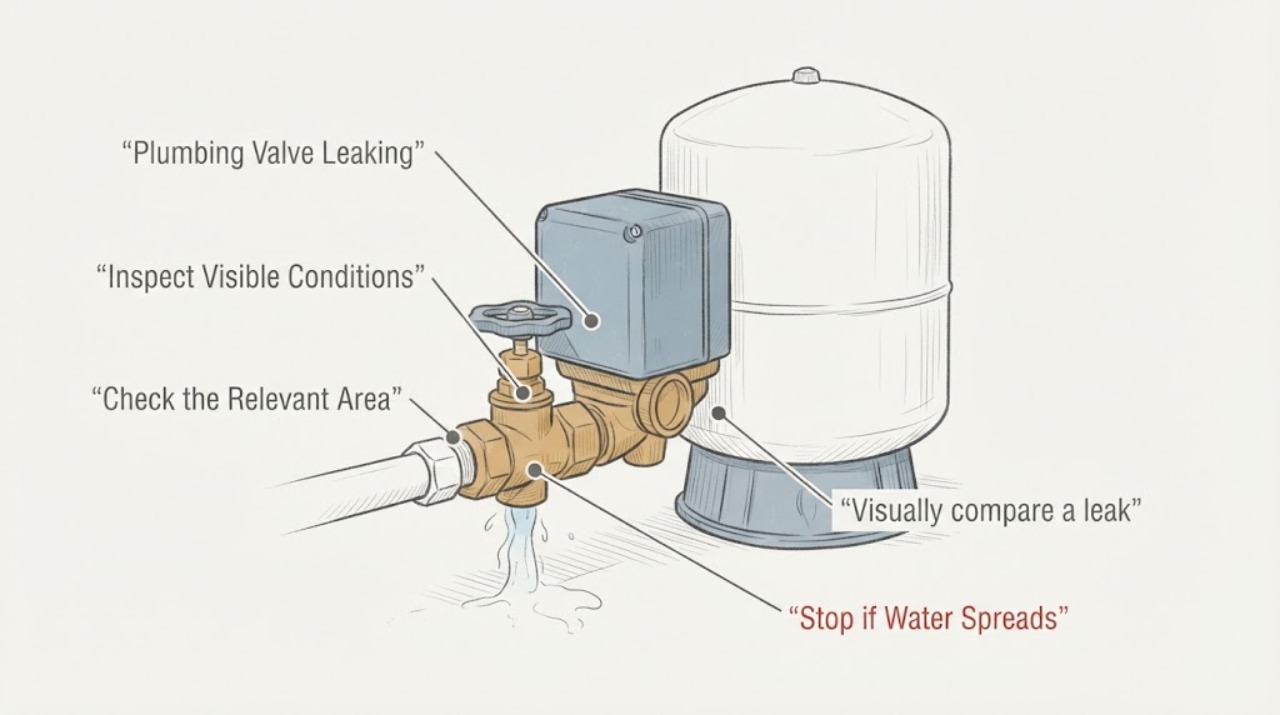
Plumbing Valve Leaking: Tell a Pressure-Valve Leak From a Tank Leak
First identify where the water begins: the outlet or discharge pipe of a temperature-and-pressure relief valve, the valve threads where it enters the tank, another fitting or drain valve, or the tank shell, seam, or welded connection. Intermittent dripping from a relief-valve discharge can be related to pressure or thermal expansion; a continuous or forceful hot discharge can indicate an unsafe temperature or pressure condition.
-
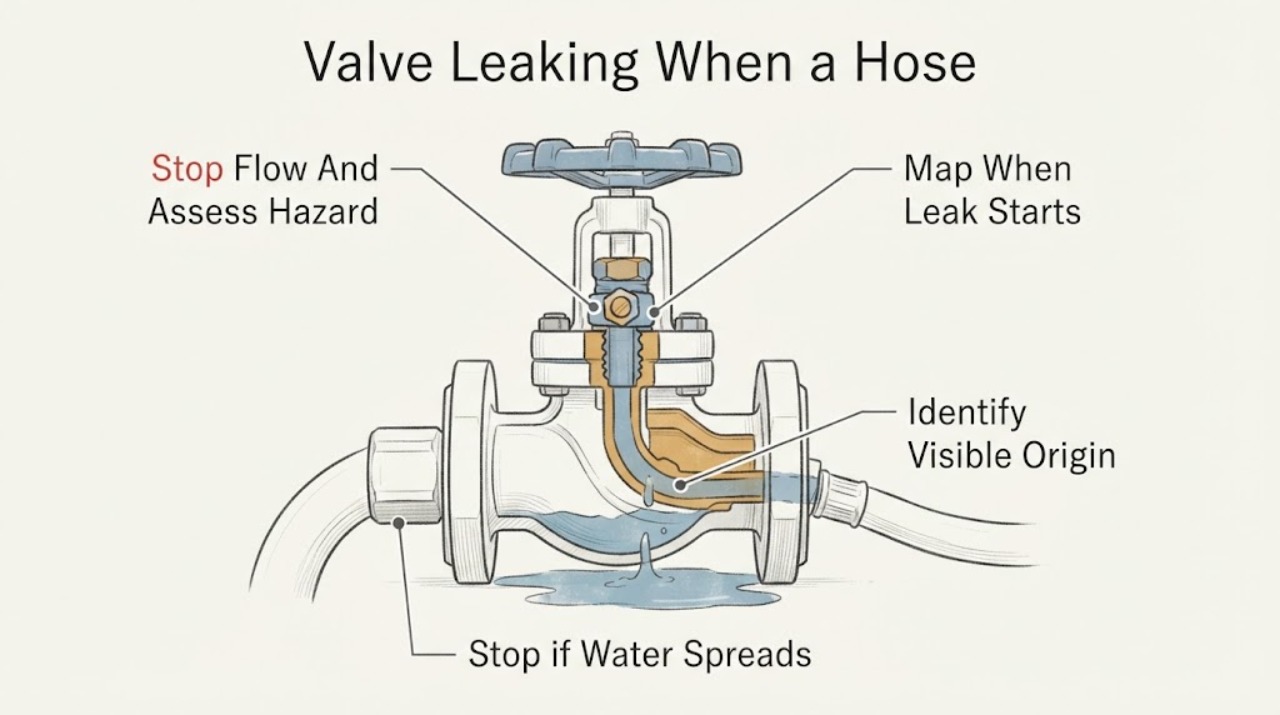
Valve Leaking When a Hose Shutoff Is Used: Find the Leak Safely
If a valve leaks when a hose shutoff is used, first determine whether water is escaping at the valve stem or packing area, the valve body or wall connection, the hose threads or washer, or a downstream fitting. A drip that appears only when the hose shutoff is opened points toward a loaded connection, hose gasket, packing seal, or downstream pressure path; a leak that continues with the hose shutoff closed points more toward the valve, stem seal, body, or upstream connection.
-
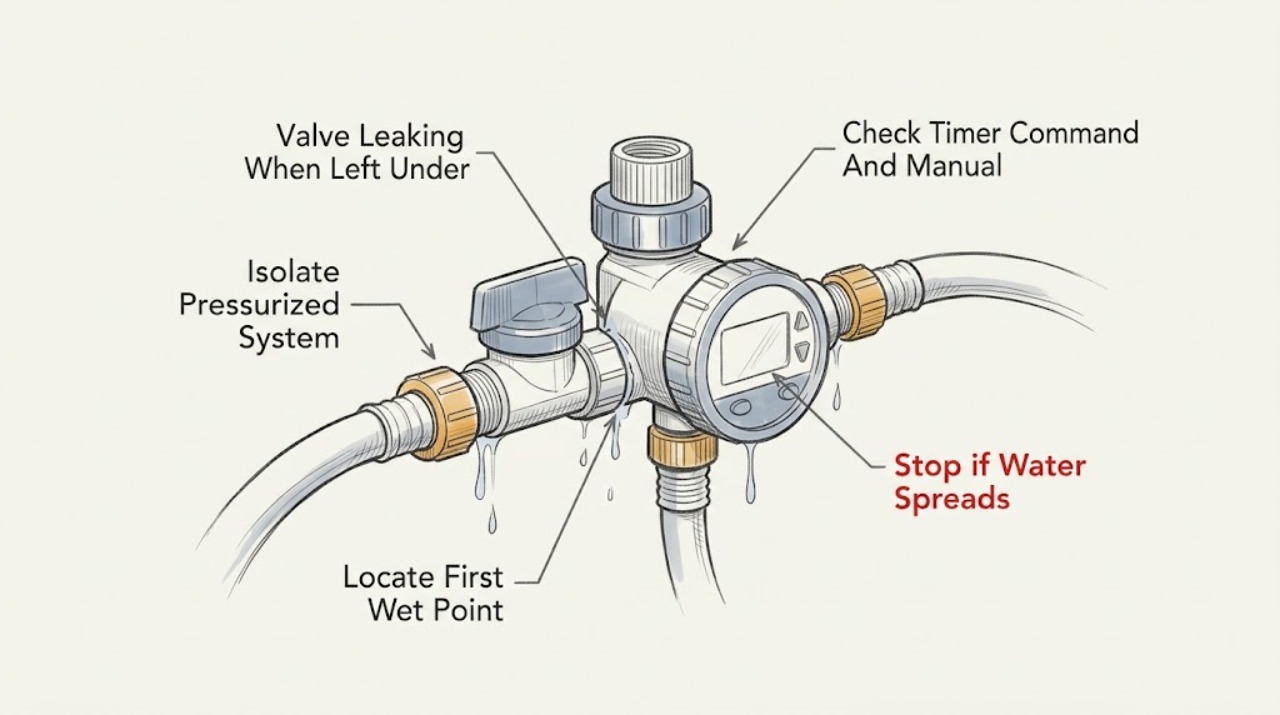
Valve Leaking When Left Under Pressure on a Garden Timer
A valve or garden-timer assembly that leaks only while the supply stays pressurized needs to be isolated before anything is opened. Turn off the timer schedule and close the upstream hose-bib or irrigation shutoff if it is accessible; do not dismantle a valve under pressure.
-
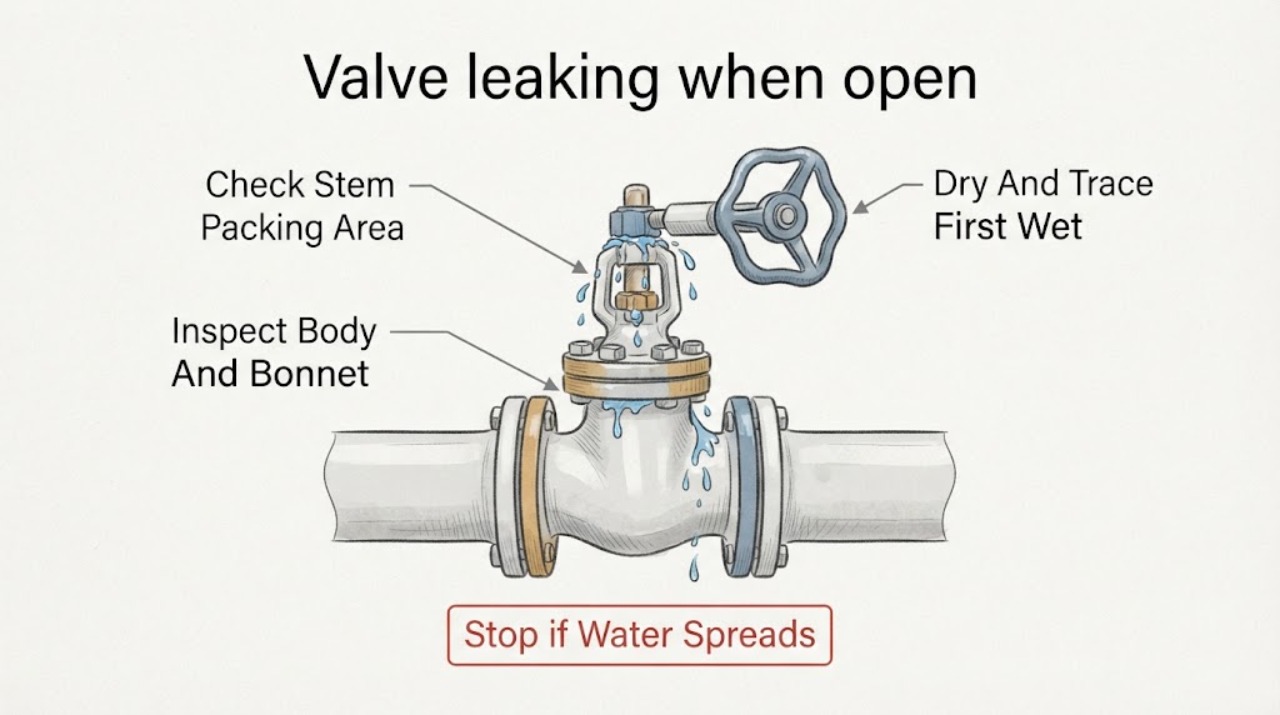
Valve leaking when open: How to find the source and when to call a plumber
If a shutoff valve leaks when it is open, first dry the valve and trace the first wet point while keeping a towel and the correct upstream shutoff available. A ring of water around the stem or packing nut points to the stem seal area; water from the valve body or bonnet seam points to a valve fault; water at a threaded, compression, push-fit, or hose connection points to the connection; and water that appears farther downstream may not be from the shutoff valve at all.
-
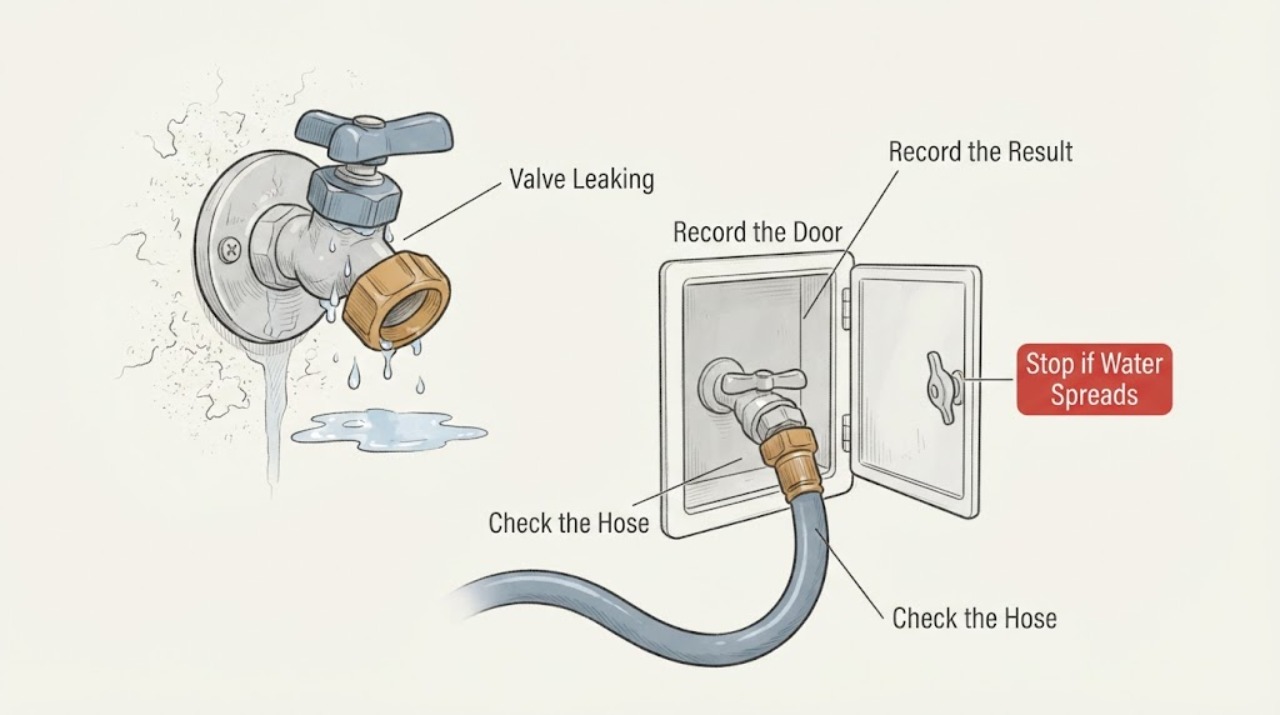
Valve Leaking: Outside Spigot Leaks With the Shutoff Valve Closed
When an outside spigot leaks even though its shutoff valve is closed, first determine whether you are seeing a short release of trapped water or a continuous supply. Close the correct indoor branch shutoff or the main valve, remove any hose or splitter, and open the outside spigot briefly into a bucket only from a dry, safe position to relieve residual pressure.
-
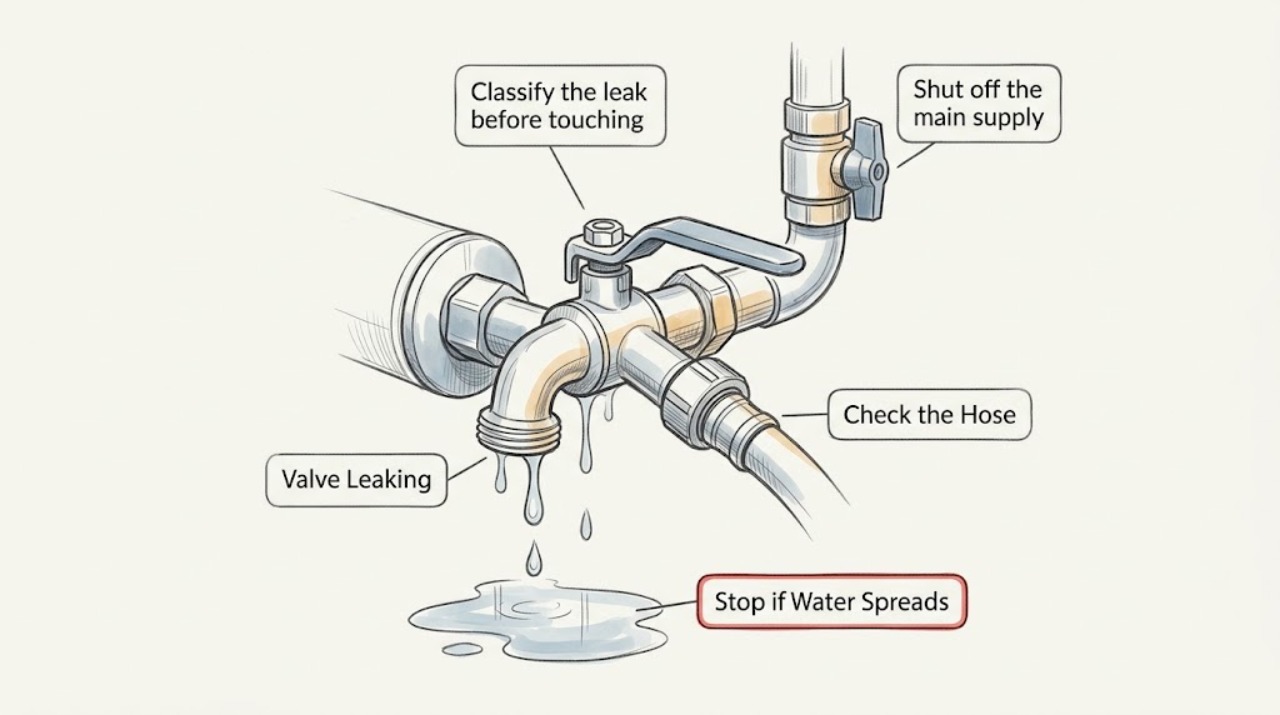
Valve Leaking: Outside Tap or Stuck Valve Going to Burst
A leaking shutoff valve is not automatically about to burst, but the response changes sharply with the leak pattern. A slow drip at a stem or packing area can be a serviceable valve leak; a bulging or cracked body, spray, rapidly growing wet area, frozen outside tap, or valve that will not close can become a flood risk.
-
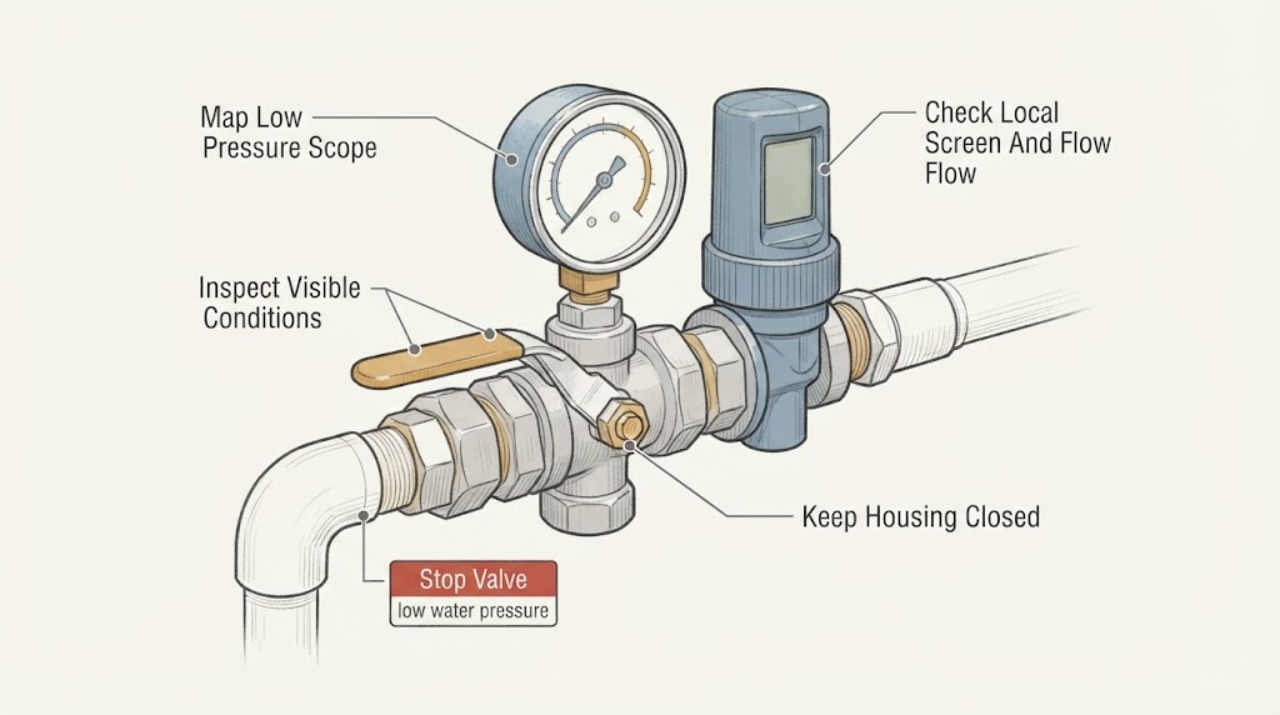
Valve low water pressure: separate a partly closed valve from a flow restriction or supply problem
Low pressure at a plumbing valve is not proof that the valve itself has failed. First compare the affected outlet with other cold and hot outlets, then check whether the accessible shutoff is fully open without forcing it.
-
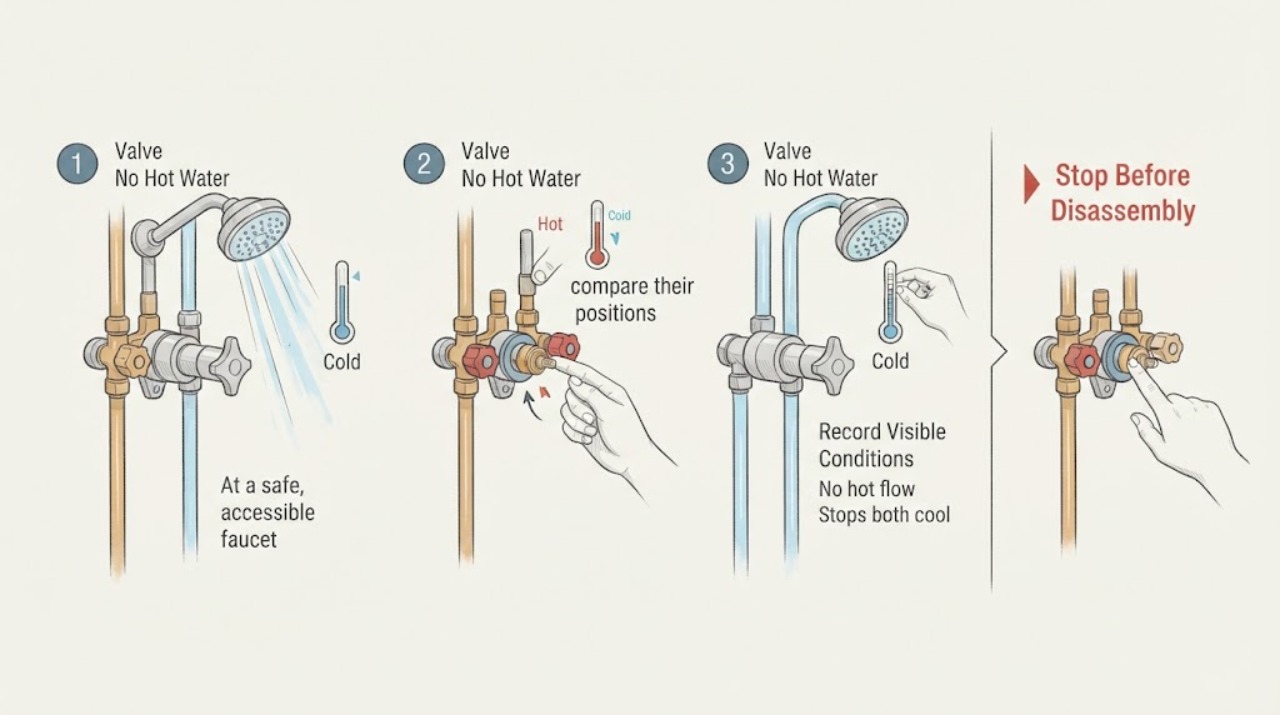
Valve No Hot Water: Trace the Hot Supply Before Replacing the Cartridge
First compare the temperature and flow at other hot-water fixtures. If the whole home has no hot water, the water heater or building supply is the priority and a plumber or property manager should be contacted.
-
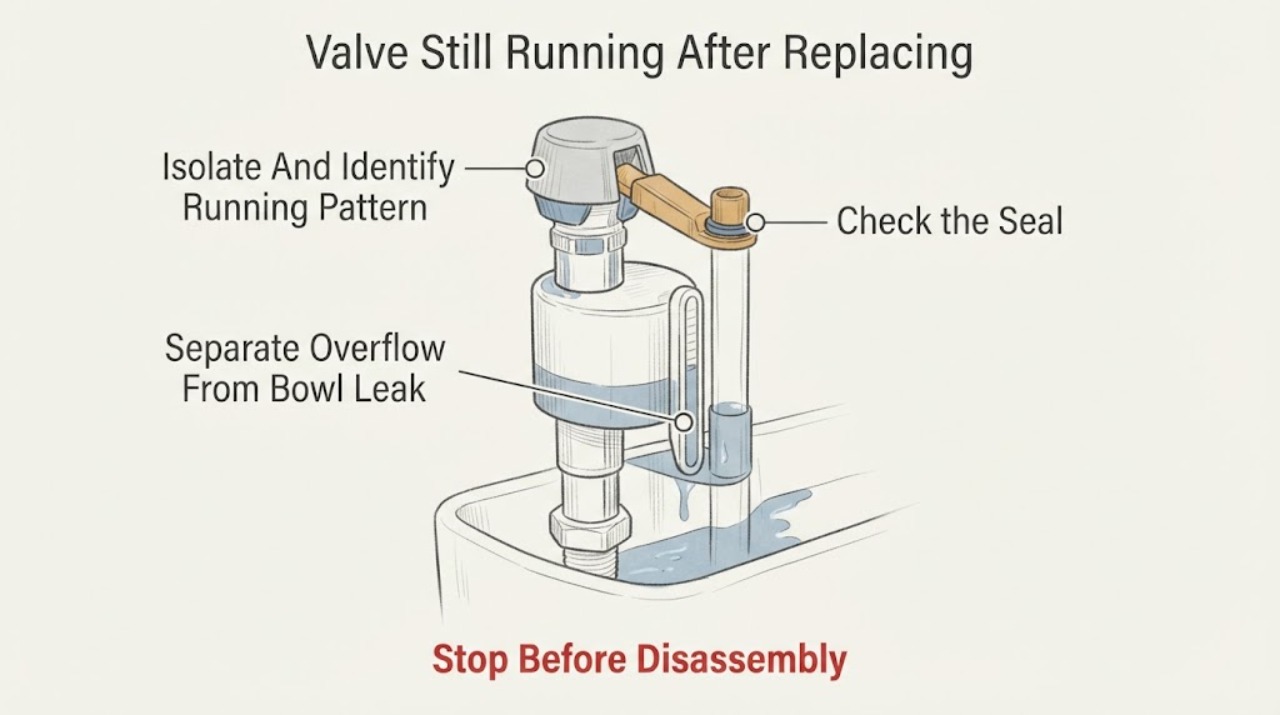
Valve Still Running After Replacing the Fill Valve Seal
If a toilet fill valve still runs after a seal replacement, first determine whether the tank is actually overflowing or whether a flush-valve seal is letting water escape into the bowl. Close the toilet supply before removing a cap or touching a seal.
-
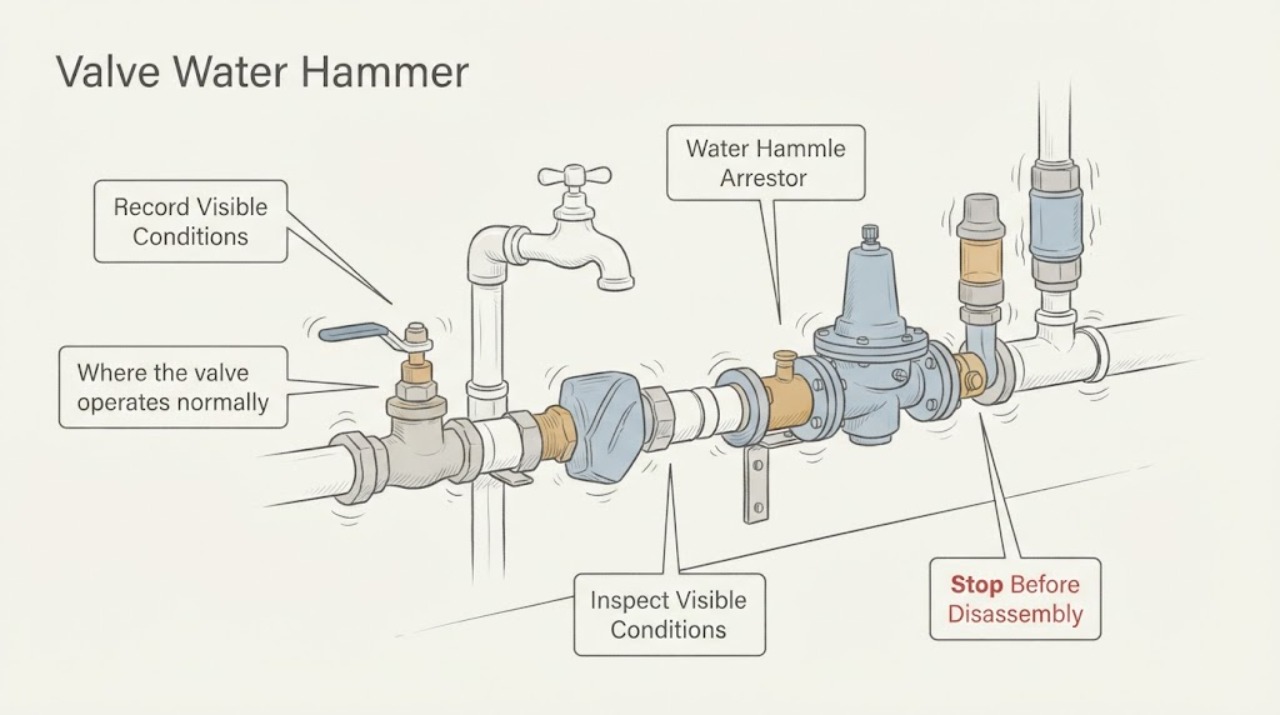
Valve Water Hammer: Find the Fast-Closing Valve Before Replacing Parts
Water hammer is a pressure shock caused when moving water is stopped or redirected suddenly, often as a tap, appliance valve, or shutoff closes. Note exactly which valve or fixture triggers the bang, close taps more gently, and inspect only visible pipework for movement or loose supports.