
Plumbing guides
Faucets Repair Guides
Faucet guidance for leaks, low flow, handles, cartridges, and aerators.
Published faucets guides
Choose the guide that best matches the equipment and symptom you are seeing.
-
American Standard Faucet Aerator Low Water Pressure: What to Check and What to Do Next
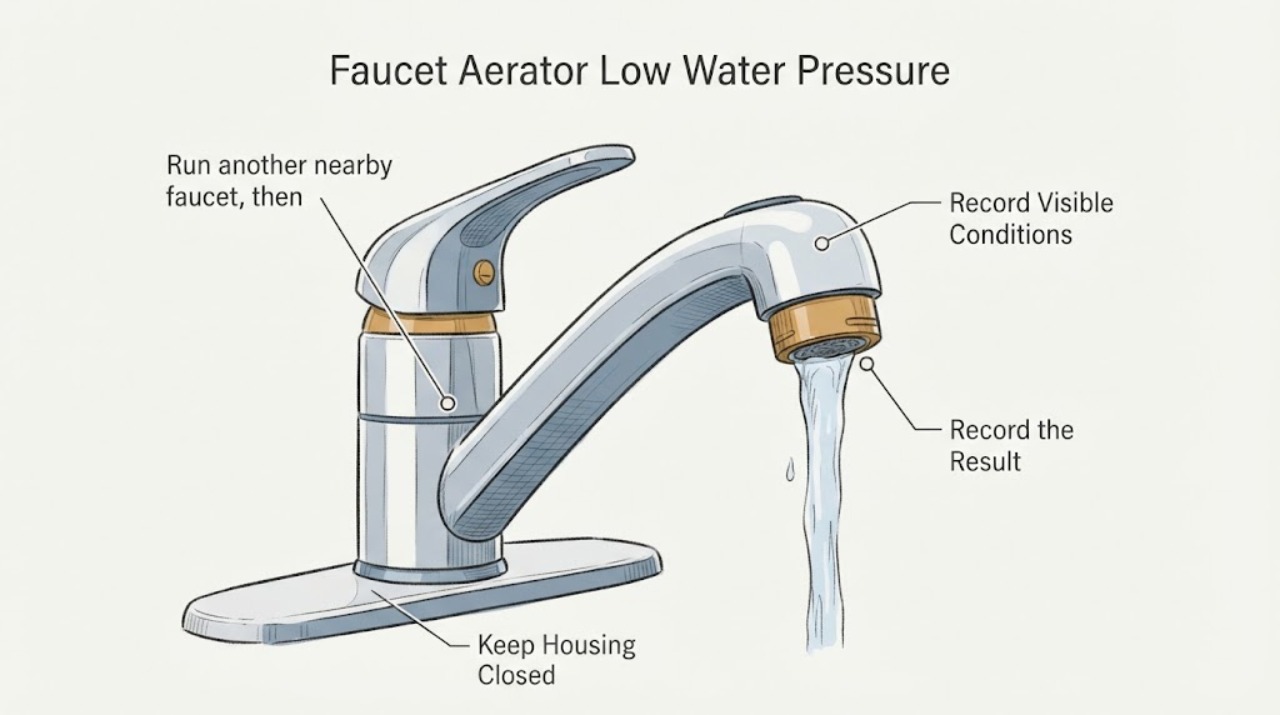
If an American Standard faucet has weak flow, first compare this faucet with another fixture and note whether hot, cold, or both sides are affected. When the problem is isolated to this outlet, inspect the faucet aerator: American Standard identifies dirt in an aerator as a cause of distorted or reduced flow and directs the user to remove it and rinse it clean.
-
American Standard faucet cartridge dripping: What to Check and What to Do Next
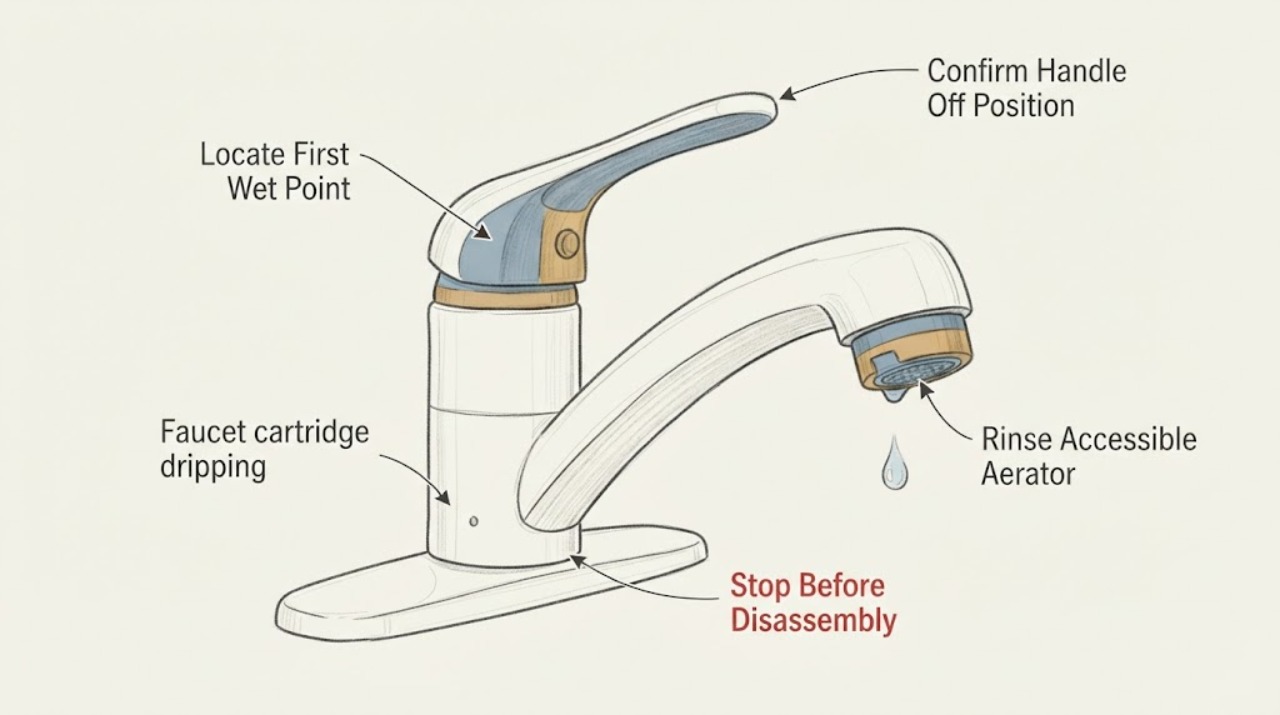
An American Standard faucet that drips after the handle is off may have debris at the valve seat, a worn or damaged cartridge or seal, a handle that is not fully closing the valve, or a different leak at the spout, handle, supply connection, or hose. First dry the faucet and identify whether water exits the spout, gathers around the handle, or appears underneath.
-
American Standard Faucet Cartridge Has No Hot Water: What to Check and What to Do Next
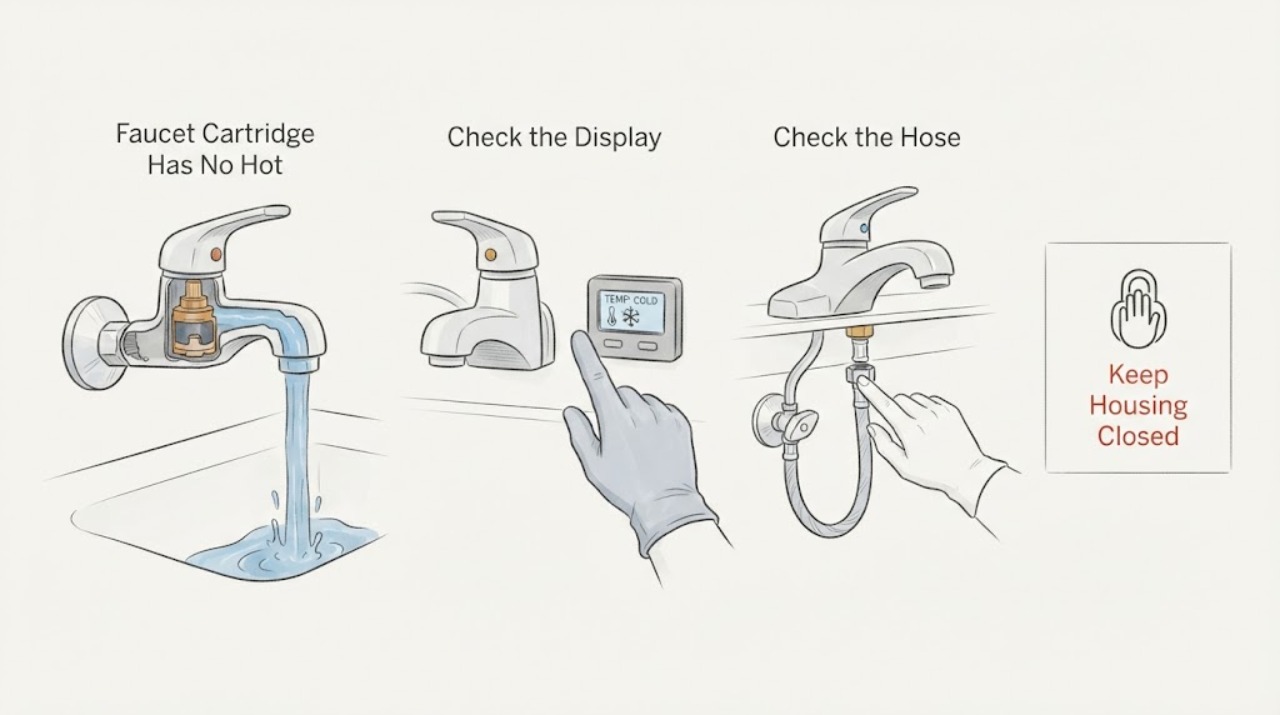
If an American Standard faucet has cold water but no hot water, first determine whether hot water is missing at this faucet only or throughout the home. Check that the hot stop valve is open, the hot supply hose is not kinked, and the faucet's hot side has flow; a single-handle cartridge or hot-limit stop can then become a plausible cause.
-
American standard faucet cartridge leaking at handle: What to Check and What to Do Next
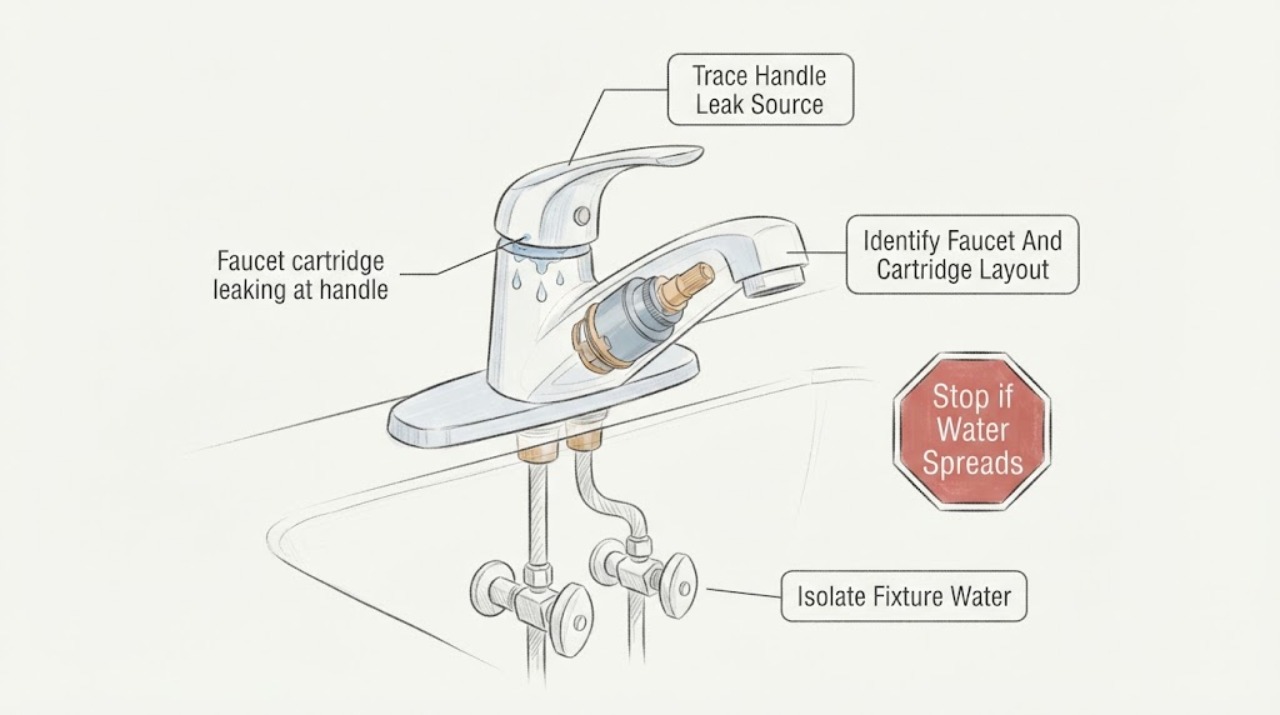
A leak at an American Standard faucet handle is not automatically proof that the cartridge is bad. First dry the faucet and identify whether water starts at the handle base only when the faucet is pressurized, drips from the spout with the handle off, or comes from a supply connection below the deck.
-
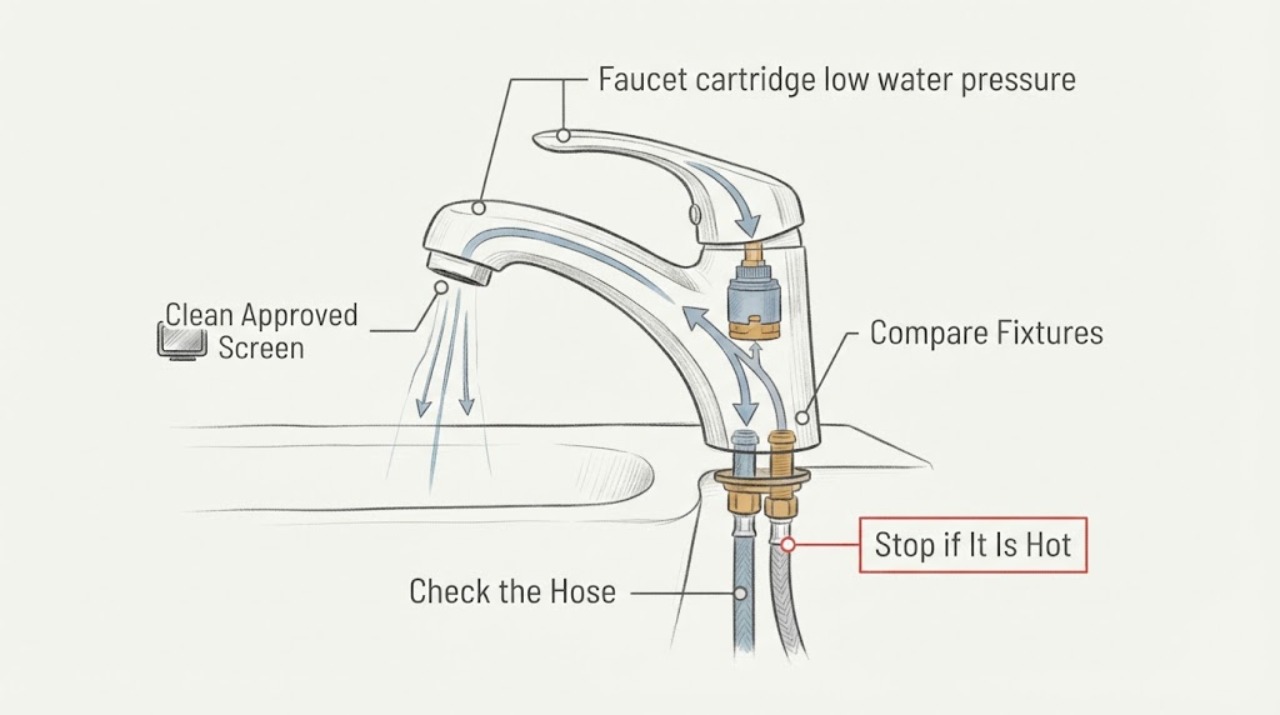
American Standard faucet cartridge low water pressure: What to Check and What to Do Next
Low pressure at an American Standard faucet is not automatically a bad cartridge. First compare this faucet with another nearby fixture and compare hot with cold; a problem isolated to one faucet can come from a partly closed supply stop, kinked hose, clogged aerator or inlet screen, blocked passage, or cartridge, while low flow throughout the home points upstream.
-
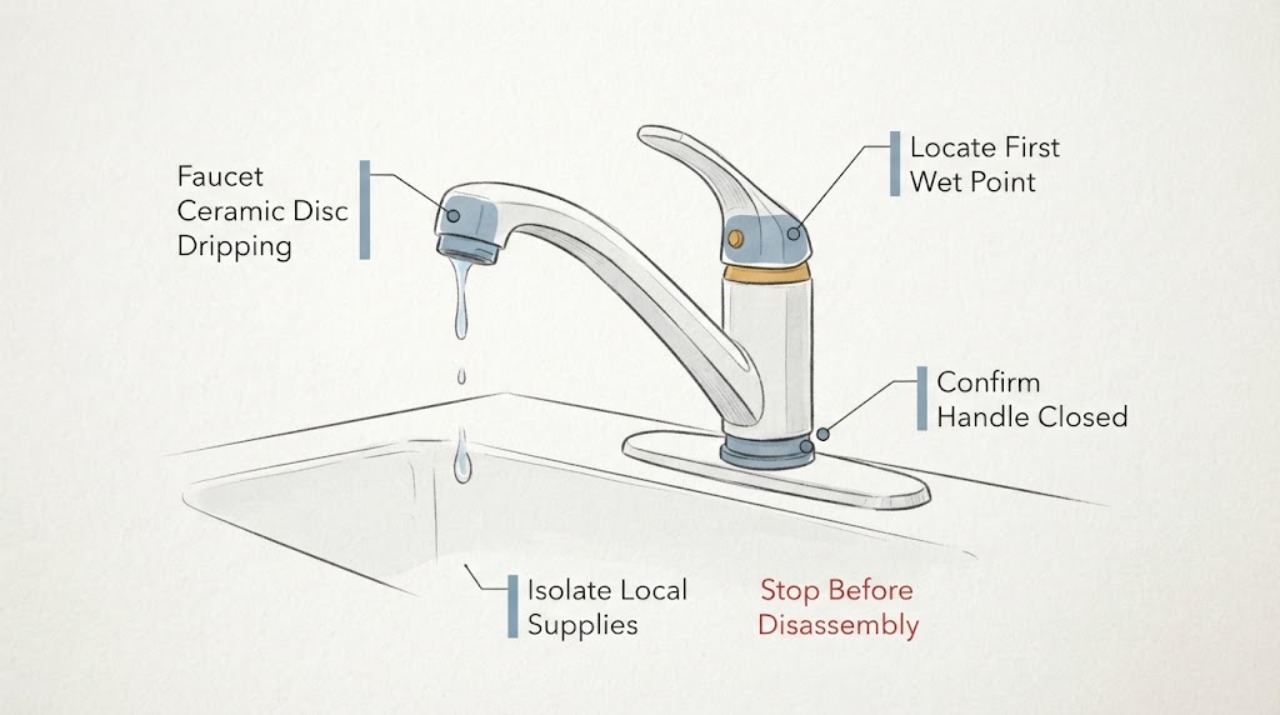
American Standard Faucet Ceramic Disc Dripping: What to Check and What to Do Next
A closed American Standard faucet that continues to drip usually needs the drip location and the affected water path identified before any part is chosen. American Standard describes its ceramic disc valves as drip-free on several faucet families, but that description does not identify the failed component on an individual faucet.
-
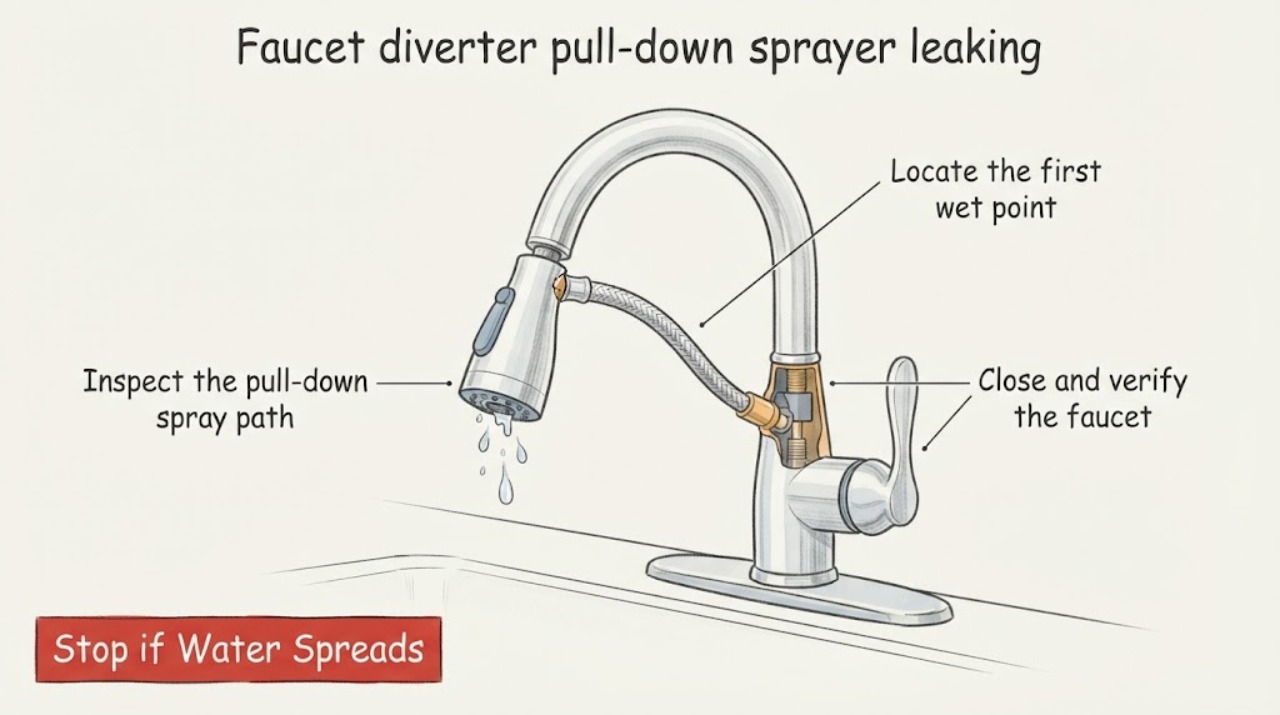
American Standard faucet diverter pull-down sprayer leaking: What to Check and What to Do Next
A leaking American Standard pull-down sprayer is not automatically a failed diverter. First identify whether water appears at the spray head, hose connection, spout neck, diverter area, faucet base, or supply connection, and whether it happens in stream mode, spray mode, or both.
-
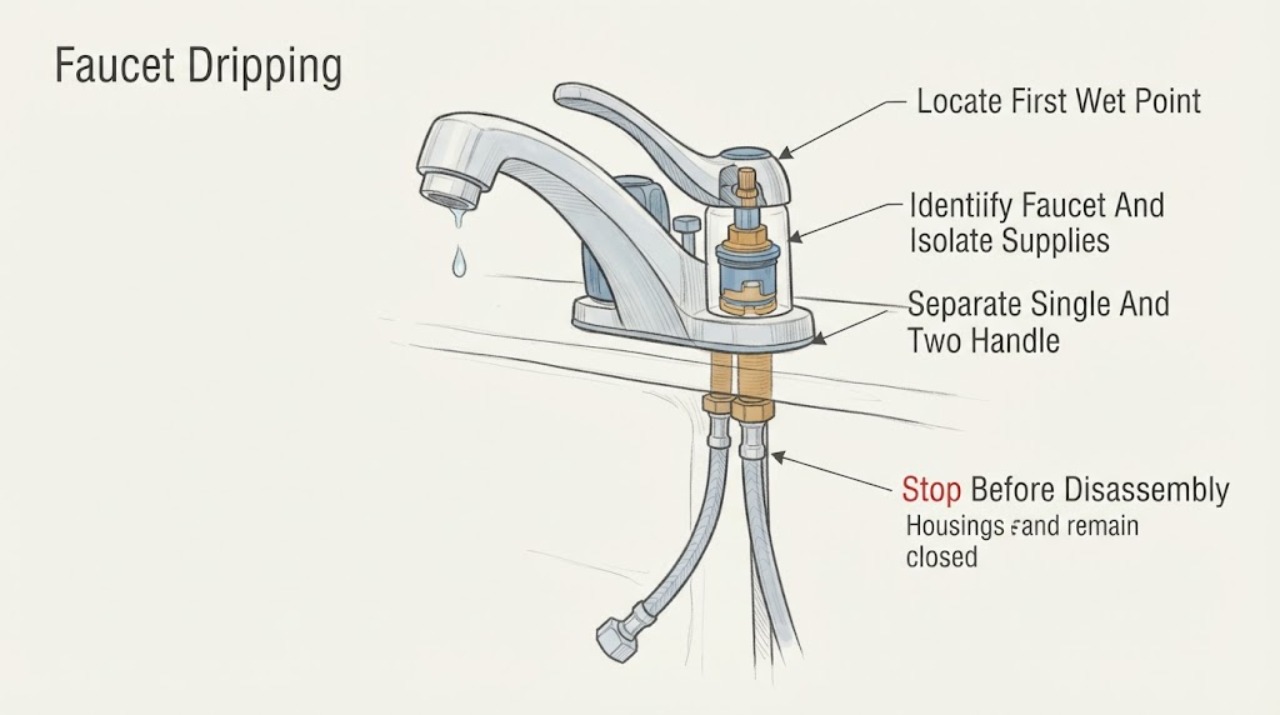
American Standard Faucet Dripping: What to Check and What to Do Next
An American Standard faucet that drips after the handles are closed usually has a valve or cartridge that is not sealing, debris at the valve, or—when water appears around the spout or handle—a worn seal or O-ring. First identify whether water comes from the spout outlet, handle, faucet body, supply connection, or drain, then close the hot and cold shutoff valves under the sink before removing any handle or cartridge.
-
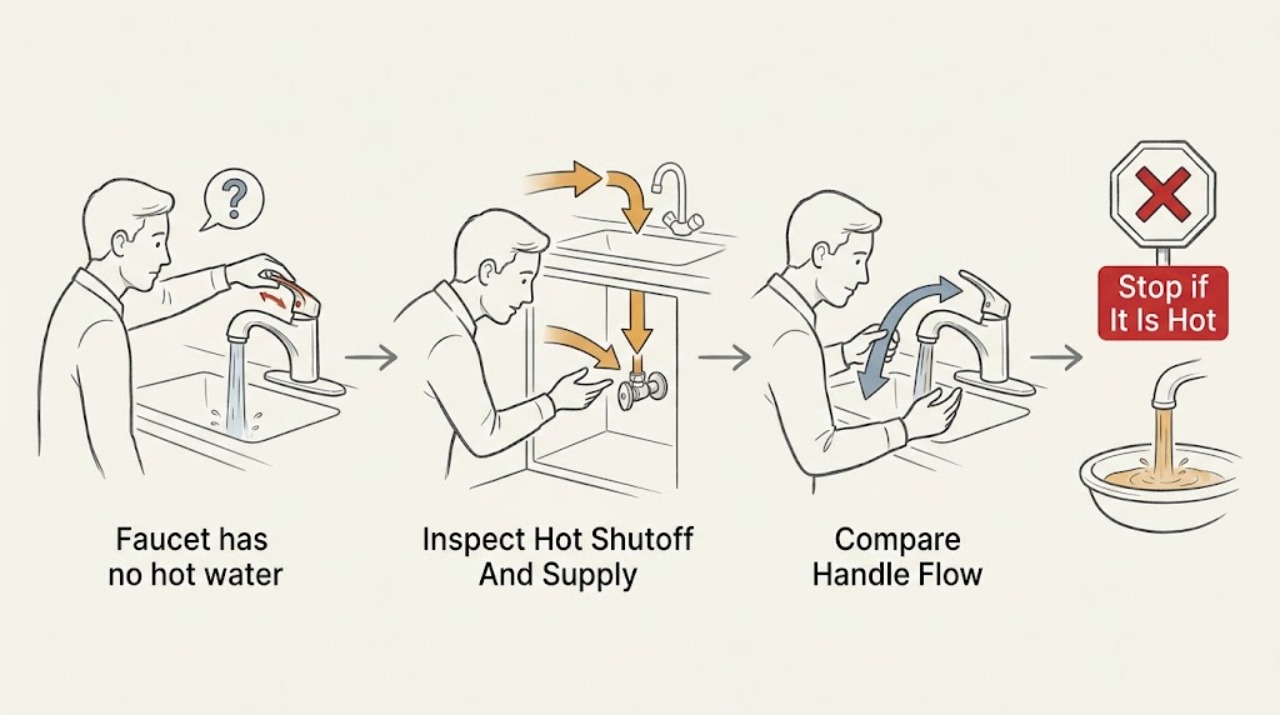
American Standard faucet has no hot water: What to Check and What to Do Next
If an American Standard faucet has no hot water, first determine whether the problem is at that faucet or affects the hot-water system. Run a nearby faucet on hot and compare the flow, then check that the faucet's hot-side shutoff and supply connection are visibly open and not kinked.
-
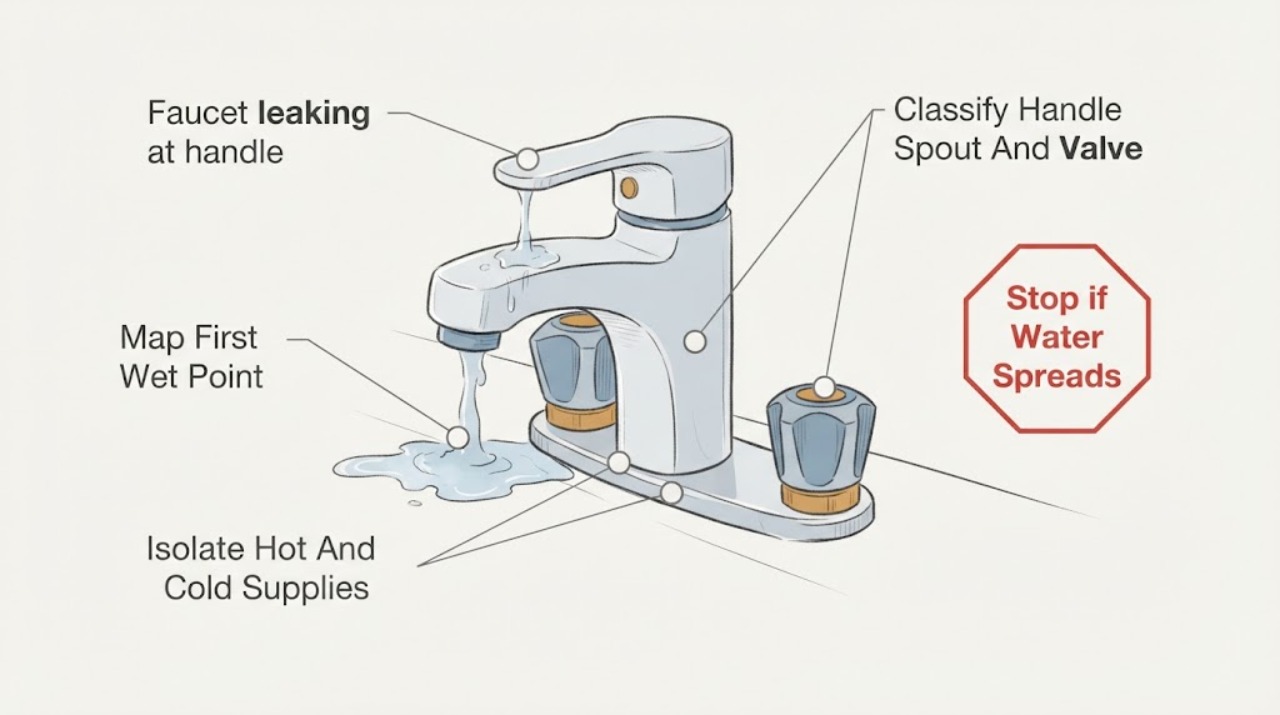
American Standard faucet leaking at handle: What to Check and What to Do Next
First dry the faucet and identify whether water starts under the handle, at the spout, around the base, or below the counter. Close the hot and cold angle stops before removing a handle or cartridge, then test one supply side at a time only when the stops are clearly identified and the area is safe.
-
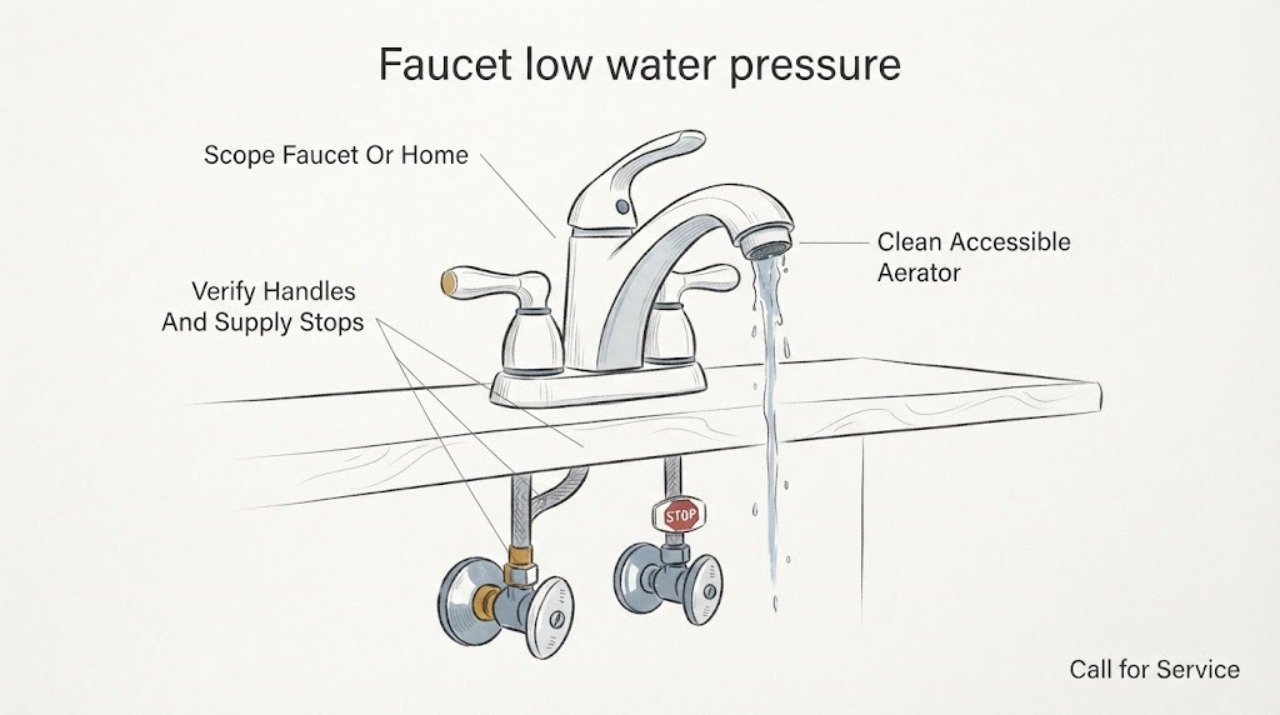
American standard faucet low water pressure: What to Check and What to Do Next
First determine whether low flow affects only the American Standard faucet, only its hot or cold side, or several fixtures in the home. Confirm the handle is fully open and the two under-sink supply stops are open without forcing them, then inspect for a kinked hose or leak.
-
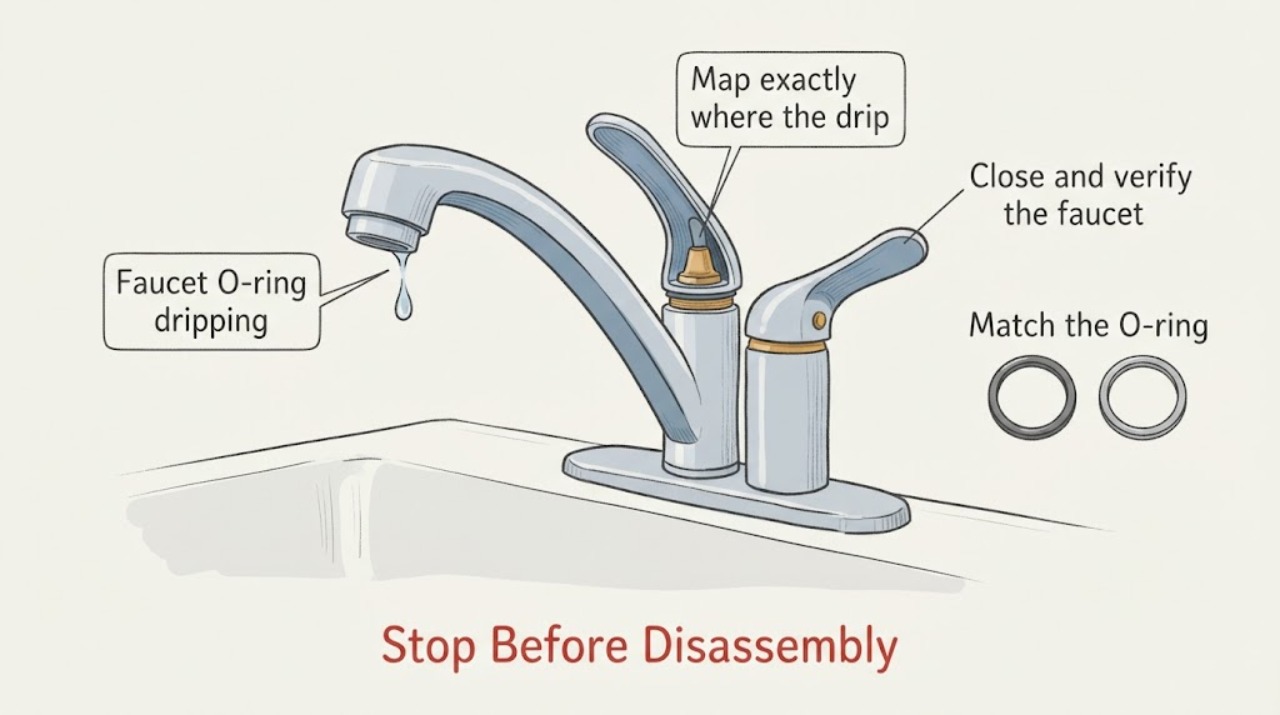
American Standard faucet O-ring dripping: What to Check and What to Do Next
An American Standard faucet that drips may have a worn, displaced, or model-specific O-ring, but a drip from the spout with the handles fully off can also come from the cartridge or valve rather than the O-ring. First identify whether water appears at the spout, handle, base, hose, or supply connection, then close the hot and cold supply stops and confirm the faucet no longer receives water.
-
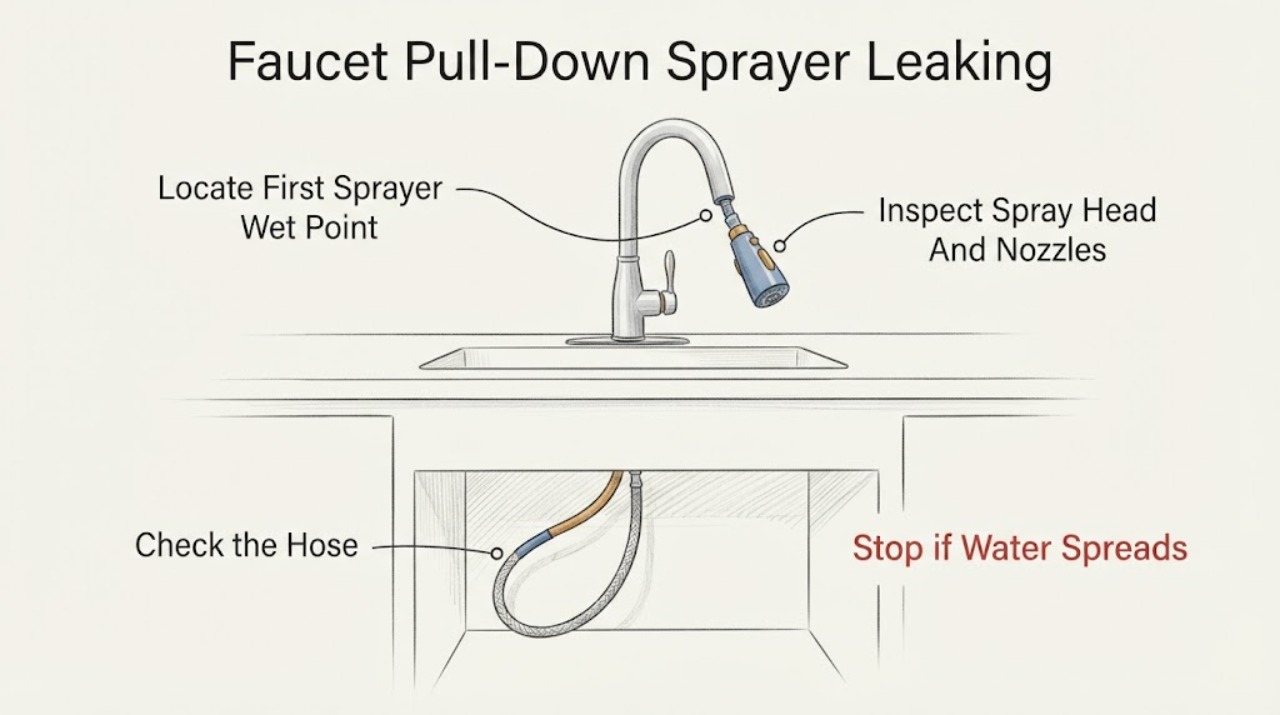
American Standard Faucet Pull-Down Sprayer Leaking: What to Check and What to Do Next
When an American Standard pull-down sprayer leaks, first identify whether water starts at the spray face, the spray-head connection, the pull-down hose, the hose-to-valve connection under the sink, or the faucet body. A spray head that leaks only while spray mode is running can have a worn seal, clogged or damaged outlet, or a connection that is not seating; water under the sink during spray use points more toward the hose, O-ring, washer, or adapter.
-
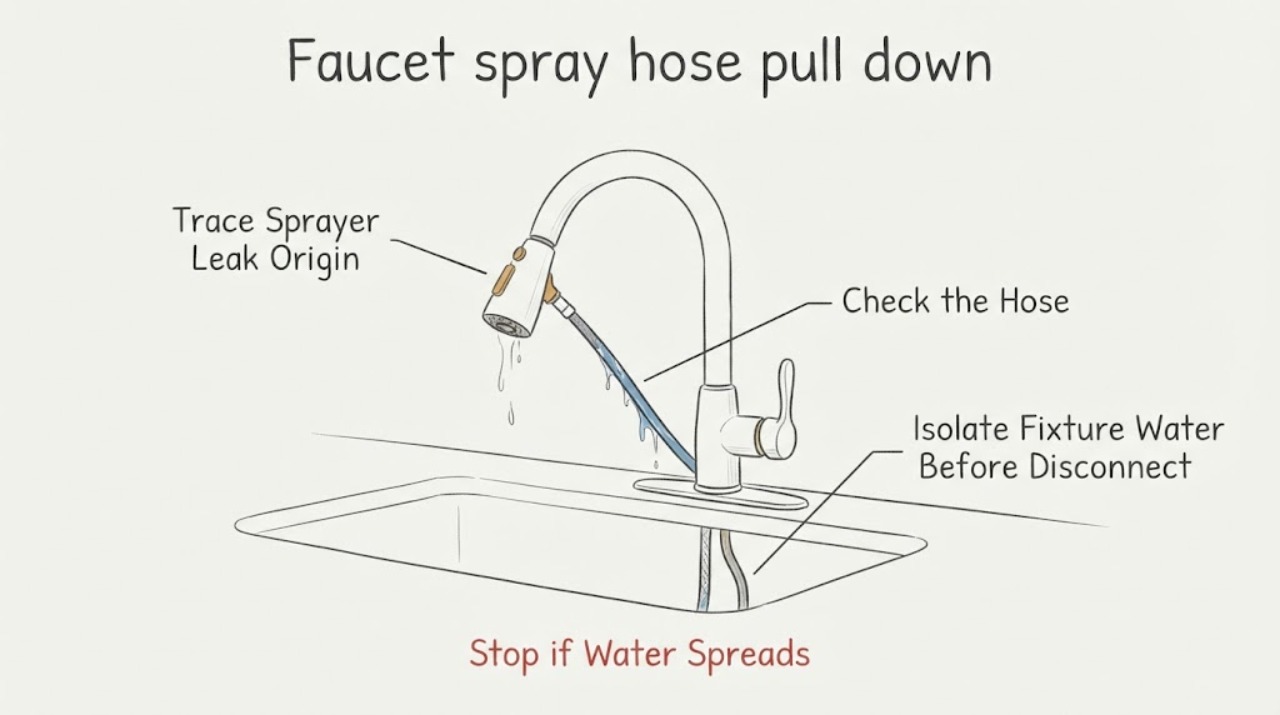
American standard faucet spray hose pull down sprayer leaking: What to Check and What to Do Next
A leaking American Standard pull-down sprayer can be caused by the spray head, the hose, an O-ring or washer at a connection, a quick-connect fitting, or a leak elsewhere in the faucet. Dry the sprayer and the underside of the sink, run the faucet briefly, and identify where water first appears: at the spray-head seam, where the hose joins the head or valve, or at a supply line or faucet body.
-
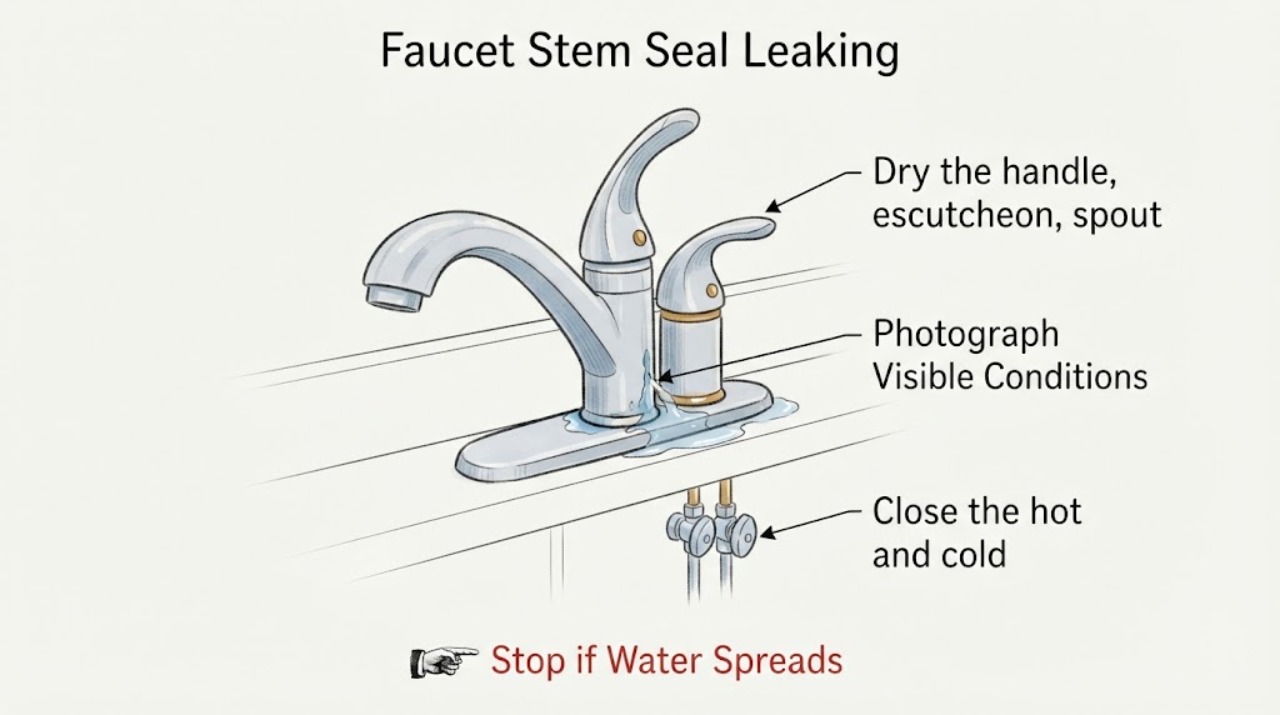
American Standard Faucet Stem Seal Leaking at Handle: What to Check and What to Do Next
Water appearing around an American Standard faucet handle usually means water is escaping at the valve stem, handle or bonnet area, but it can also be running down from the spout or a supply connection. Dry the faucet, trace the first wet point while the faucet is opened and closed, identify the exact model, and shut off the water before any disassembly.
-
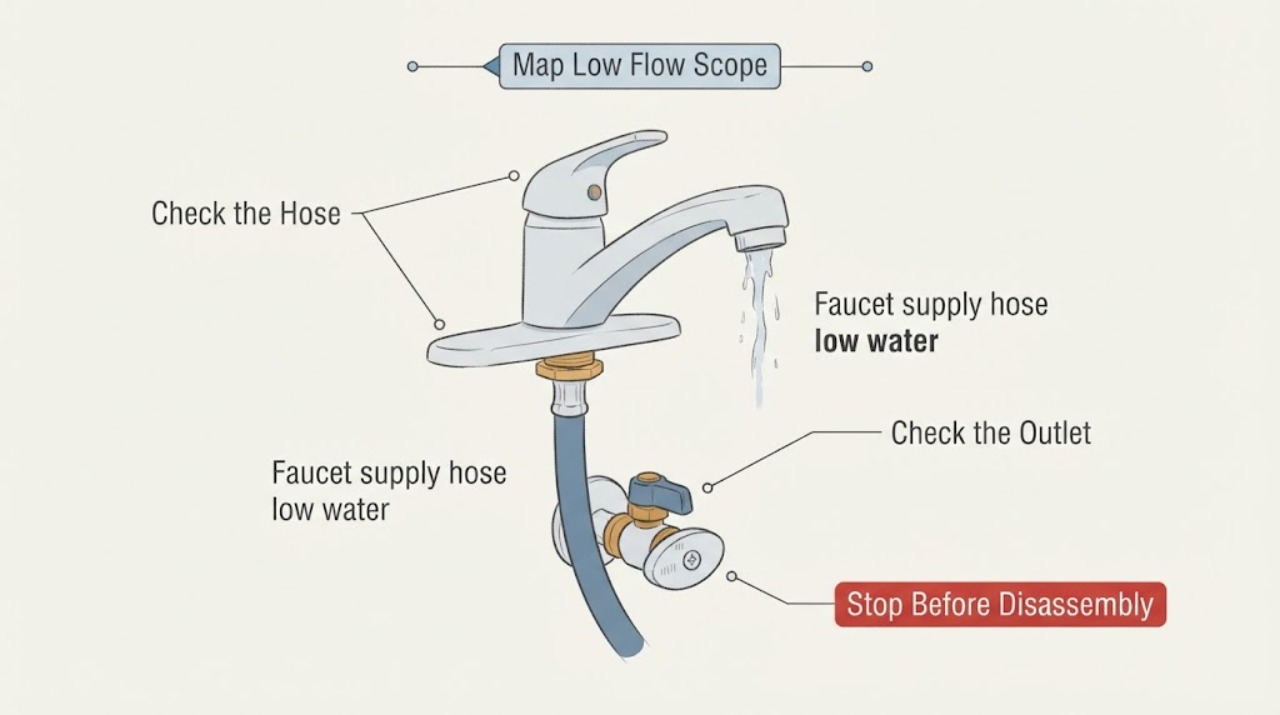
American Standard faucet supply hose low water pressure: What to Check and What to Do Next
Low flow at an American Standard faucet does not by itself prove that the supply hose is blocked. First determine whether the restriction affects one faucet, one temperature, or the whole home.
-
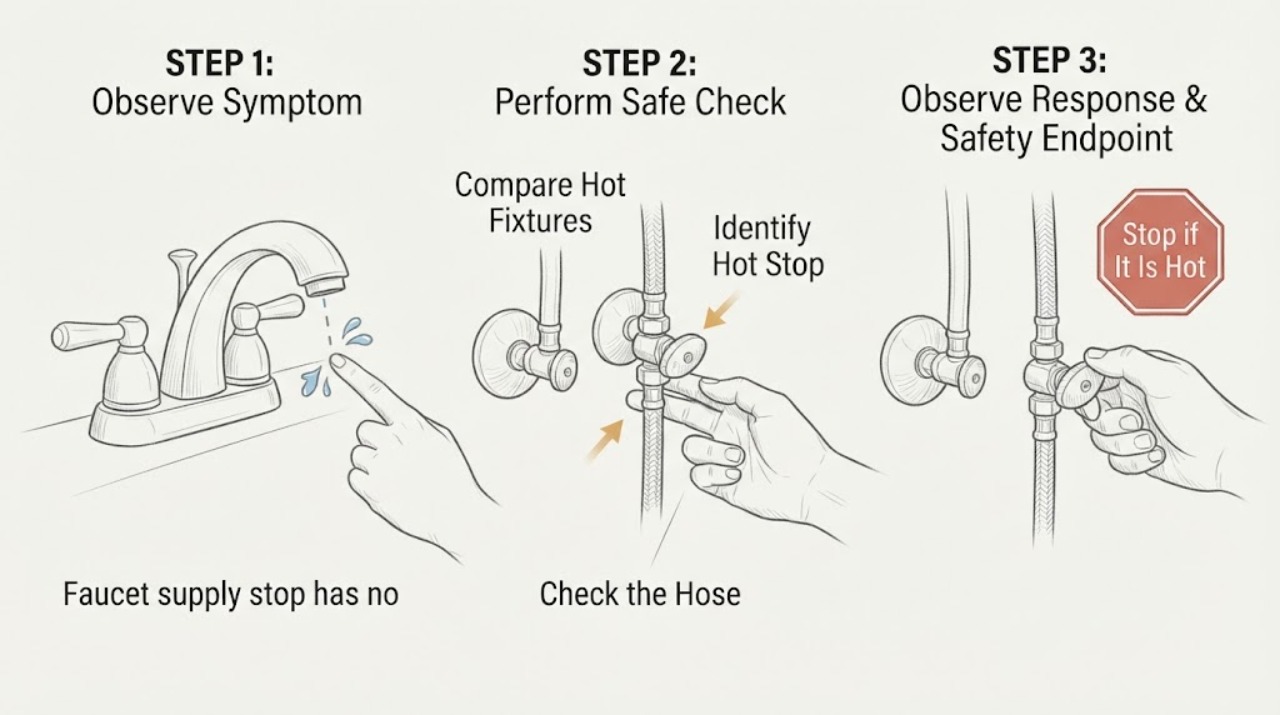
American Standard faucet supply stop has no hot water: What to Check and What to Do Next
If an American Standard faucet has normal cold water but no hot water, first compare another nearby faucet and verify that the hot supply stop under the sink is open and the hot flexible hose is connected without a kink. American Standard installation instructions identify separate hot and cold supplies and warn that the water supplies should be off before installation; the exact hose colors and arrangement can vary by model.
-
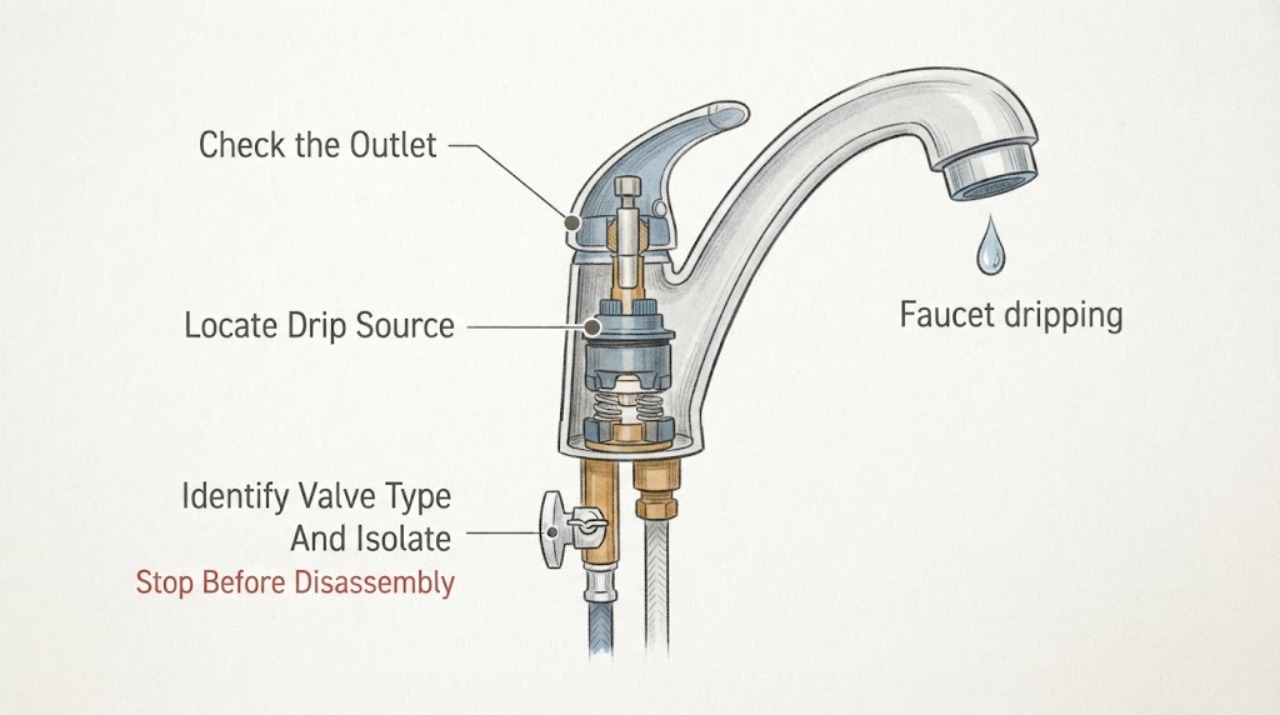
Delta faucet dripping: What to Check and What to Do Next
A Delta faucet that drips can have debris at the outlet, worn seats and springs, a worn cartridge or stem, or a leak at the handle, spout base, hose, or supply connection. First locate where the water starts and whether it drips with the faucet fully off or only while water is running.
-
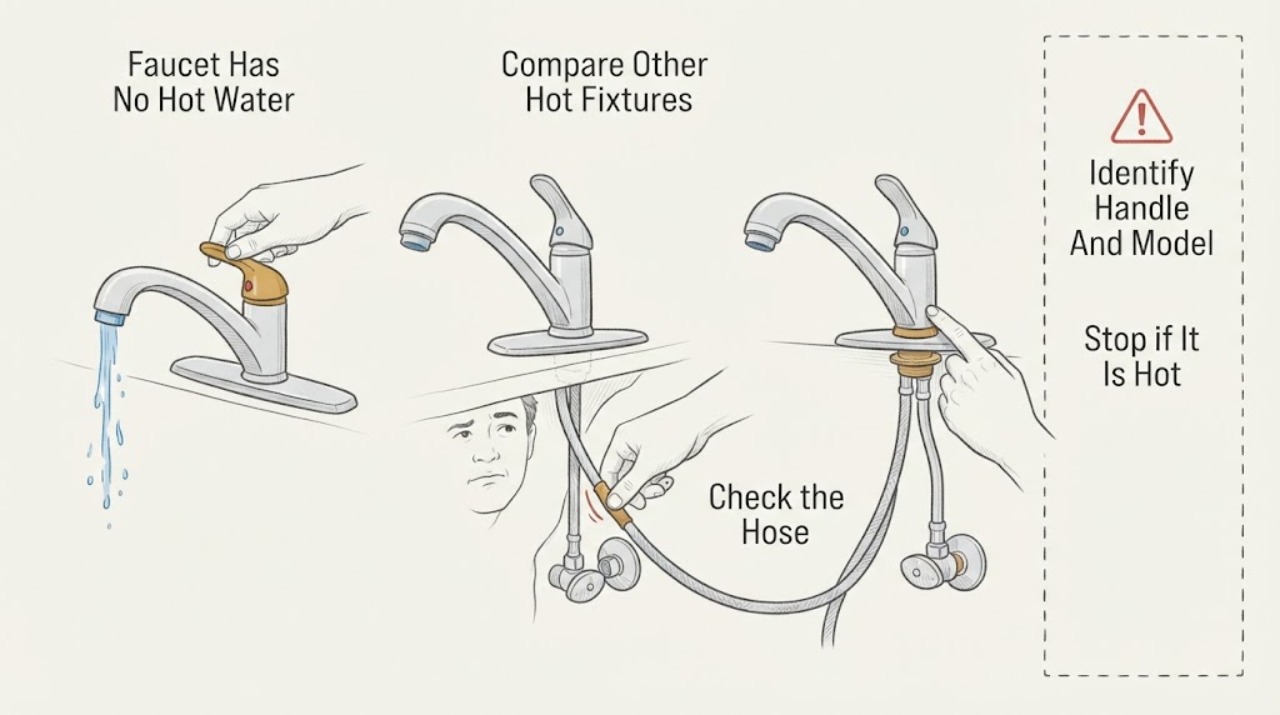
Delta Faucet Has No Hot Water: What to Check and What to Do Next
If a Delta faucet has no hot water, first check whether other fixtures still receive hot water. If other fixtures are hot, the problem is local to this faucet: a closed or failed hot-side shutoff, kinked or obstructed supply hose, wrong hot/cold connection, or a cartridge or valve that is not admitting hot water.
-
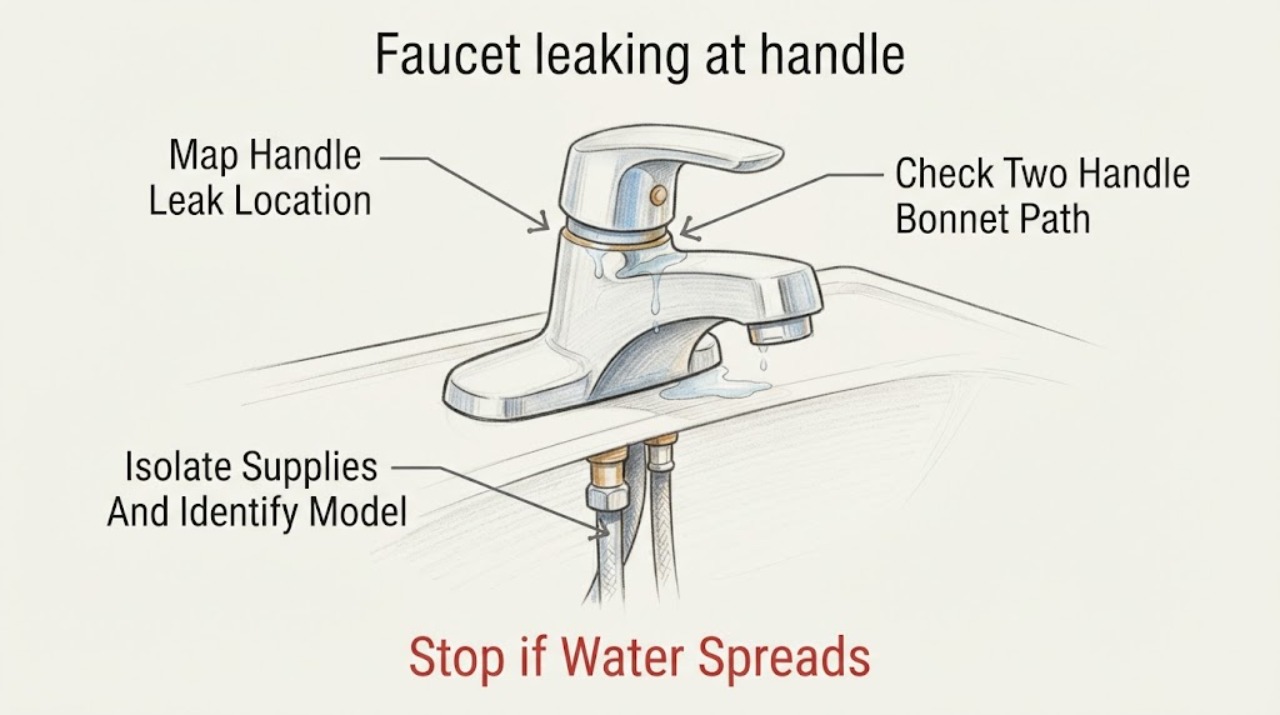
Delta faucet leaking at handle: What to Check and What to Do Next
First confirm that the water is actually coming from the handle area, not the spout tip, spout base, supply connection, or below the counter. A Delta two-handle faucet that leaks under one handle can need a bonnet or stem-related check, while a single-control faucet may need a model-specific cartridge or seal diagnosis; a leak that appears only while water is running points to a different path than a leak that continues with the handle off.
-
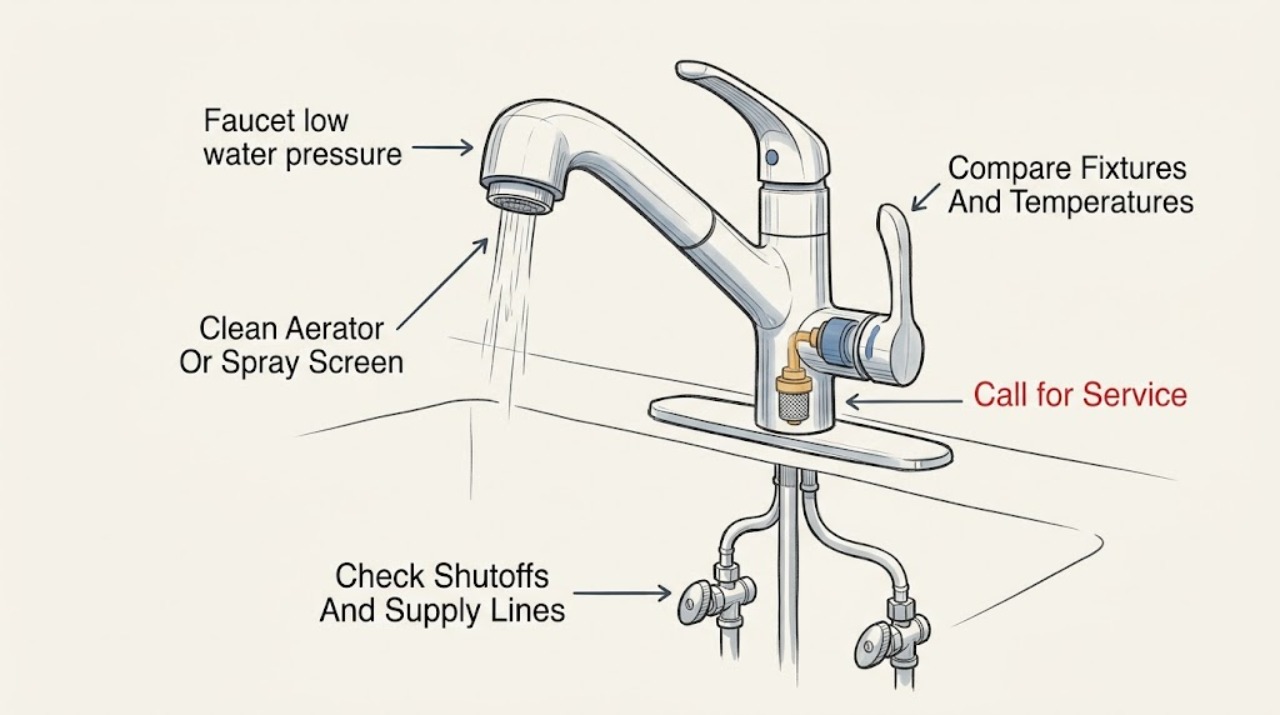
Delta faucet low water pressure: What to Check and What to Do Next
When a Delta faucet has low water pressure, first compare it with another fixture and compare hot flow with cold flow. If only this faucet is weak, clean the accessible aerator or spray-head screen, check that the hot and cold shutoff valves are open, and look for kinked supply lines.
-
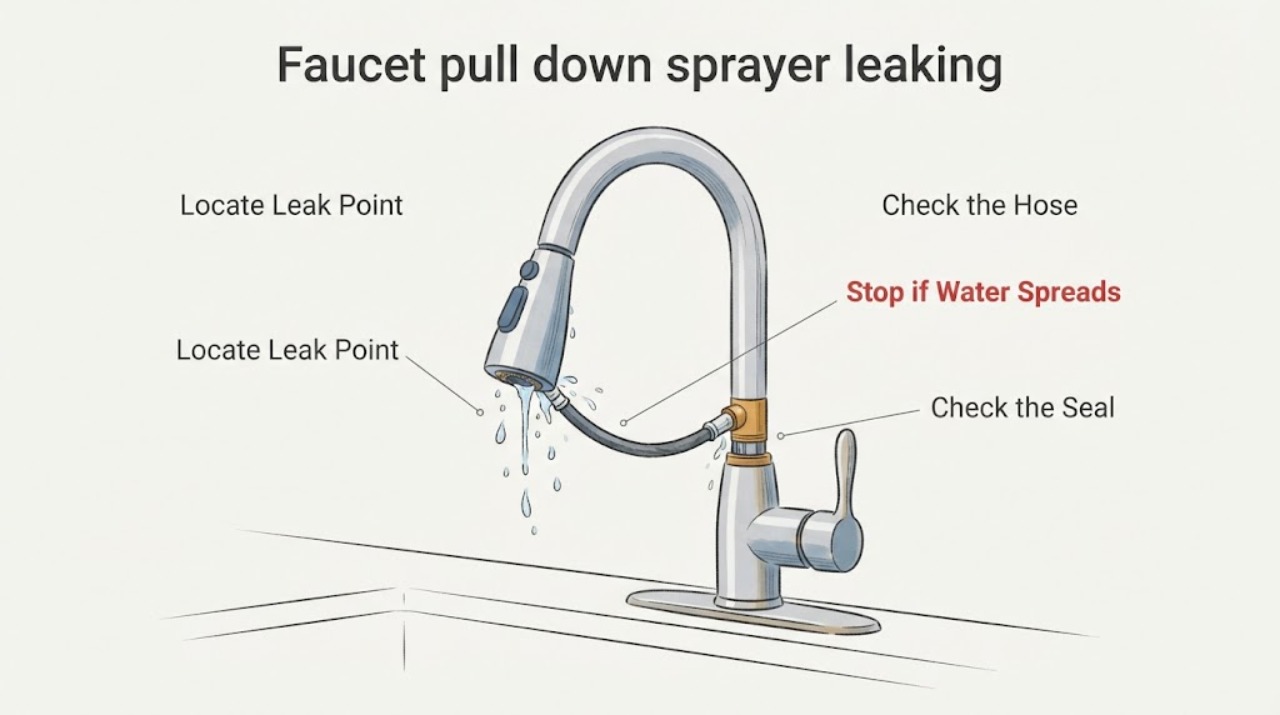
Delta faucet pull down sprayer leaking: What to Check and What to Do Next
A Delta pull-down sprayer leak must be located before choosing a repair. A few drops from the long hose just after shutoff can be residual water, but water from the spray head while the faucet is on, the wand-to-hose joint, the hose under the sink, or a clip and fitting is a real leak.
-
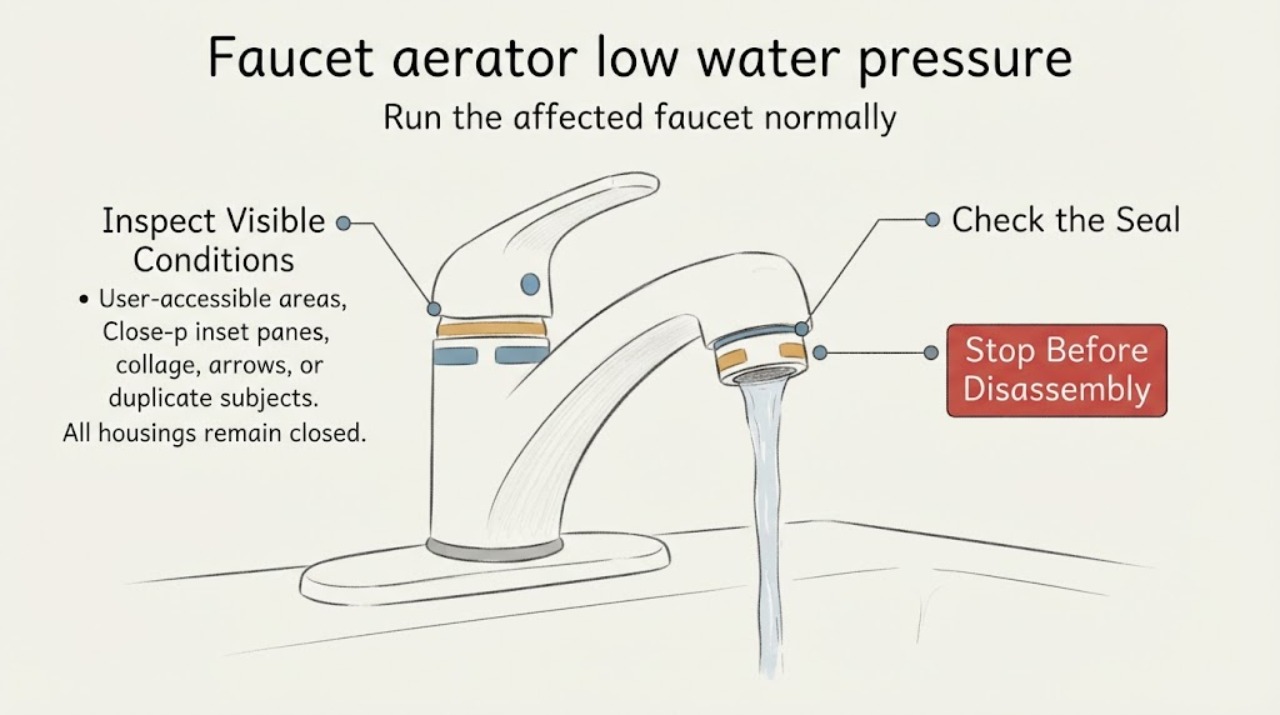
Faucet aerator low water pressure: What to Check and What to Do Next
When one faucet has weak flow, the aerator is a sensible first suspect because scale or debris can restrict its screen. Compare hot and cold flow and another nearby fixture before assuming the whole home has low pressure.
-
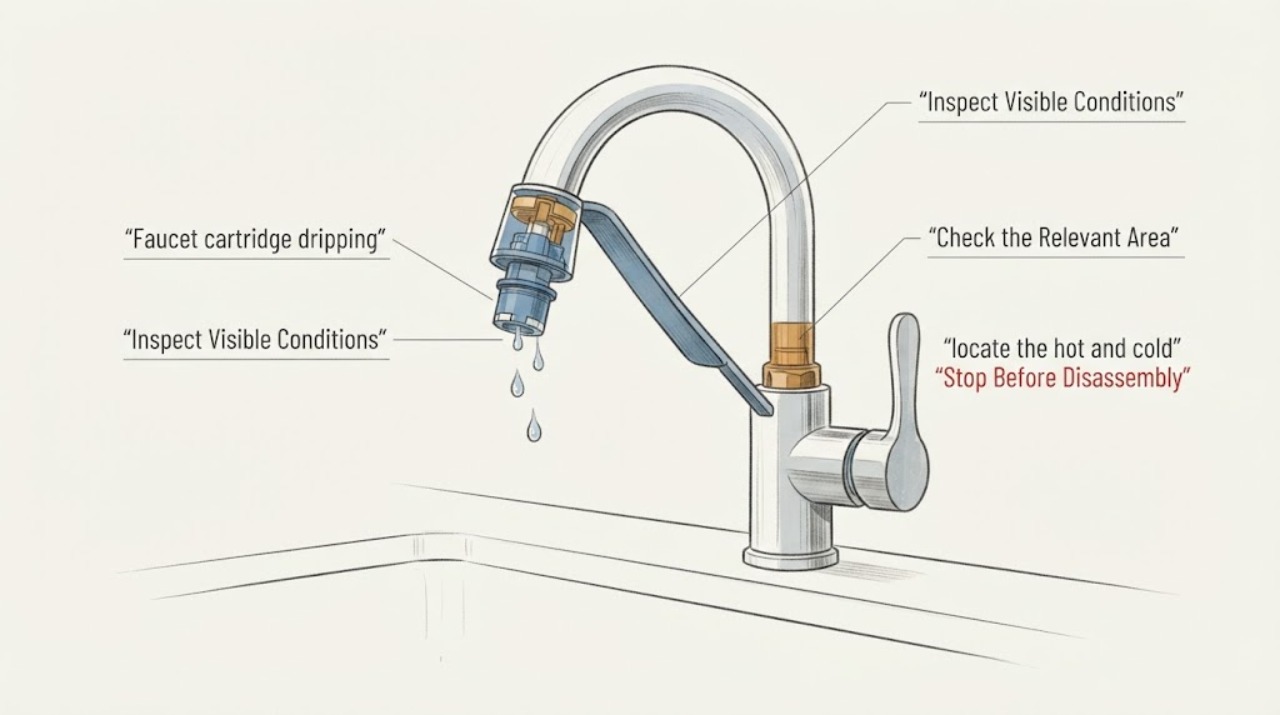
Faucet cartridge dripping: What to Check and What to Do Next
A faucet that drips after the handle is off often has a worn or damaged cartridge, seal, or related valve component, but the exact part depends on the faucet model and where the water appears. First identify whether the drip is from the spout, handle, base, or supply connection.
-
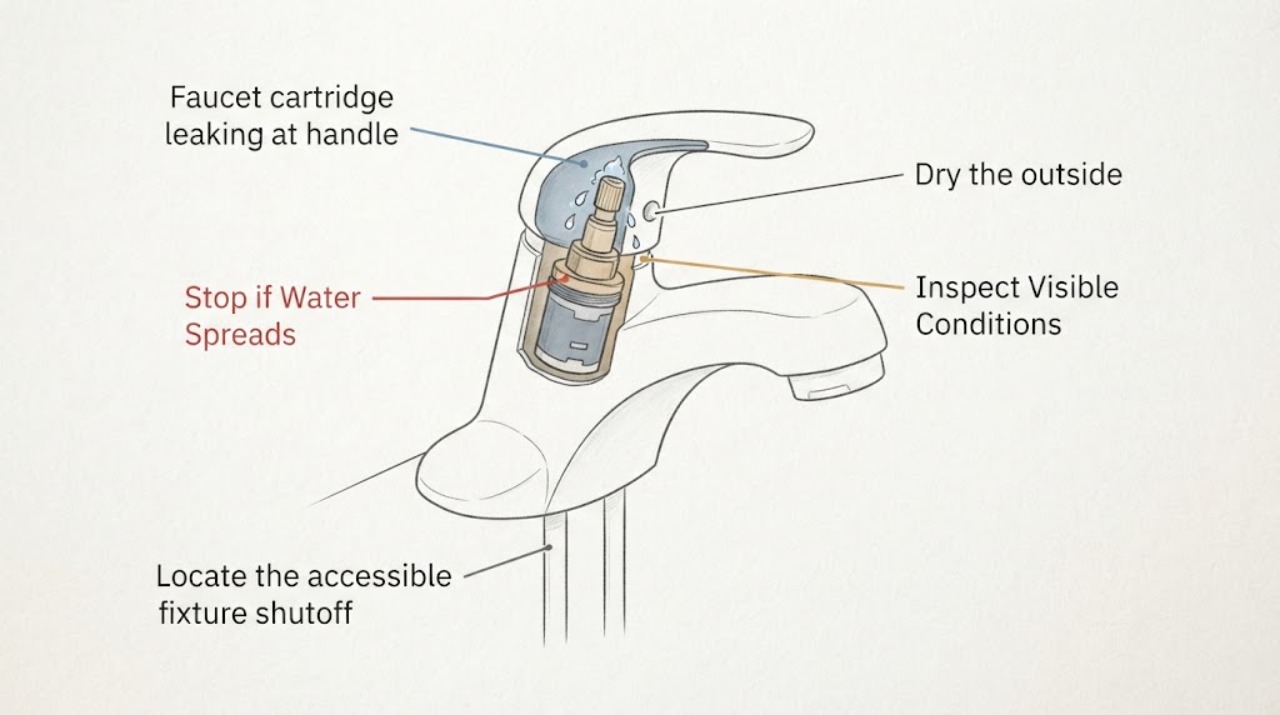
Faucet cartridge leaking at handle: What to Check and What to Do Next
First identify whether water is truly coming from beneath the handle, the faucet base, the spout, or a supply connection, and whether it happens only while the faucet runs or continues when it is off. A handle-area leak is commonly associated with the valve or cartridge, but the exact cartridge and seals depend on the faucet model.
-
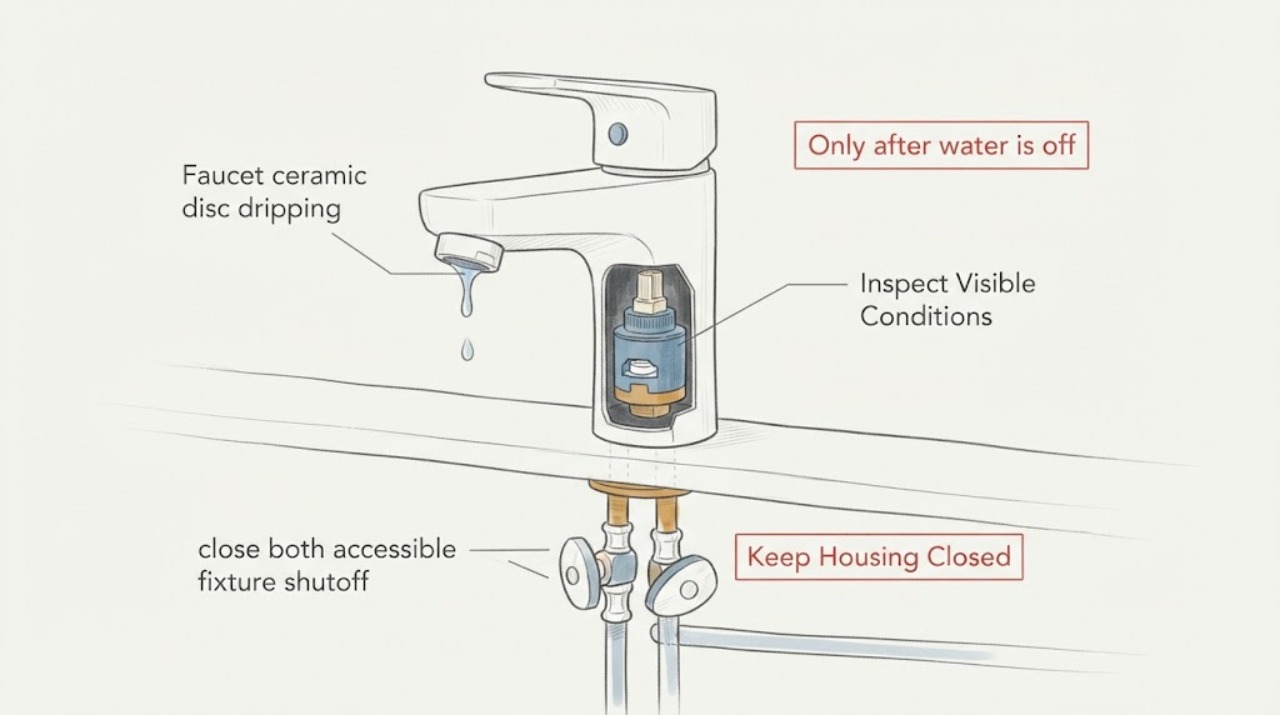
Faucet ceramic disc dripping: What to Check and What to Do Next
A ceramic-disc faucet that drips continuously after the handle is closed usually needs its cartridge, ceramic valve, seals, or valve seat assessed; a drip that stops soon after shutoff may instead be residual water or debris at the outlet. Identify where and when water appears first.
-
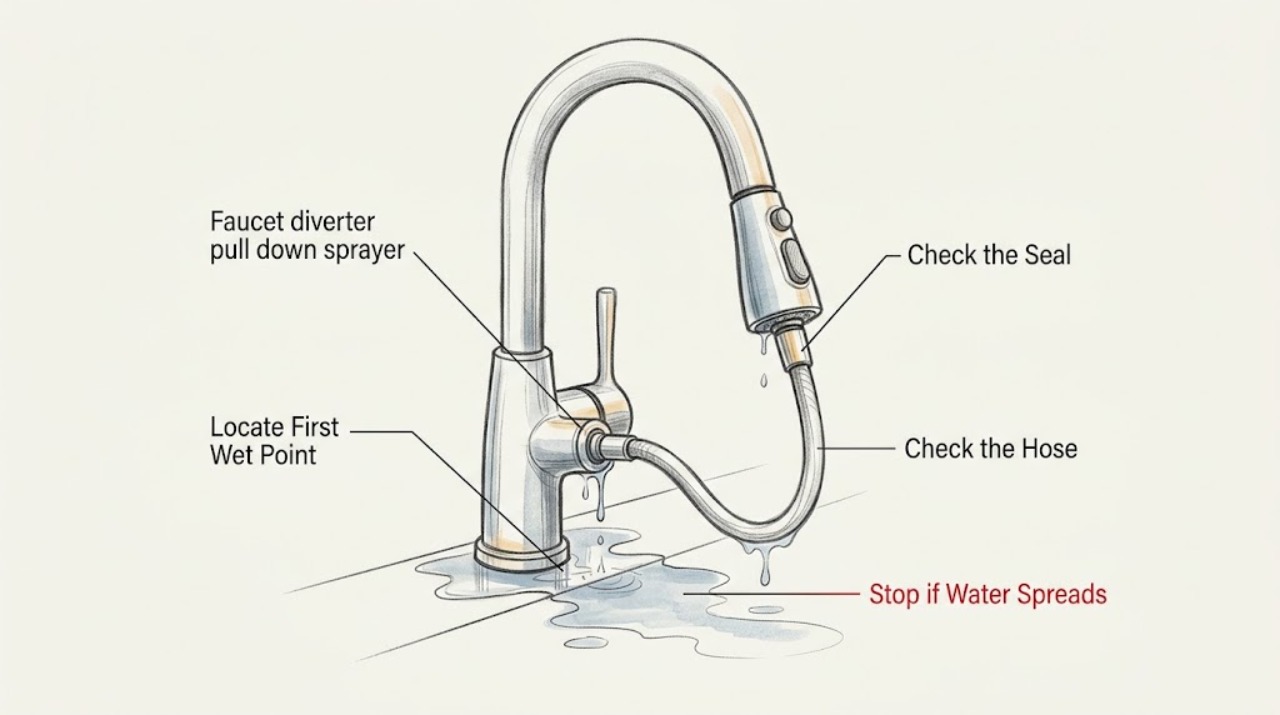
Faucet diverter pull down sprayer leaking: What to Check and What to Do Next
A pull-down sprayer leak is usually narrowed down by where the first drop appears: the sprayhead-to-hose joint, the flexible hose under the sink, the hose's diverter quick-connect, or the faucet body. Dry the visible parts, shut off the faucet supplies before loosening anything, and use a brief controlled test only to locate the leak.
-
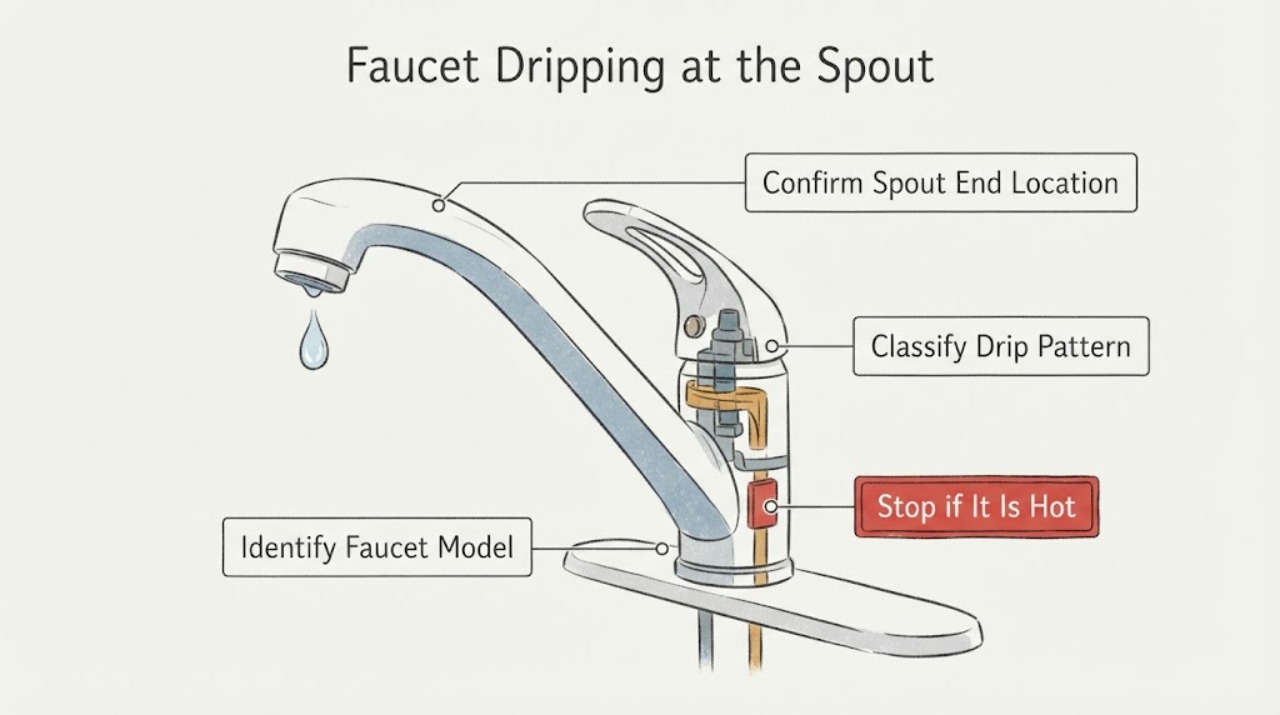
Faucet Dripping at the Spout: What to Check and What to Do Next
First confirm that water is coming from the end of the faucet spout after the handle is off, rather than from the spout base, handle, supply connection, or below the sink. A continuous end-of-spout drip commonly points to a cartridge, valve, stem, or sealing problem; single-handle and two-handle faucets use different service parts, and the exact model must be identified before ordering anything.
-
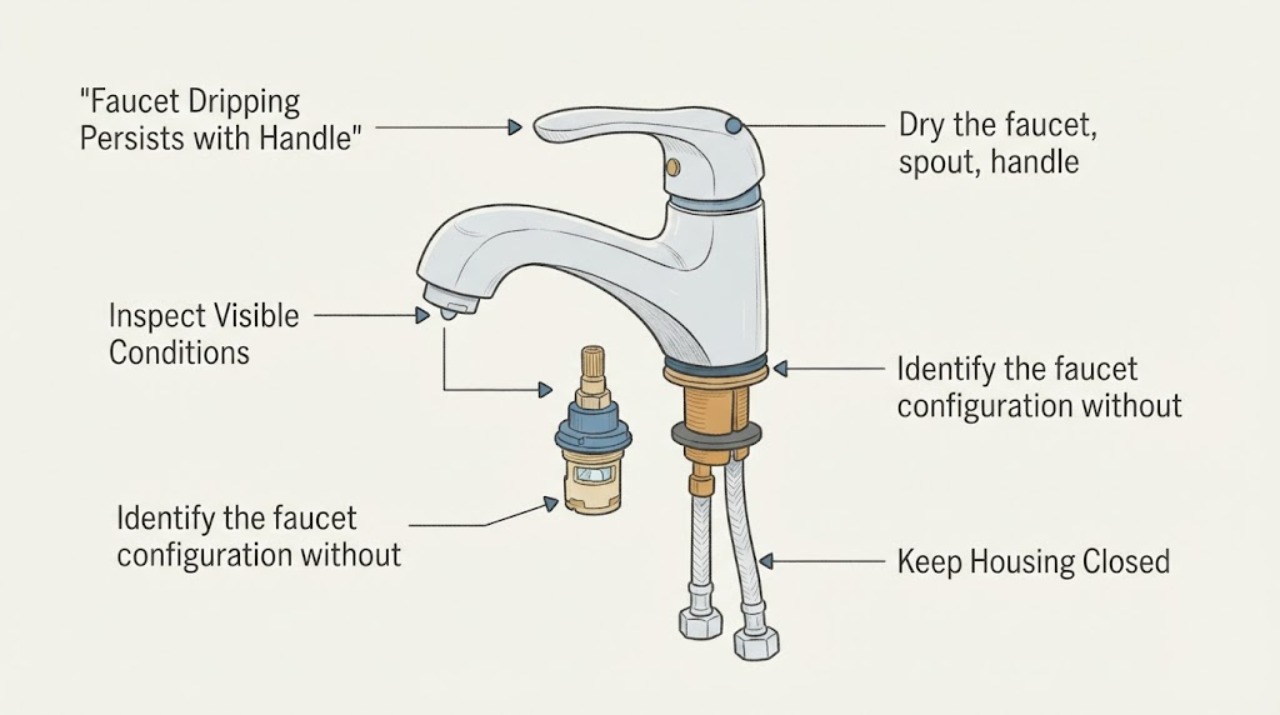
Faucet Dripping Persists with Handle Closed: What to Check and What to Do Next
A faucet that continues dripping with its handle closed usually has a shutoff problem in the cartridge, stem, washer, or seat, but a drip from the base, handle, hose, or supply connection is a different leak path. First dry the faucet and identify where water starts, then determine whether a high-arc spout is only releasing residual water for a short period or is being continuously supplied.
-
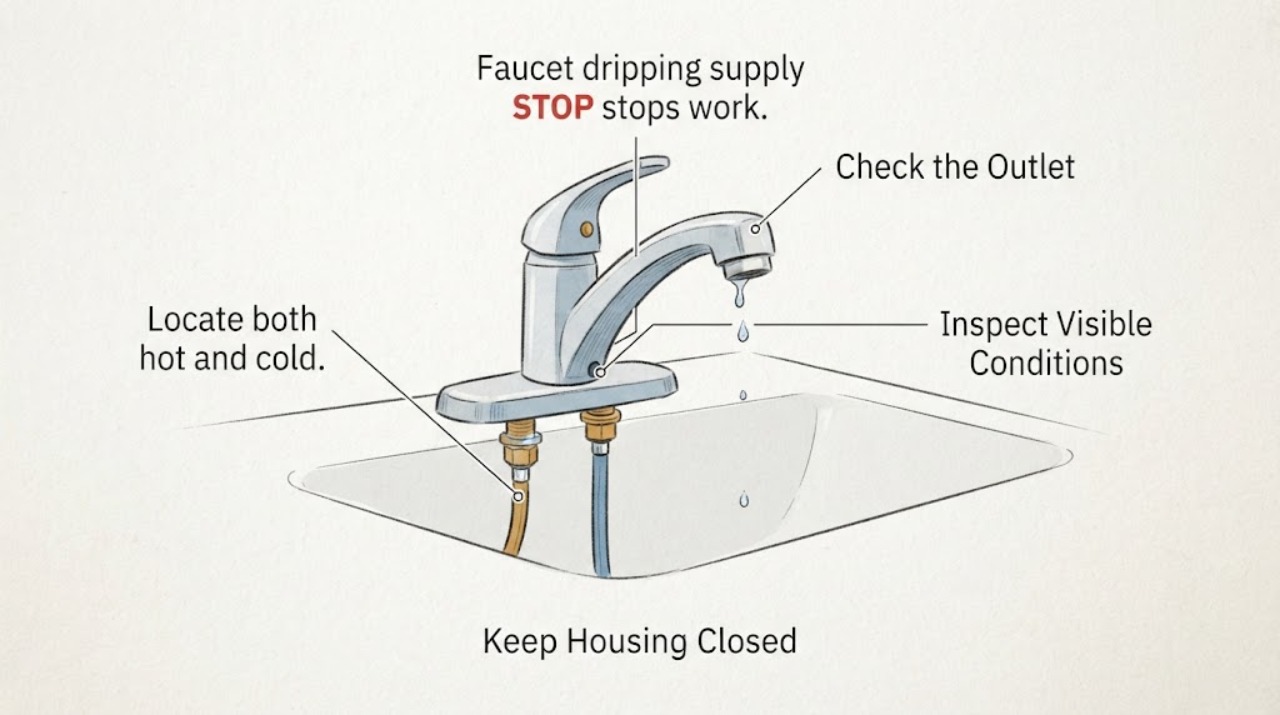
Faucet dripping supply stops work: What to Check and What to Do Next
If a faucet drips while the handle is off and the hot and cold supply stops work, close both stops gently, open the faucet to release residual pressure, and confirm that water has actually stopped before considering any disassembly. A drip from the spout usually points to a worn cartridge, stem, seat, or seal; moisture under the sink or at a supply connection points to a hose, fitting, or stop-valve leak instead.
-
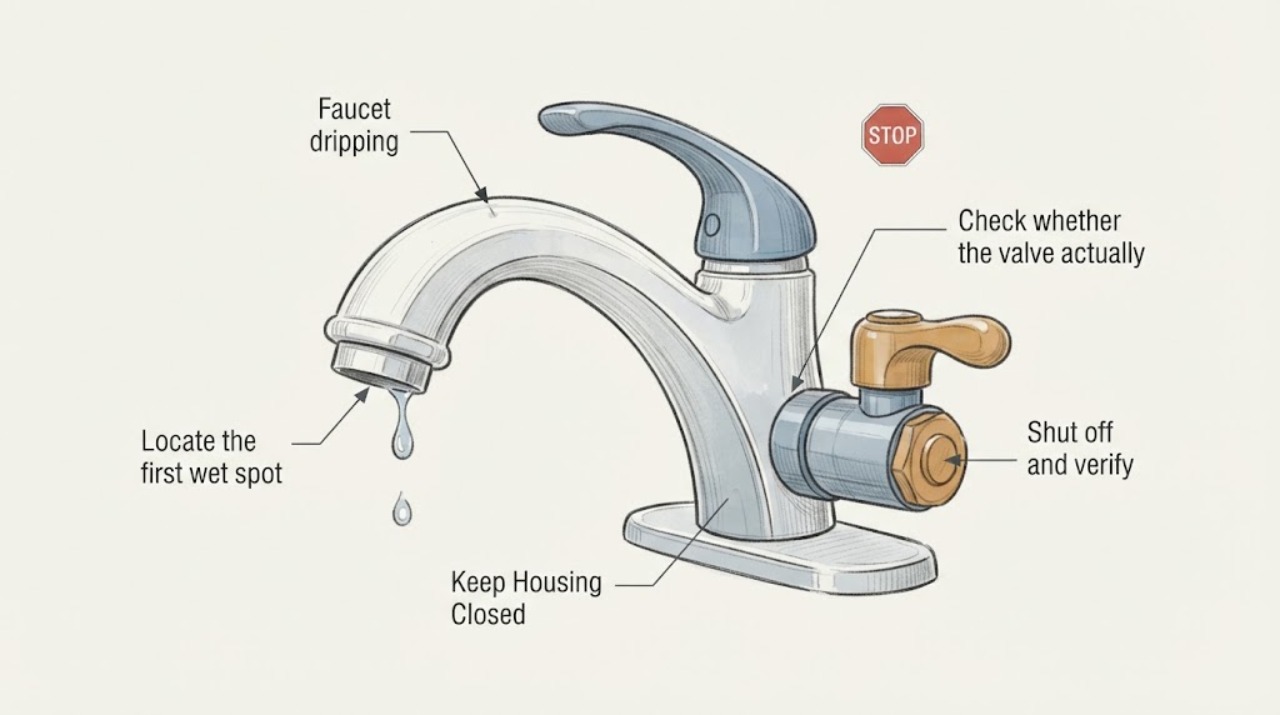
Faucet dripping: What to Check and What to Do Next
First identify where the water appears and whether the faucet still drips after its handle is fully closed. A drip from the spout usually points to a worn cartridge, stem, washer, or seat; water around the handle or base can instead point to an O-ring, retaining seal, or loose connection.
-
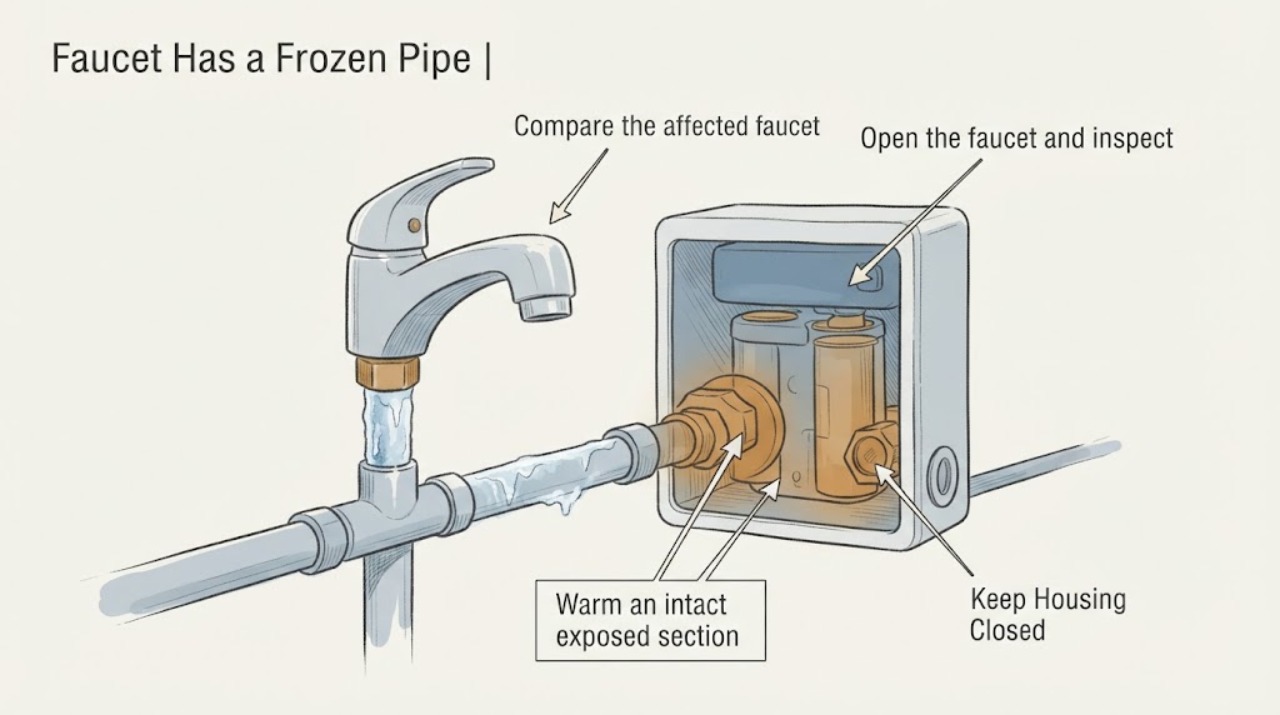
Faucet Has a Frozen Pipe: Safe Checks Before Calling a Plumber
If one faucet has no water or only a trickle during freezing weather, a nearby supply pipe may be frozen; if every faucet is affected, check for a main-supply or meter problem instead. Open the affected faucet so meltwater and pressure have a path out, locate only an exposed and dry section, and warm the surrounding area gradually with room heat or a hair dryer on a low or warm setting while staying present.
-
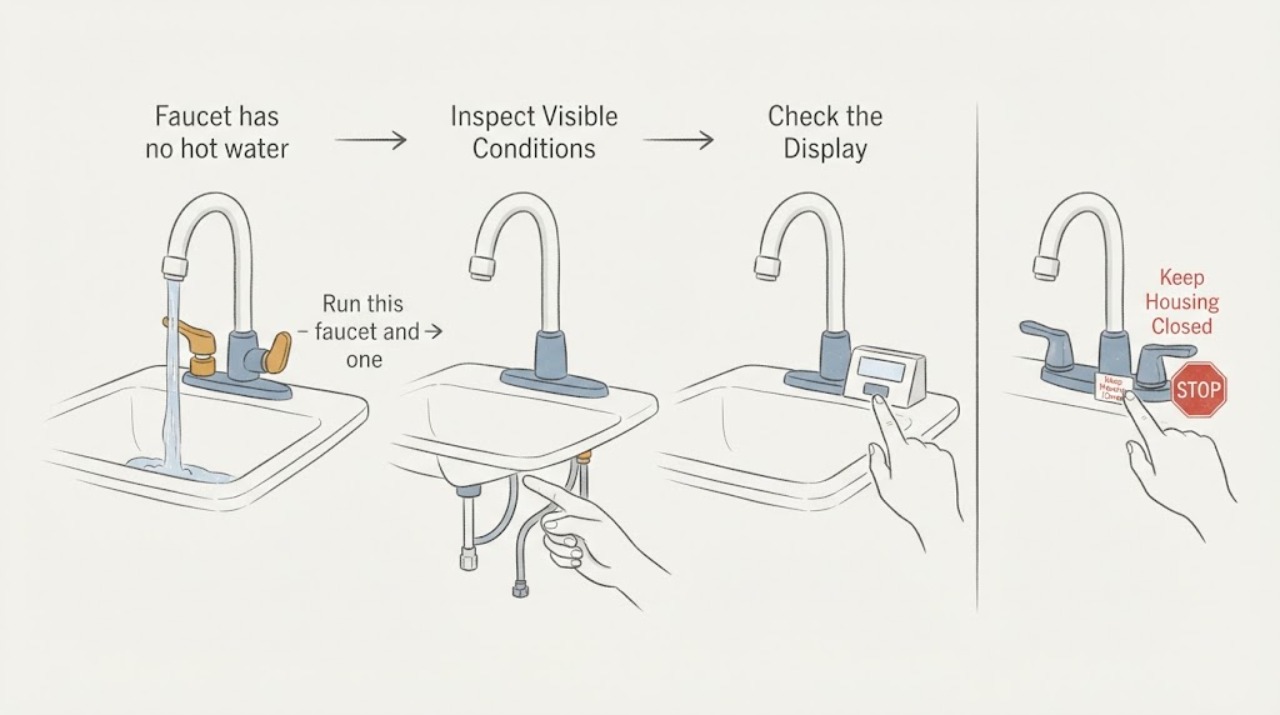
Faucet has no hot water cold flows: What to Check and What to Do Next
First compare this faucet with another fixture that normally supplies hot water. If other fixtures have hot water and cold water is strong at this faucet, the problem is probably local: a closed or restricted hot-side stop, a kinked hot supply line, or a faucet cartridge or mixing assembly that is not admitting hot water.
-
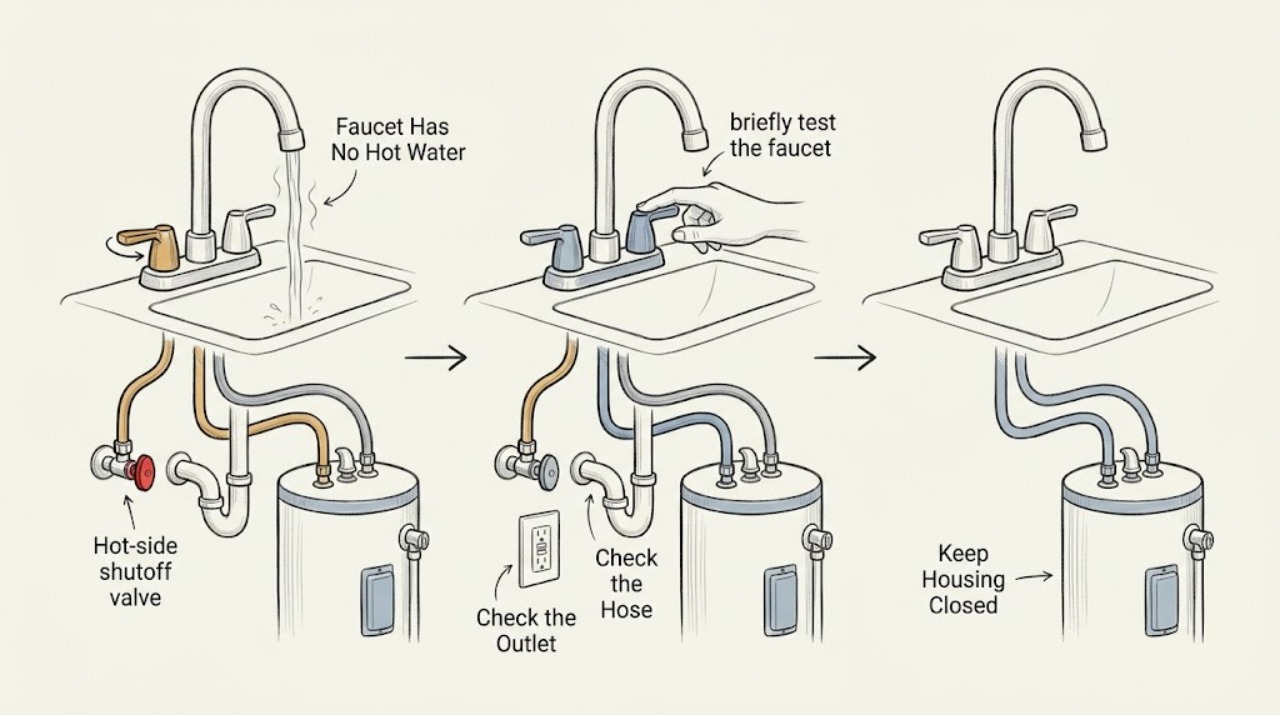
Faucet Has No Hot Water Handle Is Open: What to Check and What to Do Next
First determine whether the faucet has normal cold flow but no hot flow, or whether water flows from the hot handle but stays cold. Check the hot-water temperature at another nearby fixture, then visually confirm that the accessible hot-side shutoff under the sink is open and that the supply hose is not kinked; do not force a valve or dismantle the faucet.
-
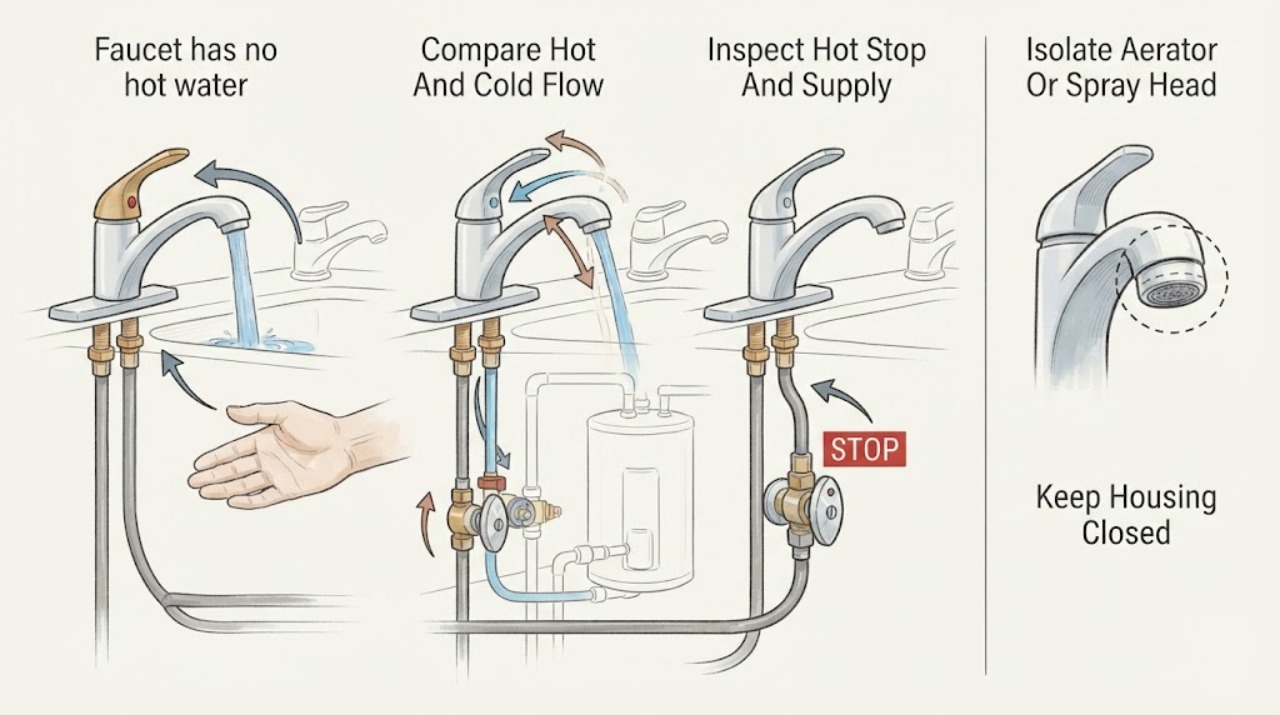
Faucet has no hot water while other fixtures may have hot water: What to Check and What to Do Next
If other fixtures deliver hot water but one faucet does not, the water heater is less likely to be the immediate fault. First distinguish no hot-water flow from water that flows but stays cold: a closed or restricted hot stop valve, kinked supply line, debris in the inlet or cartridge, a clogged spray head or aerator, or a faucet mixing or balancing valve can affect one outlet.
-
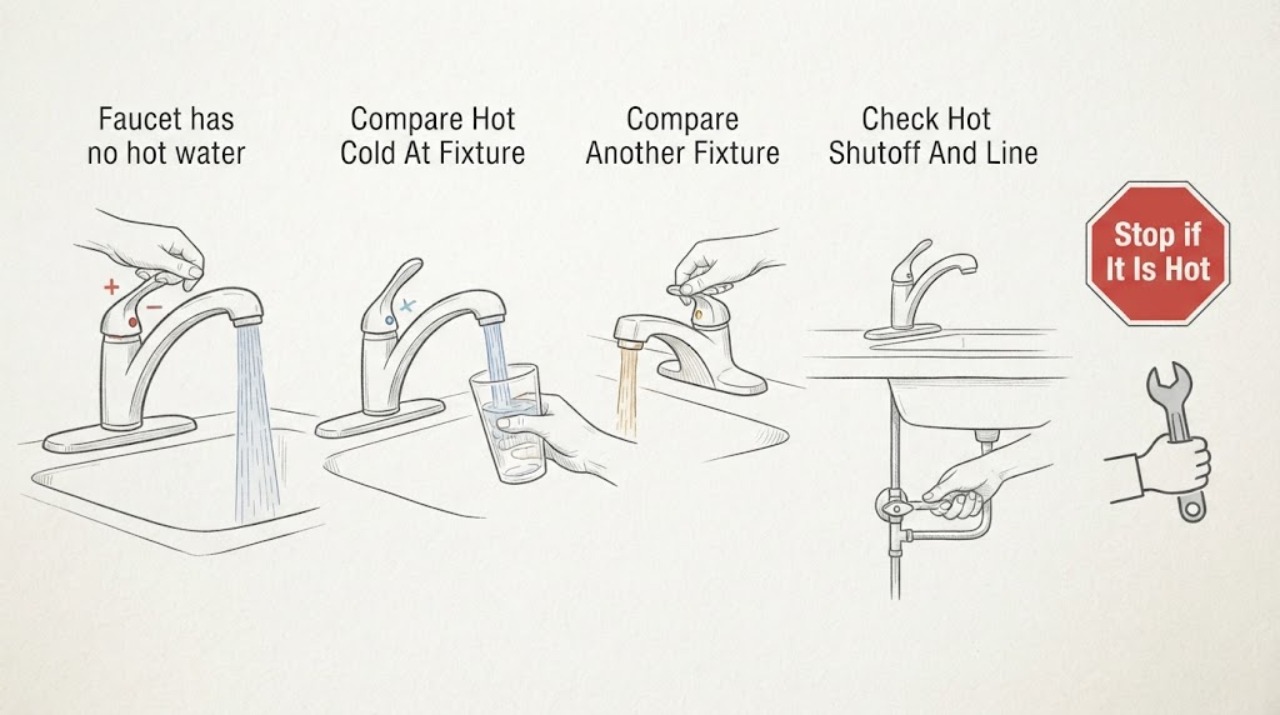
Faucet has no hot water: isolate the fixture or the hot-water system
Compare the same faucet's hot and cold flow, then compare another faucet before assuming the faucet itself has failed.
-
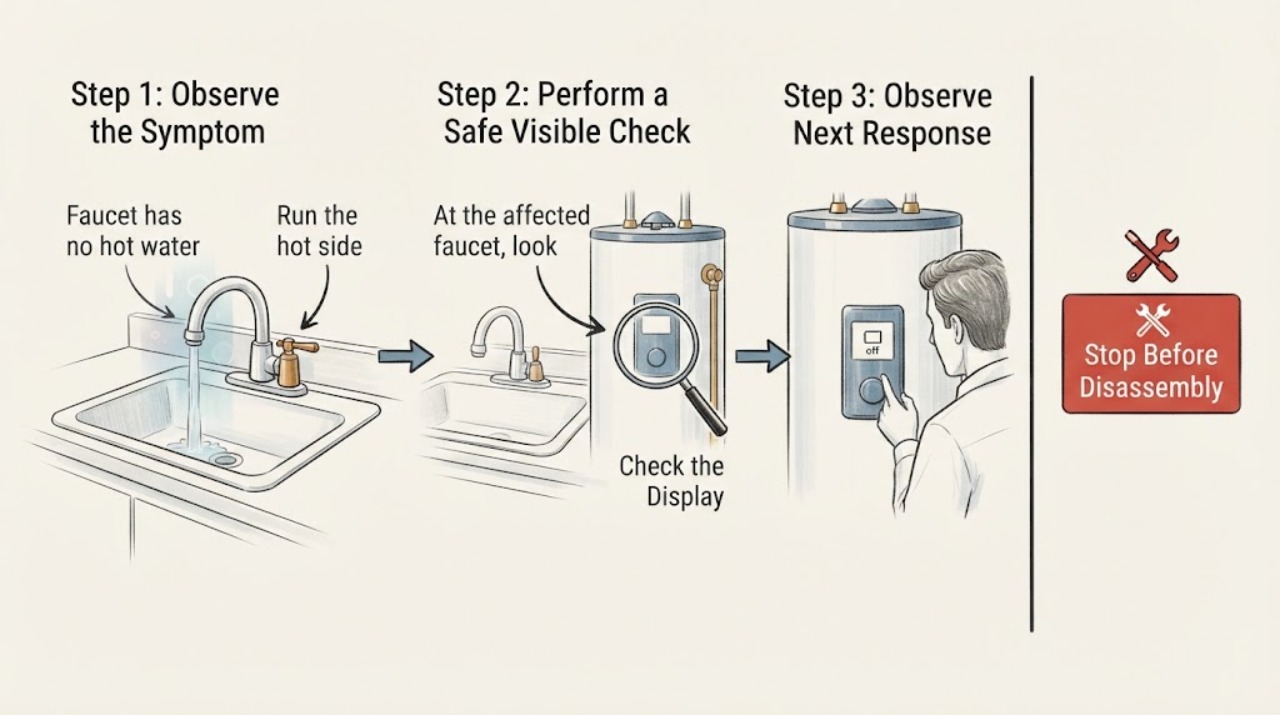
Faucet has no hot water: tell whether the tank or faucet is at fault
First compare this faucet with another hot-water outlet. If other outlets are hot, the fault is local to this faucet, its cartridge, or its hot-water supply path.
-
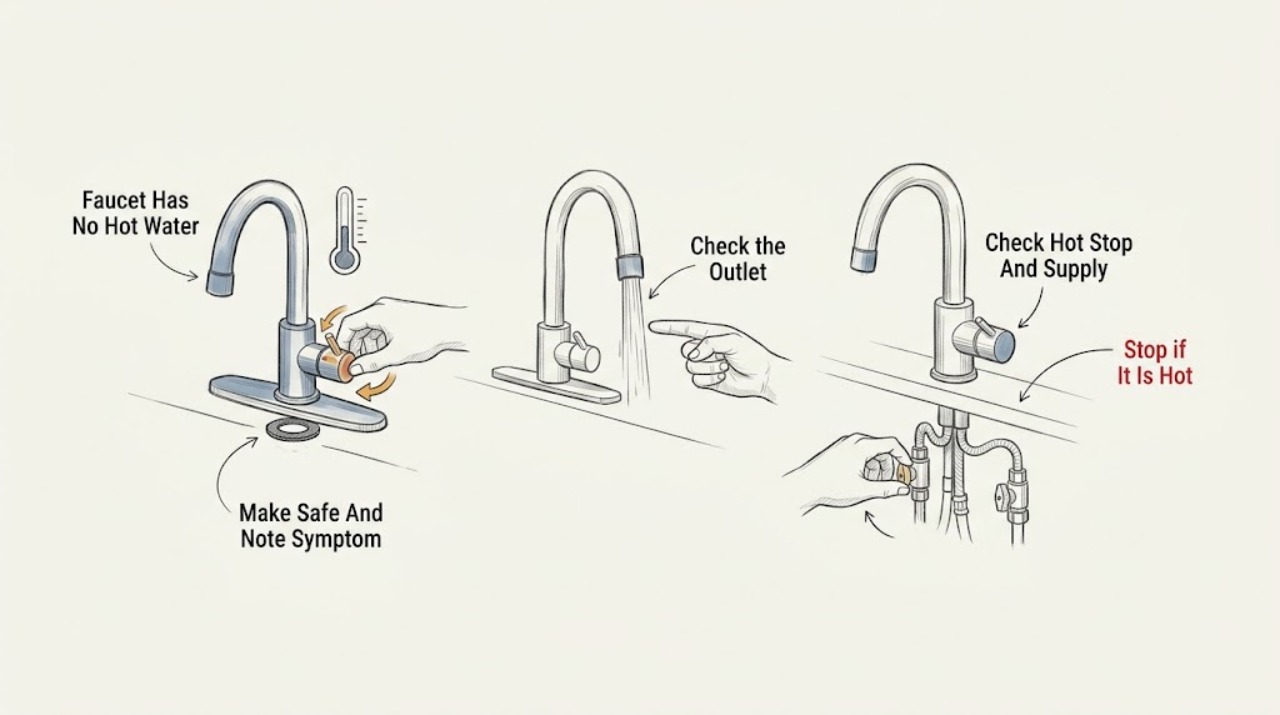
Faucet Has No Hot Water: Trace the Hot-Side Supply Before Replacing a Gasket
First determine whether the problem affects one faucet or every hot-water outlet. If cold water flows normally at this faucet but hot water does not, compare another faucet, check that the hot-side stop valve is open, and inspect the accessible hot supply hose for a kink, leak, or compression.
-
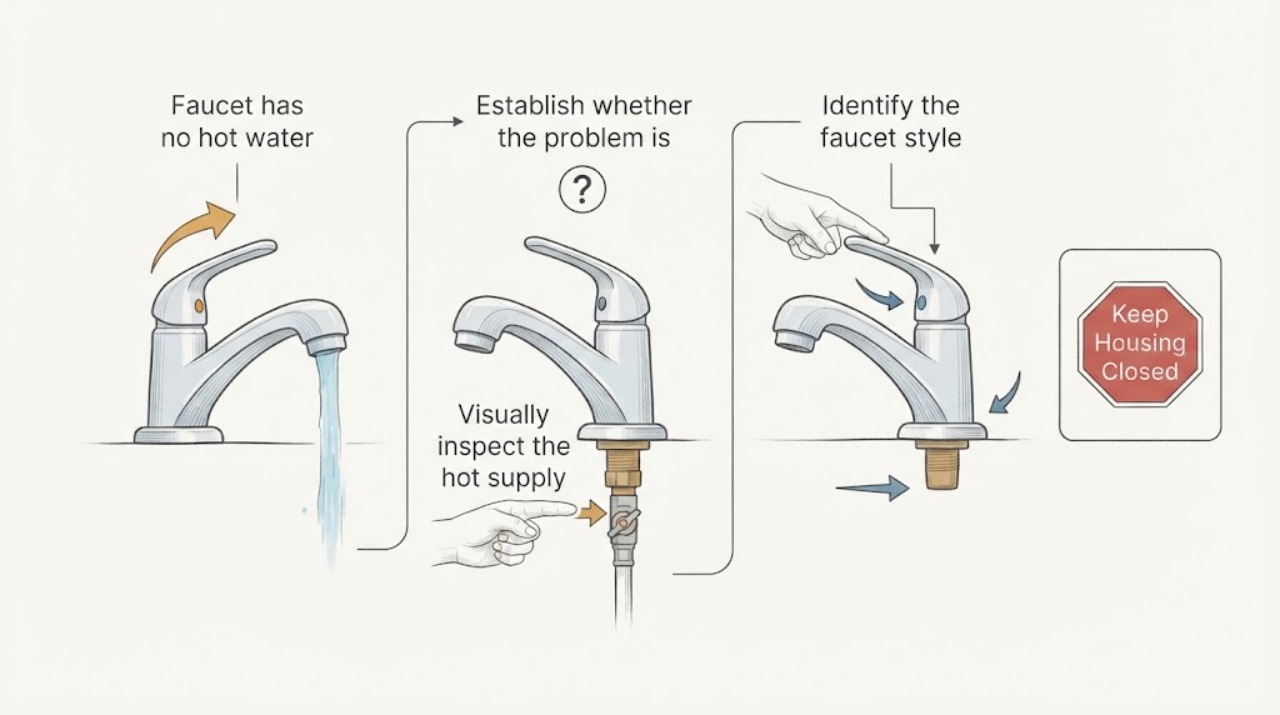
Faucet has no hot water: What to Check and What to Do Next
If one faucet has no hot water while other fixtures do, the water heater is probably not the first place to look. Compare this faucet with a nearby hot tap, then visually check the hot shutoff, the exposed hot supply hose, and the faucet's flow pattern without loosening fittings or opening the valve.
-
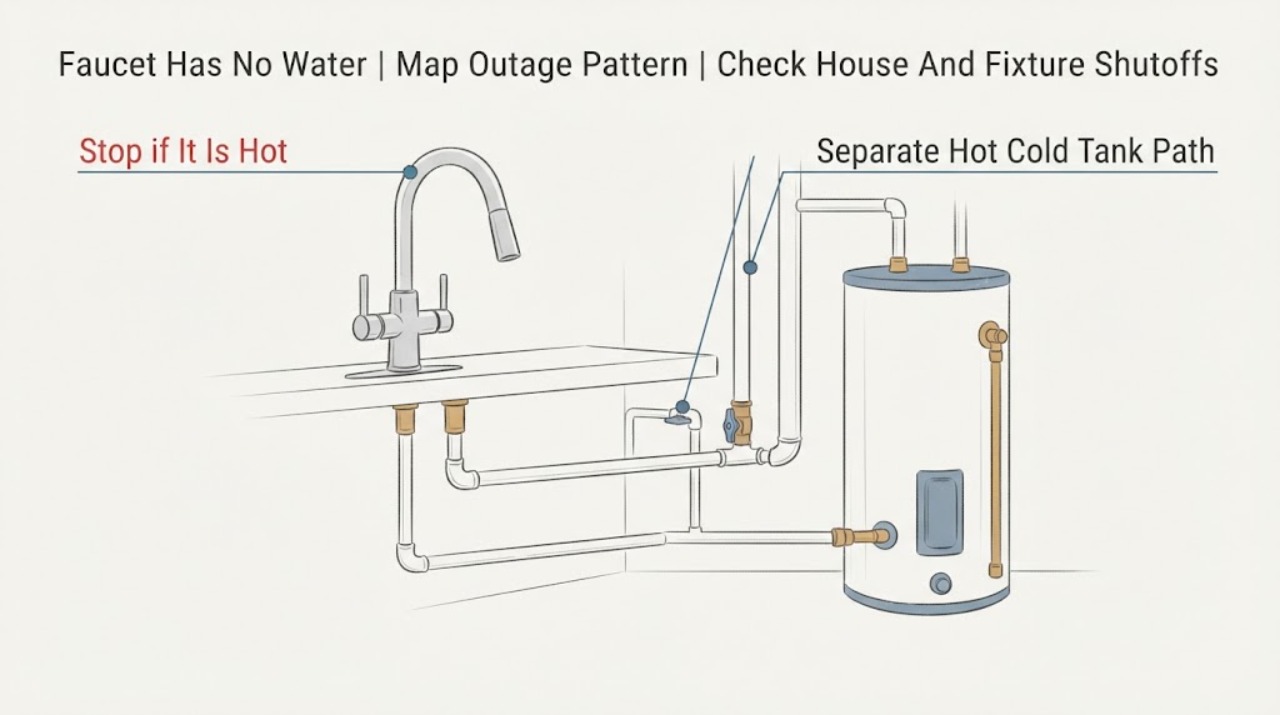
Faucet Has No Water: Check the Tank Supply Without Guessing
When a faucet has no water, do not assume the tank is the cause. First compare this faucet with another fixture and compare hot with cold.
-
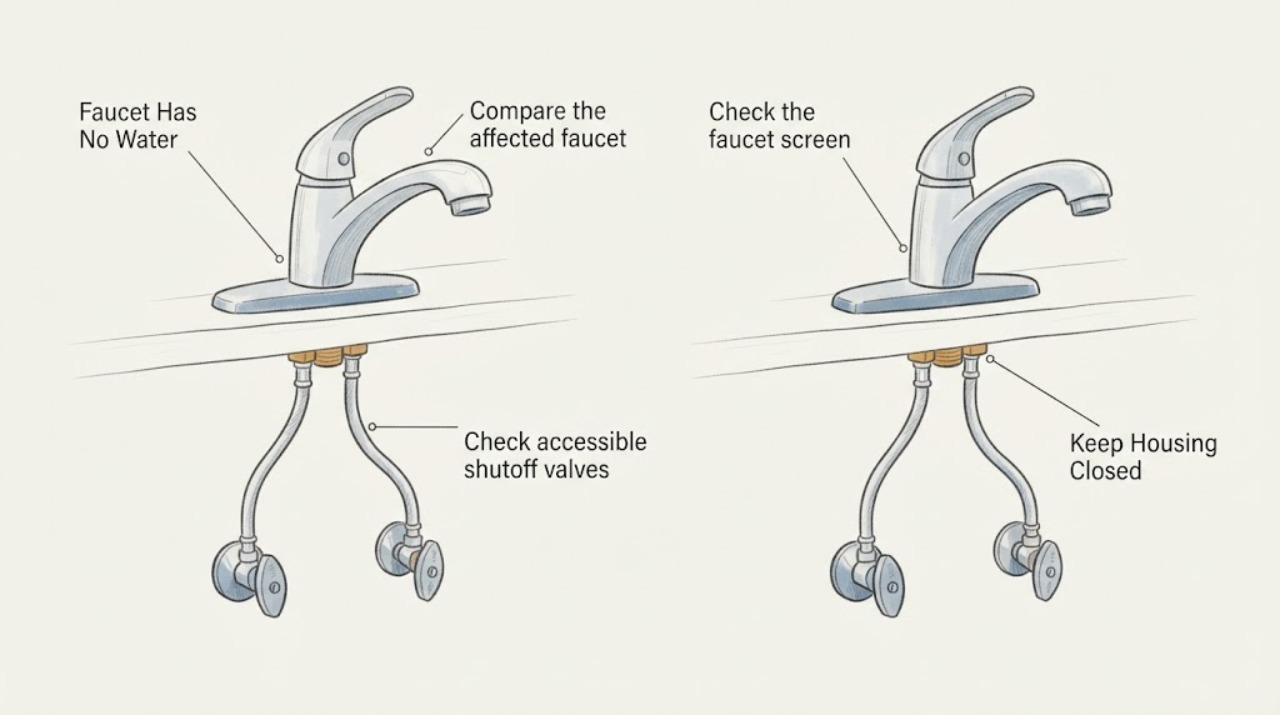
Faucet Has No Water: Safe Checks to Find the Supply Problem
Start by comparing the affected faucet with other fixtures and with both hot and cold handles. If only one faucet is dry, inspect its accessible shutoff valves, aerator, and visible supply path; if every faucet is dry, check the home's main valve, a utility or building shutoff, and whether neighbors are also affected.
-
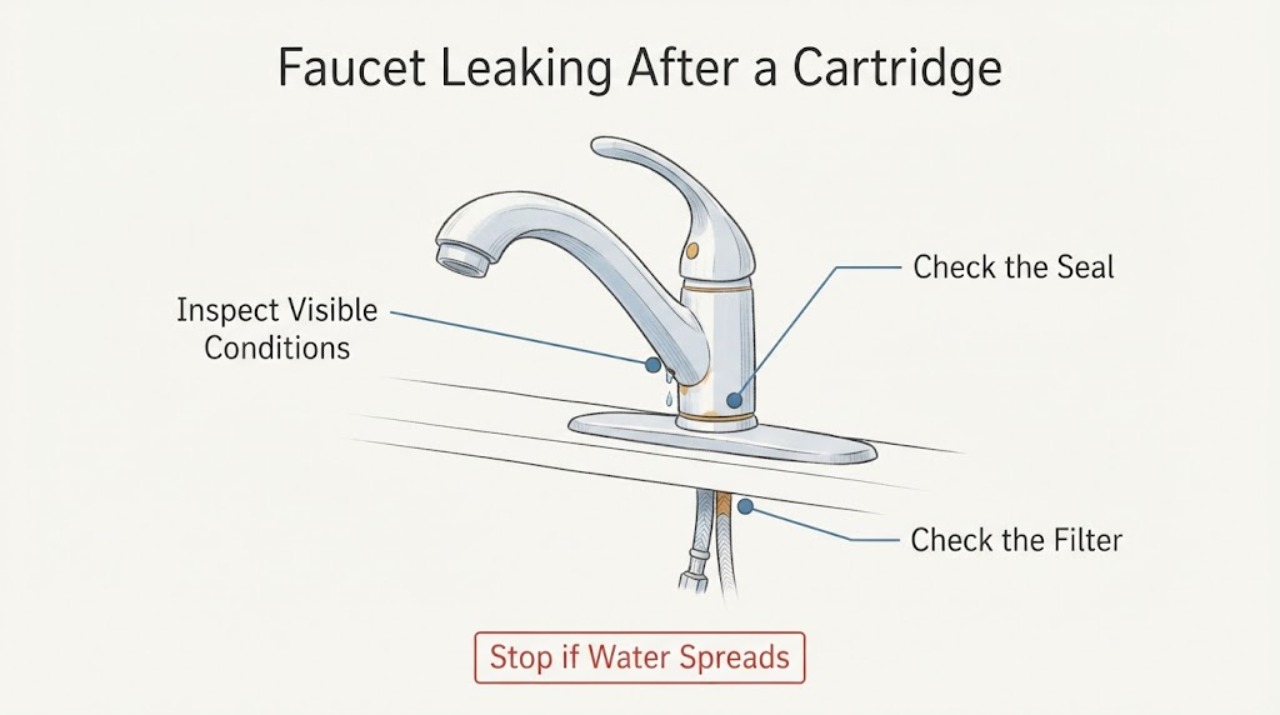
Faucet Leaking After a Cartridge Change: Find the First Wet Point
First turn off the affected hot and cold supplies from clearly identified, dry-to-reach valves, dry the faucet and cabinet, and find the first wet point during one short, supervised observation. A leak only while the faucet is open can be an incorrectly seated cartridge seal, retainer, aerator, spout O-ring, or connection; a drip that continues with the handle closed points toward a valve, cartridge, housing, supply, or pressurized connection.
-
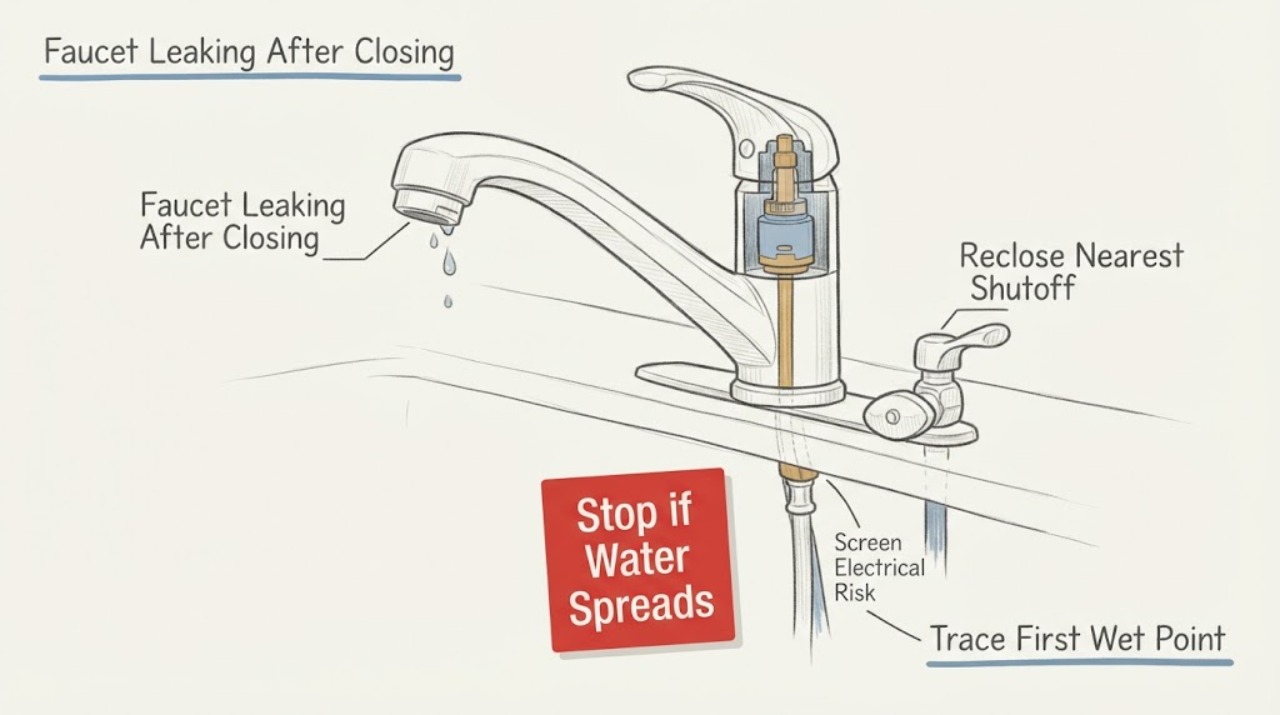
Faucet Leaking After Closing and Opening the Shutoff: Find the First Wet Point
If a faucet starts leaking after its shutoff was closed and reopened, first close the nearest shutoff again without forcing it and identify the first wet point. A leak at the shutoff stem, valve body, or threaded connection is different from a leak at the supply hose, faucet base, handle, or spout.
-
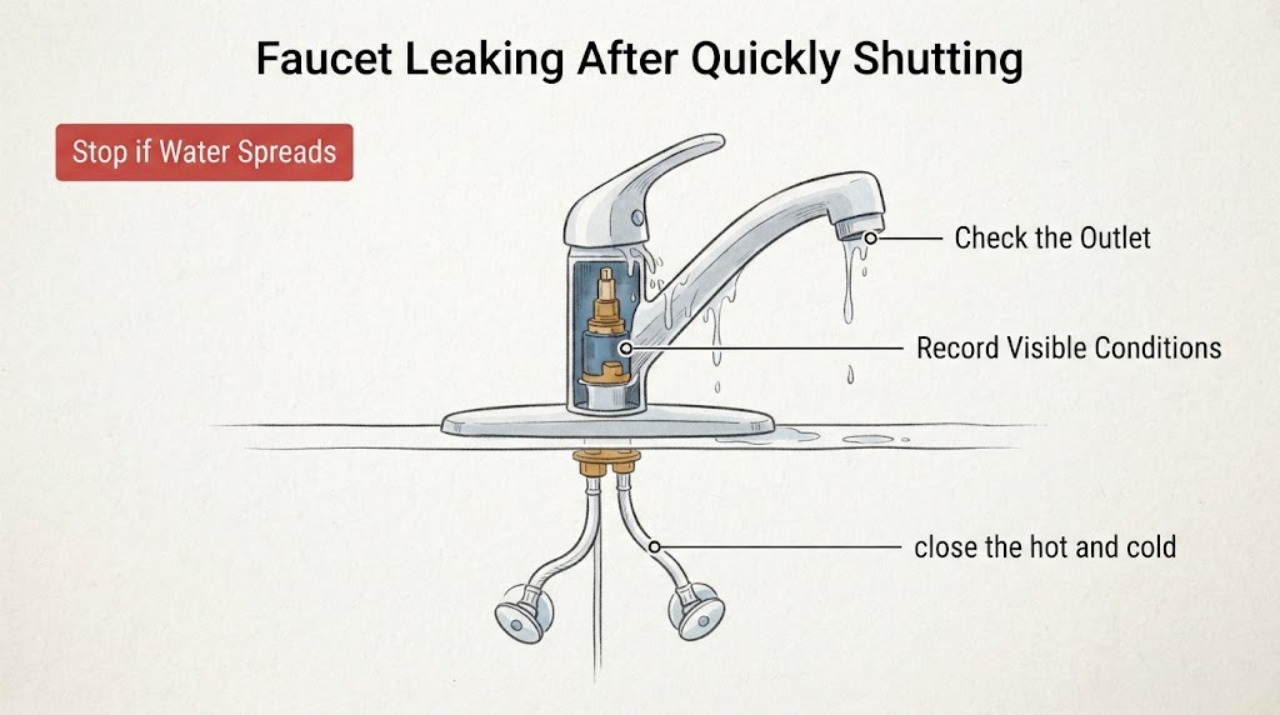
Faucet Leaking After Quickly Shutting Hot Water at the Kitchen Faucet
Quickly closing the hot side of a kitchen faucet can produce a short water-hammer bang without causing a leak, so first separate sound from actual wetness. If water remains at the spout, handle, base, or a supply connection, close the local water valve under the sink from a dry position; use the main valve if the local valves fail.
-
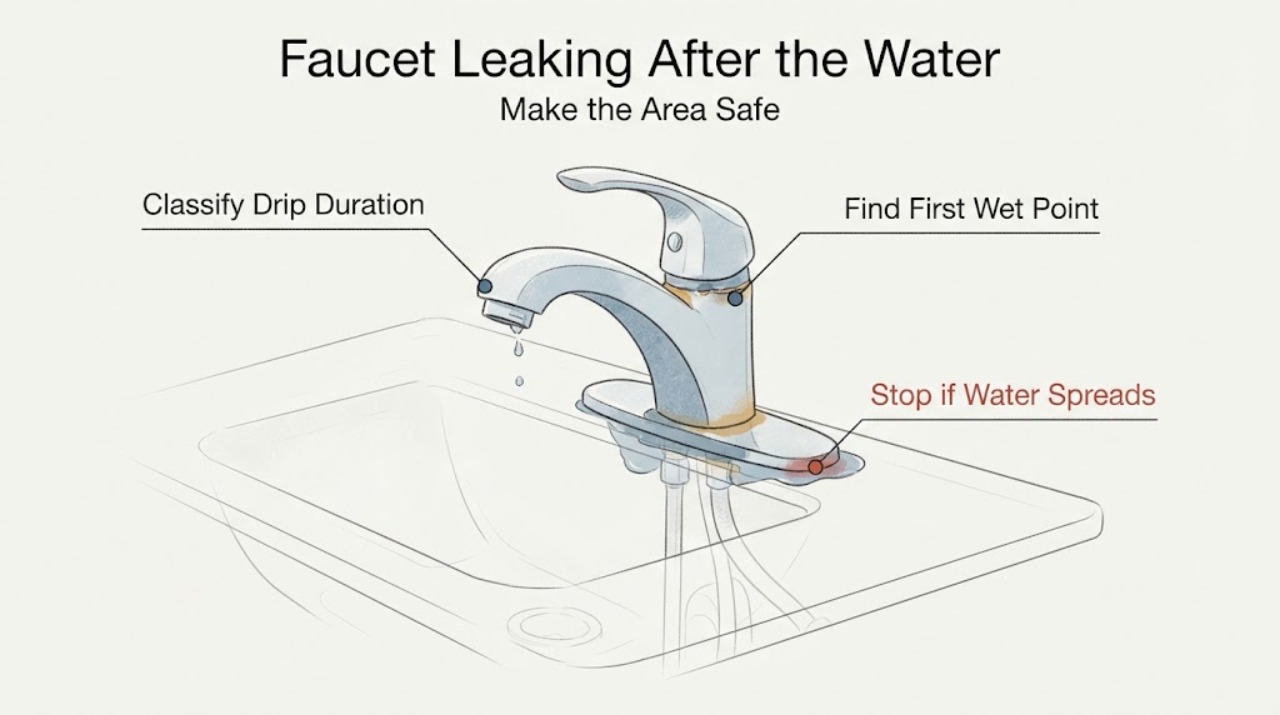
Faucet Leaking After the Water Is Shut Off: Find the First Wet Point
A few drops immediately after a faucet is closed can be residual water in the spout or outlet, but a drip that continues, restarts, or appears at the handle, base, supply connection, wall, or cabinet needs a leak check. Keep the condition exactly as reported—after water flow is terminated e—and first determine whether water is still being supplied or is only draining from the fixture.
-
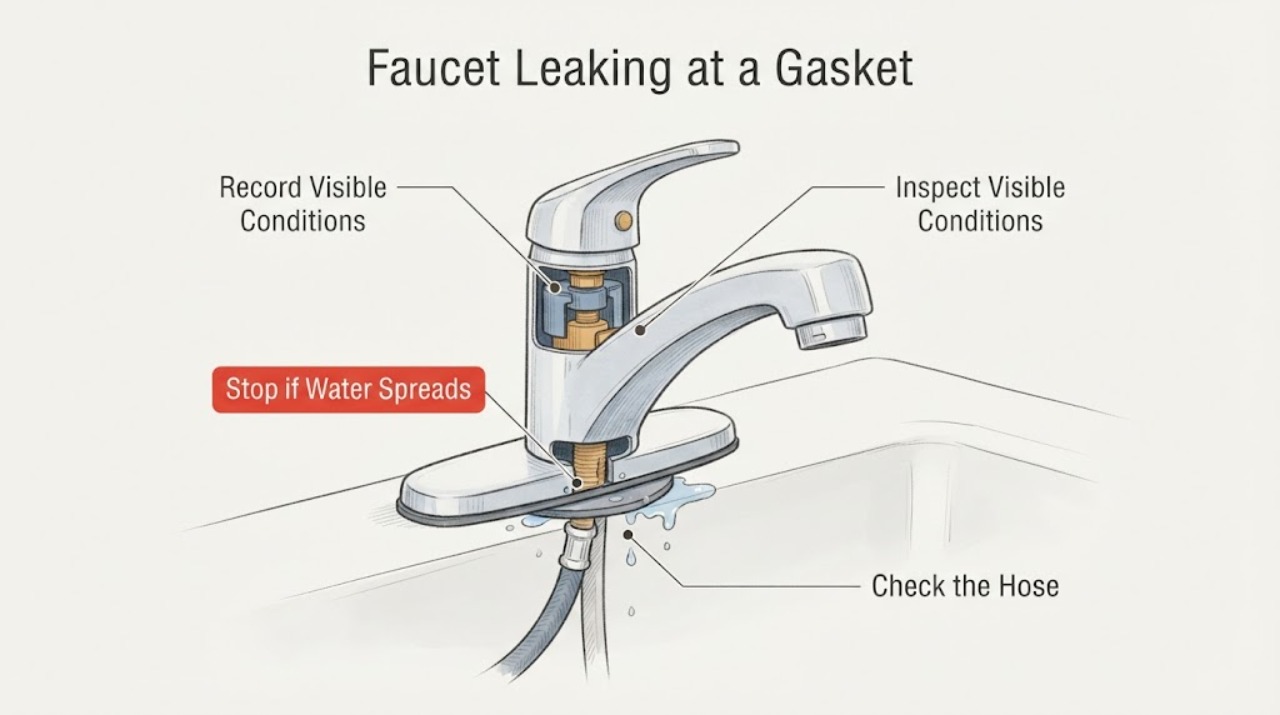
Faucet Leaking at a Gasket: Find the First Wet Point Before Replacing Parts
A faucet gasket may be worn, displaced, contaminated by scale, or not sealing because the leak is actually coming from the cartridge, stem, hose, supply connection, aerator, or the faucet base. First close the fixture's water supplies and identify the first wet point: spout, handle or stem, base or deck, supply connection, or filter or aerator.
-
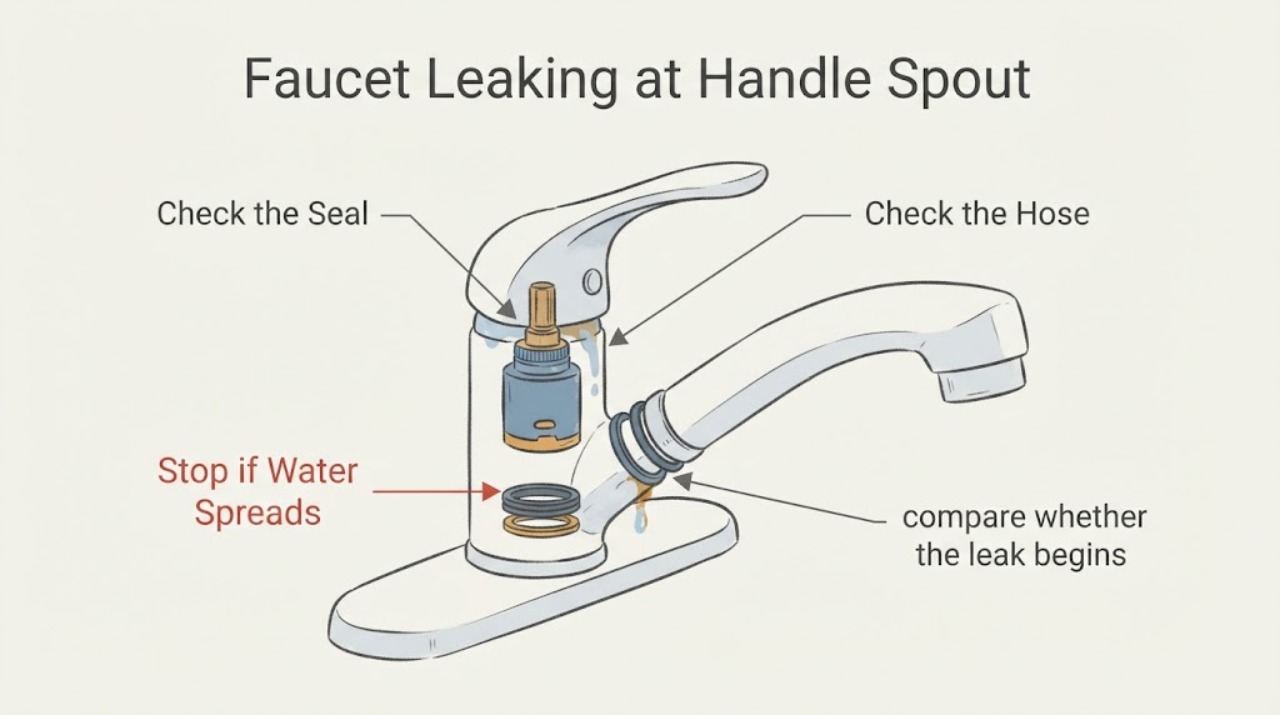
Faucet Leaking at Handle Spout May Be Dry: What to Check and What to Do Next
A faucet can leak around or under its handle while the spout stays dry. First identify whether the water appears only while the faucet is running or continues after the handle is off, and whether it starts at the handle, spout-to-body joint, or underneath the counter.
-
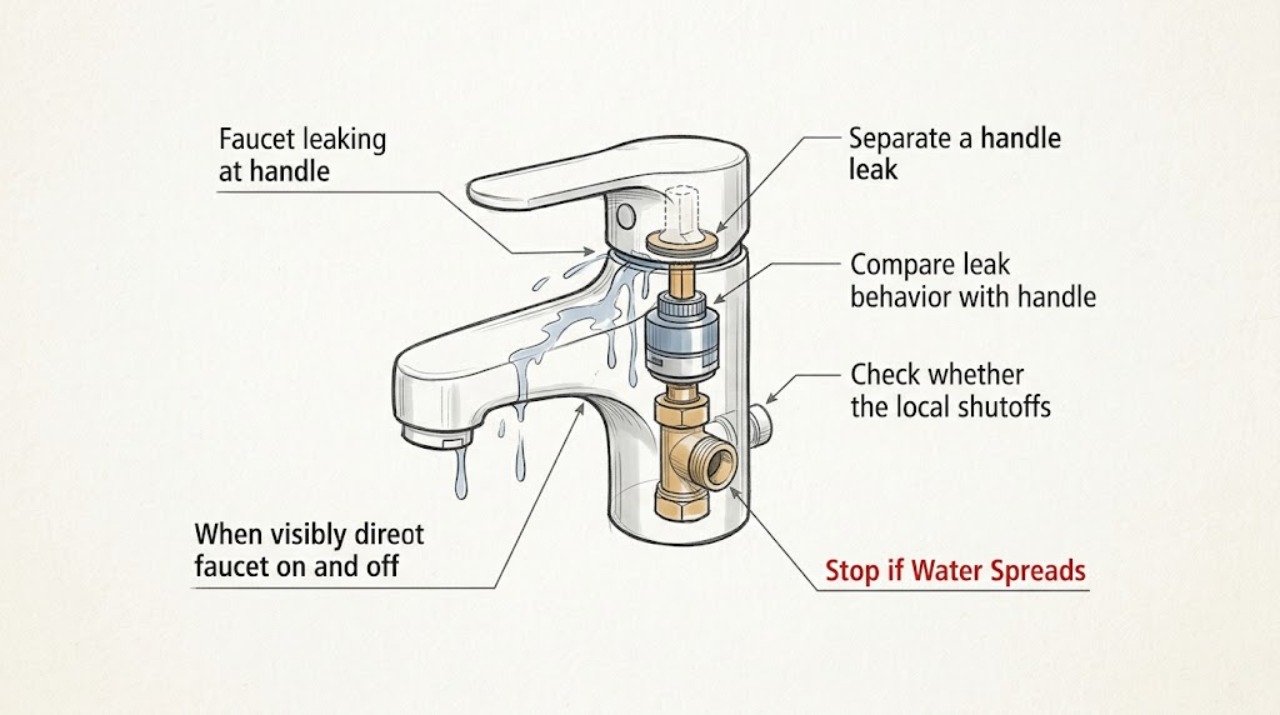
Faucet leaking at handle: What to Check and What to Do Next
First locate when and where the water appears. A leak that emerges around the handle while the faucet is running or continues when it is off often points to the valve or cartridge area, but water can also travel from the spout, supply connections, or the base and look like a handle leak.