
On this page
Start here
Quick answer
If one faucet has no water or only a trickle during freezing weather, a nearby supply pipe may be frozen; if every faucet is affected, check for a main-supply or meter problem instead. Open the affected faucet so meltwater and pressure have a path out, locate only an exposed and dry section, and warm the surrounding area gradually with room heat or a hair dryer on a low or warm setting while staying present. Never use a torch, open flame, heat gun, boiling water, or concentrated high heat. Be ready to close the main water valve because a pipe can split while frozen and begin leaking as it thaws. Stop immediately for a leak, bulge, crack, water near electrical equipment, an inaccessible or wall-enclosed section, or any uncertainty; shut off the water if safe and call a licensed plumber.
Work through in order
Diagnostic checks
Use only checks that match the exact appliance or system and its official guide.
-
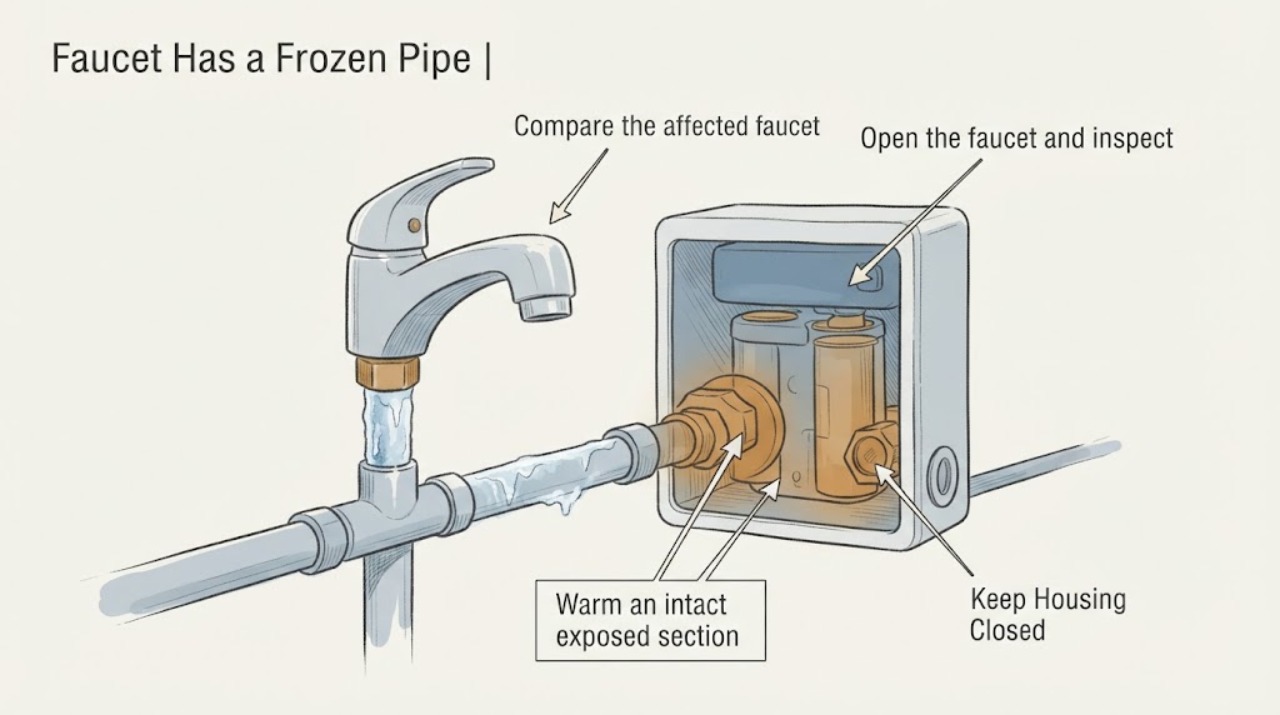
Compare the affected faucet with other fixtures
Open the affected faucet gently, then check another cold-water faucet and, if safe, another fixture on the same side of the home. Do not force a stiff handle or run water near an electrical outlet, appliance, or standing water.
Expected result: Only this faucet has no flow or a trickle, several fixtures on one area are affected, every faucet is dry, or water flow is normal elsewhere.
Next step: Leave the affected faucet open only if it can drain safely, check the exposed route toward the fixture, and locate the main shutoff before applying any warmth. If the whole home is without water or the meter is involved, contact the water utility or a licensed plumber rather than heating blindly.
Stop if: Stop for water near electrical equipment, a leaking or cracked fixture, a stuck handle that would require force, or any need to enter an unsafe or inaccessible space.
Why this matters
Why: A single affected faucet makes a local branch freeze more likely; several fixtures in one area point toward a shared branch; no flow anywhere can indicate a main supply, meter, or broader outage. Normal flow elsewhere does not rule out a frozen section at the affected fixture.
-
Open the faucet and inspect only an exposed, reachable pipe
Keep the affected faucet open enough for meltwater to escape, then look from a standing position along accessible pipe under a sink or in a warm, dry basement area. Check near exterior walls, drafts, unheated spaces, and the service entry for frost, ice, a bulge, or a visibly cold section; do not remove walls, insulation, cabinets, or pipe coverings to chase the freeze.
Expected result: A reachable pipe is frosted or icy, a section is bulging or fissured, the suspected pipe is behind a wall or ceiling, the route cannot be traced, or no visible freeze sign is present.
Next step: If the exposed pipe looks intact and the area is dry, proceed only with gentle ambient warming and a ready main shutoff. If damage is visible or access is not safe, stop and arrange licensed plumbing service.
Stop if: Do not dismantle walls or cabinets, crawl into an unsafe space, touch a bulging or cracked pipe, or continue if water is accumulating or spraying.
Why this matters
Why: A visible cold or frosted section can identify where gradual warming might be considered, but a bulge or fissure suggests damage and makes thawing a leak-risk event. An enclosed, unreachable, or unclear section is not a safe DIY thawing target.
-
Warm an intact exposed section gradually
Only when the pipe is exposed, reachable, apparently intact, and the area is dry, open cabinet doors or increase room warmth first. If additional warming is needed, use a hair dryer on a low or warm setting, keep it moving around the area rather than concentrating heat on one point, and remain present. Keep the faucet open and keep the main shutoff accessible.
Expected result: A little flow returns, full flow returns without leakage, no flow changes, the pipe begins to spray or drip, or the warming area becomes wet or unusually hot.
Next step: Continue only with gentle, attended warming while watching joints and surrounding surfaces. Once water returns, inspect for leaks and shut off the main supply if damage appears; call a licensed plumber for any leak or unresolved blockage.
Stop if: Never use a torch, blowtorch, open flame, heat gun, boiling water, or concentrated high-temperature source. Stop using any electrical dryer immediately if water appears or the area becomes wet.
Why this matters
Why: Returning flow means ice is releasing, not that the pipe has passed inspection; a hidden split may leak as pressure returns. No change may mean the freeze is elsewhere or inaccessible. Any leak, wet electrical area, or abnormal heat is a stop condition.
-
Inspect for a split as flow returns
When flow begins or the pipe appears thawed, watch the exposed pipe, joints, faucet connection, meter area, and nearby ceiling or cabinet for several moments from a safe position. Do not open a hidden wall, touch wet wiring, or restore water to a section that is visibly damaged.
Expected result: There is no leak and pressure returns normally, a drip or spray appears, a pipe is bulged or split, water enters a wall or ceiling, or the meter is damaged.
Next step: If damage appears, close the house-side or main water valve if safe, keep clear of wet electrical equipment, and call a licensed plumber. If the exposed area remains dry and intact, document the location and monitor for recurrence rather than applying hotter heat.
Stop if: Do not touch wet electrical equipment, enter a flooded or structurally affected area, open a wall to investigate, or leave a leak pressurized while waiting for service.
Why this matters
Why: Normal visible flow lowers the immediate leak concern but does not prove concealed pipe integrity. A drip, spray, bulge, split, hidden water entry, or damaged meter means the frozen section may have ruptured and needs prompt isolation and repair.
-
Document the route and reduce another freeze risk
After the immediate flow or leak issue is controlled, record where the pipe froze, whether it runs along an exterior wall or unheated area, and whether drafts or an open outdoor connection contributed. Keep safe cabinet or room access open for warm air and, after repairs, use appropriate insulation or winterization recommended for the plumbing system.
Expected result: The pipe is exposed and can be protected, the freeze is behind a wall or in a crawl space, an outdoor faucet or hose connection is involved, or the cause remains unclear.
Next step: Give the technician the location, flow pattern, thaw response, and any leak evidence. Do not install unapproved heating equipment or alter the plumbing route as an emergency workaround.
Stop if: Do not cover a wet or damaged pipe, energize heat equipment near water, block required ventilation, or enter a crawl space or wall cavity that is not safely accessible.
Why this matters
Why: An exposed vulnerable section may be protected after it is repaired and dry. A hidden or recurring freeze can require routing, insulation, drainage, or other building-level correction that should be assessed by a plumber; outdoor faucet problems may involve an interior shutoff and drainage path.
Use your observations
Decision map
Find the observation that best matches what you see, then follow the next safe action.
-
PATH 01Safety boundary
What you see
Only one faucet or a small nearby group has no water or a trickle, and the likely pipe is exposed, reachable, dry, and not visibly damaged.
Do this next
Leave the faucet open, locate the exposed section, and use only gradual ambient warmth or attended low/warm hair-dryer air while keeping the main shutoff ready.
Why this path and its safety boundary
Safety stop: Stop for a bulge, crack, leak, wet electrical area, abnormal heat, or any need to reach an enclosed or unsafe section.
-
PATH 02Safety boundary
What you see
Every faucet is dry, the water meter or service entry may be frozen, or nearby properties also have no water.
Do this next
Check the main supply status and contact the water utility or a licensed plumber; do not apply heat to an unknown meter or service line.
Why this path and its safety boundary
Safety stop: Do not dismantle meter protection, heat a service line blindly, or assume a whole-house loss is a single faucet blockage.
-
PATH 03Safety boundary
What you see
Water sprays or drips, a pipe bulges or splits, water enters a wall or ceiling, or the meter is damaged as thawing begins.
Do this next
Close the house-side or main water valve if safe, keep clear of wet electrical equipment, and obtain prompt licensed plumbing repair.
Why this path and its safety boundary
Safety stop: Do not keep thawing, reopen a leaking line, touch wet electrical equipment, or conceal the damaged area.
-
PATH 04Safety boundary
What you see
The frozen section is behind a wall, ceiling, slab, or unsafe crawl space, cannot be found, or does not respond to gentle warming.
Do this next
Leave the faucet open only if it drains safely, locate the shutoff, and call a licensed plumber to find and thaw or repair the section without destructive or high-temperature improvisation.
Why this path and its safety boundary
Safety stop: Do not open building surfaces, enter unsafe spaces, use a torch or heat gun, or continue heating an unidentified route.
Helpful context
Understand the symptom
Start by deciding whether the faucet or the supply is frozen
Turn on the affected faucet gently and compare it with other fixtures. A single faucet with no flow or a trickle points toward the branch serving that fixture, especially near an exterior wall, cabinet, crawl space, basement, or service entry. If every faucet is dry, the issue may be at the main supply or water meter rather than one frozen branch. Do not assume the pipe is intact merely because no water is visible: ice can hide a split until thawing begins.
Use only gradual, low-risk warming on a dry exposed section
If the frozen section is exposed, reachable from the floor, and well away from standing water or electrical equipment, leave the faucet open and warm the surrounding area gradually. A hair dryer on a low or warm setting can be moved continuously from the faucet side toward the colder section while attended. Ambient room heat and open cabinet doors are safer first steps. Never use a torch, open flame, heat gun, boiling water, or a high-temperature source concentrated on one point.
Prepare for the moment the ice releases
As flow returns, inspect exposed pipe, joints, the faucet connection, and the area around the water meter for spray, dripping, a bulge, a split, or water entering a wall or cabinet. Restore or open the main water supply only in a controlled way when the accessible section appears intact; if a leak appears, close the house-side or main valve if it can be operated safely and keep away from wet electrical equipment. A wall, ceiling, slab, crawl-space, or meter problem that cannot be safely reached belongs with a licensed plumber.
When checks do not resolve it
Need a professional?
Call a licensed plumber when the pipe is cracked, bulging, leaking, inaccessible, behind a wall or ceiling, at the meter or service entry, affecting the whole home, or still frozen after safe gradual warming. Seek urgent help for active spraying, flooding, water near electrical equipment, or a valve that cannot safely stop the flow.
Common questions
FAQ
How do I know if the pipe to one faucet is frozen?
If other fixtures still flow but one faucet has no water or only a trickle during freezing weather, the branch serving that faucet may be frozen. Leave the faucet open, inspect only an exposed reachable route, and do not assume the pipe is intact until it has thawed without leaking.
Should I leave the faucet open while thawing a frozen pipe?
For an affected faucet that can drain safely, opening it provides a path for meltwater and pressure as the ice releases. Stay ready to shut off the main water supply because a split may begin leaking when thawing starts.
Can I use a torch or boiling water to thaw a frozen pipe?
No. Do not use a torch, open flame, heat gun, boiling water, or concentrated high-temperature heat. Use room warmth or, only on a dry exposed intact section, attended low or warm hair-dryer air; stop for water, damage, or electrical risk.
What should I do if the pipe starts leaking after it thaws?
Close the house-side or main water valve if it is safe to reach, keep away from wet electrical equipment, and call a licensed plumber. Frozen-pipe damage may stay hidden until thawing restores pressure, so do not reopen or keep heating a leaking line.
Read the exact guide
Official sources
- Protect Your Pipes from FreezingNew York City Department of Environmental Protection · Supports opening a faucet near the freeze, gradual hair-dryer or surrounding warmth, the prohibition on open flame, and plumber escalation for inaccessible or unresolved freezes.
- Frozen Pipes and Water MetersCity of Milwaukee Water Works · Supports opening a faucet, starting gradual hair-dryer warming near the faucet, avoiding blowtorches and open flames, remaining in attendance, and contacting service for damaged pipes or meters.
- Frozen Water PipesFairfax County Fire and Rescue Department · Supports the warning that pipes can swell and break, that breaks may appear during thawing, gentle thawing, no-torch guidance, shutoff, and plumber escalation.
- All About Frozen PipesPhiladelphia Water Department · Supports comparing faucet flow, leaving a faucet open, checking for damage after thawing, using the house-side shutoff, and calling a licensed plumber for damaged pipe.
Community feedback
Share a repair observation
Share a plain-text repair observation. Accepted observations are published automatically; this page may take a moment to update.