
On this page
Start here
Quick answer
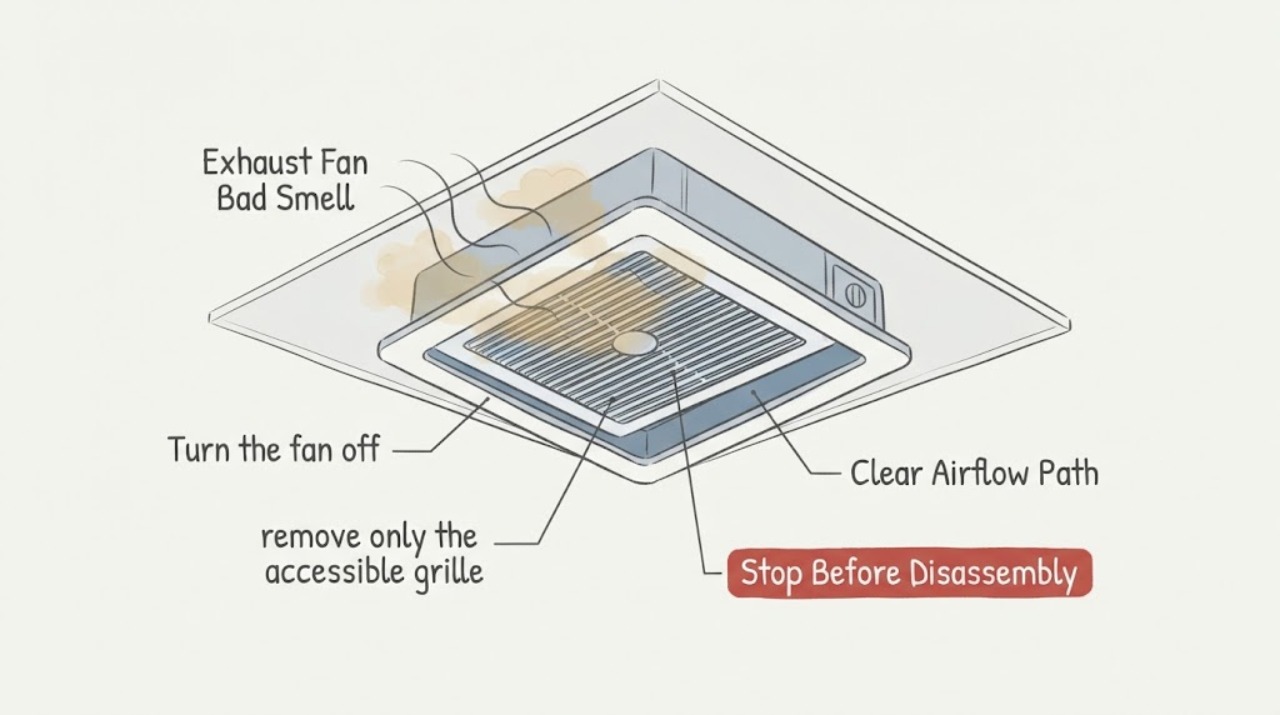
If an exhaust fan smells bad, first identify whether the odor is musty, greasy, sewer-like, or electrical. Turn the fan off for a burning or chemical smell. For a safe musty or dusty odor, isolate power, clean the accessible grille and housing, check that the duct outlet is not blocked, and improve ventilation. Persistent or hazardous odors need inspection.
Work through in order
Diagnostic checks
Use only checks that match the exact appliance or system and its official guide.
-
Check 1
Turn the fan off and classify the smell from a safe distance as musty or mold-like, grease or dust, sewer-like, or electrical or burning.
Expected result: The smell is electrical, burning, chemical, or accompanied by smoke, or it is musty, dusty, or room-related.
Next step: Leave the fan off for a hazardous odor and obtain qualified inspection; do not mask it with fragrance.
Why this matters
Why: Electrical, burning, or smoke odors can signal overheating or wiring trouble; musty or dusty odors keep moisture, residue, and duct airflow in scope.
-
Check 2
With power off at the service panel, remove only the accessible grille as the model guide permits and clean the grille and visible housing with a dry or lightly damp cloth.
Expected result: Dust, lint, grease, or visible residue is present, or the accessible area is clean.
Next step: Allow parts to dry and restore them before power is restored; do not spray liquid into the motor.
Why this matters
Why: Residue on the grille or housing can hold odor and restrict airflow; a clean fan with persistent smell points toward duct, room, or motor diagnosis.
-
Check 3
Check that the fan exhaust path and exterior termination are not visibly blocked and that the room has a normal air path for replacement air.
Expected result: The duct outlet is blocked, the room is persistently damp, or airflow is clear.
Next step: Clear only accessible obstruction and do not enter a roof, wall, or duct cavity unsafely.
Why this matters
Why: Poor air exchange can leave moisture and odors in the room; clear airflow with a persistent odor requires source-specific inspection.
-
Check 4
After one safe cleaning or airflow correction, run the fan during and after the moisture-producing activity and record whether the smell returns.
Expected result: The smell clears, returns only with room moisture, or returns immediately with the motor.
Next step: Arrange service for recurring odor, abnormal heat, noise, or electrical symptoms.
Why this matters
Why: Improvement with ventilation supports a room moisture or residue source; return with the motor points toward fan or wiring service.
Use your observations
Decision map
Find the observation that best matches what you see, then follow the next safe action.
-
PATH 01Next step
What you see
The odor is musty, surfaces are damp, and the smell improves when the fan runs with clear airflow.
Do this next
Keep the fan and room surfaces clean and dry and operate ventilation during and after moisture events.
Why this path and its safety boundary
Why it matters: Moisture and insufficient air exchange were the leading causes.
-
PATH 02Next step
What you see
The grille and visible housing are clean but odor returns immediately from the motor or duct.
Do this next
Leave the fan off if it heats or smells electrical and arrange qualified ventilation service.
Why this path and its safety boundary
Why it matters: A contaminated duct, motor, bearing, or hidden source is more likely.
-
PATH 03Next step
What you see
The odor is burning, electrical, chemical, or accompanied by smoke, sparks, or unusual heat.
Do this next
Switch off power only when safe and obtain qualified electrical or ventilation service; do not restart to test.
Why this path and its safety boundary
Why it matters: This is a safety stop.
Helpful context
Understand the symptom
Broan-NuTone explains that exhaust ventilation removes moisture, odors, and airborne contaminants, while cleaning and drying surfaces helps with musty bathroom odors. The odor source may be the room, duct, motor, or wiring rather than the fan blade alone.
An exhaust fan that smells electrical or overheats is a safety issue. Cleaning is limited to accessible, de-energized surfaces; wiring and motor work require a qualified person.
Only after diagnosis
Potential parts
- model-specific grille, motor, duct, or backdraft component
Consider a part only after odor classification, safe cleaning, airflow checks, and service diagnosis identify the source.
A bad smell does not establish a motor or duct part fit.
When checks do not resolve it
Need a professional?
Contact qualified ventilation or electrical service when odor returns after safe cleaning and airflow checks, comes from the motor, or is electrical, chemical, smoky, or associated with heat or sparks.
Common questions
FAQ
Can a dirty exhaust fan cause a bad smell?
Dust, lint, grease, and moisture can accumulate on accessible fan surfaces and the room, while poor ventilation leaves odors trapped. Isolate power before cleaning and investigate odors that return.
What smell means I should stop using an exhaust fan?
Stop for burning, electrical, chemical, smoke, sparks, or abnormal heat. Leave the fan off and obtain qualified inspection rather than spraying cleaner into the motor.
Read the exact guide
Official sources
- Bathroom Air Quality Tips: Reducing Odors, Humidity and Airborne ContaminantsBroan-NuTone · Opened official Broan-NuTone guidance; it connects ventilation with removal of odors and moisture and identifies common bathroom odor sources.
- BROAN Cleaning & MaintenanceBroan-NuTone · Opened official Broan-NuTone installation and maintenance guide; it covers odor or vapor control and turning off service power before adjustments.
Community feedback
Share a repair observation
Share a plain-text repair observation. Accepted observations are published automatically; this page may take a moment to update.