
Repair problem
Storm Window Draft Troubleshooting Guides
Published FixGraph guidance for diagnosing and responding to storm window draft.
Matching published guides
Choose a guide that matches the service, equipment, and conditions you are seeing.
-
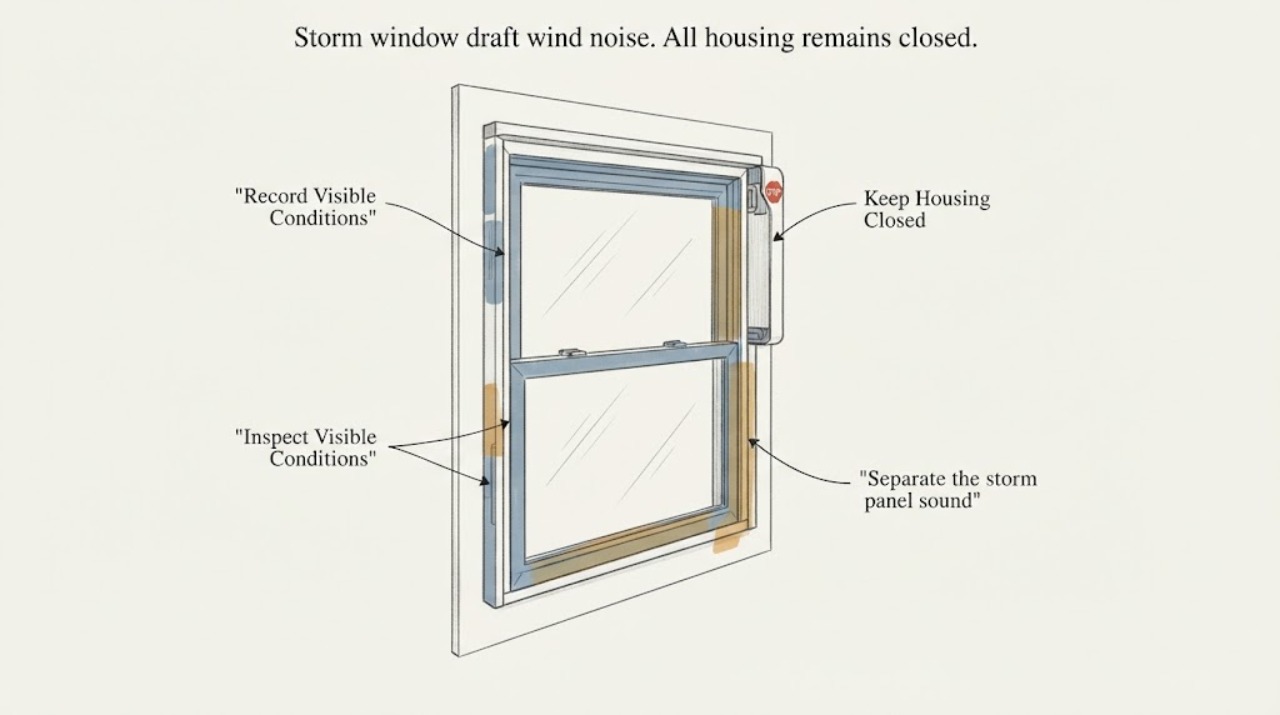
Storm window draft wind noise: What to Check and What to Do Next
For a storm window draft with wind noise, first log wind direction, gust timing, and whether the sound is a whistle, flutter, rattle, or vibration. From indoors or safe ground level, compare the storm panel, seals, frame, latches, hardware, primary window, and surrounding trim without touching or forcing them. Do not climb, remove glass or panels, use flame, smoke, hose, pressure, or impact tests, or buy a seal before the moving or leaking layer is confirmed.
-
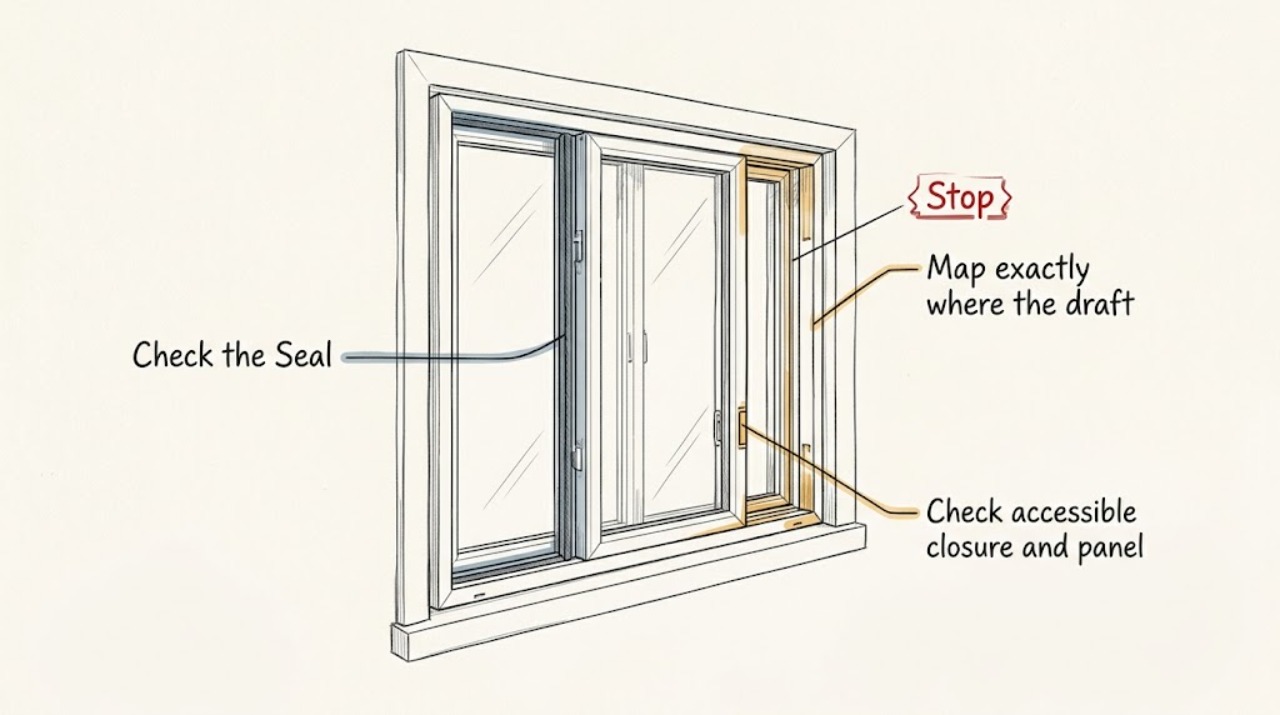
Storm window draft: What to Check and What to Do Next
A draft at a storm window usually comes from a panel that is not fully seated, a latch or frame gap, worn weatherstripping, or air leaking around the surrounding window opening. Start with safe, ground-level observations: note exactly where the air is felt, confirm that accessible latches are closed without force, inspect visible seals, and compare the draft with the primary window and nearby trim.