
On this page
Start here
Quick answer
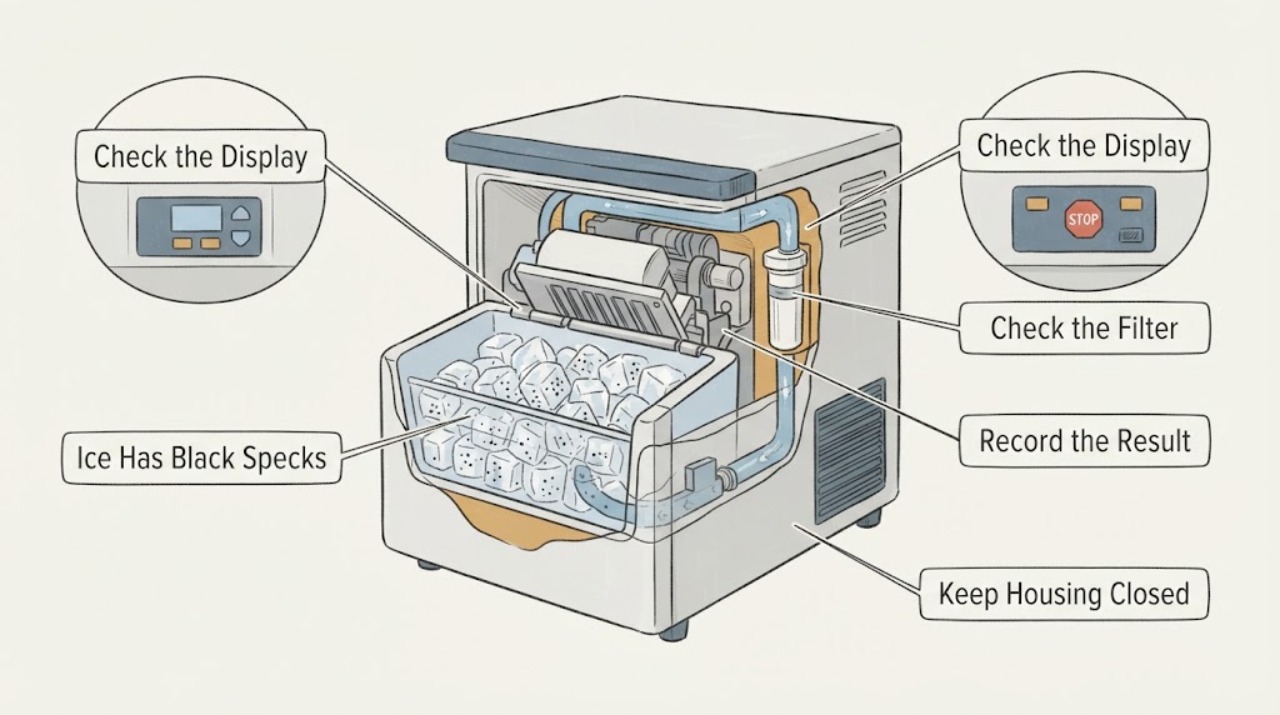
The exact report for an LG LBC22520TT describes black specks and gray, metal-looking shavings in the ice. Stop using that ice and discard the current bin while you separate a water/odor problem from visible debris or a damaged ice-maker part. LG's official guidance for bad-tasting or odorous ice supports cleaning the refrigerator interior and ice bin, discarding old or initial ice, checking the taste of dispenser water against tap water, and replacing an overdue water filter with the model-approved filter. Those checks do not identify metal-looking particles or prove that an ice-maker kit from another freezer layout fits this model. If particles return after a clean, dry bin and fresh water/filter checks, keep the ice maker out of use and arrange model-specific service; do not consume the ice or substitute a top-freezer kit because it looks similar.
Work through in order
Diagnostic checks
Use only checks that match the exact appliance or system and its official guide.
-
Check 1
Stop eating and serving the affected ice. Turn the ice maker off using its normal control, remove and discard the current ice, and wash and dry the removable ice bin as the model instructions permit. Do not scrape the ice-maker mold, handle moving parts, or use a sharp tool to investigate the particles.
Expected result: The bin contains visible black/gray particles, only an odor/taste is present, or a clean dry bin produces fresh ice without particles.
Next step: Keep contaminated ice discarded. If particles are present again in a fresh batch, leave the ice maker off and arrange model-specific service rather than consuming more ice or replacing a part by guess.
Stop if: Stop using the ice immediately for sharp, metallic, oily, chemical, or unknown debris; do not taste-test it.
Why this matters
Why: Visible debris requires containment and a source check; odor/taste alone can have the water, food, filter, interior, or stored-ice causes described by LG. A clean bin does not prove the ice-maker assembly is safe if particles return.
-
Check 2
Compare a clean glass of refrigerator-dispenser water with cold tap water, without tasting any visibly contaminated ice. Note whether the water itself has the same odor or taste and whether the issue started after a filter change, long storage, or a new installation.
Expected result: Dispenser water and tap water taste similar, only the ice is affected, or the dispenser water also has an odor/taste.
Next step: If the source water is also affected, address the water supply. If only ice is affected, continue with bin/interior/filter checks and keep discarding affected batches; persistent particles require service.
Why this matters
Why: LG says a similar taste in tap water points away from the refrigerator, while food odors, stored ice, a new installation, water minerals, and an overdue filter can affect ice or water. This comparison does not identify visible metal particles.
-
Check 3
Check the filter's installation date and that it is fully seated, then replace it only with the exact model-approved filter and procedure. Seal strong-smelling food and clean the accessible refrigerator and freezer interior without opening sealed tubing or the ice-maker housing.
Expected result: The filter is overdue or mis-seated, the interior or food has a strong odor, or those conditions are correct but new ice still contains particles.
Next step: Discard the first affected batches after a documented filter/bin correction. If visible specks or shavings return, stop the ice maker and request service with photographs, the model number, filter history, and the water comparison.
Why this matters
Why: LG recommends filter replacement about every six months and identifies food odors, interior condition, and stored ice as possible taste/odor contributors. A filter or cleaning correction cannot explain away recurring metal-looking shavings without further diagnosis.
-
Check 4
Confirm the refrigerator model label reads LBC22520TT and record whether the debris is in newly formed cubes, the bin, or the dispenser chute. Do not install the top-freezer LK75C kit or another visually similar assembly unless LG's exact model parts documentation or an authorized technician confirms fitment.
Expected result: The model is confirmed and the debris returns from newly made ice, the debris is only old ice/bin residue, or the proposed replacement is for another freezer layout.
Next step: Keep the ice maker out of service for recurring fresh debris and provide the exact model, photos, filter details, and water comparison to LG or qualified service. Do not alter wiring, mounting, or controls.
Why this matters
Why: The exact Reddit post raises a cross-layout fitment question but provides no approved compatibility evidence. Fresh recurring debris points to an unresolved appliance or water-path problem; old bin residue points to cleaning/storage but still does not validate a substitute part.
Use your observations
Decision map
Find the observation that best matches what you see, then follow the next safe action.
-
PATH 01Next step
What you see
Only an old batch or the bin smells stale, and no visible particles appear after the bin is washed, dried, and refilled.
Do this next
Discard the old ice, keep food sealed, follow LG's filter interval, and monitor a fresh batch. Stop using the ice if visible debris returns.
Why this path and its safety boundary
Why it matters: The observation is consistent with stored ice, bin residue, or odor transfer, but it does not prove that the original contamination source is resolved permanently.
-
PATH 02Next step
What you see
Dispenser water has the same taste as tap water, while the ice alone has an odor or visible debris.
Do this next
Keep the ice maker off, clean and dry the bin, check the exact filter, and request service if new ice again contains particles.
Why this path and its safety boundary
Why it matters: The issue is localized to ice storage, the ice-making path, or odor transfer rather than being established as a whole-house water problem; visible shavings remain unresolved.
-
PATH 03Next step
What you see
Black/gray particles return in newly made ice after the bin, interior, filter, and food-odor checks are correct.
Do this next
Discard the ice, leave the ice maker off, preserve photographs and the model/filter information, and arrange LG-authorized or qualified appliance service. Do not fit a cross-layout kit or open the appliance to inspect it.
Why this path and its safety boundary
Why it matters: A persistent source remains unidentified. The report and official guidance do not establish whether it is the ice-maker mold, a water component, or another part.
Helpful context
Understand the symptom
Treat visible particles differently from an odor
A stale or chemical taste can come from stored ice, food odors, water minerals, or a filter. Black specks or gray metal-looking shavings are a separate observation: do not taste them to identify the source. Photograph the particles in a clean container and keep the ice maker off while the bin and water path are assessed. The opened report does not prove whether the debris came from the mold, a water path, or another source.
Do not solve a fitment question by appearance
The reporter asks about an LK75C kit marketed for a top-freezer layout while identifying the refrigerator as an LBC22520TT bottom-freezer model. Similar-looking ice makers can differ in wiring, programming and mounting. This page does not approve that substitution; use the exact model's parts documentation or an authorized technician.
Common questions
FAQ
Can I keep using ice after finding black specks or metal-looking shavings?
No. Discard the affected ice and stop serving it while you clean and document the bin and identify the source. Do not taste-test unknown particles; recurring fresh debris needs service.
Could a water filter or food odor cause contaminated-tasting ice?
LG says an overdue filter, food odors, old stored ice, interior condition, new installation, and source-water minerals can affect ice taste or odor. Those explanations do not by themselves account for recurring black or gray particles, so keep the ice maker off if visible debris returns.
Will a top-freezer LK75C ice-maker kit fit the LG LBC22520TT?
Do not assume it will. The exact report asks this because the refrigerator is a bottom-freezer model, and no official fitment evidence was opened for that substitution. Confirm the exact model and approved part documentation or have service verify it before ordering.
Read the exact guide
Official sources
- Ice Maker RepairReddit r/appliancerepair · Opened the exact Reddit search result. It verifies the model and visible contamination report, but replies about fitment and cause are unverified community suggestions.
- Ice Has Bad Taste - RefrigeratorLG USA Support · Opened official LG support guidance. It is general refrigerator guidance rather than an LBC22520TT-specific manual; the article uses its external cleaning, discard, water-comparison, filter, and service boundaries without claiming that it identifies metal particles or approves a replacement part.
Community feedback
Share a repair observation
Share a plain-text repair observation. Accepted observations are published automatically; this page may take a moment to update.