
On this page
Start here
Quick answer
A pressure cooker that is not working should be checked for a firm power connection, a dry base/control panel, correct lid seating, enough liquid, and a model-specific display message. Never force a lid while the float valve is up or pressure may remain. If the cooker stays unresponsive, shows a persistent fault, or has liquid/oil inside the base, stop using it and contact the manufacturer or qualified service.
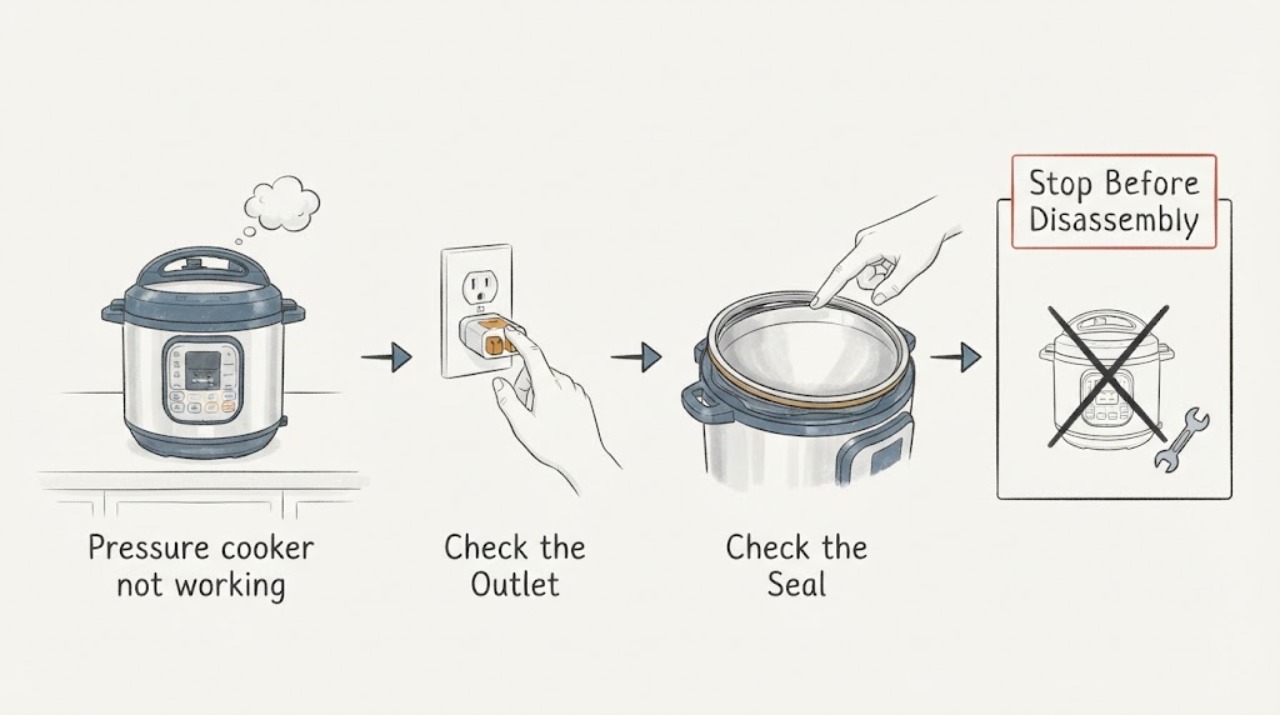
Work through in order
Diagnostic checks
Use only checks that match the exact appliance or system and its official guide.
-
Check 1
Unplug/cool the cooker and inspect cord, outlet, dry base, and control panel for moisture or residue.
Expected result: Outlet/cord issue, wet base/panel, or supply appears normal.
Next step: Do not energize a wet or oil-contaminated base; dry only as the official procedure allows.
Why this matters
Why: Instant Pot directs owners to firm cord connection and drying the base after water; oil/fat in the base is a stop condition.
-
Check 2
Check lid seating, float valve position, and sealing ring from outside after pressure is fully released.
Expected result: Lid is mis-seated, float valve remains up, seal visibly displaced, or lid state is normal.
Next step: Never force the lid; wait for depressurization and use the exact manual.
Why this matters
Why: A pressure cooker may not start or open until its lid/interlock state is correct.
-
Check 3
Record any display/error and verify liquid and fill level without exceeding the manual’s PC MAX/food limits.
Expected result: Code appears, liquid is insufficient/over limit, or fill is normal.
Next step: Correct only cool, accessible fill/setup conditions and do not bypass a pressure sensor.
Why this matters
Why: Instant Pot documents fill limits and model-specific error/support paths; symptom alone does not identify a part.
-
Check 4
After one documented correction, run the model’s safe water test or normal cycle only if the cooker is dry and lid operation is normal.
Expected result: Cycle completes, panel remains unresponsive, or fault returns.
Next step: Keep it out of use and contact support with model, code, and observations.
Why this matters
Why: A single successful test supports setup; recurrence needs manufacturer diagnosis.
Use your observations
Decision map
Find the observation that best matches what you see, then follow the next safe action.
-
PATH 01Next step
What you see
Cord/outlet/base is wet or oil-contaminated.
Do this next
Do not use it; follow manufacturer disposal/service guidance.
Why this path and its safety boundary
Why it matters: Powering the cooker could create an electrical or fire hazard.
-
PATH 02Next step
What you see
Lid/float valve remains pressurized or locked.
Do this next
Do not force the lid; wait until fully depressurized and contact support if it stays locked.
Why this path and its safety boundary
Why it matters: Pressure may remain; opening is hazardous.
-
PATH 03Next step
What you see
Panel is dry and lid/setup are normal but cooker remains unresponsive or code returns.
Do this next
Stop testing and contact Instant Pot support with item/model details.
Why this path and its safety boundary
Why it matters: Control, sensor, heater, or power fault needs model-specific service.
-
PATH 04Next step
What you see
Steam escapes abnormally, contents leak, smoke, burning odor, or electrical trip occurs.
Do this next
Stop heat, isolate power only if safe, keep clear, and obtain qualified service.
Why this path and its safety boundary
Why it matters: Immediate pressure/electrical safety boundary.
Helpful context
Understand the symptom
“Not working” may mean no power, an unresponsive panel, no pressure, or a locked lid. Identify the stage before any reset.
Pressure and hot contents create a safety boundary; only external, cool checks are appropriate.
When checks do not resolve it
Need a professional?
Arrange manufacturer or qualified pressure-cooker service when the panel remains unresponsive after dry power/setup checks, a fault returns, or pressure/heating controls need diagnosis.
Common questions
FAQ
Why will a pressure cooker not turn on?
Check a firm cord/outlet and a dry base/control panel. Persistent no-power needs model support.
Can I open the lid if it is stuck?
No. If the float valve is up or lid resists, pressure may remain. Do not force it.
Can overfilling stop it working?
Overfilling can violate the manual’s pressure limits. Keep below the exact model’s maximum and contact support for recurring faults.
Read the exact guide
Official sources
- Contact Us – Instant PotInstant Pot · pressure cooker model-specific support
- Frequently Asked Questions – Instant PotInstant Pot · pressure cooker power, water, control panel, overfill and lid safety
Community feedback
Share a repair observation
Share a plain-text repair observation. Accepted observations are published automatically; this page may take a moment to update.