
On this page
Start here
Quick answer
Some pressure-cooker hiss or release noise is part of heating and steam control, but a new loud noise, continuous leak, or unstable valve needs a safe stop. Keep face and hands away from the release path, wait for pressure to leave naturally when appropriate, and inspect sealing parts only after the cooker is fully depressurized and cool.
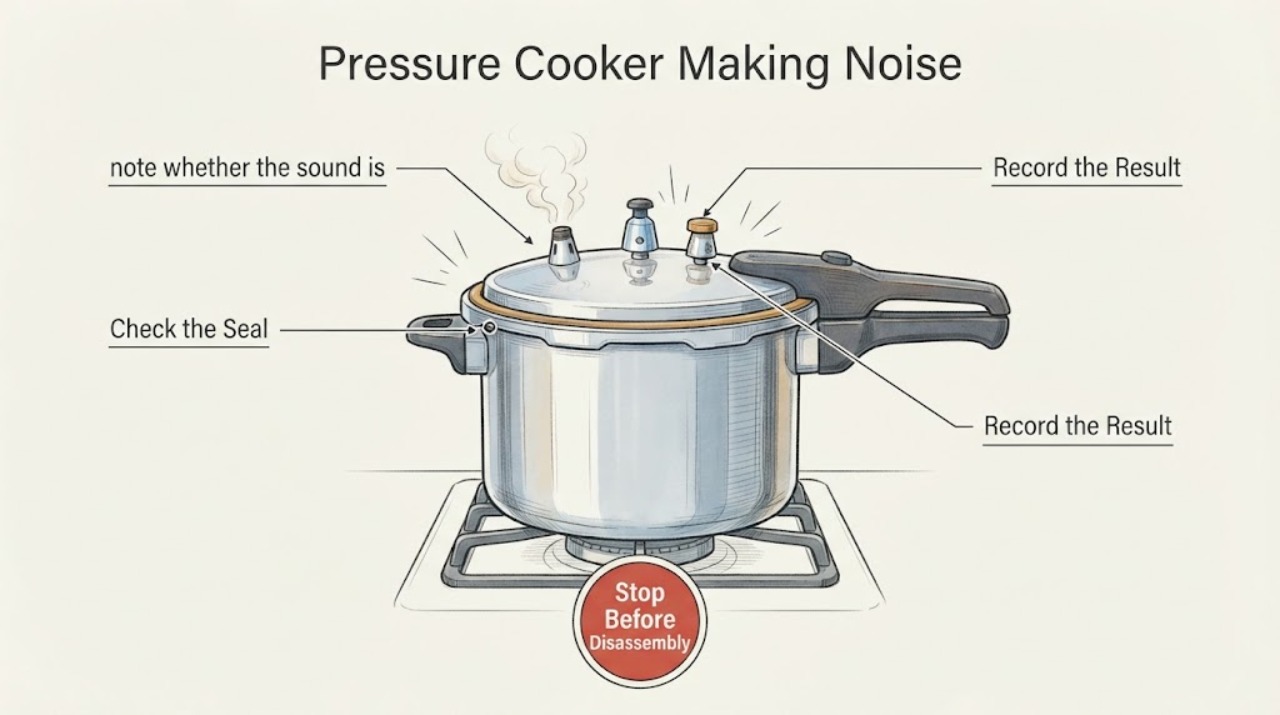
Work through in order
Diagnostic checks
Use only checks that match the exact appliance or system and its official guide.
-
Check 1
From a safe distance, note whether the sound is a brief hiss during heating, a jet from the release handle, bubbling at the float valve, or a mechanical sound from the base.
Expected result: A brief hiss, steady release, valve chatter, or grinding electrical sound occurs.
Next step: Keep clear of steam and do not touch or open the lid until pressure is released.
Why this matters
Why: Quick release produces a jet of steam, while natural release is gradual; mechanical noise is a different symptom.
-
Check 2
Confirm the cooker is on Sealing and that the release handle, float valve, silicone cap, and sealing ring are seated only when cool and depressurized.
Expected result: The handle is venting, the float valve is up, or all parts are seated.
Next step: After full depressurization, reseat or replace only the exact sealing part identified by the manual.
Why this matters
Why: A valve or seating condition can explain steam noise, but a raised float means residual pressure remains.
-
Check 3
Check the inner-pot rim and lid seal for warping, food debris, stretching, or damage after pressure is fully released.
Expected result: A ring, cap, valve, lid, or pot rim is damaged.
Next step: Do not pressure-cook with damaged parts; arrange service or use a verified replacement.
Why this matters
Why: Damaged sealing parts or a warped rim can prevent safe sealing.
-
Check 4
If steam has leaked for more than three minutes or the sound is abnormal, turn the appliance off and unplug it after pressure is safely released.
Expected result: Noise continues with pressure, steam leaks over three minutes, or the unit is unplugged safely.
Next step: Keep it off and arrange service; never force the lid or bypass pressure protection.
Why this matters
Why: Instant Pot treats prolonged steam leakage as a stop-and-unplug event; never force the lid.
Use your observations
Decision map
Find the observation that best matches what you see, then follow the next safe action.
-
PATH 01Next step
What you see
The sound is a brief hiss during heat-up or an intentional quick release, with no abnormal leak.
Do this next
Keep clear of the release path and follow the manual’s release method.
Why this path and its safety boundary
Why it matters: The sound may be normal pressure or release operation.
-
PATH 02Next step
What you see
Steam escapes continuously from the lid or valve, or the float never seals.
Do this next
Keep hands away, stop after pressure is safely released, and inspect only when cool.
Why this path and its safety boundary
Why it matters: A sealing ring, valve, cap, lid, or pot-rim issue is possible.
-
PATH 03Next step
What you see
Noise is grinding, prolonged, or paired with damage, burning odor, or leakage beyond three minutes.
Do this next
Turn it off, unplug after safe depressurization, and arrange qualified service.
Why this path and its safety boundary
Why it matters: The appliance has crossed the manufacturer’s stop boundary.
Helpful context
Understand the symptom
This guide focuses on where the sound comes from and whether pressure is present. The symptom is a starting point, not a part diagnosis; use each observation to choose the next safe check.
Manufacturer guidance supports these symptom-level checks. Model-specific controls, parts, and service procedures must be confirmed in the appliance manual.
Only after diagnosis
Potential parts
- sealing ring or steam-release handle
Relevant only after full depressurization identifies damaged or poorly seated sealing parts.
Confirm the exact appliance model and manufacturer instructions before ordering.
When checks do not resolve it
Need a professional?
Arrange qualified pressure-cooker service for prolonged leakage, mechanical noise, damaged pressure parts, or a lid that will not release safely.
Common questions
FAQ
Is hissing always a pressure-cooker fault?
No. Instant Pot distinguishes normal quick-release steam from natural release; continuous leakage is different.
Can I open the lid when it is noisy?
No. A raised float or difficult lid indicates pressure may remain. Never force it open.
Read the exact guide
Official sources
- Frequently Asked Questions – Instant PotInstant Pot · electric pressure cooker steam release, sealing, residual pressure and safe operation
Community feedback
Share a repair observation
Share a plain-text repair observation. Accepted observations are published automatically; this page may take a moment to update.