
On this page
Start here
Quick answer
A bad smell from a Samsung microwave usually starts with food residue, a dirty turntable or roller ring, or—on an over-the-range model—a saturated filter. Unplug the unit before cleaning the cavity and use Samsung's water-steam method with a microwave-safe bowl; stop immediately for smoke, sparking, a burning electrical odor, or a smell that remains after the cavity is clean and dry.
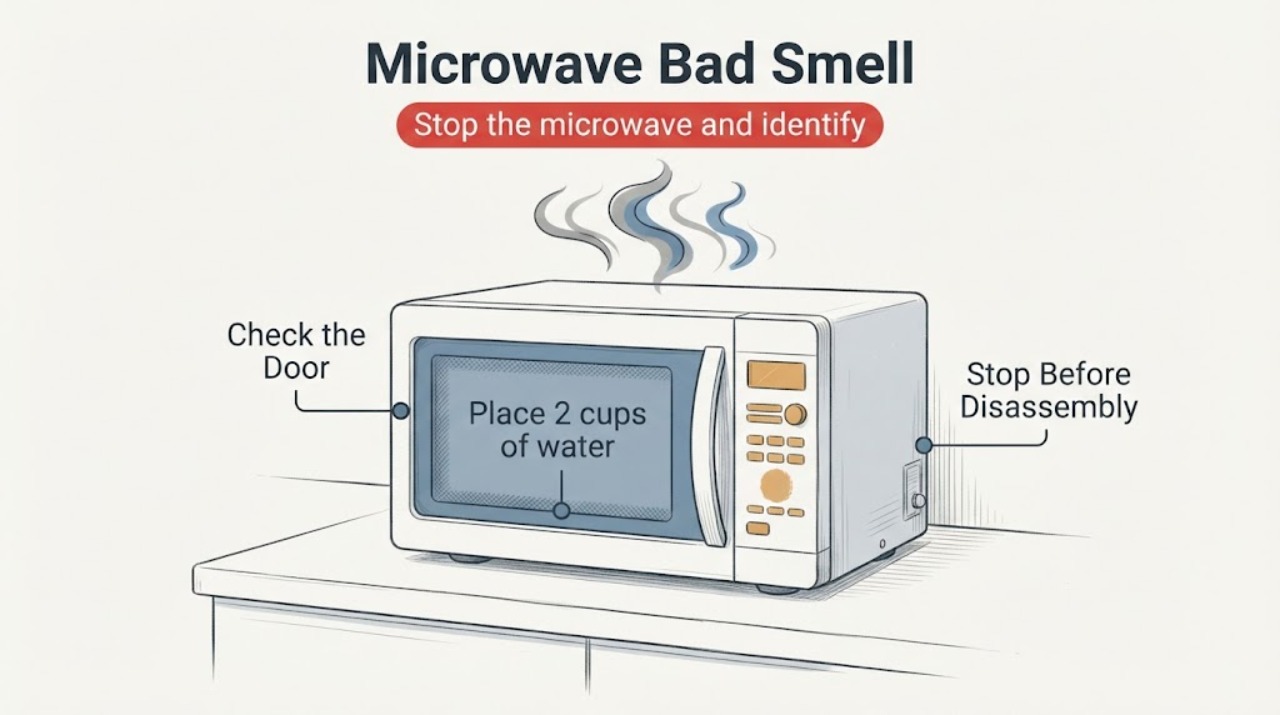
Work through in order
Diagnostic checks
Use only checks that match the exact appliance or system and its official guide.
-
Check 1
Stop the microwave and identify whether the smell is food-like/greasy, a first-use plastic or protective-oil odor, or a sharp burning/electrical odor; note any smoke or sparks.
Expected result: The odor is tied to a visible spill or normal first use, or it is sharp/burning with smoke, sparks, or no visible residue.
Next step: For smoke, sparks, or a burning electrical odor, unplug or switch off power if safe and do not use the microwave; continue cleaning only for a food or residue odor.
Why this matters
Why: Residue or first-use materials can be addressed with model-safe cleaning and ventilation; smoke, sparks, or an electrical smell can indicate a hazard rather than dirt.
-
Check 2
Inspect the cavity ceiling, side walls, door area, turntable, and roller ring for splatter or hardened food; remove the glass tray and let it cool before washing it.
Expected result: Residue is visible inside or under the tray, or the cavity and removable parts are clean.
Next step: Clean visible residue with a soft cloth and mild method; do not scrape the cavity or use steel wool, bleach, or solvents.
Why this matters
Why: Old food and grease can create recurring odors when heated; a clean cavity makes an internal or filter source more plausible.
-
Check 3
Place 2 cups of water in a 4-cup microwave-safe bowl and run High for 5 minutes or until boiling, let it stand 1–2 minutes, then wipe the cavity dry when safe to touch.
Expected result: Steam loosens residue and the odor decreases, or the odor remains after the cavity is cleaned and dry.
Next step: Repeat the steam-cleaning method only as needed for residue; stop using the unit and request service for a persistent unexplained smell.
Why this matters
Why: Improvement supports a residue source; persistence in a clean cavity shifts concern toward the filter, wiring, or an internal component.
-
Check 4
For an over-the-range microwave, inspect the grease filter and note its cleaning history and charcoal-filter age without reaching into internal vents.
Expected result: The grease filter is coated, or the charcoal filter is beyond Samsung's stated 6–12-month replacement interval; alternatively, filters are clean/current.
Next step: Clean or replace the filter using the model manual, then retest only after the microwave is dry; request service if the odor remains.
Why this matters
Why: Grease and odor can collect in maintained filters; clean/current filters make a persistent internal odor more concerning.
Use your observations
Decision map
Find the observation that best matches what you see, then follow the next safe action.
-
PATH 01Next step
What you see
The smell follows a visible food spill and decreases after steam cleaning and wiping the cavity dry.
Do this next
Keep the cavity, turntable, and roller ring clean and dry, and clean fresh spills promptly.
Why this path and its safety boundary
Why it matters: Heated food residue is the leading cause and the microwave does not need a part based on this symptom alone.
-
PATH 02Next step
What you see
The microwave is new and the odor is a faint protective-oil or plastic smell without abnormal smoke or sparks.
Do this next
Remove all packaging, ventilate the area, and follow the model manual's first-use instructions; stop if the odor becomes electrical or smoky.
Why this path and its safety boundary
Why it matters: A first-use odor can come from manufacturing residue and ventilation is the relevant next step.
-
PATH 03Next step
What you see
The odor is sharp/burning, accompanied by smoke or sparks, or persists after a clean cavity and current filters.
Do this next
Unplug or isolate power if safe, do not use the microwave, and arrange qualified service.
Why this path and its safety boundary
Why it matters: An internal electrical, heating, or waveguide-area fault is possible and cleaning is not a safe remedy.
Helpful context
Understand the symptom
Identify the smell before cleaning
Food residue and grease produce a different decision from an electrical or burning odor. The cavity, turntable, roller ring, door area, and over-the-range filters are the accessible places to inspect; internal components are not a user cleaning target.
Only after diagnosis
Potential parts
- over-the-range charcoal filter
Consider only for an over-the-range model when the charcoal filter is beyond its maintenance interval and odor is not from cavity residue.
Confirm the exact microwave model and filter type in the Samsung manual before ordering.
When checks do not resolve it
Need a professional?
Stop using the microwave for smoke, sparks, a sharp burning/electrical odor, visible cavity damage, or an odor that persists after safe cavity and filter cleaning. Never remove the cabinet or attempt internal microwave repair; high-voltage components require qualified service.
Common questions
FAQ
How do I remove a bad smell from a Samsung microwave?
For a food or residue odor, steam clean with 2 cups of water in a microwave-safe bowl, let it stand briefly, and wipe the cavity, tray, and roller ring dry. Never use bleach, steel wool, or solvents.
When is a microwave smell unsafe?
Smoke, sparks, a sharp burning electrical odor, visible cavity damage, or an odor that remains after safe cleaning is a stop condition. Isolate power if safe, do not use the unit, and arrange qualified service.
Read the exact guide
Official sources
- How to clean a Samsung microwaveSamsung · Samsung microwave cavity, turntable, roller ring, filter, and safe cleaning guidance
- Samsung microwave turns on by itselfSamsung · Samsung microwave fire-hazard boundary for abnormal self-start behavior
Community feedback
Share a repair observation
Share a plain-text repair observation. Accepted observations are published automatically; this page may take a moment to update.