
On this page
Start here
Quick answer
A hot pan, grate, or cooktop surface can remain hot after a normal high-heat setting, but a flame that stays too large when turned down, will not shut off, has an abnormal color or shape, or heats nearby controls or surfaces unexpectedly is not normal. Turn the affected control off immediately. If the flame remains on, gas odor is present, the flame is uncontrolled, or there is smoke or heat damage, stop using the cooktop, leave the area as appropriate, and follow local gas-emergency guidance. With the cooktop completely cool and the controls off, you may check cap alignment, visible moisture or debris, and obvious drafts. Do not adjust a regulator, alter the gas path, or dismantle the appliance.
Work through in order
Diagnostic checks
Use only checks that match the exact appliance or system and its official guide.
-
Check 1
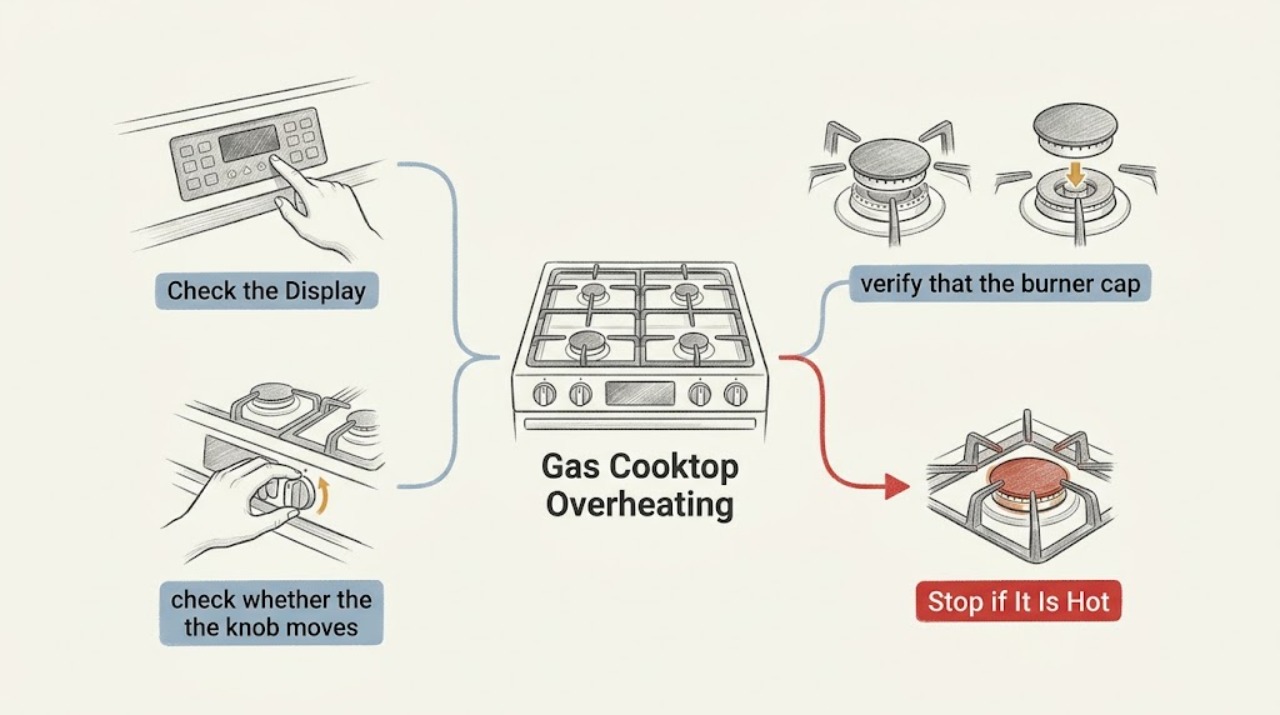
Turn the affected control to off and classify the heat from a safe distance before touching any part of the cooktop.
Expected result: The heat may be limited to a hot pan after a high setting, or there may be a flame that stays high, will not respond to the knob, has an abnormal color or shape, spreads outside the burner area, or is accompanied by odor, smoke, or damage.
Next step: If the flame remains on, gas odor persists, or smoke or heat damage is present, stop immediately, avoid flames and electrical switches, leave the area as appropriate, and follow local gas-emergency guidance. If the flame is off and there is no warning sign, wait until the cooktop is completely cool before inspecting it.
Stop if: Do not touch hot parts, relight the burner, or keep cooking to see whether an abnormal flame settles down.
Why this matters
Why: Retained cookware heat can be normal. A persistent or uncontrolled flame and any gas, smoke, or damage symptom indicates a gas or combustion safety condition rather than ordinary cooking heat.
-
Check 2
With the control off and the cooktop cool, check whether the knob moves normally through its off, lighting, and heat positions without forcing it.
Expected result: The knob may turn normally, feel stuck, fail to turn down, remain pressed, or leave a flame on after it reaches off.
Next step: If the knob is stuck or the flame does not stop when the control is off, do not use that burner. Close the main gas supply only if it can be done safely and follow local emergency guidance for odor or an uncontrolled flame; otherwise arrange qualified service.
Stop if: Do not remove the control panel, force the shaft, or attempt to repair or bypass the gas valve.
Why this matters
Why: A control that does not respond can prevent gas from being reduced or shut off. That requires professional diagnosis; the knob is not a safe way to adjust an internal valve.
-
Check 3
After cooling, verify that the burner cap is level and seated with its locating tabs aligned to the burner base.
Expected result: The cap may be visibly shifted, tilted, or unable to sit level after cleaning or a spill; a correctly positioned cap rests in its intended location.
Next step: With all controls off, reposition only the loose top cap so its tabs fit the matching notches. If it cannot sit level, is damaged, or the flame remains too high or uneven, leave the burner off and request service.
Stop if: Do not force a cap, run a burner with a missing or unstable part, or remove the burner base.
Why this matters
Why: Thermador identifies moved or misaligned caps as a cause of flames that are too high or uneven and of other ignition problems.
-
Check 4
Inspect accessible burner ports and the igniter for moisture, residue, or lint, then clean and dry the cool top surface as directed by Thermador.
Expected result: A boil-over or cleaning may have left ports wet or blocked, or the igniter may be damp or dirty; the burner may also be clean and dry.
Next step: Use a soft cloth for the cap, a stiff nylon toothbrush for accessible ports without scratching or gouging them, and a lightly damp cotton swab for the cooled igniter; dry everything thoroughly. If debris is inaccessible or the condition persists, stop using the burner and call service.
Stop if: Do not use a metal probe, flammable cleaner, excess water, or any cleaning method while the surface is hot or the controls are on.
Why this matters
Why: Wet or blocked ports and a damp igniter can disturb ignition and flame distribution, but a clean, dry burner with persistent high or abnormal flame needs a different diagnosis.
-
Check 5
Look for an obvious external draft or hood airflow that could disturb the flame, without placing objects around the burner.
Expected result: An open window, strong hood draw, or room gust may make a flame lift, lean, or go out; the flame may remain high or abnormal after the draft is reduced.
Next step: Reduce an obvious external draft without blocking required ventilation, then leave the burner off until the unit is safe. If the flame issue remains, arrange qualified service rather than repeating tests.
Stop if: Do not shield the burner with cookware or objects, defeat ventilation, or test through a gas odor or uncontrolled flame.
Why this matters
Why: Thermador notes that air movement can affect flame behavior. A draft does not explain a control that cannot reduce or stop gas, visible damage, persistent odor, or a consistently abnormal flame.
-
Check 6
After the cap and accessible surfaces are cool, clean, dry, and correctly positioned, make one normal supervised observation only if there is no warning sign.
Expected result: The burner may respond to the control and produce a stable flame, or it may remain too high at low, stay lit after off, burn unevenly or with abnormal color, or cause nearby heat or damage.
Next step: Turn the control off. If the response is not normal, leave the cooktop unused and request qualified appliance or gas service. Use the urgent safety branch for odor, smoke, uncontrolled flame, or visible damage.
Stop if: Do not repeat the test, adjust pressure, or open the gas appliance to find the cause.
Why this matters
Why: A controlled flame that responds normally supports a corrected surface or airflow issue. A persistent high or abnormal flame indicates a valve, regulator, burner, or installation problem that should not be adjusted by the user.
Use your observations
Decision map
Find the observation that best matches what you see, then follow the next safe action.
-
PATH 01Next step
What you see
Only the pan and grate remain hot after a deliberately high setting, and the flame responds normally to the control.
Do this next
Allow the cookware and surface to cool naturally and use a lower setting next time; monitor for any return of abnormal flame behavior or heat damage.
-
PATH 02Next step
What you see
The flame stays high when turned down, the knob will not reduce or shut off the burner, or the flame remains on at off.
Do this next
Stop using the burner and arrange qualified appliance or gas service. Do not adjust the regulator or gas valve.
-
PATH 03Next step
What you see
The flame is uneven, displaced, or abnormally colored after a spill or cleaning.
Do this next
After the cooktop is completely cool, check cap seating and clean and dry accessible ports and the igniter. If the abnormal flame returns, leave the burner off and call service.
-
PATH 04Next step
What you see
A strong draft is visibly disturbing an otherwise responsive flame, with no odor or damage.
Do this next
Reduce the external draft without blocking ventilation and observe only from the normal operating position. A persistent high or unstable flame still requires service.
-
PATH 05Next step
What you see
The regulator or gas installation is suspected, or the high flame affects more than one burner.
Do this next
Do not inspect or adjust the regulator, injector, or gas path. Turn controls off and have a qualified installer or gas technician inspect the appliance and installation.
-
PATH 06Next step
What you see
Gas odor, hissing, uncontrolled flame, smoke, scorching, or heat damage is present.
Do this next
Turn controls off if possible without approaching danger, avoid ignition sources and electrical switches, leave the area as appropriate, and follow local gas-emergency guidance. Do not resume use until qualified help clears the condition.
Helpful context
Understand the symptom
First decide whether the heat is expected
A pan and grate can stay hot after cooking, and a deliberately high control setting produces more heat by design. Overheating is more concerning when the flame does not respond to the knob, remains high at a low setting, burns unevenly or with an abnormal color, spreads beyond the burner area, or is accompanied by odor, smoke, or visible damage. Do not touch the grate or burner to judge temperature.
Safe surface checks
After the cooktop is cool and every control is off, look for a burner cap that is shifted or tilted, moisture or food around the ports, and a draft from a hood or window. Thermador's care instructions allow cooled caps and burner bases to be cleaned with mild soap and a soft cloth, ports with a stiff nylon toothbrush without scratching, and igniters with a damp cotton swab while avoiding excess water.
Control and gas boundary
A knob that cannot turn down or shut off, a flame that stays on after the control is off, or an incorrectly installed regulator is not a user adjustment. Stop using the burner and arrange qualified appliance or gas service. If the gas odor persists, the flame is uncontrolled, or smoke or heat damage is present, use the urgent safety branch instead of testing another burner.
Safety boundary
Stop conditions
- Persistent gas odor, hissing, uncontrolled flame, smoke, scorching, or heat damage: stop immediately, avoid flames and electrical switches, leave the area as appropriate, and follow local gas-emergency guidance.
- Do not use a burner whose knob cannot turn down or shut off, or whose flame remains on after the control reaches off.
- Do not adjust gas pressure or the regulator, injector, valve, burner base, or any other gas-path component.
- Do not dismantle the cooktop or perform live electrical work; clean only when completely cool and controls are off.
Only after diagnosis
Potential parts
- burner cap
Consider only if the cap is damaged or cannot sit level after its position and the accessible burner surface have been checked.
Confirm the exact cooktop model and manufacturer fit information before ordering any replacement. - control valve
Consider only after a qualified technician confirms that a knob that will not regulate or shut off the flame is caused by the valve.
Gas controls require model-specific fitment and qualified installation; do not attempt a gas-path repair yourself. - burner base
Consider only when qualified service finds damage or a persistent flame-distribution fault after cap position and cleaning are ruled out.
Confirm the exact model and installation requirements with qualified service before selecting a component.
When checks do not resolve it
Need a professional?
Call an authorized appliance or qualified gas technician when a flame remains too high or uneven after safe cap, cleaning, drying, and draft checks; a knob cannot control the flame; the suspected regulator or installation is involved; or heat damage has occurred. Persistent odor, hissing, smoke, or an uncontrolled flame requires urgent local gas-emergency guidance.
Common questions
FAQ
Can a high flame on a Thermador cooktop be normal?
A high control setting intentionally produces more heat, and a pan or grate can remain hot after cooking. A flame that stays high when turned down, will not shut off, is uneven or abnormally colored, or causes smoke or damage is not normal and needs the stop and service steps above.
What should I check if one Thermador burner is hotter than expected?
After the cooktop cools, check that the burner cap is correctly seated and that accessible ports are clean and dry. Do not adjust the regulator or burner base. If the flame remains high or uneven, arrange qualified service.
What if my cooktop knob will not turn the flame down?
Turn the control off and stop using that burner. A knob that cannot regulate or shut off gas can involve the control valve or installation; do not force the knob or open the cooktop. Request qualified appliance or gas service.
When is overheating a gas-safety emergency?
Persistent gas odor, hissing, an uncontrolled flame, smoke, scorching, or heat damage requires immediate stopping. Avoid flames and electrical switches, leave the area as appropriate, and follow local gas-emergency guidance. Do not resume use until qualified help clears the condition.
Read the exact guide
Official sources
- Gas Cooktops - ExtraLow® BurnersThermador · Thermador gas cooktops equipped with ExtraLow or ExtraLow Select
- Gas Cooktops & Rangetops - TroubleshootingThermador · Thermador gas cooktops; high or uneven flames, flame-outs, cap position, drafts, gas odor, and service boundary
- Gas Cooktops & Rangetops - Cleaning & CareThermador · Thermador gas cooktops; cooled burner caps, bases, ports, igniters, and cleaning safety
Community feedback
Share a repair observation
Share a plain-text repair observation. Accepted observations are published automatically; this page may take a moment to update.