
On this page
Start here
Quick answer
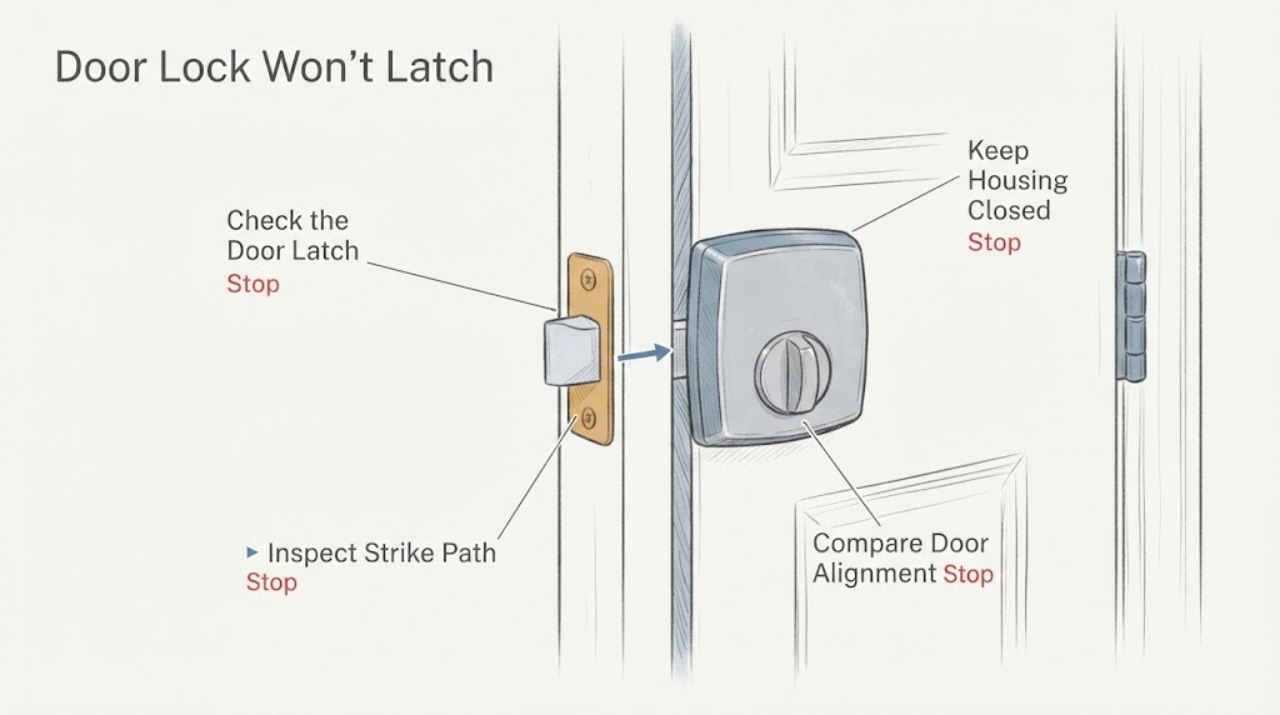
First separate a lock-movement problem from a door-alignment problem. From the secure inside side, leave the door open and gently operate the handle, thumbturn, or key while watching the latch bolt retract and return. If it moves smoothly with the door open but misses the strike when the door is closed, inspect the visible contact, door gaps, hinges, and weatherstripping without forcing the door. If the latch binds while open, the door cannot be secured, or you must push, pull, lift, slam, pry, or bypass anything, stop using the lock and call a qualified locksmith or door professional.
Work through in order
Diagnostic checks
Use only checks that match the exact appliance or system and its official guide.
-
Check 1
With the door open and your fingers clear of the latch path, gently operate the handle, thumbturn, or key and watch the latch at the door edge. Do not force a stiff control.
Expected result: Record whether the latch retracts and returns fully and smoothly, moves only part way, stays recessed, or binds even while the door is open.
Next step: If movement is not smooth, stop testing and arrange a locksmith assessment. If it is smooth, keep the door open between tests and continue with the visible alignment checks.
Stop if: Stop for a stiff key or thumbturn, a loose or cracked lock body, exposed sharp hardware, or any need to force the latch.
Why this matters
Why: Smooth movement with the door open shifts attention to the relationship between the door and frame. Binding, incomplete travel, or a latch that does not return points toward lock or door-hardware service.
-
Check 2
With the door open, visually compare the latch height and center with the strike opening. Inspect the jamb for existing rub marks, dents, loose-looking hardware, debris, or a blocked opening without removing the plate.
Expected result: Note whether the latch is centered on the opening, contacts an upper or lower edge, meets one side of the strike, or has no clear path into it.
Next step: Photograph the latch edge and strike from inside and describe the contact direction to a locksmith or door professional rather than filing, drilling, or repositioning hardware as a guess.
Stop if: Do not enlarge the frame opening, pry the strike, remove security hardware, or use tools to defeat the lock.
Why this matters
Why: A consistent edge contact suggests a strike or door-position mismatch. A clear path with a latch that still fails points back toward the lock mechanism or another condition that needs professional diagnosis.
-
Check 3
Let the door rest closed without force and observe the visible gap along the latch side, top edge, and hinge side. Do not push, pull, lift, or slam the door into position.
Expected result: Look for a uniform gap, a narrowed or widened section, a visibly sagging corner, frame damage, or weatherstripping that appears compressed or obstructive.
Next step: Record whether the symptom varies by season or weather and report the gap pattern with the photos. Do not compensate by applying force to the door.
Stop if: Stop if the door, frame, hinges, or glass appears damaged, loose, unstable, or unable to support normal closure.
Why this matters
Why: An uneven gap or sag pattern can explain why a normally moving latch misses its strike. An obstructive seal can prevent full closure, while frame damage or movement needs professional assessment.
-
Check 4
From the safe inside side, visually inspect the accessible lock trim, latch face, strike plate, hinges, and nearby frame for looseness, cracks, missing pieces, corrosion, or signs of recent installation.
Expected result: Note whether the hardware looks intact and seated, or whether any part is visibly loose, damaged, misaligned, or different from the original preparation.
Next step: Keep the door open or use a safe alternate entry while arranging a qualified locksmith. Provide the lock type, visible brand or model marking, and hardware photos.
Stop if: Do not remove the lock case, pull the cylinder, disconnect smart-lock wiring, or continue if the door cannot be secured.
Why this matters
Why: Visible damage or a recent installation change can explain the latching failure and affect security. An intact exterior with a persistent failure still does not justify disassembly or a guessed replacement.
-
Check 5
Confirm from a safe position that the latch moves smoothly with the door open, the door and frame are intact, the strike path is visible, and the door can remain securely closed without force.
Expected result: Answer yes only when every condition is true. Answer no for binding, unclear alignment, damage, an unsecured entry, or any need to push, lift, pry, or bypass.
Next step: For no, stop operating the lock and use the service-call checklist. For yes, provide the latch travel, strike contact, door-gap pattern, hardware identity, and timing of the problem to a locksmith or door professional.
Stop if: Do not continue repeated closure tests, forced-entry attempts, lock bypass, picking, drilling, or unapproved disassembly.
Why this matters
Why: Yes supports a documented alignment conversation with a professional. No means the immediate priority is securing the opening and obtaining qualified service, not ordering a generic lock or making a structural alteration.
Use your observations
Decision map
Find the observation that best matches what you see, then follow the next safe action.
-
PATH 01Safety boundary
What you see
The latch binds, remains recessed, or fails to return while the door is open.
Do this next
Stop operating the lock and call a qualified locksmith; keep the door open or use a safe alternate entry while waiting.
Why this path and its safety boundary
Why it matters: The lock or latch assembly needs a professional assessment rather than an alignment adjustment.
Safety stop: Do not spray unknown products into the lock, force the key or thumbturn, remove the cylinder, or disassemble the lock.
-
PATH 02Safety boundary
What you see
The latch moves smoothly open but contacts the upper, lower, or side edge of the strike when the door rests closed.
Do this next
Have a locksmith or door professional assess the frame, hinges, weatherstripping, and strike together.
Why this path and its safety boundary
Why it matters: The door position, frame, hinges, weatherstripping, or strike path may be out of alignment.
Safety stop: Do not file, chisel, drill, pry, or move the strike as a security or fitment guess.
-
PATH 03Safety boundary
What you see
The door latches at some times but not others, or the problem tracks humidity, temperature, or seasonal change.
Do this next
Record the timing and visible gap pattern while the symptom is present and arrange an alignment assessment.
Why this path and its safety boundary
Why it matters: The door, frame, hinges, or weatherstripping may be changing position enough to interfere with the latch.
Safety stop: Stop if the door must be lifted, pulled, or slammed to secure it, or if frame movement or damage is visible.
-
PATH 04Safety boundary
What you see
The entry cannot be secured, the door or frame is damaged, or the source of the failure is not clear from safe observation.
Do this next
Stop using the lock and contact a qualified locksmith or door professional for prompt assessment.
Why this path and its safety boundary
Why it matters: The immediate issue is security and safe access, not a trial-and-error repair.
Safety stop: Do not leave an unsecured exterior opening unattended and do not attempt to defeat, bypass, or force the lock.
Helpful context
Understand the symptom
Separate latch movement from door alignment
The latch is the spring-loaded piece at the door edge; the strike plate and its opening are in the frame. A latch that retracts and returns smoothly while the door is open but hits the upper, lower, or side edge of the strike when the door rests closed points toward alignment, frame movement, hinge sag, weatherstripping, or the strike path. A latch that binds or stays recessed with the door open points toward the lock or latch assembly instead.
Keep the entry secure while checking
Perform the first check from inside with the door open whenever possible. Do not test by slamming the door, pushing or lifting it into position, repeatedly turning a stiff key, or leaving an exterior entry unsecured. A failed latch is a security problem as well as a fit problem, so use a safe alternate entry or keep the door open while arranging service if it cannot remain secured normally.
Weather and frame movement can be intermittent
Temperature and moisture can change a door, frame, or weatherstrip enough to alter the latch position. If the lock works at some times but not others, record the weather or season, the visible gap pattern, and whether the door needs to be pushed, pulled, or lifted. That pattern helps a professional distinguish movement of the opening from a failing lock component.
Safety boundary
Stop conditions
- Stop immediately for an unsecured entry, damaged frame or door, binding hardware, a stiff key or thumbturn, or any need to bypass, pick, drill, pry, force, or disassemble the lock.
- Do not remove security hardware, enlarge the frame opening, or move the strike as a guess.
- Do not push, pull, lift, or slam the door into position to make it latch.
- If the source of the failure is unclear or the door cannot remain secured, use a safe alternate entry and contact a qualified professional.
Only after diagnosis
Potential parts
- strike plate
Consider only after a professional confirms that the latch is healthy and the existing strike is the correct repair path for the observed contact or damage.
Match the lock function, frame preparation, screw pattern, finish, and security requirements; do not assume a generic plate fits or preserves the opening's security. - latch bolt
Consider only when the latch fails to move or return with the door open and the professional identifies the latch as the failed component.
Confirm the lock family, faceplate style, backset, handing, and door preparation before ordering; compatibility cannot be inferred from appearance alone. - door lock replacement
Consider a complete replacement only after the lock failure, door preparation, security function, and fit have been assessed; an alignment problem alone does not prove the lock needs replacement.
Confirm door thickness, bore and backset, function, handing, frame condition, and any smart-lock or keying requirements with the manufacturer or professional.
When checks do not resolve it
Need a professional?
Call a qualified locksmith or door professional when the latch does not move smoothly with the door open, the door cannot be secured, the strike or frame is damaged, the door must be forced into position, or the alignment cause is unclear.
Have this ready
- Lock brand or model if visible, without sharing keys or security codes
- Latch behavior with the door open
- Where the latch contacts the strike
- Door-gap, hinge, frame, and weatherstripping observations
- Whether the problem changes with weather or season
- Clear photos taken from the inside and what was not opened or adjusted
Common questions
FAQ
Why does the door lock work with the door open but not when it is closed?
That pattern usually shifts attention from the latch mechanism to the relationship between the latch and strike: door sag, frame movement, weatherstripping, or a strike opening that is no longer aligned. Check the visible contact and gaps without forcing the door, then arrange professional alignment help.
Should I move or file the strike plate?
Not as a first diagnostic step. A strike change can affect security and may not address a sagging door, damaged frame, or failing latch. Document which edge is contacted and have a locksmith or door professional assess the complete alignment.
What if I have to lift or pull the door to make it latch?
Treat that as an alignment or sag warning, not a cue to keep forcing the door. Record the condition while it is present and seek professional service, especially if the door cannot remain secured normally.
Is the latch bolt automatically the problem?
No. A latch that travels smoothly with the door open may be healthy while missing an out-of-position strike. A latch replacement is conditional on observing a movement problem with the door open and confirming fitment.
Read the exact guide
Official sources
- How to install a deadbolt lockSchlage · Manufacturer guidance used to distinguish smooth bolt movement with the door open from dragging at the strike with the door closed; it does not establish a universal fit for an unspecified lock.
- How to fix a door that won’t latch.Schlage · Manufacturer guidance used for general diagnostic distinctions; it is not a model-specific authorization to alter an unknown door or lock.
Community feedback
Share a repair observation
Share a plain-text repair observation. Accepted observations are published automatically; this page may take a moment to update.