
Repair service
Locksmith Guides
Locks, keys, access hardware, and security guidance.
Published locksmith guides
Choose the guide that best matches the service and problem you are seeing.
-
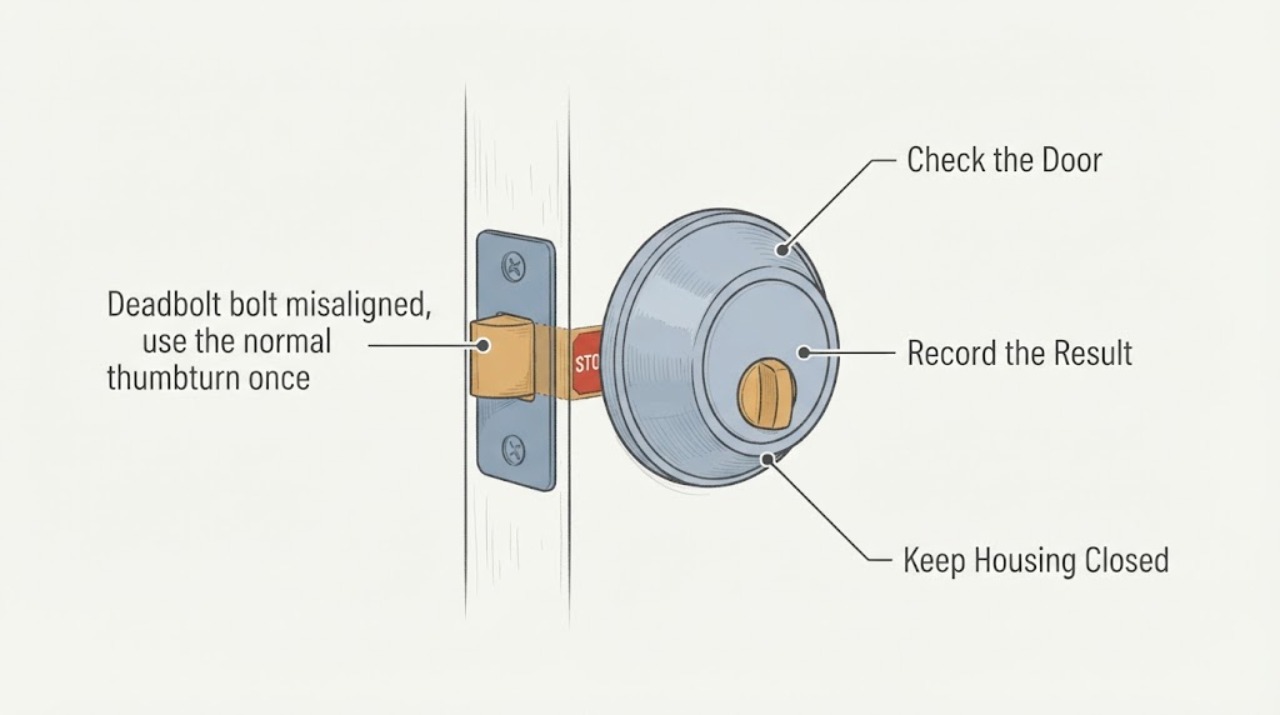
Deadbolt bolt misaligned: What to Check and What to Do Next
If a deadbolt works with the door open but rubs, stops short, or only locks when the door is pushed, pulled, or lifted, the bolt and the strike opening are probably out of alignment. A lawful owner can compare the lock open and closed, note visible contact marks and door movement, and then give those observations to a locksmith. Do not force the key or thumbturn, leave a door that cannot be secured in service, or attempt any bypass or destructive entry.
-
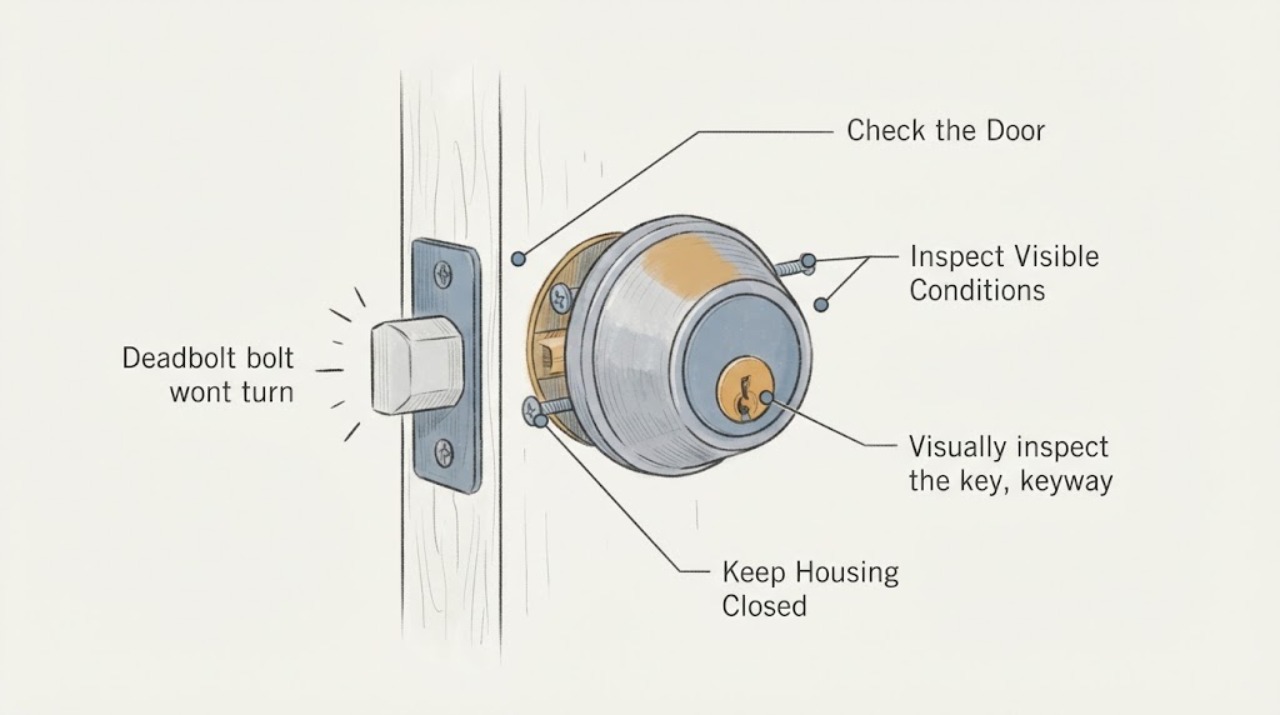
Deadbolt bolt wont turn: What to Check and What to Do Next
If a deadbolt bolt will not turn, keep the door in the safest lawful position available and do only external, gentle observations on a door and lock you own or are authorized to manage. Compare the key or interior thumbturn with the door open versus closed, look for visible strike or frame misalignment, and note whether the bolt is obstructed or the cylinder turns without moving it.
-
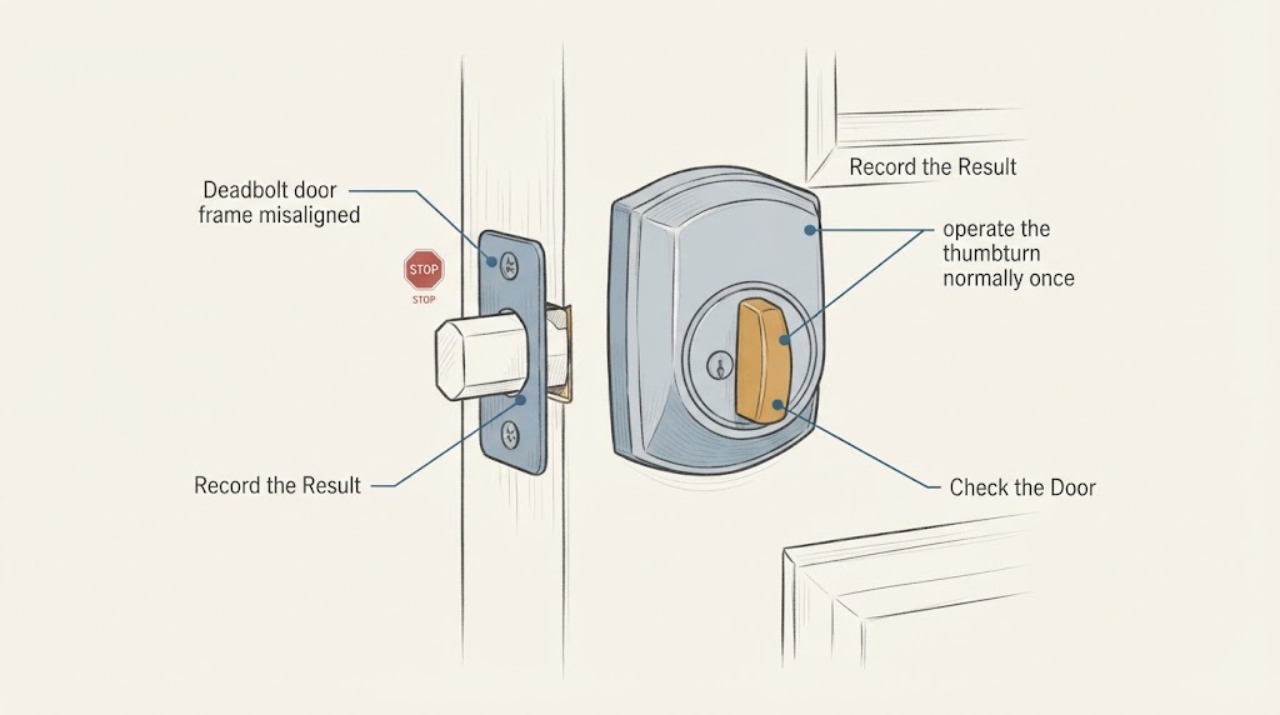
Deadbolt door frame misaligned: What to Check and What to Do Next
If a deadbolt works with the door open but rubs or stops when the door is closed, compare the door, frame, strike opening, hinges, and visible weather seal as one alignment system. A lawful owner can observe the bolt with the door open, make one gentle closed-door test from the safe interior side, and record visible gaps or contact marks.
-
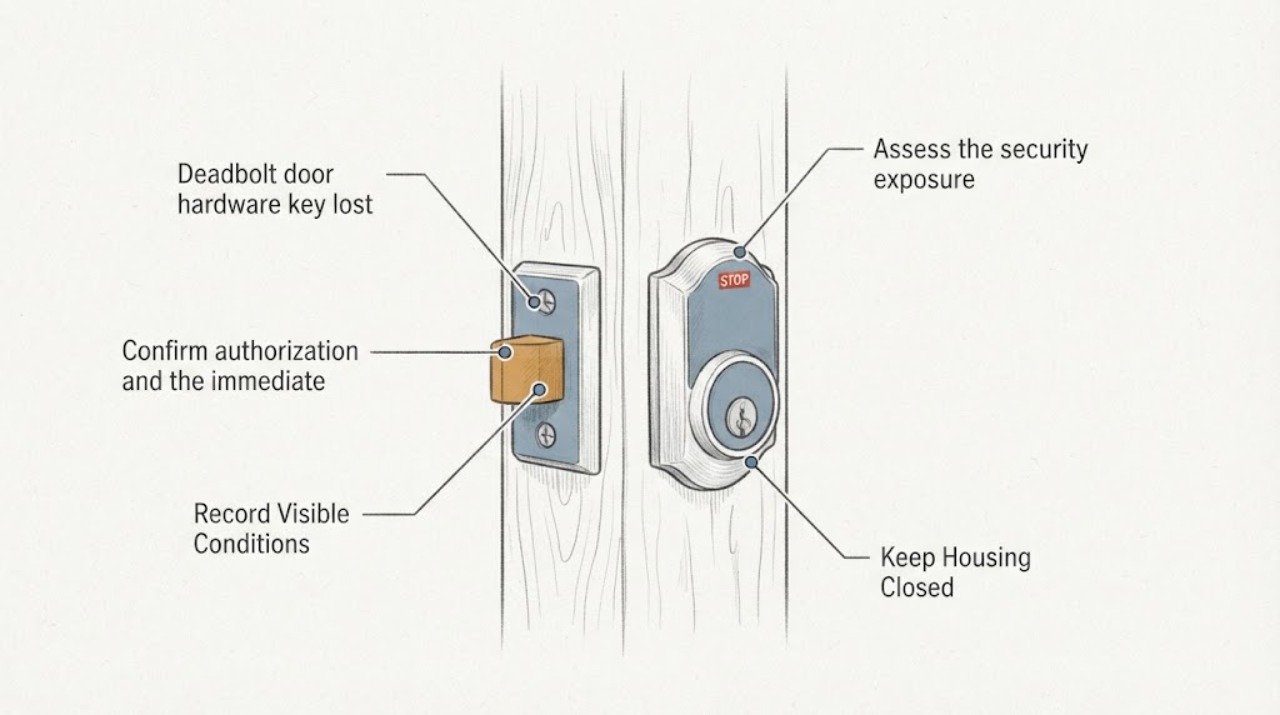
Deadbolt door hardware key lost: What to Check and What to Do Next
A lost deadbolt key is a security and access problem, not a reason to defeat the lock yourself. From a safe position, confirm that you own or are authorized to secure the property, record the deadbolt's visible brand and hardware details, and determine whether the key may have been lost, stolen, or left with someone who should no longer have access.
-
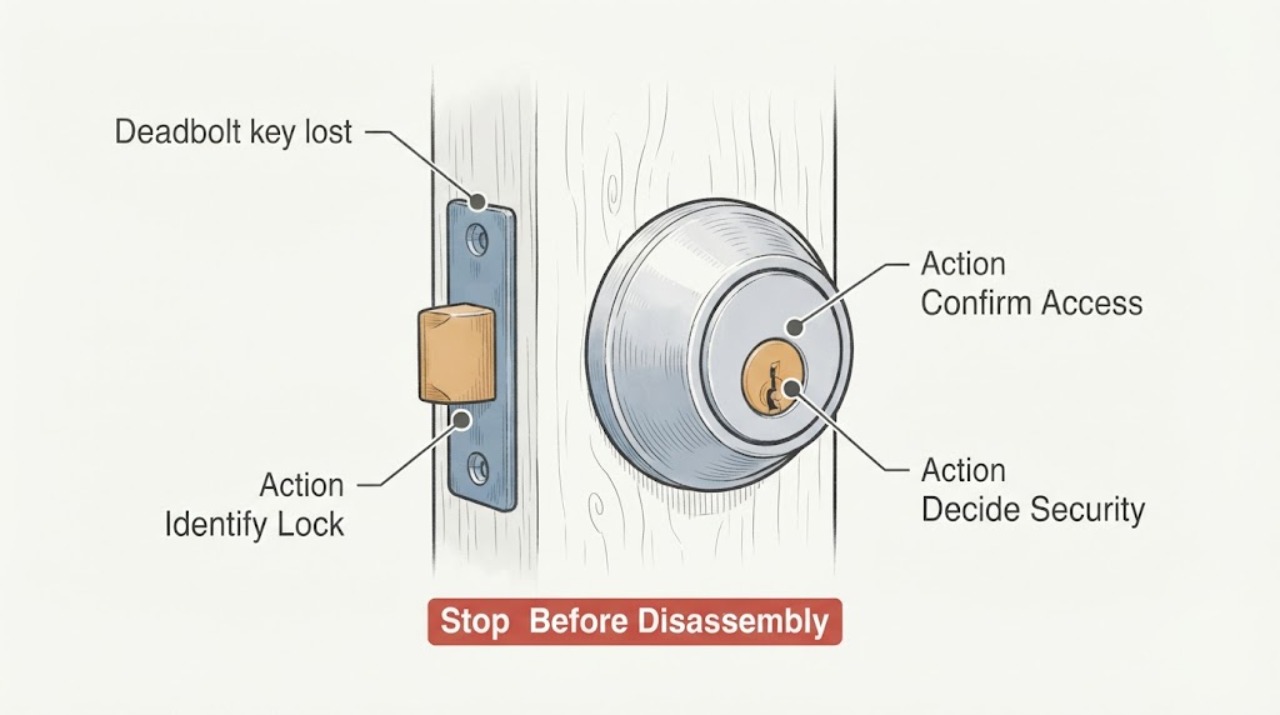
Deadbolt key lost: What to Check and What to Do Next
If the key to a deadbolt is lost, do not try to defeat or force the lock. First determine whether the door is already secure and whether you still have a different working key.
-
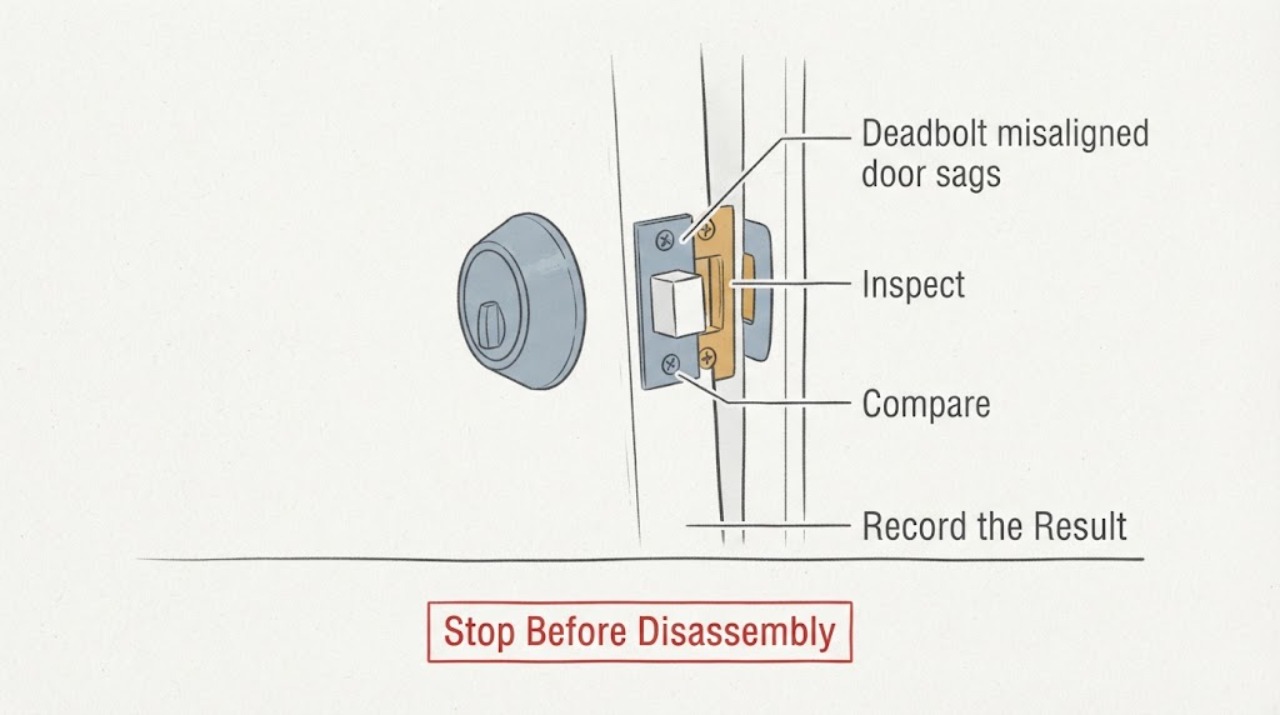
Deadbolt misaligned door sags: What to Check and What to Do Next
When a door sags and the deadbolt is misaligned, first check from the secure side whether the door must be lifted, pushed, or pulled for the bolt to meet the strike. Record where the bolt rubs and whether the door gap or hinge side has shifted, but do not force the lock or remove hardware. A qualified locksmith should confirm whether the cause is hinge or frame movement, strike alignment, or the deadbolt itself before any part is selected.
-
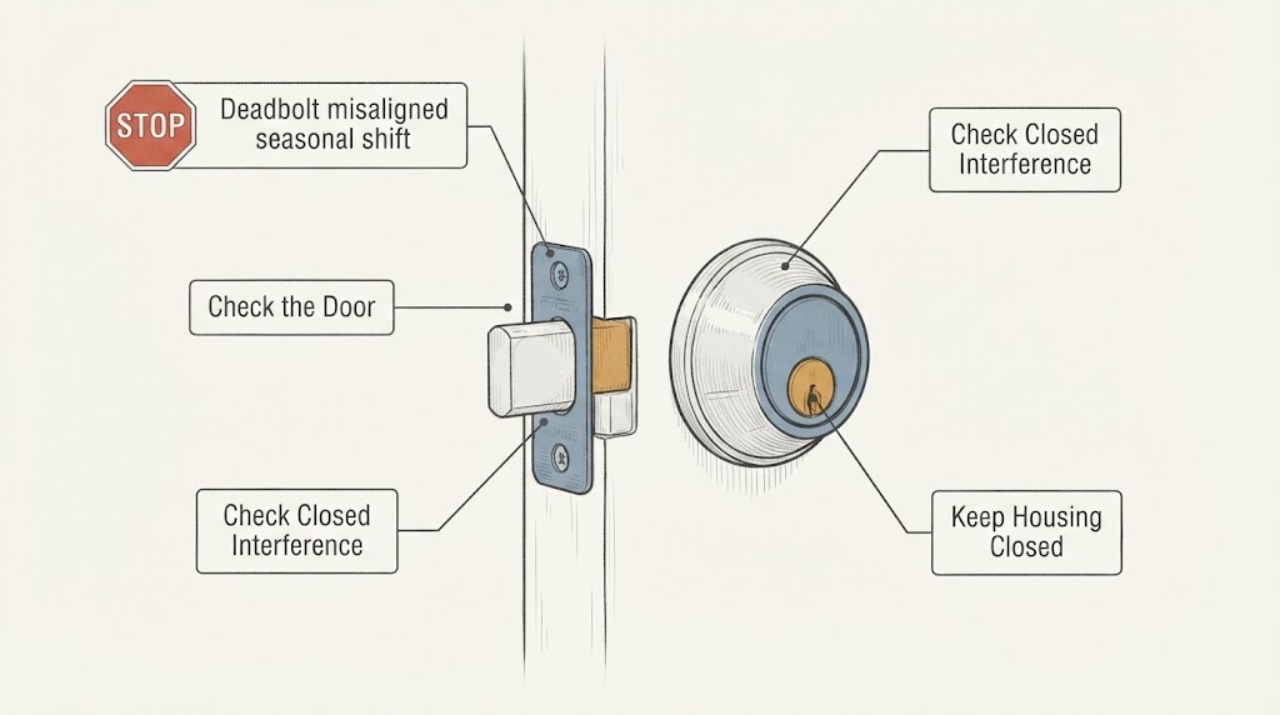
Deadbolt misaligned seasonal shift: What to Check and What to Do Next
A deadbolt that binds as seasons change usually reflects door, frame, strike, hinge, or weatherstrip movement. Test only with the door open and the bolt unloaded, then observe whether the bolt is smooth; do not force the key, enlarge the pocket, or defeat a lock. If alignment remains difficult or the door must be pushed, lifted, or pulled, arrange locksmith service.
-
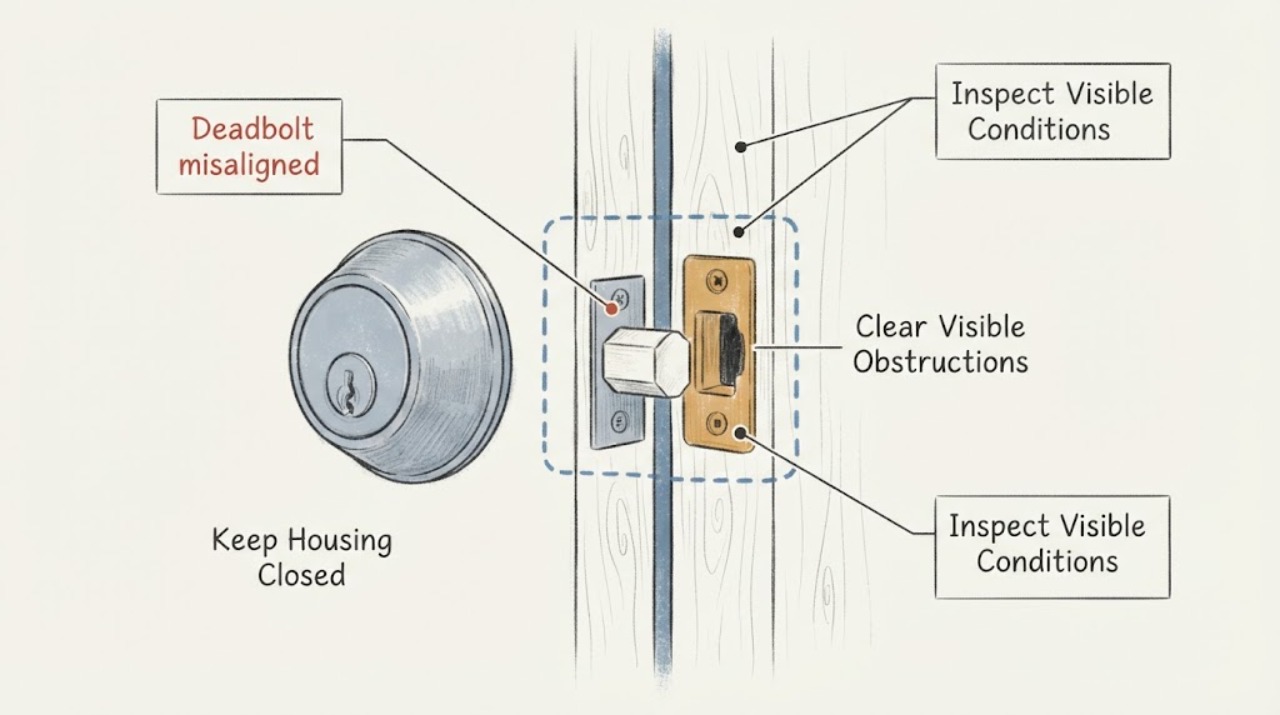
Deadbolt misaligned: What to Check and What to Do Next
A deadbolt that hits the strike or needs the door pushed, pulled, or lifted is usually an alignment problem between the door, frame, strike, or bolt—not a reason to force the key or modify the opening. From the secure side, test the bolt with the door open and then closed without applying pressure.
-
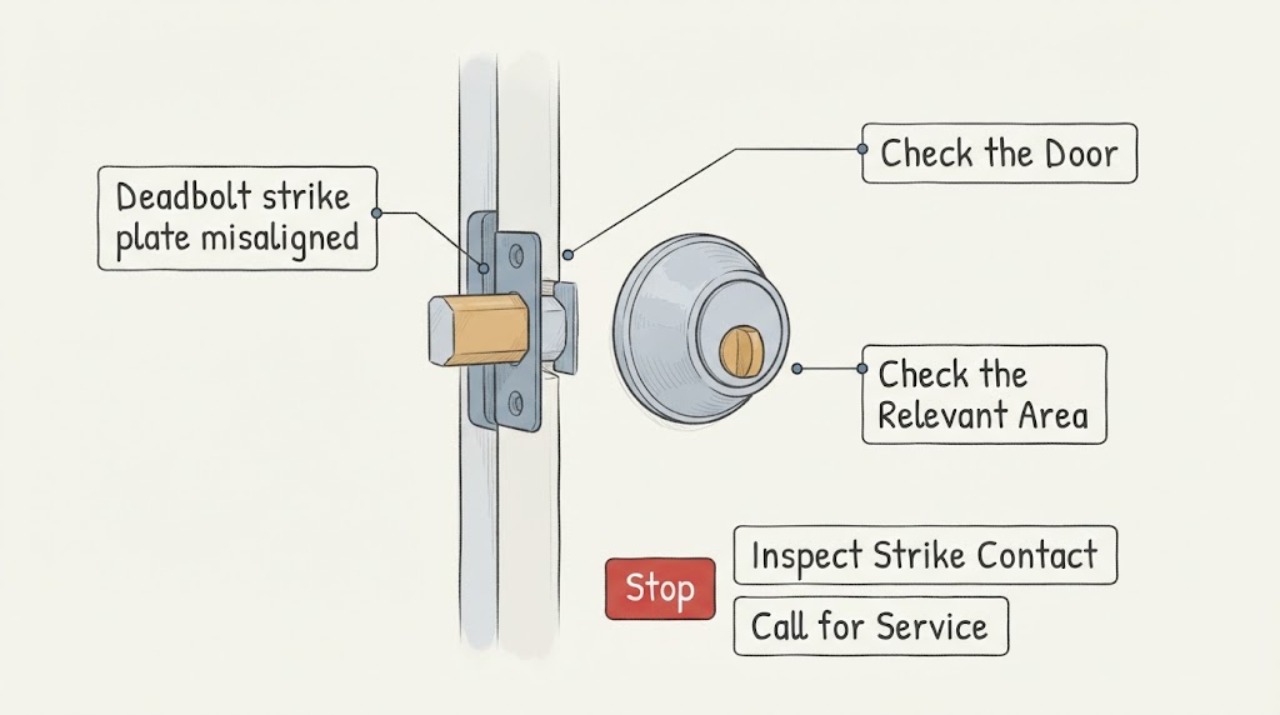
Deadbolt strike plate misaligned: What to Check and What to Do Next
A deadbolt that works with the door open but drags, rubs or stops when the door is closed usually has a door-to-frame alignment problem, not a key or bypass problem. If you are the lawful owner or authorized occupant, keep the door open while checking that the bolt moves smoothly, then make only gentle, no-force observations of the strike, hinges, weatherstripping and frame.
-
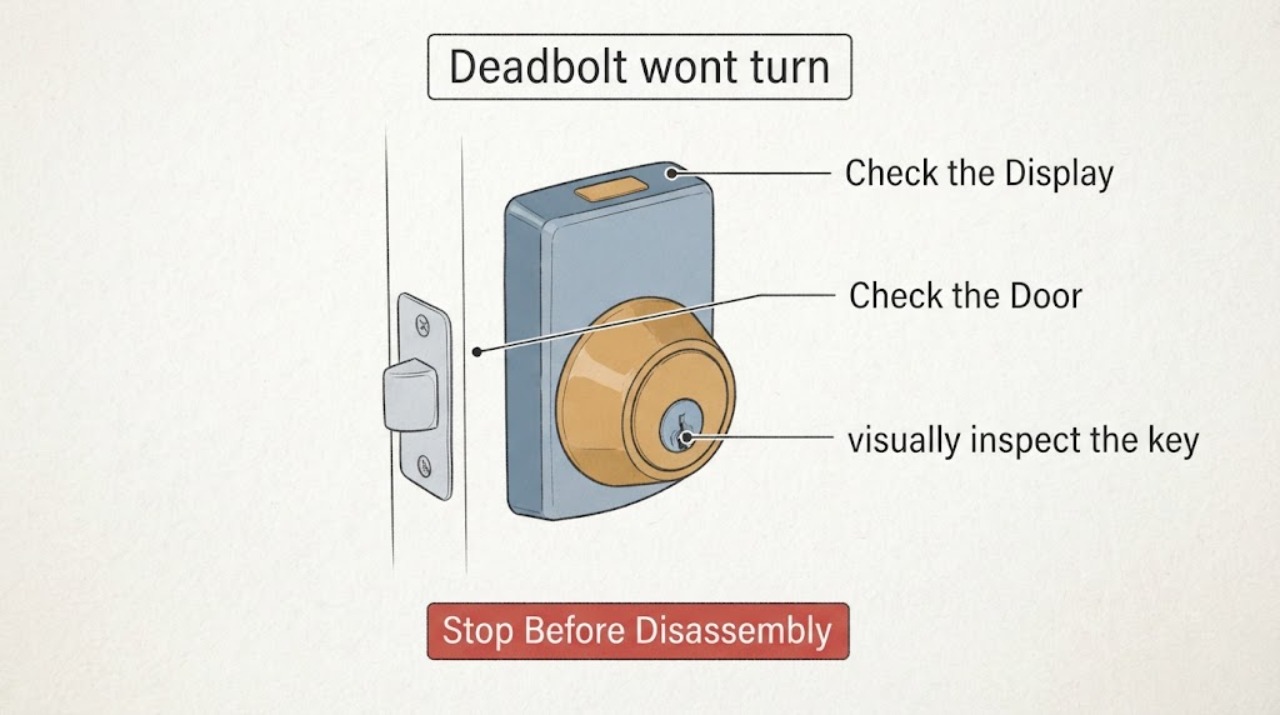
Deadbolt wont turn: What to Check and What to Do Next
Do not twist the key harder or try to defeat the lock. First, with the door open and from the side where you have lawful access, gently test the key and the inside thumbturn through their normal range.
-
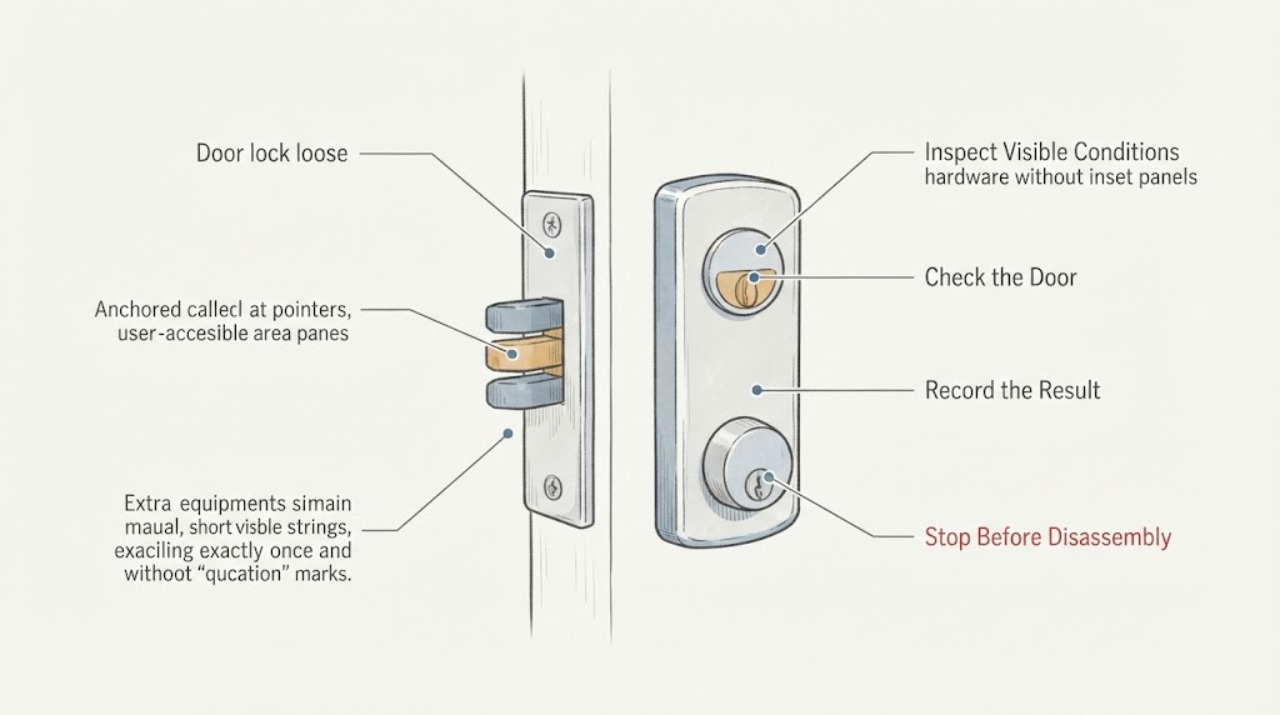
Door lock loose: What to Check and What to Do Next
A loose door lock can be loose trim, a moving handle or knob, a latch that no longer meets the strike, or damage around the mounting area. From a normal standing position, inspect the visible hardware, then observe the key, handle, latch, and strike with the door open and closed normally.
-
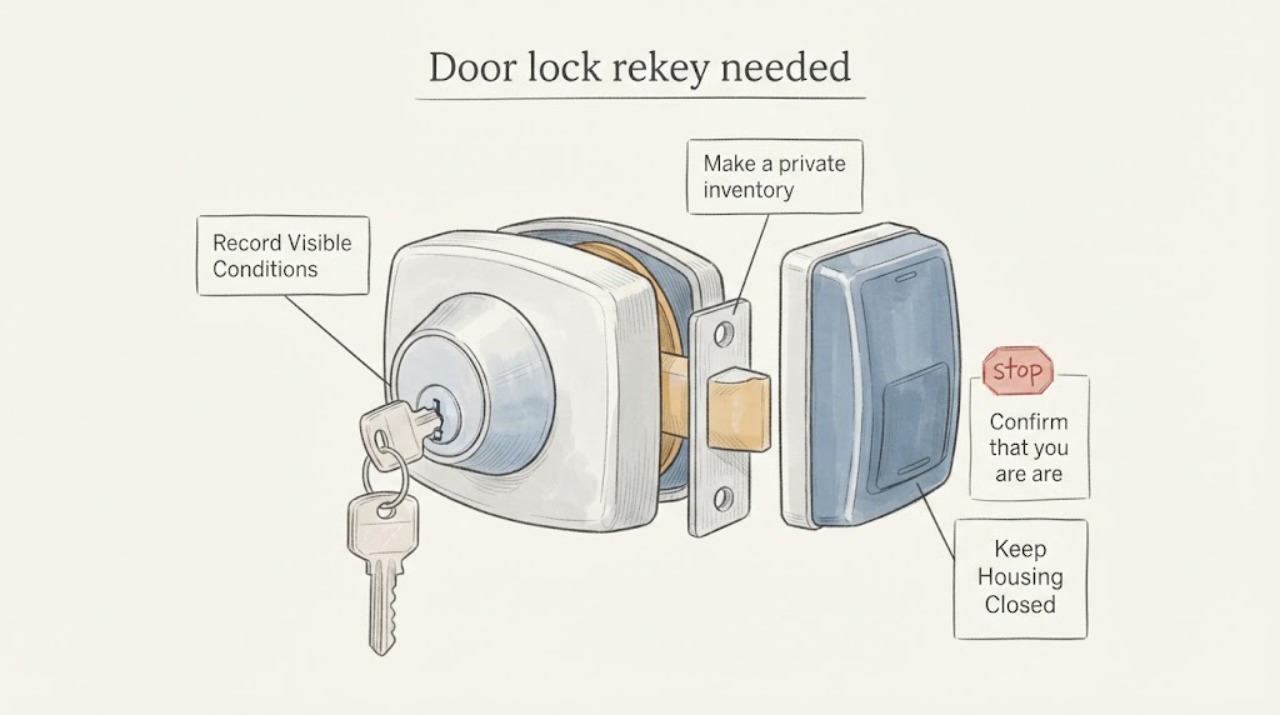
Door lock rekey needed: What to Check and What to Do Next
A rekey is usually the right service when the lock hardware is usable but you no longer trust who has copies of the keys—for example after moving, a tenant change, a lost or unreturned key, or a change in ownership. Before scheduling, confirm that you are authorized to change the lock, identify the lock type and visible brand or model without exposing a key code, list which old keys are missing or untrusted, and note whether the door and lock currently operate normally.
-
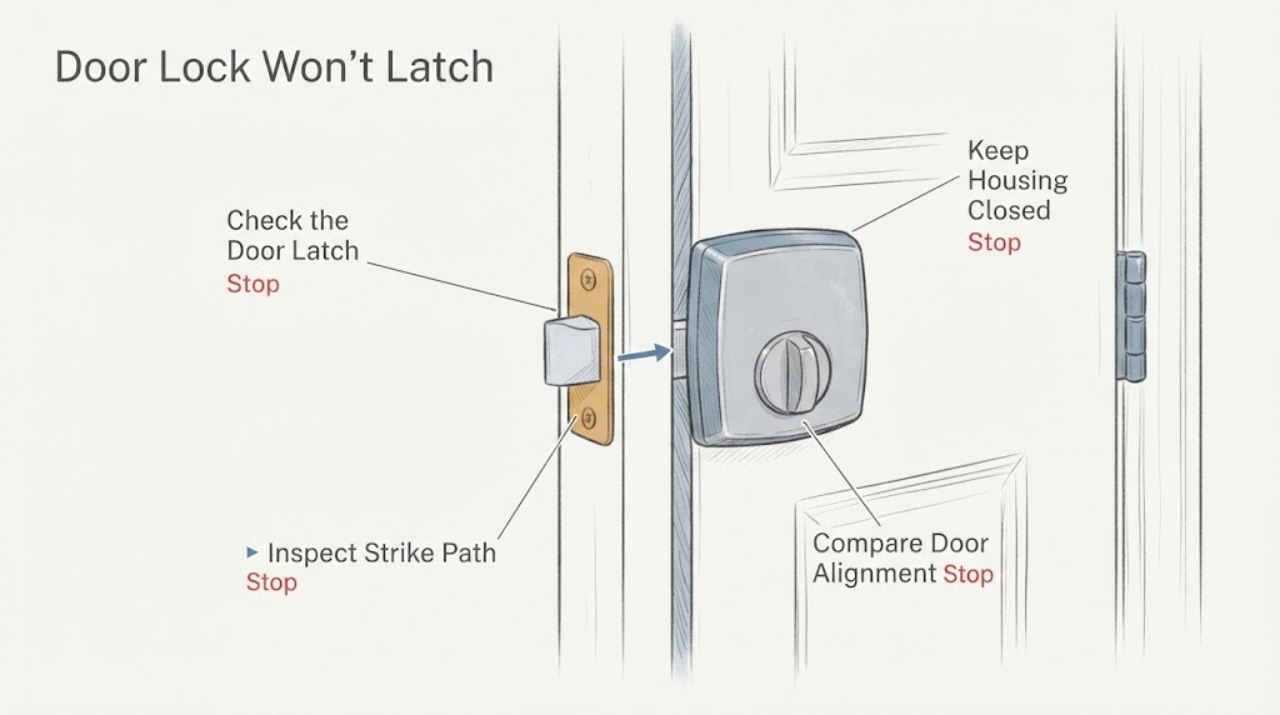
Door Lock Won't Latch: What to Check and What to Do Next
First separate a lock-movement problem from a door-alignment problem. From the secure inside side, leave the door open and gently operate the handle, thumbturn, or key while watching the latch bolt retract and return.
-
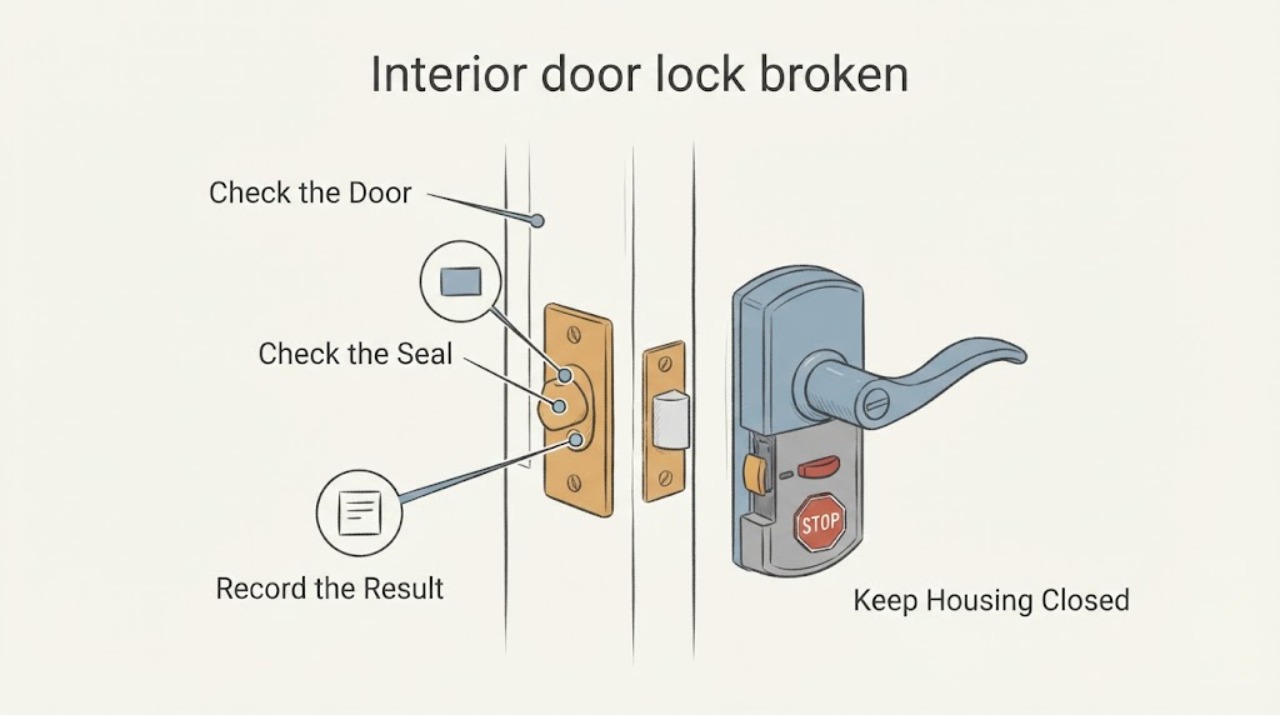
Interior door lock broken: What to Check and What to Do Next
Do not force, pick, bypass, or destructively take apart a broken interior door lock. If the door is open, keep it open while you make a few gentle observations: check whether the handle or privacy turn moves the latch with the door open, compare that behavior with the door closed only if you can safely reopen it, and look for a loose handle, shifted strike, or hinge-side sag.
-
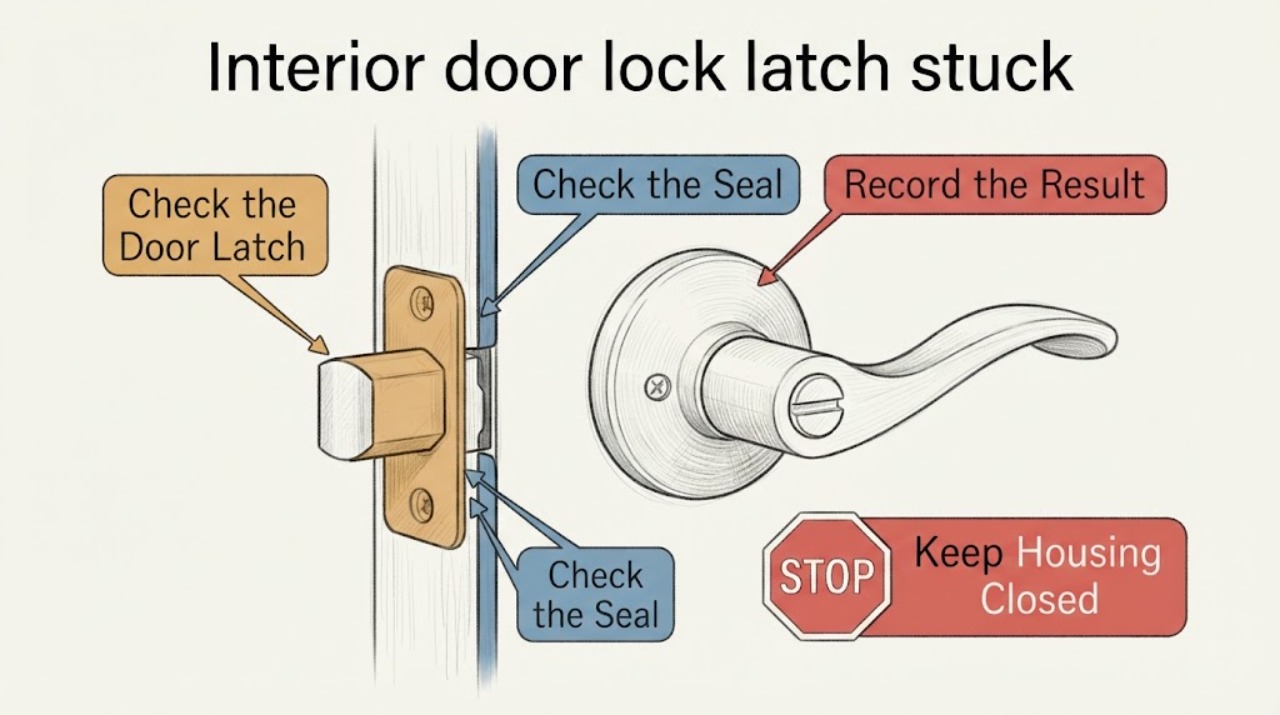
Interior door lock latch stuck: What to Check and What to Do Next
Do not force a stuck interior latch or use a bypass method. If the door is open and access is authorized, keep it open while you gently observe whether the handle retracts and returns the latch, whether the latch works only when the door is away from the strike, and whether the door or strike looks shifted or loose.
-
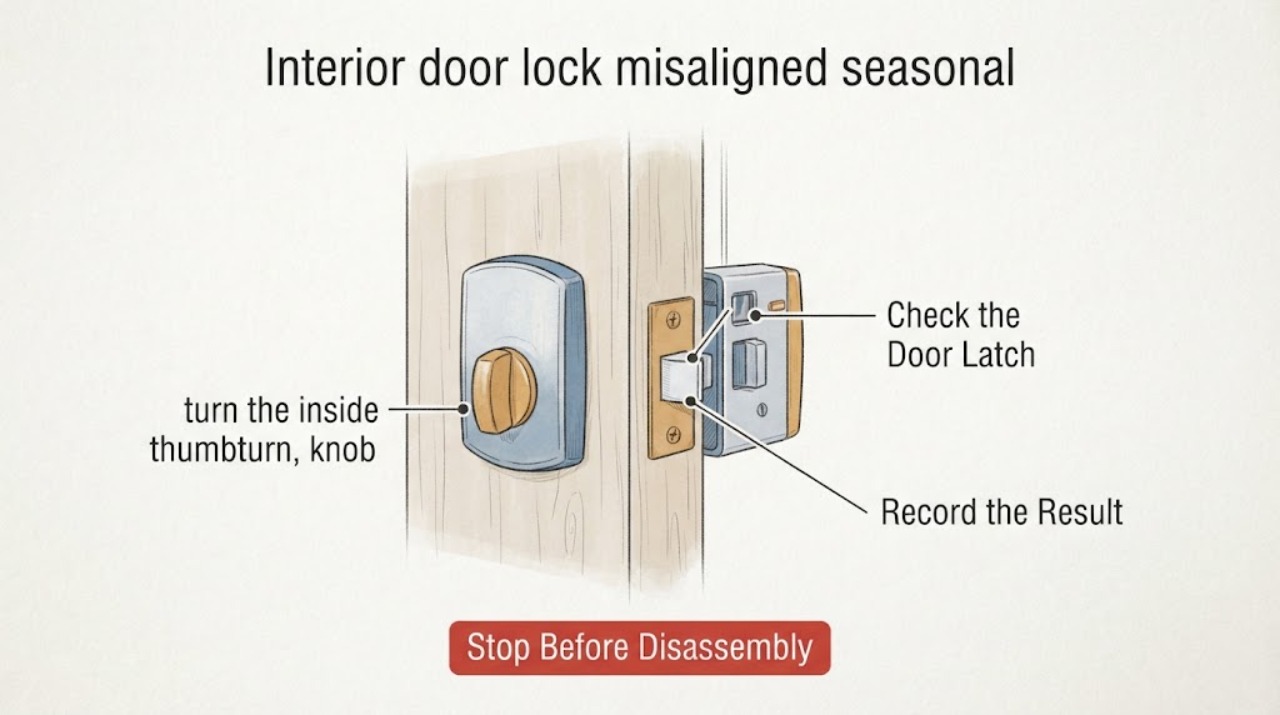
Interior door lock misaligned seasonal shift: What to Check and What to Do Next
A seasonal door shift usually shows up as a latch or bolt that works smoothly with the door open but rubs the strike or jamb when the door is closed. Test the lock with the door open first, then close the door without lifting or pulling it and look for the contact point.
-
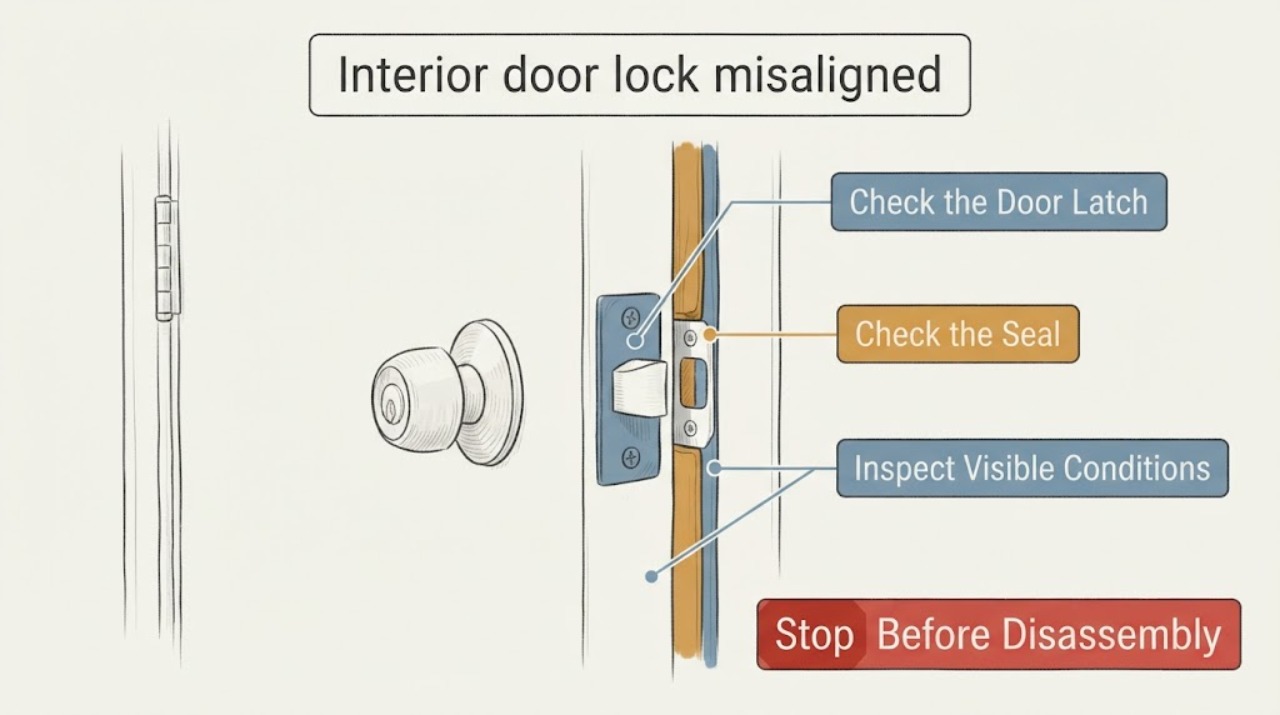
Interior door lock misaligned: What to Check and What to Do Next
Keep the door open while checking whether the latch and lock operate smoothly, then close it gently and observe where the latch or bolt meets the strike. Note any rubbing, a shifted gap, a loose-looking hinge, a door that sags, or a change with season or humidity.
-
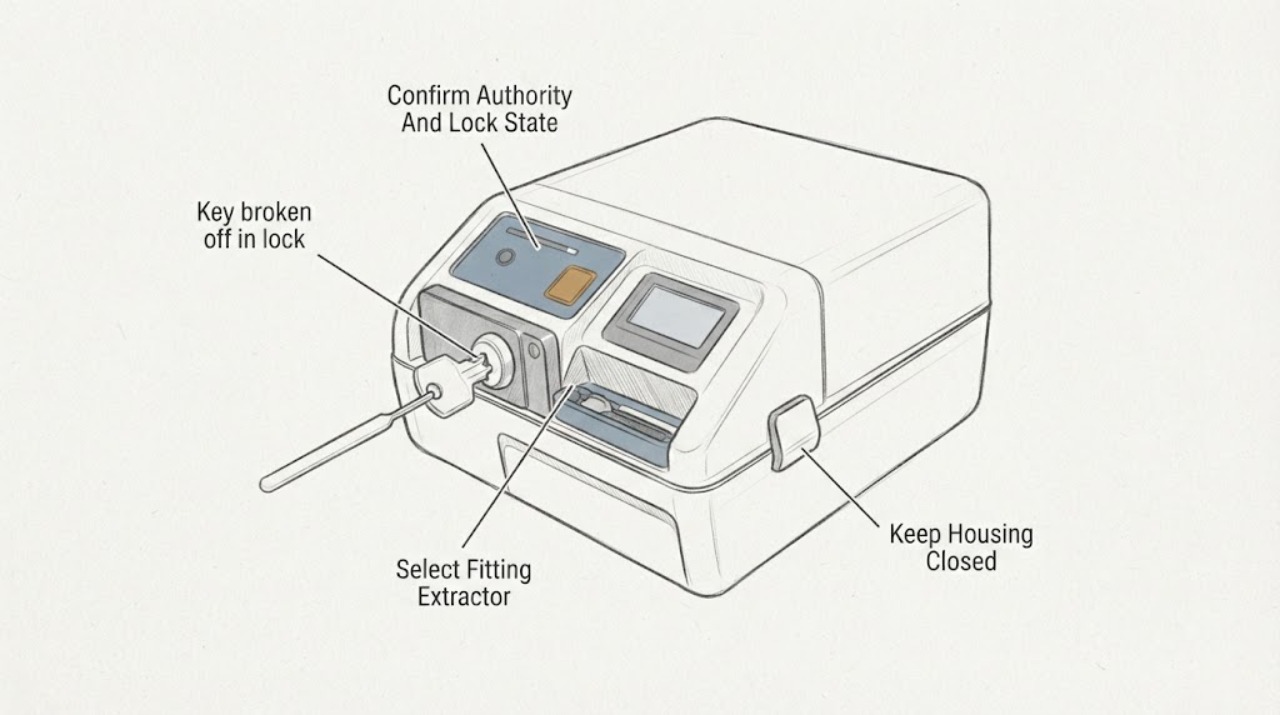
Key broken off in lock cylinder: How to use an extractor tool safely
If a key has broken off in a lock cylinder, stop turning the key or pushing the fragment farther in. Confirm that the lock is yours or that you are authorized to service it, and proceed only when the cylinder is in its normal key-in position, the fragment is visible or its location is clear, and the extractor can enter without force.
-
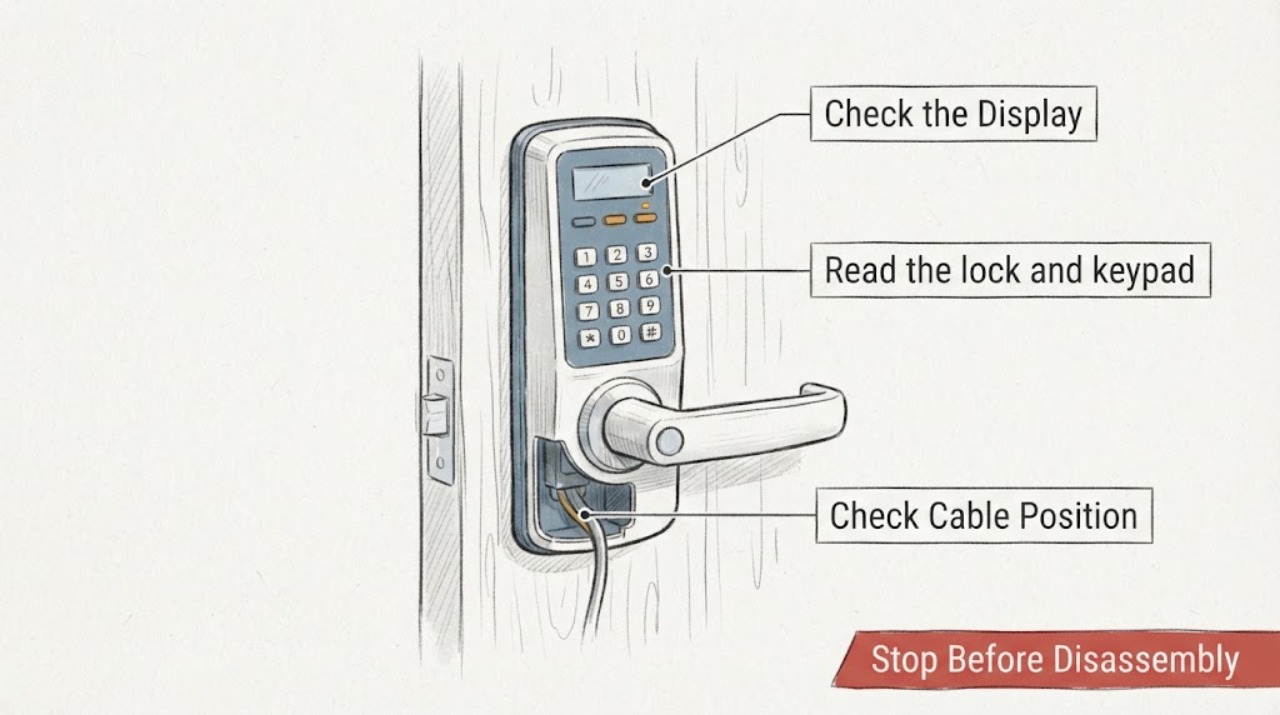
Keypad lock battery low intermittent response: What to Check and What to Do Next
A low or unevenly seated battery can make a keypad lock respond only sometimes, delay the motor, or stop the keypad from waking. First record whether the keypad shows a low-battery light or sound, whether the keypad lights up but the lock does not move, and whether the lock works with the door open.
-
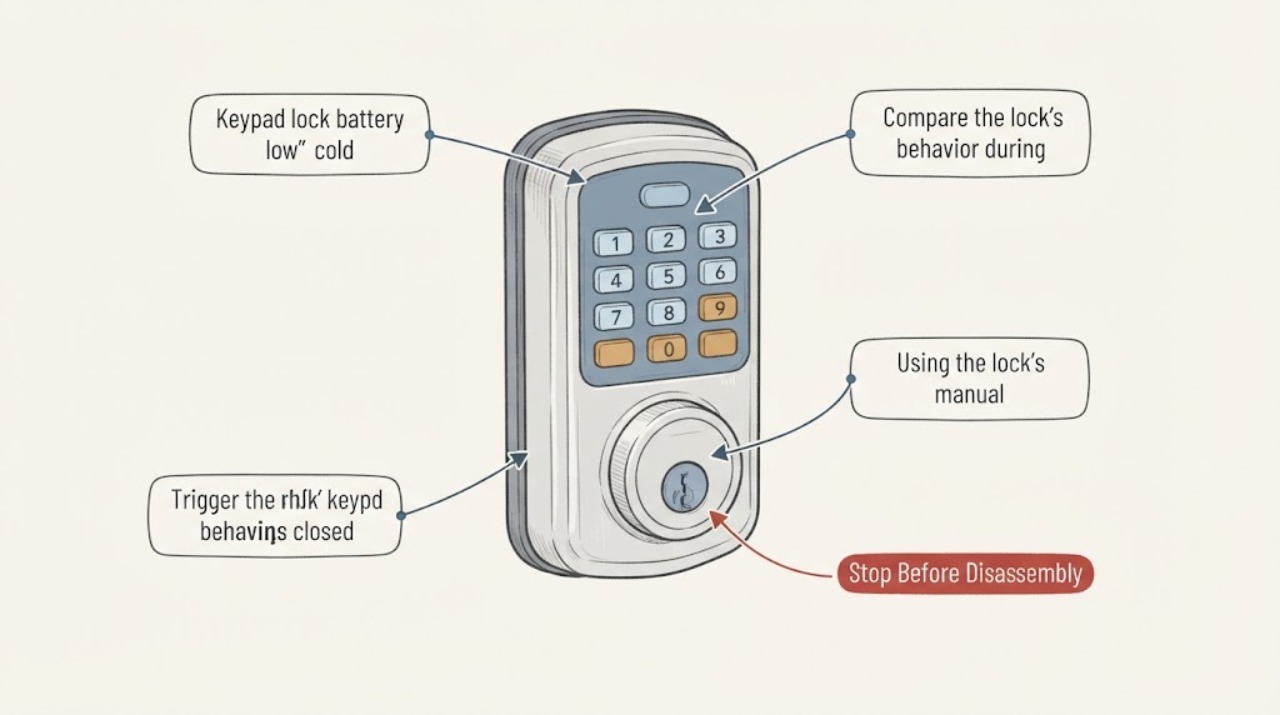
Keypad lock battery low cold weather: What to Check and What to Do Next
Cold weather can make a partly depleted battery deliver less power, so a keypad lock may beep, respond slowly, or fail to move the latch even though it worked in milder weather. Confirm the warning at the lock, replace the complete battery set with the exact type specified for that lock, and then test the latch with the door open.
-
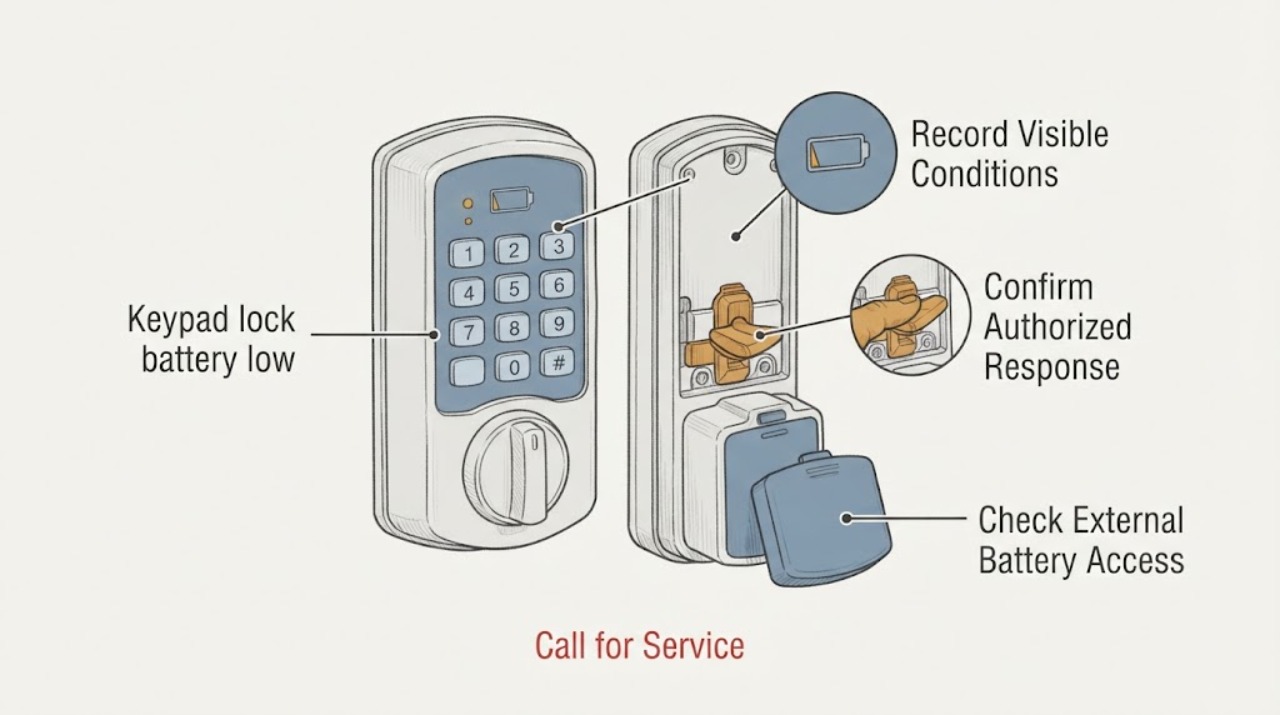
Keypad lock battery low: What to Check and What to Do Next
Treat a low-battery warning as a time-sensitive maintenance signal, not as a reason to disable or bypass the lock. Observe the keypad light, tone, app status, and whether an authorized code produces the normal response.
-
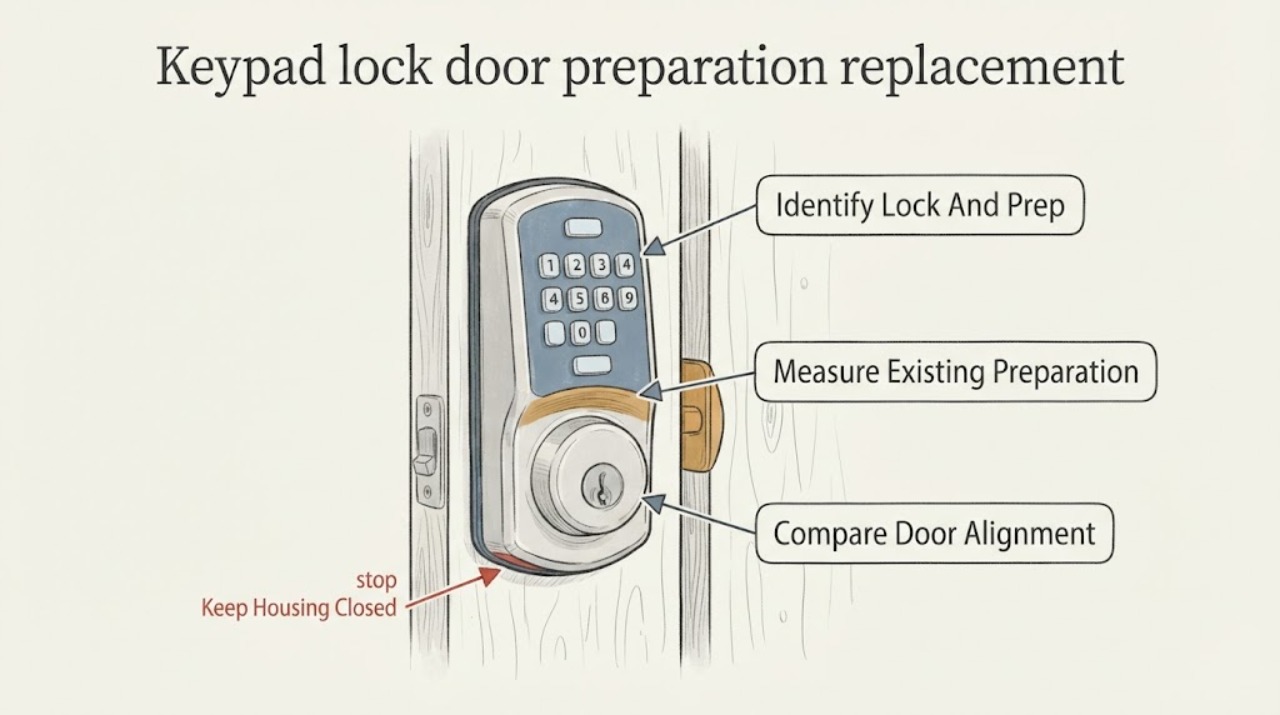
Keypad lock door preparation replacement needed: What to Check and What to Do Next
Before buying or drilling for a replacement keypad lock, compare the existing door preparation with the exact replacement's installation guide. Record the lock type, cross-bore and edge-bore size, backset, door thickness, faceplate or drive-in style, and strike location.
-
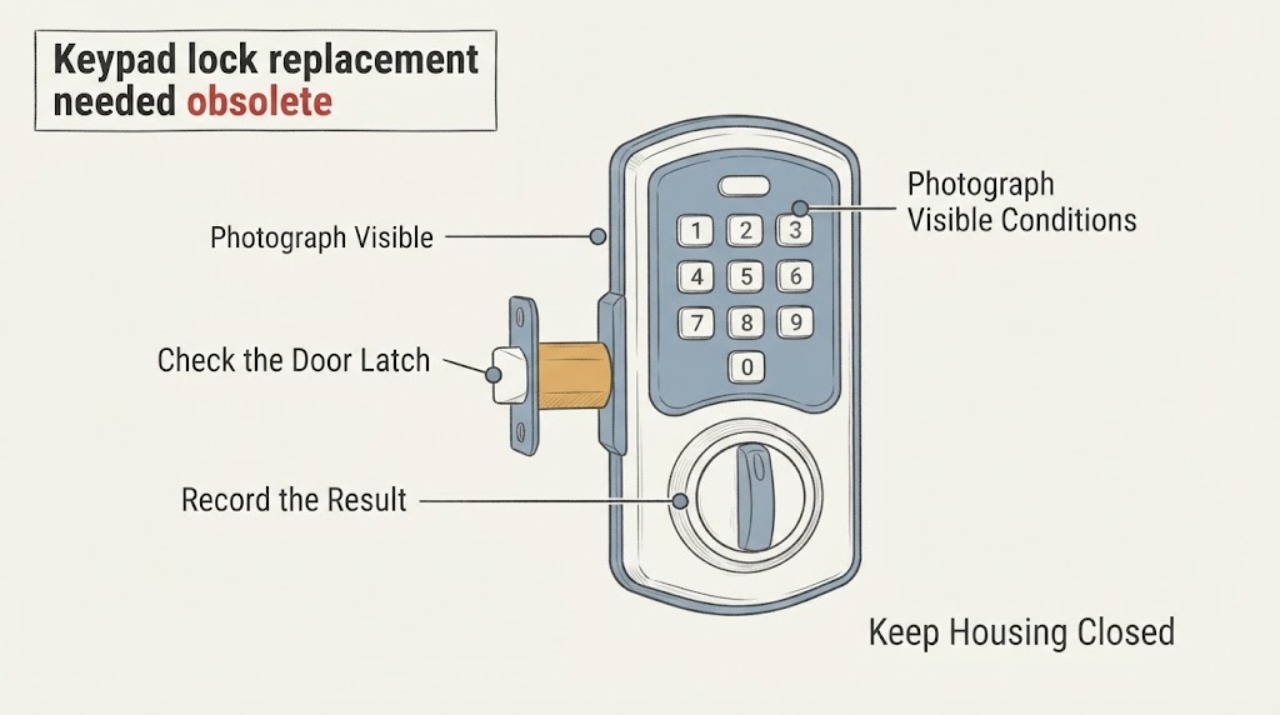
Keypad lock replacement needed obsolete model: What to Check and What to Do Next
An obsolete keypad-lock model is not automatically a drop-in replacement. First record the exact model from the inside battery cover or other product label, preserve a working mechanical entry method, and determine whether the lock is a deadbolt, lever, keyed, keyless, or smart assembly.
-
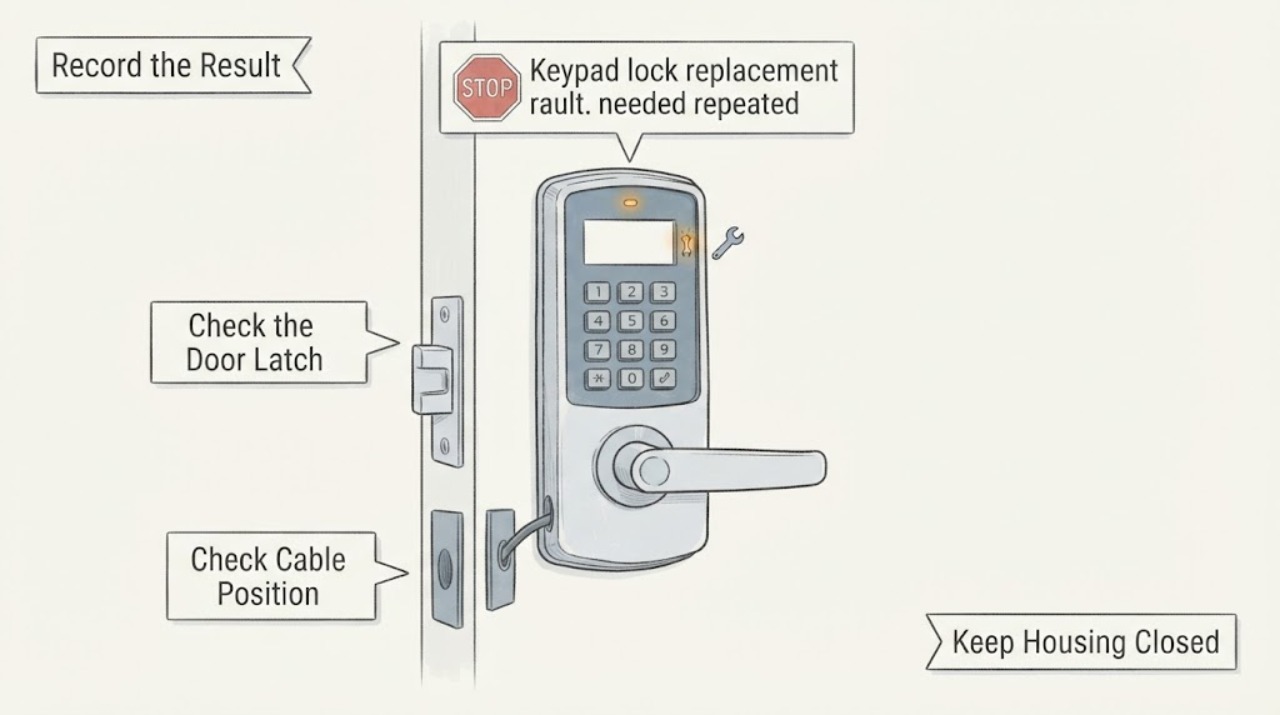
Keypad lock replacement needed repeated faults: What to Check and What to Do Next
Repeated keypad-lock faults do not prove that the whole lock needs replacement. First keep the door open and record the exact symptom, battery state, keypad response, latch movement, door alignment, and any app or access-system message.
-
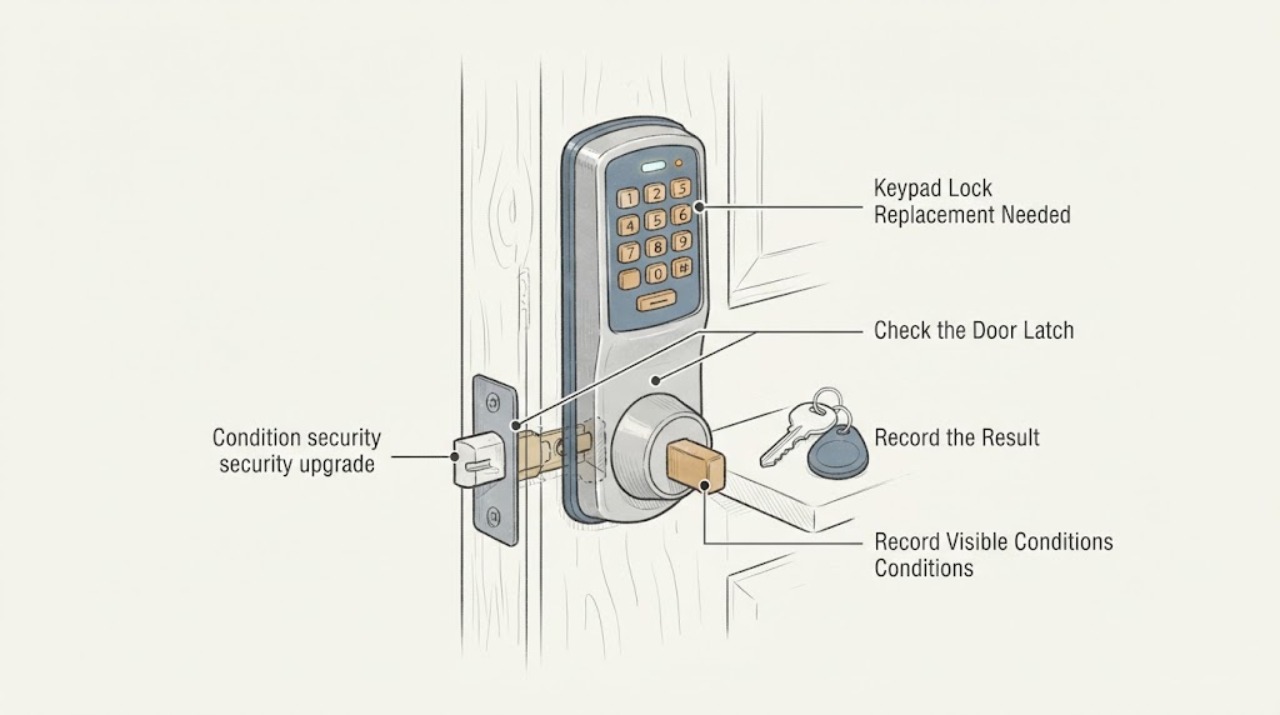
Keypad Lock Replacement Needed for a Security Upgrade: What to Check and What to Do Next
Replacing a keypad lock can improve how you control entry, but a keypad does not automatically make a weak door, loose frame, misaligned deadbolt, or unmanaged code secure. First check whether the existing door closes squarely and whether the bolt extends and retracts smoothly into the strike without force.
-
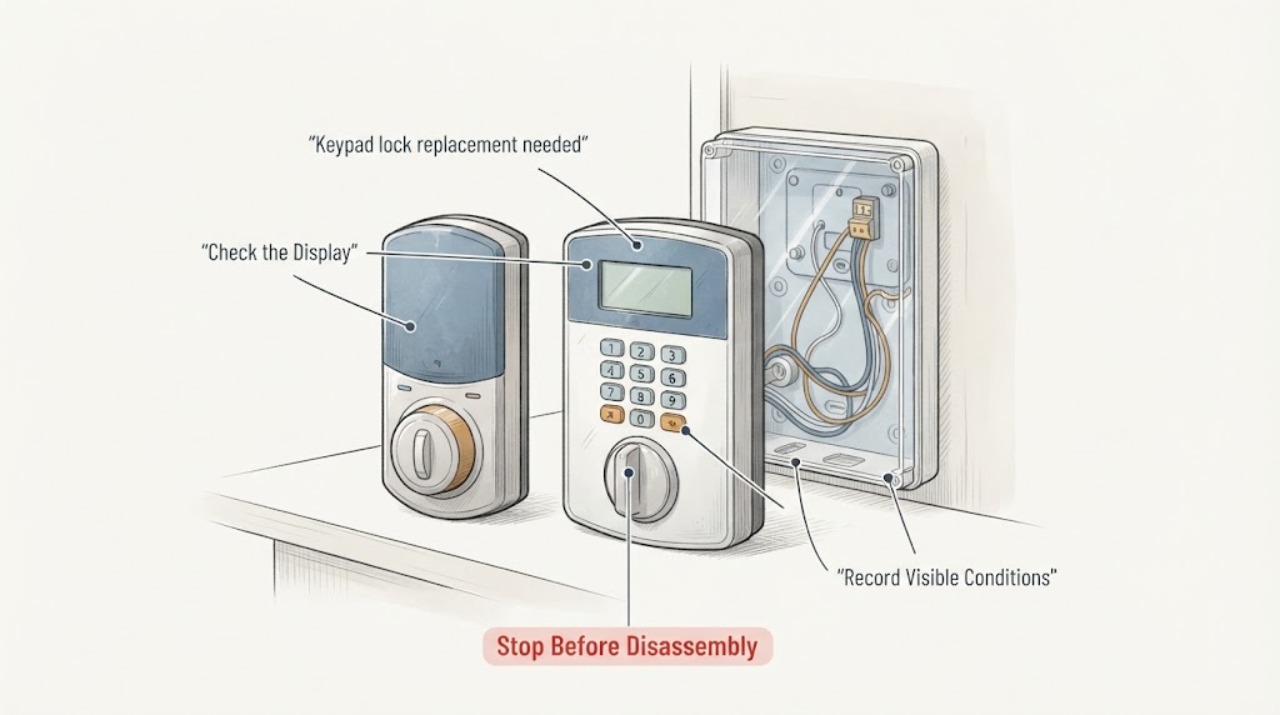
Keypad lock replacement needed: What to Check and What to Do Next
A keypad lock that no longer powers, accepts an authorized code, or secures the door reliably may need a battery or user-level setup check, an alignment diagnosis, or replacement by a locksmith. First record the keypad's visible response, battery warning, door and latch behavior, and any exterior damage without forcing the door or dismantling the lock.
-
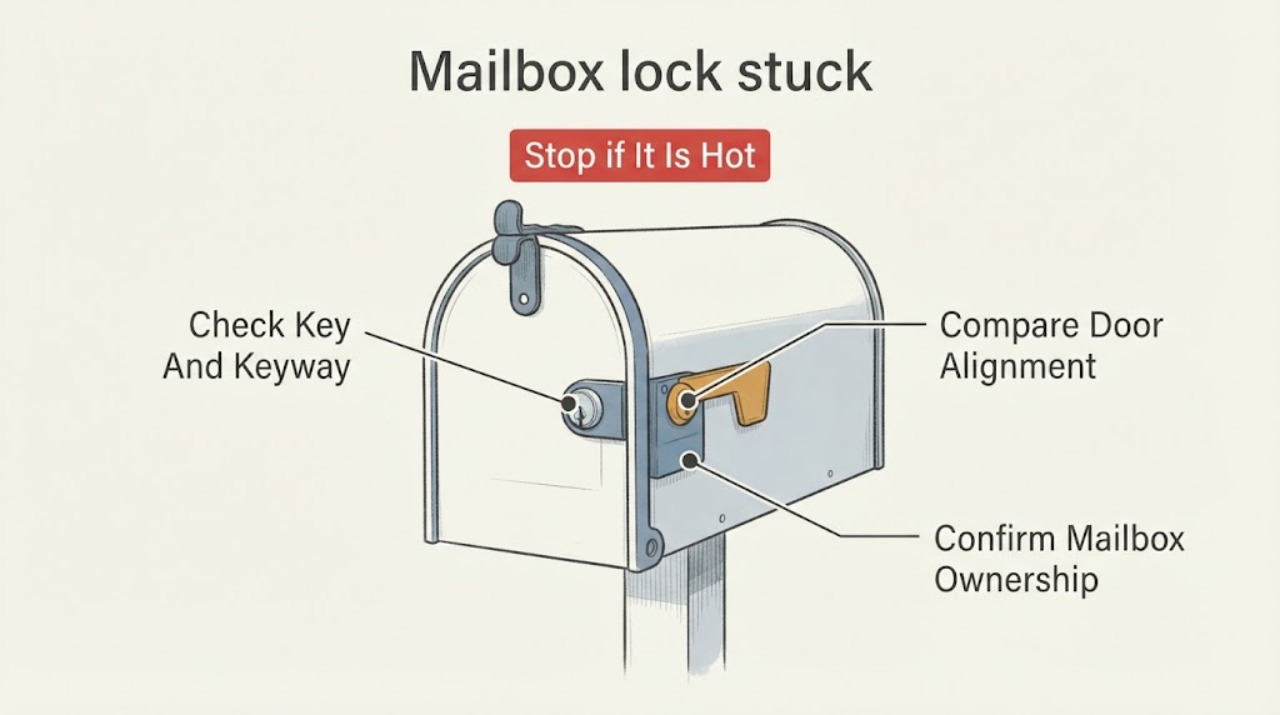
Mailbox lock stuck: What to Check and What to Do Next
A mailbox key that will not turn can be caused by the wrong key, a misaligned or loaded door, debris or weather exposure, or a worn lock. Start with safe observations and normal key operation only: confirm that you are responsible for the box, identify the box type, check the key and door alignment without forcing anything, and document the symptom.
-
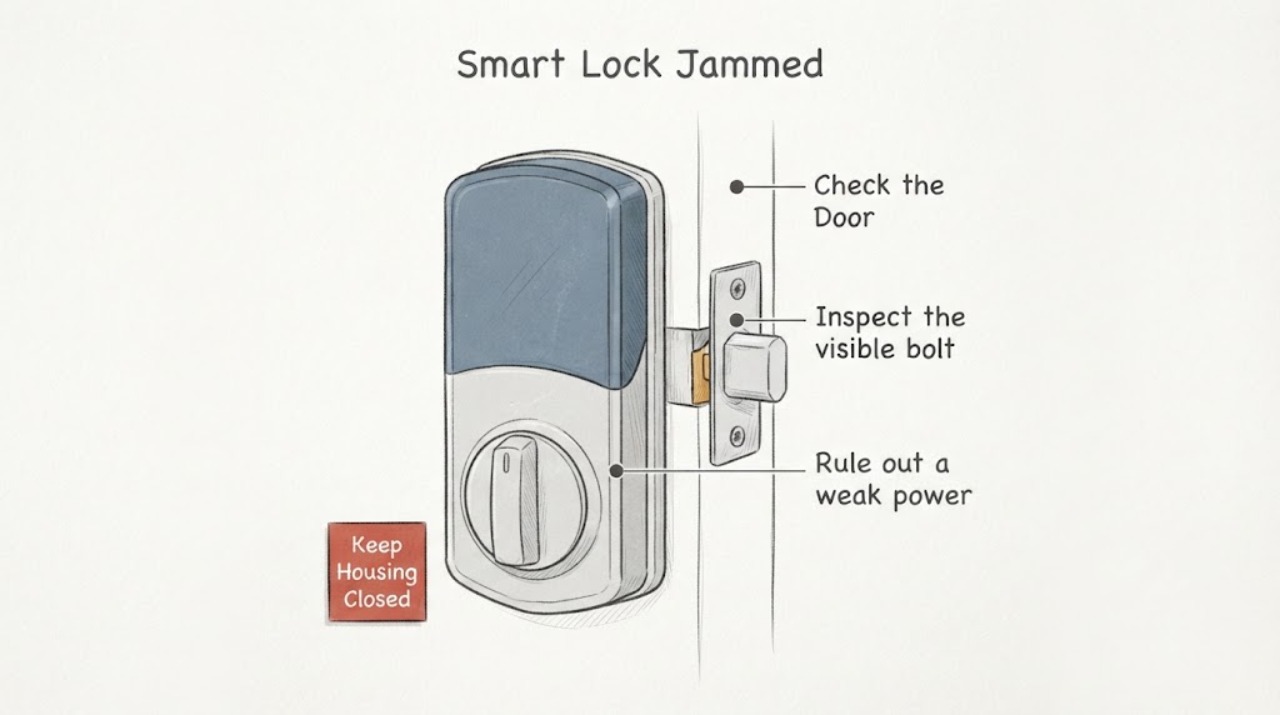
Smart Lock Jammed: Motor Whirring but Bolt Won't Throw When Misaligned
A whirring motor with a bolt that will not throw usually means the motor is meeting mechanical resistance, the lock was not calibrated or handed for the door, the batteries cannot deliver enough power, or the drive connection is slipping. First compare smooth manual operation with the door open and closed, then inspect the bolt-to-strike path and test with fresh batteries.