
On this page
Start here
Quick answer
Do not twist the key harder or try to defeat the lock. First, with the door open and from the side where you have lawful access, gently test the key and the inside thumbturn through their normal range. If the bolt works smoothly with the door open but binds when the door is closed, the door, frame, weatherstripping, or strike alignment is loading the bolt. If it will not turn with the door open, the key or lock mechanism may be worn, damaged, dirty, or incorrectly installed. Stop before forcing anything, keep the door secured when appropriate, and call a qualified locksmith or door professional when the cause is not an obvious, low-risk alignment observation.
Before you begin
Safety first
- Do not pick, bypass, drill, pry, shim, cut, force, or otherwise defeat the lock. Do not remove the deadbolt, strike, trim, or hinges when that could leave the property unsecured or change the security hardware.
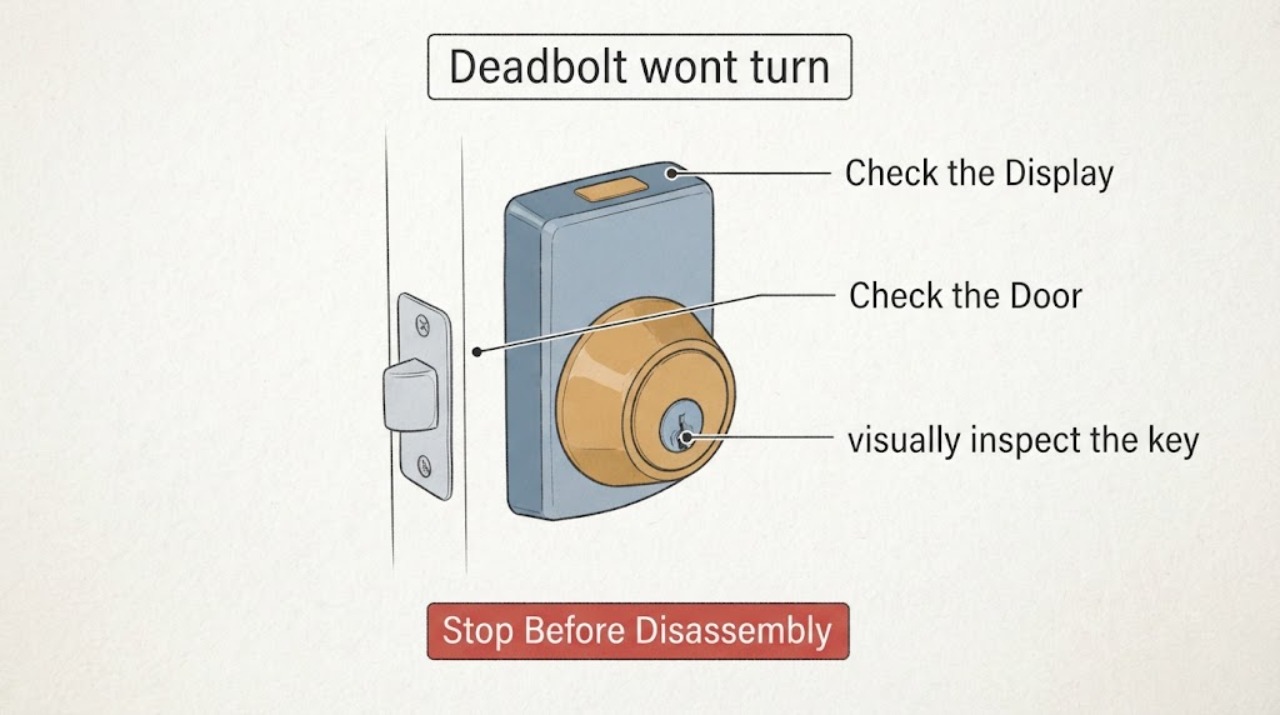
Work through in order
Diagnostic checks
Use only checks that match the exact appliance or system and its official guide.
-
Check 1
With the door open and secured so it cannot swing unexpectedly, insert the authorized key and gently turn it through its normal lock and unlock range. Then use the inside thumbturn, if present, without tools, twisting, or forcing either control.
Expected result: If the key and thumbturn both move the bolt smoothly with the door open, the lock mechanism is at least moving without door-frame load. If the key alone is difficult while the thumbturn works, the key or cylinder becomes the leading concern; if neither control moves, the lock or bolt mechanism may be jammed or damaged.
Next step: Record which control moved, whether the bolt fully retracted and extended, and whether the key was easy to insert and remove. Continue only with the closed-door comparison if the open-door test was smooth.
Stop if: Stop immediately if the key bends, binds, cracks, will not withdraw, or requires more than gentle normal pressure. Do not make another attempt with a stuck key.
Why this matters
Why: The open-door result separates a closed-door alignment problem from a key, cylinder, or internal deadbolt problem without attempting entry or disassembly.
-
Check 2
If the open-door test was smooth, close the door normally and gently try the key and inside thumbturn again without pushing, pulling, lifting, leaning on, or holding the door. Keep hands away from the bolt edge and stop if the lock resists.
Expected result: A bolt that works open but drags or stops only when closed points toward alignment between the bolt and strike opening, a sagging door, a tight weatherstrip, or frame movement. A bolt that remains difficult open and closed points away from a simple strike alignment issue.
Next step: Photograph the closed door, strike area, and any visible gap or rubbing mark. Do not enlarge the strike opening, move the strike, remove trim, or adjust hinges as a workaround.
Stop if: Stop using the lock if the door must be pushed, pulled, or lifted to turn the bolt, or if the bolt remains partly extended. Keep the opening secured by a safe, lawful method and call a professional.
Why this matters
Why: The closed-versus-open difference determines whether to request a door/frame alignment assessment or a locksmith inspection of the key and deadbolt itself.
-
Check 3
With the door open and the bolt retracted, visually inspect the key and the exposed lock face, bolt edge, strike plate, and frame for a bent key, damaged edge, loose-looking trim, visible debris, paint interference, impact marks, or a strike that no longer lines up with the bolt.
Expected result: A visibly bent or worn key, damaged cylinder face, loose trim, or impact mark supports a locksmith inspection. A bolt and strike that appear offset or rubbed support a door/frame alignment assessment, but visual alignment alone does not identify which part needs adjustment.
Next step: Take close and wide photos and note whether the problem began after a door impact, weather change, repainting, or lock installation. Keep the lock assembled while arranging service.
Stop if: Do not scrape, drill, pry, pick, cut, shim, or enlarge the strike or bolt opening. Escalate if the frame or lock shows damage.
Why this matters
Why: Visible evidence helps the professional choose between key or cylinder service, lock replacement, or door/frame alignment work without dismantling the lock.
-
Check 4
If an authorized spare key is available, compare it visually with the problem key and try it only during the open-door test, using the same gentle motion. Do not keep cycling keys to overcome resistance and do not use an unverified key copied for another lock.
Expected result: If one known-good key works smoothly and another does not, the problem may be key wear or damage. If both authorized keys behave the same, the cylinder, bolt, or door alignment remains more likely.
Next step: Keep the keys and note which one produced each result. Ask a locksmith to inspect or replace the key or cylinder as appropriate.
Stop if: Stop if a key catches, twists, or cannot be removed normally. Do not force extraction or attempt to operate the lock with improvised tools.
Why this matters
Why: The spare-key result can prevent an unnecessary lock replacement, but it does not prove that the lock is safe to use when the door is closed.
-
Check 5
Check the lock's visible identity and history without removing it: read the manufacturer or model marking if present, note whether it is keyed, electronic, or a smart deadbolt, and record any recent installation, repainting, door swelling, or impact.
Expected result: A recent installation or seasonal door change makes preparation and alignment worth checking; an older lock with a worn key or cylinder points toward a locksmith assessment. A smart lock may also need its own manufacturer-specific support path, but the mechanical open-door versus closed-door distinction still helps.
Next step: Provide the model marking, key behavior, open/closed comparison, and photos to the locksmith or manufacturer support channel. Do not remove the lock simply to find a model number.
Stop if: Stop the inspection if access requires dismantling the lock, disturbing security hardware, or leaving the property unsecured.
Why this matters
Why: Identity and history guide the professional toward the correct replacement or adjustment and reduce the risk of ordering an incompatible deadbolt or strike.
Use your observations
Decision map
Find the observation that best matches what you see, then follow the next safe action.
-
PATH 01Next step
What you see
The key and thumbturn operate smoothly with the door open but the bolt binds only when the door is closed.
Do this next
Treat this as a likely door/frame, strike, weatherstrip, or sagging-door alignment issue and arrange a locksmith or qualified door professional assessment. Do not force the key or alter the strike opening yourself.
-
PATH 02Next step
What you see
The key or thumbturn will not move the bolt even with the door open, or the bolt will not fully retract.
Do this next
Stop trying the lock and request locksmith service for the cylinder, bolt, or deadbolt assembly. Do not use bypass, picking, drilling, or forced-entry methods.
-
PATH 03Next step
What you see
One authorized key works open but another is bent, worn, or catches.
Do this next
Keep the questionable key out of the lock and ask a locksmith to verify the key and cylinder. Do not continue testing a key that may break or become stuck.
-
PATH 04Next step
What you see
The door is visibly sagging, the frame or strike is damaged, or the lock problem began after impact or installation work.
Do this next
Keep the door secured without forcing the bolt and arrange a combined locksmith and door/frame assessment. Do not remove trim, drill the frame, or adjust hinges as an improvised entry or repair method.
-
PATH 05Next step
What you see
The key is stuck, the lock is damaged, the property cannot be secured, or there is an urgent access or safety need.
Do this next
Stop manipulating the lock, keep people clear of the door, and contact a qualified locksmith or appropriate emergency service. Be prepared to confirm lawful access and describe the exact key and door behavior.
Helpful context
Understand the symptom
Separate door load from lock mechanism
A deadbolt can feel stuck because the bolt is pressing against the strike opening when the door is closed, or because the key, cylinder, interior turnpiece, or bolt mechanism has a problem even when the door is open. A controlled open-door comparison is the safest useful distinction. It is only a diagnostic observation: it is not permission to pry, drill, pick, bypass, or force the lock.
Protect the lock and the people around it
Use only a key you are authorized to use and ordinary gentle hand pressure. Keep fingers clear of the latch edge and strike area, do not remove the lock while the door is needed for security, and do not improvise with tools or chemicals. If a key is stuck, damaged, or cannot be withdrawn normally, leave it in place and arrange professional help.
Only after diagnosis
Potential parts
- deadbolt-replacement
Only consider a replacement after the open-door test and a professional assessment indicate that the deadbolt or cylinder is worn or damaged rather than merely misaligned.
Confirm door thickness, backset, bore and edge preparation, handing, security grade, keyway, and existing strike before selecting a replacement. Do not remove the current lock just to guess at fit. - lock-lubricant
Only consider a lubricant if the lock manufacturer or locksmith confirms it is suitable for the specific cylinder and the symptom is consistent with dry operation; lubricant is not a remedy for a bent key, strike misalignment, or internal damage.
Use only the product type and application method approved for the lock. Do not pour unverified chemicals into the keyway or continue operating a lock that binds. - strike-plate
Only consider a strike plate after a professional confirms that the existing strike is damaged or incompatible and that the bolt and door are otherwise sound; a new strike cannot compensate for a sagging or warped door without assessment.
Match the deadbolt, reinforcement, frame preparation, screw pattern, and required security hardware. Have a professional install or assess it when the frame needs alteration.
When checks do not resolve it
Need a professional?
Call a qualified locksmith or door professional when the deadbolt will not turn with the door open, the key is stuck or damaged, the bolt will not fully retract, the door must be pushed or lifted, the frame is damaged, or the lock cannot be secured normally.
Safety scope: Do not pick, bypass, drill, pry, shim, cut, force, or otherwise defeat the lock. Do not remove the deadbolt, strike, trim, or hinges when that could leave the property unsecured or change the security hardware.
Have this ready
- Provide the lock brand or model if visible, whether it is keyed or electronic, the open-door and closed-door results, which key or thumbturn moved, photos of the bolt and strike, and any recent installation, impact, repainting, or seasonal door change.
Common questions
FAQ
Why does my deadbolt turn with the door open but not when it is closed?
That pattern commonly points to load or misalignment between the bolt and strike, a sagging door, weatherstrip pressure, or frame movement. It does not prove which part needs adjustment, so stop forcing the key and arrange a locksmith or door-alignment assessment.
What if the deadbolt will not turn even with the door open?
A key, cylinder, bolt, or internal lock problem becomes more likely. Stop using force, keep a stuck key in place if it cannot be withdrawn normally, and ask a qualified locksmith to inspect it.
Can I spray lubricant into a deadbolt that will not turn?
Only use a lubricant if the lock manufacturer or locksmith confirms that it is suitable for that cylinder and symptom. Lubricant will not correct a bent key, strike misalignment, damaged parts, or a lock that is already binding.
Should I remove or move the strike plate?
Do not alter the strike as a first response. Document the visible alignment and closed-versus-open behavior, then have a qualified professional determine whether the strike, frame, door, or lock needs work.
Can I force the key if I am locked out?
No. Forcing a key can break it in the cylinder or damage the lock and door. Contact a qualified locksmith or the appropriate emergency service and be prepared to confirm lawful access.
Read the exact guide
Official sources
- How to install a deadbolt lockSchlage · Used for the safe open-versus-closed functional comparison and the general explanation that a bolt dragging at the strike indicates an alignment question; installation details are not reproduced as DIY entry instructions.
- How do I check door alignment for my smart lock?Kwikset · Used as a manufacturer-specific alignment reference for the general diagnostic distinction; its smart-lock examples do not establish fit or repair instructions for every mechanical deadbolt.
Community feedback
Share a repair observation
Share a plain-text repair observation. Accepted observations are published automatically; this page may take a moment to update.