
On this page
Start here
Quick answer
If the key to a deadbolt is lost, do not try to defeat or force the lock. First determine whether the door is already secure and whether you still have a different working key. If the lock is a Kwikset SmartKey model and you have its current working key and SmartKey tool, follow the manufacturer's re-key instructions so the missing key no longer operates the cylinder. If no working key is available, the key was stolen, the lock is damaged, or you are locked out, stop experimenting and arrange a qualified locksmith to re-key or replace the deadbolt after confirming ownership or occupancy.
Before you begin
Safety first
- Do not attempt bypass, lockpicking, forced entry, or improvised drilling.
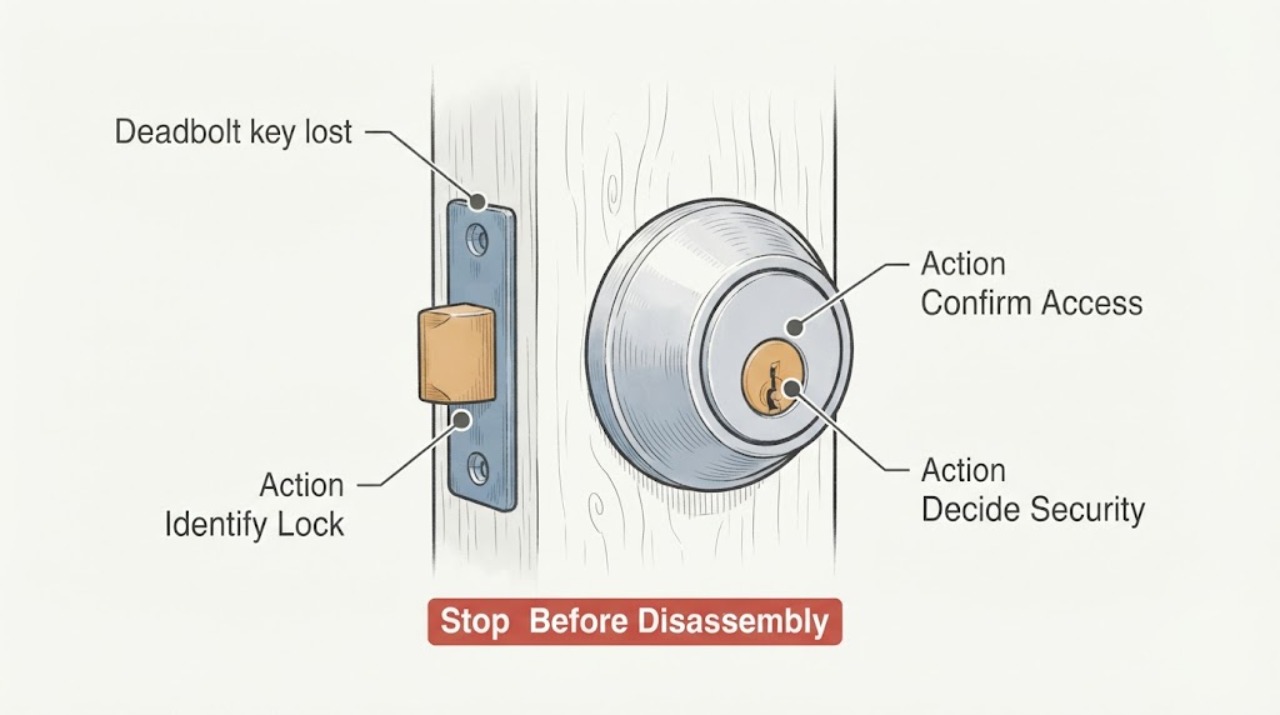
Work through in order
Diagnostic checks
Use only checks that match the exact appliance or system and its official guide.
-
Check 1
Check whether the door is open, secured, or reachable through another authorized entrance, and note whether a current working key exists.
Expected result: You have authorized access and a working key; you have authorized access but no working key; or you are locked out.
Next step: Keep the door secured when possible and move to lock identification only when you have authorized access.
Stop if: Stop and seek professional or emergency help if you cannot confirm lawful access or someone is at immediate risk.
Why this matters
Why: An authorized entrance allows a calm inspection. A missing working key removes some manufacturer-specific self-service paths. Being locked out calls for a professional service visit.
-
Check 2
Read the visible deadbolt brand or model marking and check the original paperwork without removing the cylinder or guessing compatibility.
Expected result: The lock is identified and its instructions describe a re-key system; it is identified but needs a current key or professional; or it cannot be identified.
Next step: Give the markings, paperwork, and key availability to a locksmith, or follow matching manufacturer instructions only when every required item is present.
Stop if: Stop self-service if the instructions do not match the lock or a required working key or tool is missing.
Why this matters
Why: Only matching manufacturer documentation can establish a supported re-key route. An unidentified or damaged cylinder needs professional assessment.
-
Check 3
Record whether the missing key was merely misplaced, may have been stolen or copied, and whether the deadbolt turns smoothly with the working key.
Expected result: The hardware is intact and identifiable; the key may be compromised; or the cylinder binds, is damaged, or is unknown.
Next step: Request a written scope for re-keying, cylinder replacement, or complete deadbolt replacement based on those observations.
Stop if: Stop operating the lock and call a professional if it binds, will not secure the door, or shows damage.
Why this matters
Why: A serviceable identified cylinder may be a re-key candidate. A compromised key, damaged cylinder, or unknown hardware may justify replacement or a professional recommendation.
-
Check 4
Before authorizing work, ask the locksmith for identity, written scope, and charging terms, and provide the deadbolt markings and access state.
Expected result: The provider answers specific questions and gives clear terms, or pressures immediate payment and will not explain the work.
Next step: Authorize only the agreed work after the scope is understandable; otherwise end the interaction and choose another verified provider.
Stop if: Stop before work if identity, scope, or payment terms remain unclear.
Why this matters
Why: Clear terms help match the service to the lost-key problem. Pressure or unclear identity is a reason to pause and verify independently.
Use your observations
Decision map
Find the observation that best matches what you see, then follow the next safe action.
-
PATH 01Next step
What you see
There is no authorized way to enter or the lock is binding while someone is at risk inside.
Do this next
Use the appropriate emergency service for the immediate safety issue and tell the responding professional that the key is lost; do not attempt forced entry.
-
PATH 02Next step
What you see
The door is secure and there is no immediate danger.
Do this next
Keep it secured while arranging a locksmith or confirming a manufacturer-supported re-key option.
-
PATH 03Next step
What you see
The documentation requires a current working key and you do not have one.
Do this next
Do not improvise a reset or disassemble the lock; request professional re-keying or replacement.
-
PATH 04Next step
What you see
The model is not confirmed or the lock is damaged, loose, or difficult to operate.
Do this next
Treat it as a professional inspection and replacement/re-key decision.
-
PATH 05Next step
What you see
The key was stolen or could be tied to the property address.
Do this next
Tell the locksmith that the key is compromised and request a re-key or replacement that invalidates the missing key.
-
PATH 06Next step
What you see
The cylinder or door hardware is damaged, binds, or cannot be identified.
Do this next
Request an inspection and replacement recommendation rather than forcing the existing hardware.
-
PATH 07Next step
What you see
The provider requests unusual payment methods or refuses written details.
Do this next
Pause, do not share financial credentials, and verify the business through contact information you obtained independently.
-
PATH 08Next step
What you see
The provider confirms the scope and the deadbolt condition matches your report.
Do this next
Authorize only the agreed work and test the new key with the door open before relying on it.
Helpful context
Understand the symptom
Start with the security decision
A lost key is an access-control problem, not a lock-bypass problem. Keep the door closed if the lost key could be linked to the address, and do not put personal details on a key tag or in a public post. If the key may have been stolen, treat the cylinder as exposed even if you still have another way into the home. A re-key changes which key cut the existing cylinder accepts; replacing the deadbolt is the alternative when the cylinder is damaged, its design is unknown, or a professional recommends a new unit.
When to call a professional
Call a qualified locksmith promptly if you are locked out, have no current working key, suspect the key was stolen, cannot identify the cylinder, or find damage, binding, or loose door hardware. Give the professional the door state, lawful-access information, visible markings, whether the key may be compromised, and what you observed when operating the lock. Do not attempt lockpicking, bypass, forced entry, or improvised drilling.
Only after diagnosis
Potential parts
- rekeyable-deadbolt
Only when the existing lock is identified as serviceable and a locksmith or the applicable manufacturer documentation confirms the choice.
Do not assume compatibility from appearance; match the confirmed lock design and door hardware. - deadbolt-replacement
When the cylinder is damaged, the key exposure warrants a new unit, or the existing lock cannot be identified or serviced.
Confirm the door and existing hardware requirements before selecting a replacement.
When checks do not resolve it
Need a professional?
You are locked out or cannot confirm an authorized way to enter., The lost key may have been stolen, copied, or linked to the property., No current working key is available for a manufacturer-supported re-key process., The deadbolt is damaged, binds, is loose, or cannot be identified.
Safety scope: Do not attempt bypass, lockpicking, forced entry, or improvised drilling.
Have this ready
- Deadbolt brand and model markings or original paperwork, if available
- Whether the door is open, closed, locked, or otherwise secured
- Whether a current working key exists
- Whether the missing key may expose the property
Common questions
FAQ
Can I re-key a deadbolt after losing its key?
Often a locksmith can re-key a serviceable deadbolt without replacing all of the hardware, but the method depends on the cylinder. A manufacturer-specific system may require the current working key and a matching tool. If those are missing, arrange professional service rather than improvising.
Should I replace the deadbolt if the key was stolen?
Treat a stolen key as compromised. Ask a locksmith whether re-keying will invalidate it for the identified cylinder or whether replacement is the better security choice, especially if the key could be associated with the address.
What should I tell a locksmith about a lost deadbolt key?
Tell them whether you are locked out, whether a current working key exists, the visible brand/model markings, whether the lock binds or is damaged, and whether the missing key may have been stolen or copied. Ask for the proposed scope in writing before authorizing work.
Is it safe to try to open the deadbolt myself without the key?
Do not attempt lock bypass, picking, forced entry, or improvised drilling. Those actions can damage the door and hardware and create a safety or legal problem. Use an authorized alternate entrance when available or contact a qualified locksmith.
Read the exact guide
Official sources
- Re-key Locks Easily with Kwikset SmartKeyKwikset · Manufacturer FAQ and overview for Kwikset SmartKey products.
- What are some classic warning signs of possible fraud and scams?Consumer Financial Protection Bureau · General consumer-safety guidance used here to evaluate an urgent service provider; it does not certify any locksmith.
- How to re-key your SmartKey Security™ locks?Kwikset · Manufacturer instructions for an identified Kwikset SmartKey lock; not a generic instruction for every deadbolt.
Community feedback
Share a repair observation
Share a plain-text repair observation. Accepted observations are published automatically; this page may take a moment to update.