
On this page
Start here
Quick answer
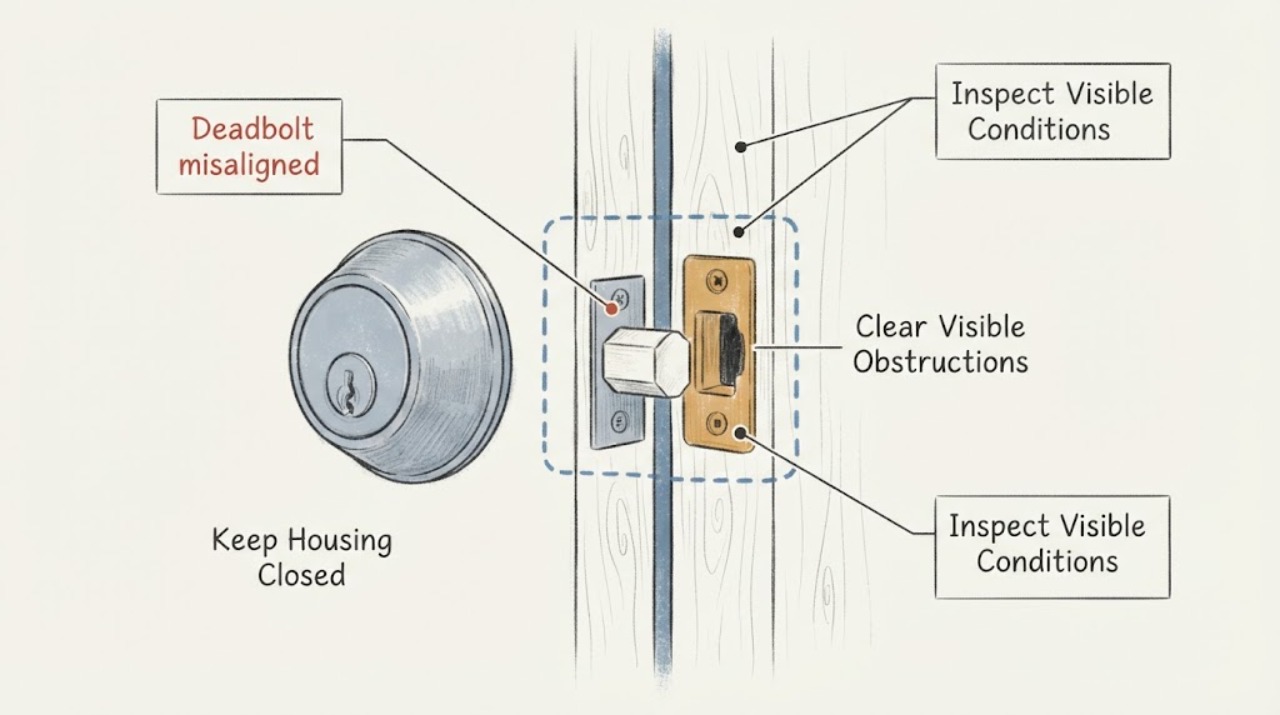
A deadbolt that hits the strike or needs the door pushed, pulled, or lifted is usually an alignment problem between the door, frame, strike, or bolt—not a reason to force the key or modify the opening. From the secure side, test the bolt with the door open and then closed without applying pressure. Observe whether the bolt moves freely, where it contacts the strike, whether the door sits evenly in the frame, and whether weatherstripping or a sagging hinge changes the gap. If the door will not close or secure normally, the lock is electronic, the frame is damaged, or the next step would involve cutting, drilling, bypassing, or forced entry, stop and call a locksmith.
Work through in order
Diagnostic checks
Use only checks that match the exact appliance or system and its official guide.
-
1. Compare bolt movement with the door open and closed
From the inside or another secure position, leave the door open and turn the thumbturn or key normally to extend and retract the bolt. Then close the door and repeat gently without pushing, pulling, lifting, or leaning on the door. Keep the door unlatched until the test is complete.
Expected result: The bolt moves smoothly open but drags or stops when closed; it is stiff in both positions; or the lock operates smoothly in both positions.
Next step: Record the result and do not force the lock. Continue with visual gap and strike observations only if the door can remain safely secured without relying on the problematic deadbolt.
Stop if: Stop if the key or thumbturn binds sharply, the door may lock you out, the lock cannot retract, or testing would require force or leaving the property unsecured.
Why this matters
Why: Smooth movement with the door open but resistance when closed points toward door-to-frame or strike alignment. Resistance in both positions may indicate the lock or installation itself. Smooth operation in both positions makes a temporary pressure or weatherstrip issue more likely, but does not rule out a developing alignment change.
-
2. Observe where the bolt meets the strike
With the door open and the bolt retracted, visually compare the bolt centerline with the strike opening on the frame. With the door closed but not locked, look for a top, bottom, or side contact mark or a bolt that is visibly offset from the opening. Do not remove the strike, enlarge the pocket, or insert tools into the lock opening.
Expected result: The bolt is high, low, or side-shifted relative to the opening; the bolt enters but rubs one edge; or the alignment looks centered with no visible contact.
Next step: Photograph the bolt and strike from the inside and give the contact location to a locksmith. Keep the door secured by a separate functioning lock if available; do not alter the opening as a first response.
Stop if: Stop if the strike or frame is loose, cracked, split, or damaged, or if checking the pocket would require drilling, chiseling, cutting, or removing security hardware.
Why this matters
Why: A consistent offset supports a door-sag, frame-shift, strike-position, or hinge-side issue. Contact on one edge can explain why the lock works only when the door is pulled or lifted. A centered visual position with continued binding may indicate depth, lock mounting tension, or an internal lock issue.
-
3. Check the door position and visible obstructions
Look along the latch edge, hinge edge, and top of the closed door for an uneven gap, rubbing paint, shifted weatherstripping, loose visible hinge screws, or a door that sits lower on the strike side. Compare the gap when the door is open and closed. Do not lift the door, remove hinges, or loosen fasteners.
Expected result: The door is visibly sagging, the gap changes by season or weather, weatherstripping presses the door away from the frame, a hinge appears loose, or the gaps look even.
Next step: Document the gap and obstruction and have a locksmith assess the door and frame as a system. If the issue is temporary after humidity or weather, still wait for the symptom to be present when the technician evaluates it.
Stop if: Stop if the door is unstable, the frame is separating, the hinges are damaged, or any correction would require structural cutting or force.
Why this matters
Why: A changed gap or sag can move the bolt relative to the strike. Weatherstripping can add closing pressure. A loose or damaged hinge can require a door or frame repair rather than a new deadbolt. Even gaps shift attention toward the strike, depth, lock mounting, or internal mechanism.
-
4. Identify the lock and decide whether to escalate
From a safe, accessible position, photograph the lock brand and model marking if visible and note whether it is keyed, thumbturn, or electronic. Record whether the problem started after a lock installation, hinge or weatherstrip change, seasonal movement, or a door impact. Do not remove the interior assembly, bypass the lock, or test an untrusted lock by leaving the door unsecured.
Expected result: The lock model is clear and the door can remain secured; the model is unknown; the lock is electronic or battery-powered; or the door cannot be secured normally.
Next step: Give the locksmith the model, photos, contact location, door gap observations, and recent changes. Use only manufacturer-specific guidance for a low-risk adjustment that does not alter security or the frame.
Stop if: Stop and call a locksmith if the door cannot secure, the lock is jammed, the frame is damaged, the key is trapped, or the next step would involve bypass, picking, forced entry, cutting, drilling, or structural modification.
Why this matters
Why: Model and lock type determine the correct strike and installation guidance. An electronic or unknown lock may have alignment and mounting requirements that are not interchangeable with a keyed deadbolt. An unsecured door or failed lock is a service issue, not a generic adjustment task.
Use your observations
Decision map
Find the observation that best matches what you see, then follow the next safe action.
-
PATH 01Safety boundary
What you see
The deadbolt moves freely with the door open but binds only when the door is closed.
Do this next
Treat the symptom as door-to-frame or strike alignment first. Document the contact side and observe the door gap, hinge-side sag, and weatherstrip pressure without altering the frame.
Why this path and its safety boundary
Safety stop: Do not continue if the lock may trap you outside, the key or thumbturn binds sharply, or the door cannot remain secured.
-
PATH 02Safety boundary
What you see
The door must be pushed, pulled, or lifted for the bolt to enter the strike.
Do this next
Record that pressure direction and look for a shifted gap, sagging hinge side, weatherstrip interference, or a strike that is visibly offset. A locksmith can decide whether the strike, hinge, frame, or lock needs attention.
Why this path and its safety boundary
Safety stop: Do not force the bolt, enlarge the pocket, or remove security hardware to make the door lock.
-
PATH 03Safety boundary
What you see
The door cannot close or remain securely locked, or the frame or lock is damaged.
Do this next
Stop troubleshooting and arrange locksmith service. Use a separate safe entry or exit plan and do not advertise or expose the unsecured condition.
Why this path and its safety boundary
Safety stop: No lock bypass, lockpicking, forced entry, drilling, cutting, or structural alteration is appropriate as a self-help response.
Helpful context
Understand the symptom
What a misaligned deadbolt means
A deadbolt needs the door, frame, strike opening, and bolt to share the same position. A door can sag on its hinges, a frame can shift, weatherstripping can add pressure, or a strike can sit off the bolt centerline. A lock that operates smoothly with the door open but binds when closed is showing a door-position problem more often than a key problem. A lock that binds in both positions may need model-specific lock or mounting service.
Keep the security boundary intact
Do not treat a misaligned deadbolt as an invitation to bypass or defeat a lock. Do not drill, chisel, cut, pick, force, or enlarge the frame opening, and do not remove a strike or interior assembly unless a qualified professional has assessed the situation. If the door is not securing, use a locksmith and avoid leaving the property exposed.
What to provide for service
A locksmith can work faster with the lock model, photos of the bolt and strike, the direction of any contact, whether the bolt works with the door open, door-gap observations, and the timing of any hinge, weatherstrip, impact, or seasonal change. Tell them whether the door remains secured and whether the lock is keyed, thumbturn, or electronic.
Only after diagnosis
Potential parts
- deadbolt strike plate
Relevant only if a locksmith confirms that the existing strike is damaged, incompatible, or positioned incorrectly for the identified deadbolt.
Confirm the deadbolt model, strike shape, reinforcement requirements, frame condition, and security fit before ordering. - door hinge screws
Relevant only when a professional confirms that a loose or damaged hinge is contributing to door sag and the frame can safely accept the specified fastener.
Confirm hinge type, screw length, thread, frame material, and load requirements; do not substitute fasteners or alter the frame by guesswork. - deadbolt replacement
Consider only if the lock mechanism or installation is confirmed faulty and alignment cannot be restored with safe, model-specific service.
Verify door thickness, backset, bore, handing, strike and reinforcement requirements, and security grade with the manufacturer or locksmith.
When checks do not resolve it
Need a professional?
Call a locksmith when the bolt binds in both open and closed positions, the door must be pushed or lifted to lock, the lock is electronic or unknown, the frame or hinge is damaged, or the door cannot remain secured.
Have this ready
- Whether the bolt moves smoothly with the door open and with the door closed
- The side of the strike or frame where the bolt contacts
- Photos of the bolt, strike, frame, hinge-side gap, and visible weatherstripping
- Lock brand and model marking, if safely visible, plus keyed, thumbturn, or electronic type
- Any recent installation, hinge, weatherstrip, impact, moisture, or seasonal change
Common questions
FAQ
Why does a deadbolt work with the door open but not closed?
That pattern usually means the door, frame, strike, weatherstripping, or hinge position changes when the door closes. Observe where the bolt contacts and whether the gap is uneven, then have a locksmith assess the alignment without forcing the lock.
Should I force the key or push the door harder?
No. Force can damage the key, lock, strike, or frame and may leave the door unsecured. Record whether the door needs pressure and call a locksmith if the bolt does not move smoothly.
Can I enlarge the strike hole myself?
Do not cut, drill, chisel, or enlarge the frame as a generic fix. The opening may include reinforcement and security hardware, and the real cause may be sagging, weatherstripping, mounting tension, or a damaged frame.
When is a misaligned deadbolt urgent?
Treat it as urgent when the door cannot secure, the lock is jammed, the frame or hinge is damaged, or entry would require bypass or forced entry. Keep the property secure and arrange locksmith service.
Read the exact guide
Official sources
- How do I check door alignment for my smart lock?Kwikset · Supports comparing open and closed lock operation, checking strike alignment, weatherstripping, mounting tension, and escalation when resistance persists.
- How to install a deadbolt lockSchlage · Supports testing bolt movement with the door open and closed and recognizing drag or strike contact as an alignment symptom.
- How to fix a door that won’t latchSchlage · Supports observing seasonal fit changes, weatherstrip pressure, strike contact, door sag, and hinge-related alignment symptoms; this article intentionally limits the reader to observation and escalation.
Community feedback
Share a repair observation
Share a plain-text repair observation. Accepted observations are published automatically; this page may take a moment to update.