
On this page
Start here
Quick answer
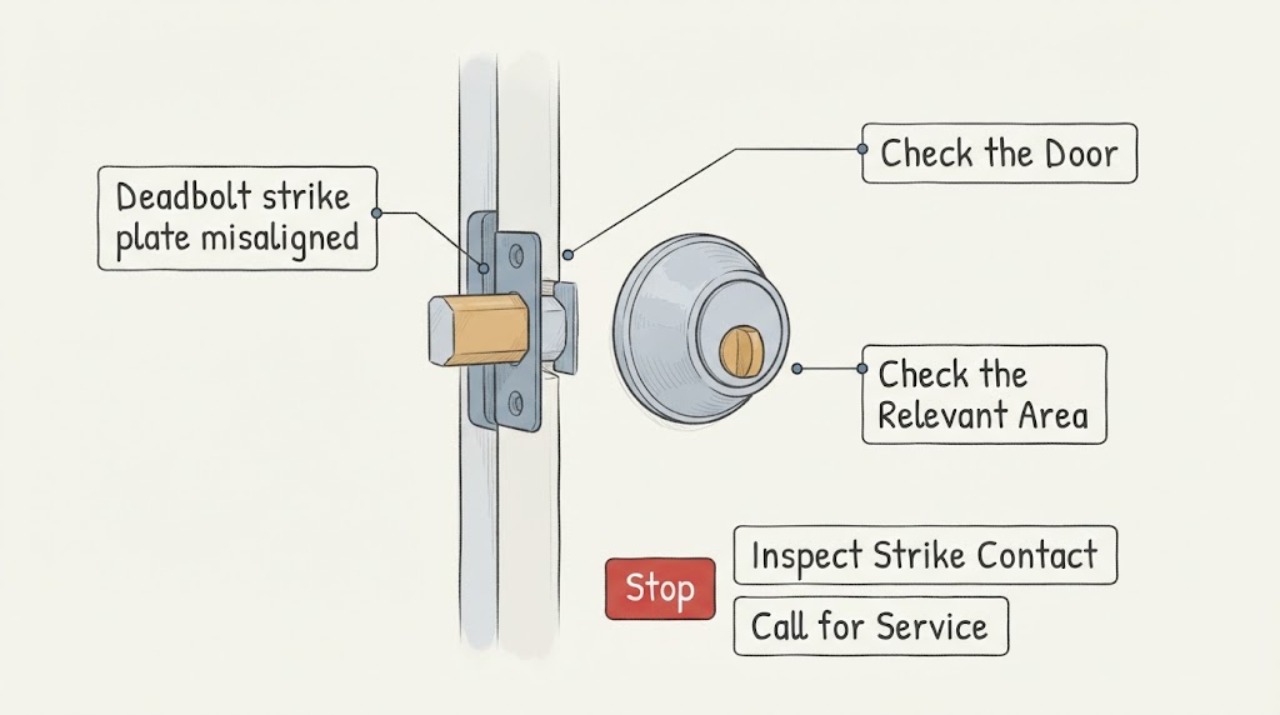
A deadbolt that works with the door open but drags, rubs or stops when the door is closed usually has a door-to-frame alignment problem, not a key or bypass problem. If you are the lawful owner or authorized occupant, keep the door open while checking that the bolt moves smoothly, then make only gentle, no-force observations of the strike, hinges, weatherstripping and frame. Do not pick, bypass, force, drill or chisel the lock or frame. If the door cannot reliably secure, the frame is warped, the lock is damaged, or a simple visual check does not identify the interference, use another secure entrance and call a qualified locksmith or door professional.
Before you begin
Safety first
- Do not bypass, pick, drill, chisel, pry or force the lock or frame. Do not remove security hardware or repeatedly cycle a binding bolt. Keep a safe alternative entrance available and let a qualified professional make any adjustment.
Work through in order
Diagnostic checks
Use only checks that match the exact appliance or system and its official guide.
-
Check 1
With the door open and from the inside, turn the thumbturn or key gently to extend and retract the deadbolt. Do not force it or allow the door to swing shut during the check.
Expected result: Smooth movement with the door open differs from resistance, scraping or incomplete travel even before the bolt reaches the strike.
Next step: Leave the bolt retracted and keep the door open while checking the frame and strike visually.
Stop if: Stop if the key bends, the thumbturn jams, the bolt will not retract, or the lock shows damage; do not apply force or attempt entry techniques.
Why this matters
Why: If it binds while open, the lock or installation may need a locksmith; if it is smooth, continue with the closed-door alignment observation.
-
Check 2
From the inside with the door fully closed, turn the thumbturn gently without pushing, pulling or lifting the door. Keep an alternative exit available and do not let the bolt remain extended if it does not operate smoothly.
Expected result: A bolt that turns smoothly when closed differs from one that catches only at the last part of travel or requires pressure on the door.
Next step: Retract the bolt, reopen the door, and document whether the interference is at the top, bottom or side of the strike area.
Stop if: Stop immediately if the door could lock you in, the bolt jams, the door cannot be opened normally, or the lock does not secure without force.
Why this matters
Why: Closed-only resistance is consistent with strike alignment, door sag, weatherstripping pressure or frame movement; it is not a reason to force the deadbolt.
-
Check 3
With the door open, look at the bolt tip, strike plate and visible bolt pocket for fresh rub marks, paint transfer, loose-looking plate movement or a bolt that is visibly above, below or beside the opening. Do not remove the plate or cut the frame.
Expected result: A clear contact mark on one edge differs from a strike that appears aligned but a bolt that remains difficult to turn.
Next step: Take a close photograph with the door open and provide it to the locksmith or door professional.
Stop if: Stop if the strike, jamb or door is cracked, loose, splintered or structurally damaged; do not add force or remove security hardware.
Why this matters
Why: An edge mark gives a locksmith a likely adjustment direction; no visible mark leaves installation tension, lock damage or a concealed frame issue unresolved.
-
Check 4
Observe the closed-door gaps, hinge-side alignment, latch engagement and weatherstripping without lifting, prying or leaning on the door. Note whether the issue changes with temperature, humidity or season.
Expected result: A consistent gap and stable alignment differ from a door that rubs the frame, needs lifting, is pressed outward by weatherstripping, or changes with weather.
Next step: Record the pattern and have the appropriate locksmith or door professional correct the underlying alignment.
Stop if: Stop if hinges are loose, the door is warped, the frame moves, or any adjustment would require removing the door or changing the frame.
Why this matters
Why: The pattern can point to a sagging door, loose or worn hinges, frame movement or weatherstrip interference rather than a strike-plate defect alone.
-
Check 5
After each gentle observation, verify from the inside that the door opens normally and that the deadbolt is fully retracted before leaving the area. Do not repeatedly cycle a binding lock.
Expected result: A door that opens and secures smoothly with the bolt fully retracted differs from a door that remains unsecured, sticks or requires force.
Next step: Keep the door on a safe temporary arrangement only if it remains lawfully and reliably secured, otherwise use another entrance and call a locksmith.
Stop if: Stop using the door as an entry barrier if it cannot close and lock reliably, or if anyone could be trapped or locked out.
Why this matters
Why: An unreliable lock is a security issue even if it sometimes works; repeated cycling can worsen damage and create a lockout.
Use your observations
Decision map
Find the observation that best matches what you see, then follow the next safe action.
-
PATH 01Next step
What you see
If the deadbolt binds or fails to retract with the door open
Do this next
Do not adjust the strike to hide the problem. Keep the bolt retracted and arrange locksmith or manufacturer support for the lock or installation.
-
PATH 02Next step
What you see
If the deadbolt is smooth with the door open but catches only when the door is closed
Do this next
Document the contact edge and inspect door gaps, hinges and weatherstripping visually. Have a locksmith or door professional perform any strike or frame adjustment without force.
-
PATH 03Next step
What you see
If alignment changes with weather, humidity or season, or the door needs pushing, pulling or lifting
Do this next
Treat the frame, hinges or door movement as part of the problem; call a door professional or locksmith rather than repeatedly moving the strike.
-
PATH 04Next step
What you see
If the plate, jamb, hinges, door or deadbolt is cracked, loose, warped or damaged
Do this next
Stop using the unreliable entrance, preserve the hardware, and arrange professional repair or replacement. Do not drill, chisel, pry or force the assembly.
-
PATH 05Next step
What you see
If the door cannot be opened normally from inside or cannot be secured without force
Do this next
Keep occupants safe, use another secure entrance, and call a qualified locksmith. Do not attempt bypass, picking or forced entry.
Helpful context
Understand the symptom
What the open-versus-closed test tells you
A deadbolt that turns smoothly with the door open but binds only after the door closes is responding to the relationship between the bolt and the strike opening. A door that also binds while open points more toward the lock installation or internal hardware. Keep every test gentle and perform it from the secure side so the door cannot lock you out.
Keep security ahead of adjustment
Do not enlarge the bolt pocket, remove the strike, force the key, or make a change that leaves the door less secure. If the door cannot latch or lock reliably, use a different secure entrance and arrange a locksmith visit. The public-safe check is to identify the interference and give the professional clear evidence.
Only after diagnosis
Potential parts
- strike-plate
Consider this category only after the actual contact point and lock family are confirmed by the owner, manufacturer or locksmith; a different plate cannot correct a warped or sagging frame by itself.
Match the exact deadbolt model, strike geometry, reinforcement arrangement and frame preparation before ordering. - door-hinge-screws
Consider this category only when a professional confirms that loose or worn hinge attachment is causing the door to sag into the strike area.
Confirm hinge, jamb and door materials and the proper fastener type; do not use a screw change to compensate for structural frame damage. - deadbolt-replacement
Consider replacement only when the lock itself is damaged, incompatible or worn after alignment has been checked; a new deadbolt will not solve an underlying door or frame movement.
Confirm door thickness, bore, backset, handing, strike and security requirements with the manufacturer or locksmith before ordering.
When checks do not resolve it
Need a professional?
Call a qualified locksmith or door professional when the bolt binds with the door open, the door needs force to lock, the strike or jamb is damaged, alignment changes with weather, or the entrance cannot be secured reliably.
Safety scope: Do not bypass, pick, drill, chisel, pry or force the lock or frame. Do not remove security hardware or repeatedly cycle a binding bolt. Keep a safe alternative entrance available and let a qualified professional make any adjustment.
Have this ready
- Provide the deadbolt brand and model if visible, whether it works with the door open, the exact contact edge, photos of the strike and jamb, door-gap and hinge observations, weatherstripping changes, and whether the door remains safely usable.
Common questions
FAQ
Why does the deadbolt work with the door open but not closed?
That pattern usually points to the relationship between the bolt and strike opening, door sag, weatherstripping pressure or frame movement. Keep tests gentle and have a locksmith adjust the underlying alignment if visual checks do not identify it.
Can I force the key or push the door to make it lock?
No. Force can damage the cylinder, bolt or frame and may leave the door unsecured. Stop using the unreliable entrance and call a qualified locksmith.
Should I chisel the strike opening larger?
Not as a homeowner workaround for this article. Confirm the contact point and frame condition first; cutting the jamb can weaken security or hide a sagging-door problem. A locksmith or door professional should perform any required frame work.
When is a new strike plate or deadbolt appropriate?
Only after the lock family, door preparation and underlying alignment are confirmed. A replacement part is conditional; it will not correct a warped door, loose hinges or damaged frame by itself.
Read the exact guide
Official sources
- How to fix a door that won’t latchSchlage · Diagnosing a deadbolt that rubs or fails to latch without assuming the strike alone is defective
- How to install a deadbolt lockSchlage · General deadbolt alignment observations when the brand and model are not specified
- How do I check door alignment for my smart lock?Kwikset · General visual and low-force alignment checks, with model-specific instructions deferred to the actual manufacturer
Community feedback
Share a repair observation
Share a plain-text repair observation. Accepted observations are published automatically; this page may take a moment to update.