
Repair problem
Bathroom Floor Tile Cracked Troubleshooting Guides
Published FixGraph guidance for diagnosing and responding to bathroom floor tile cracked.
Matching published guides
Choose a guide that matches the service, equipment, and conditions you are seeing.
-
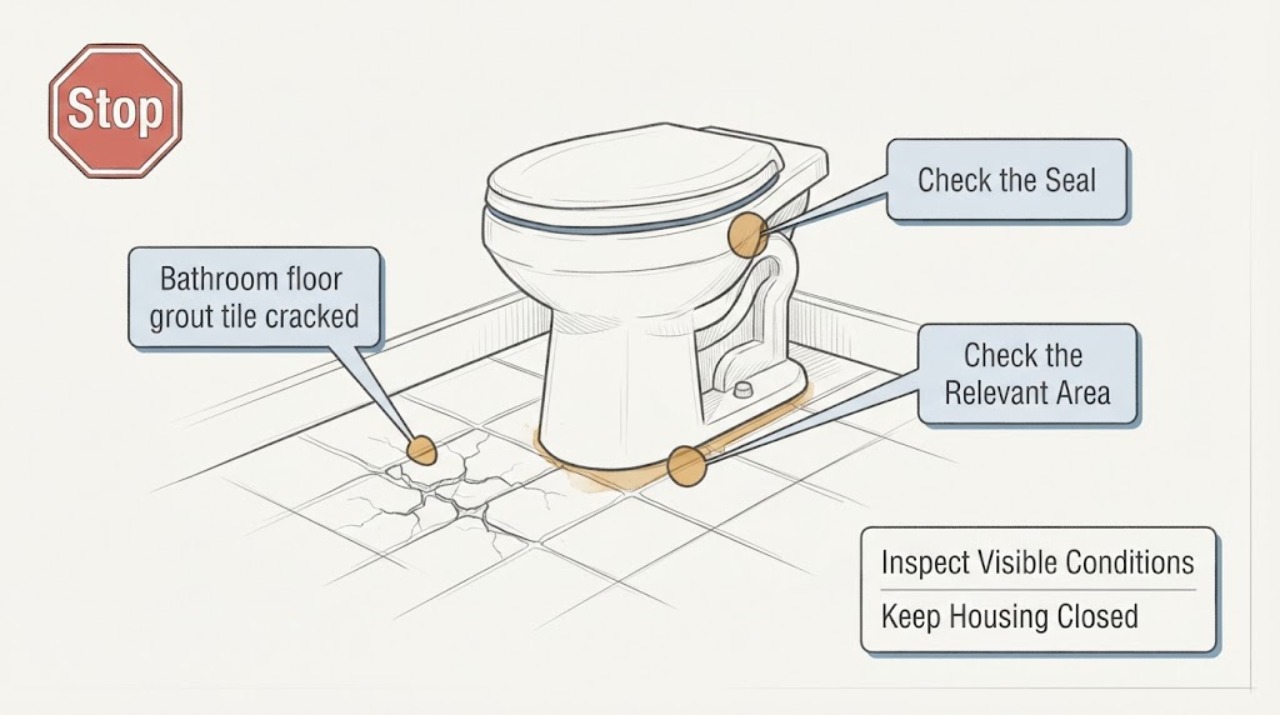
Bathroom floor grout tile cracked: What to Check and What to Do Next
A cracked bathroom-floor grout joint may be a limited surface defect, but it can also reflect tile movement, substrate movement, moisture, loose tile, or a failed movement joint. First determine whether the crack is only in the grout or continues through a tile, map whether it is isolated or recurring, and look for movement, water marks, soft areas, and trip or slip risk.
-
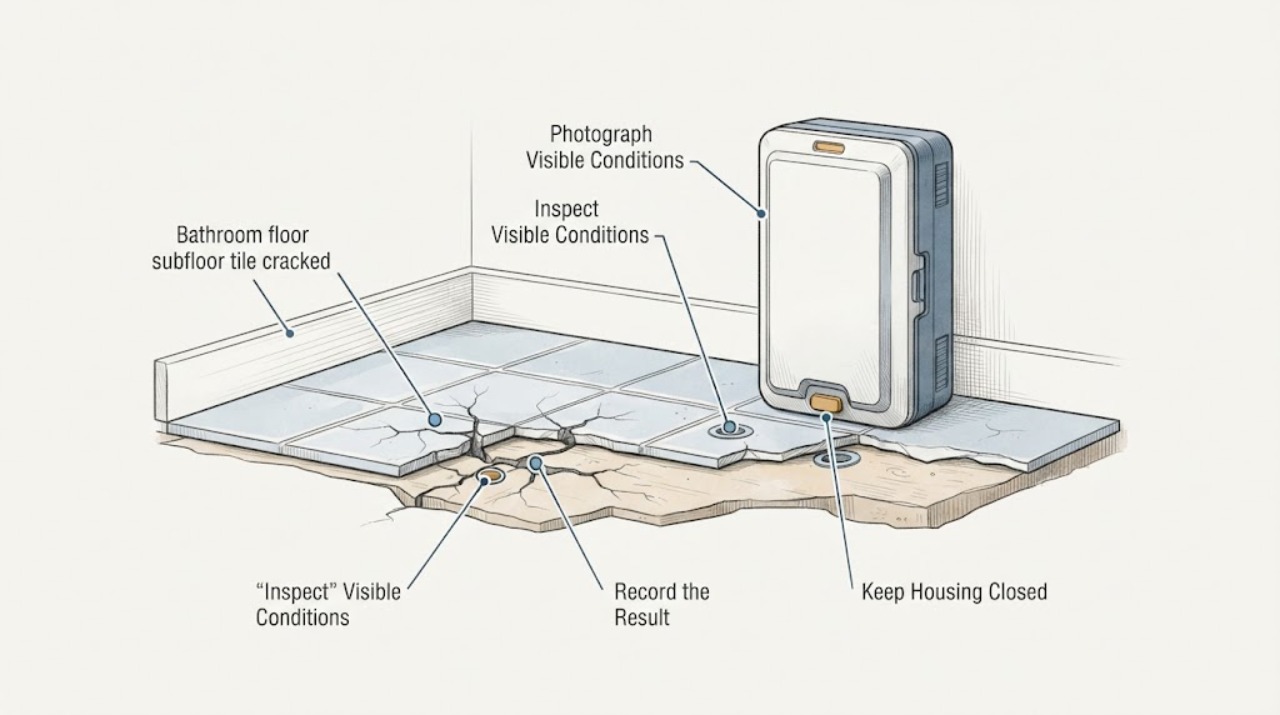
Bathroom floor subfloor tile cracked: What to Check and What to Do Next
A cracked bathroom floor tile may be a surface defect, movement in the tile assembly, or a sign of moisture or subfloor movement. Start with safe observation: map the crack, look for tile or grout movement, note soft or uneven areas without pressing hard, and check for moisture or plumbing-related timing.
-
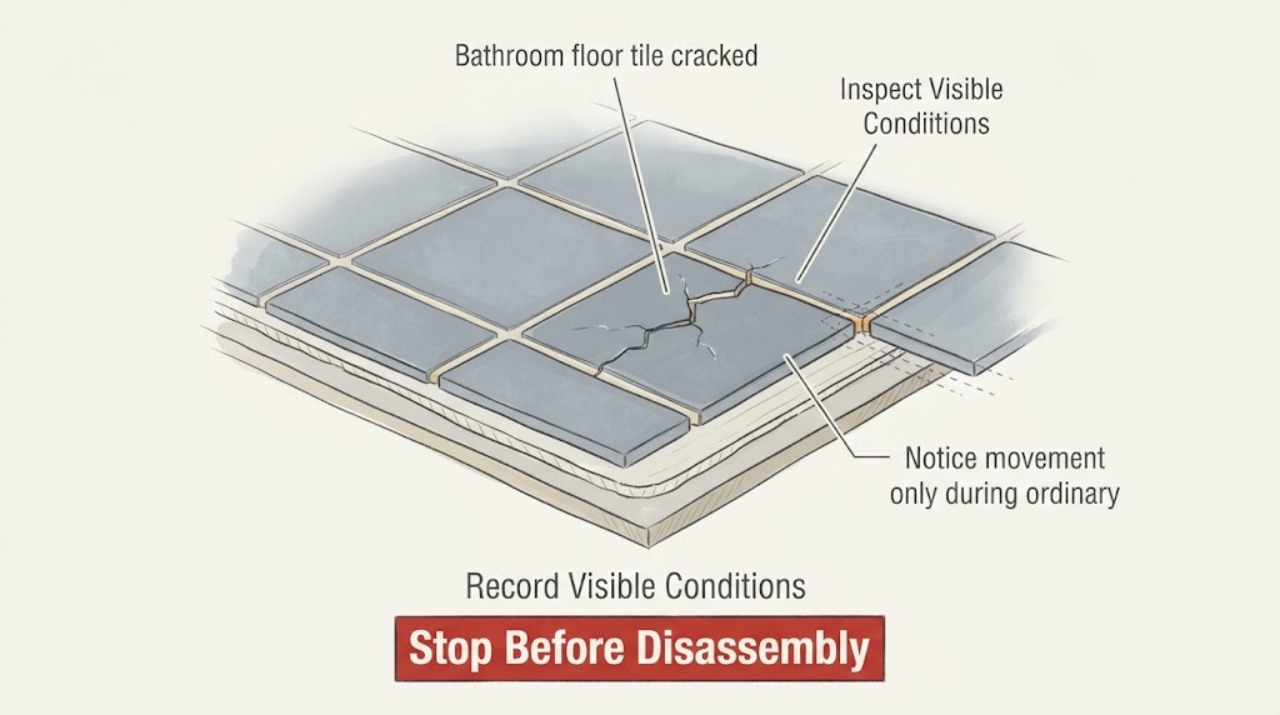
Bathroom floor tile cracked: What to Check and What to Do Next
Treat a cracked bathroom floor tile as an observation and moisture-triage issue first. From a safe standing position, document the crack pattern, notice whether the tile feels loose during ordinary use, and look for dampness, staining, odor, or recurring wet grout near the shower, tub, toilet, or sink.