
Repair problem
Fallen Branch Yard Cleanup Troubleshooting Guides
Published FixGraph guidance for diagnosing and responding to fallen branch yard cleanup.
Matching published guides
Choose a guide that matches the service, equipment, and conditions you are seeing.
-
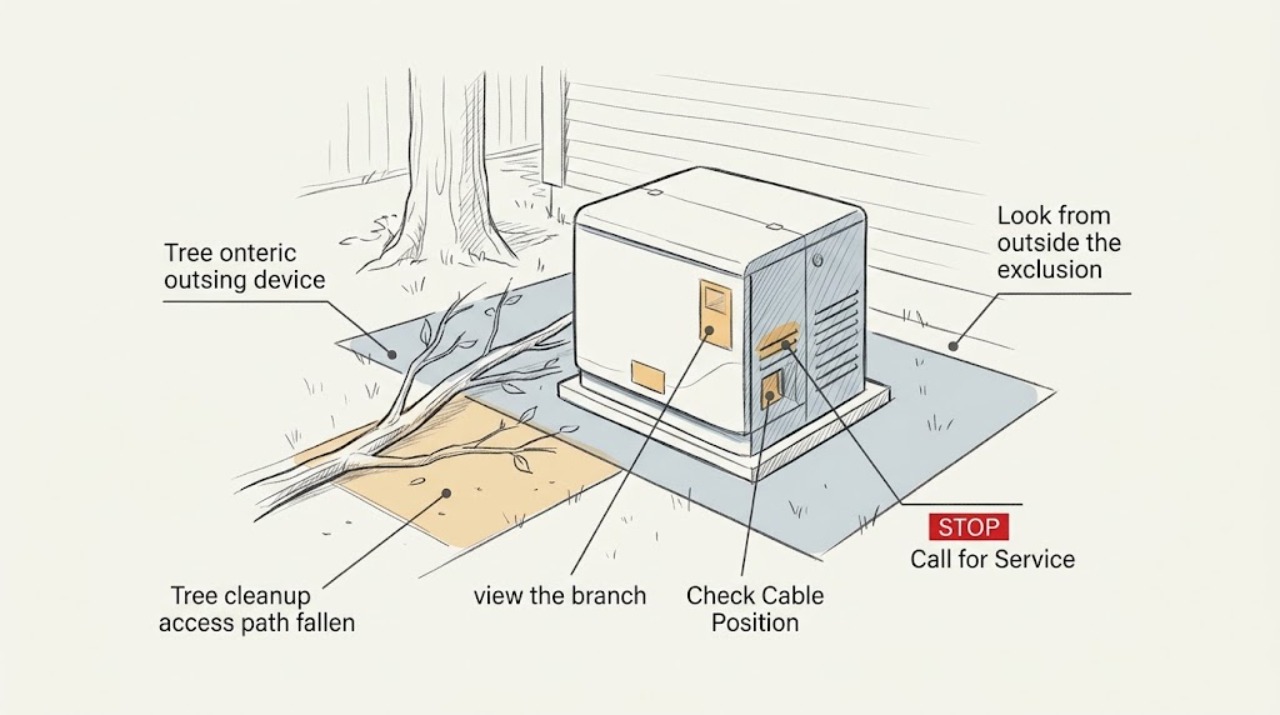
Tree cleanup access path fallen branch yard: What to Check and What to Do Next
Treat a fallen branch in a yard access path as a hazard survey first, not a carrying or cutting job. From stable ground, look for hanging or connected limbs, a bent or tensioned branch, a damaged tree, utility lines, structures, blocked public access, unstable soil, and whether the path can be isolated without approaching the debris.
-
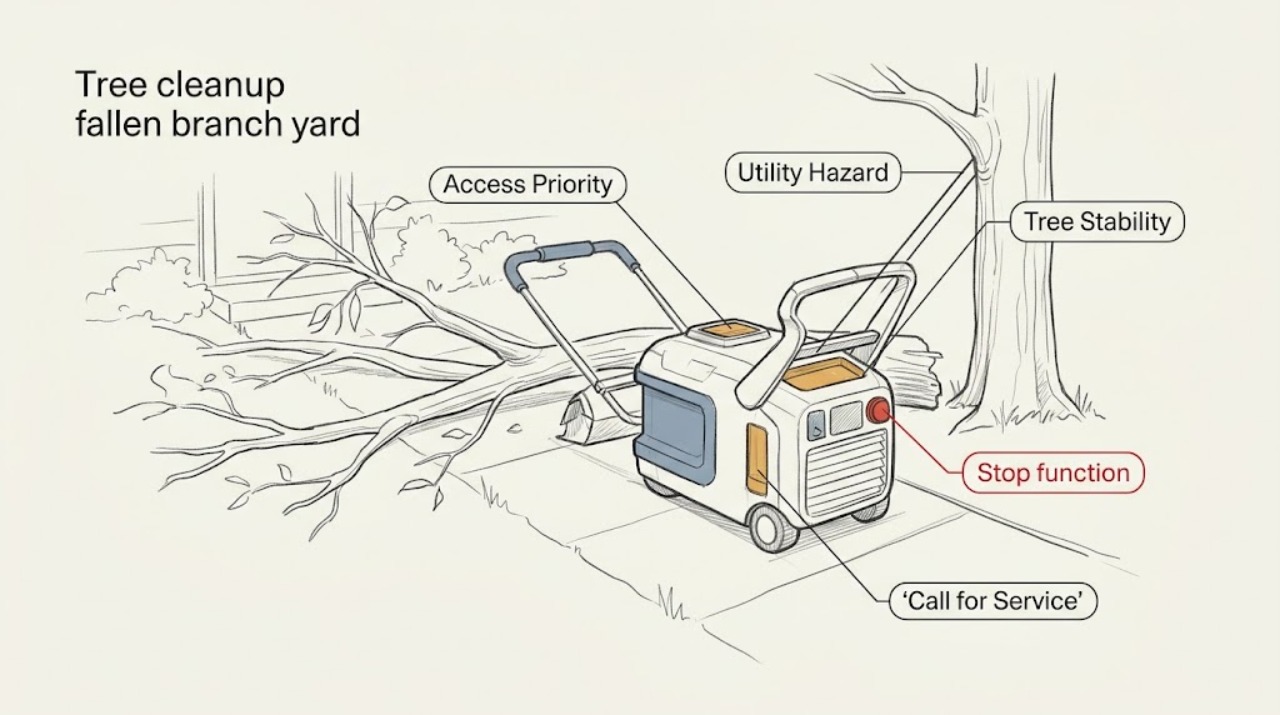
Tree cleanup fallen branch yard blocked walkway: What to Check and What to Do Next
A storm-fallen branch blocking a walkway is first an access and scene-safety problem, not ordinary yard waste. From a distant ground-level position, identify any downed or contacted power line, hung or tensioned limb, leaning tree, lifted root plate, saturated ground, and whether the route is a sole entrance or emergency exit.
-
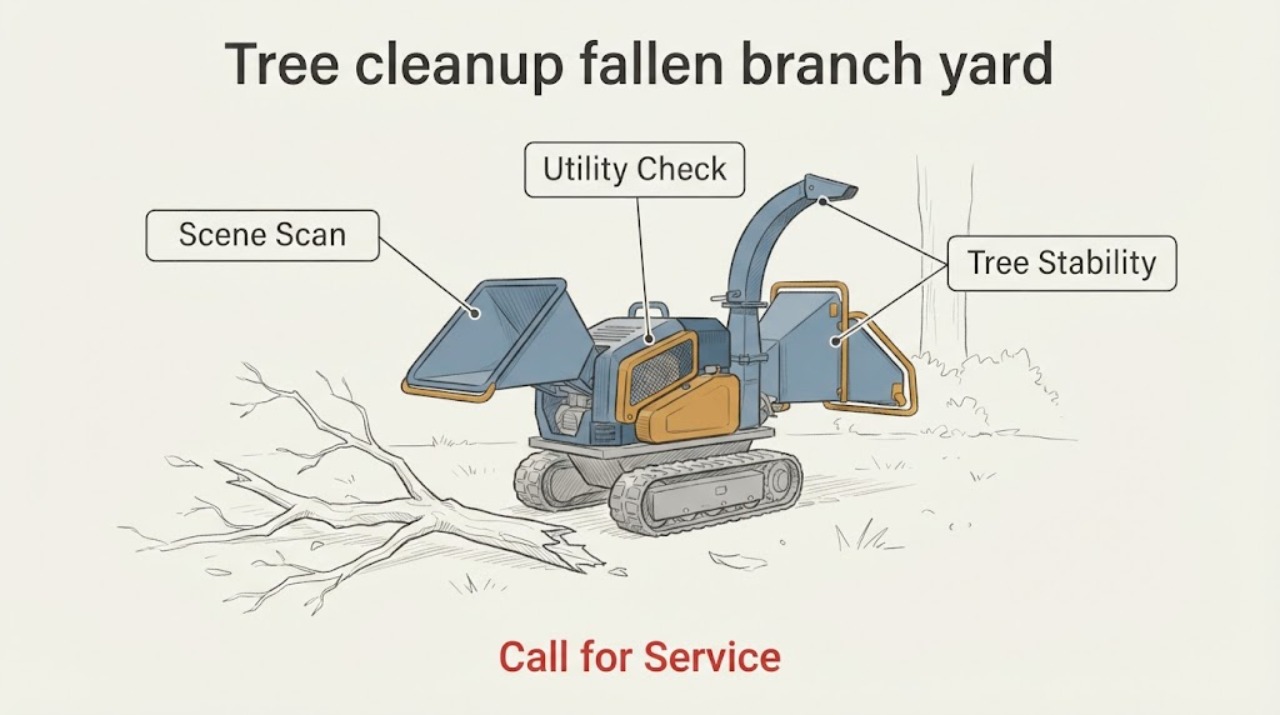
Tree cleanup fallen branch yard after storm: What to Check and What to Do Next
Storm-fallen branches are not automatically yard waste. From a distant ground-level position, first look for downed or touching power lines, a leaning tree or lifted root plate, branches still hung or under tension, saturated or unstable ground, and blocked access.
-
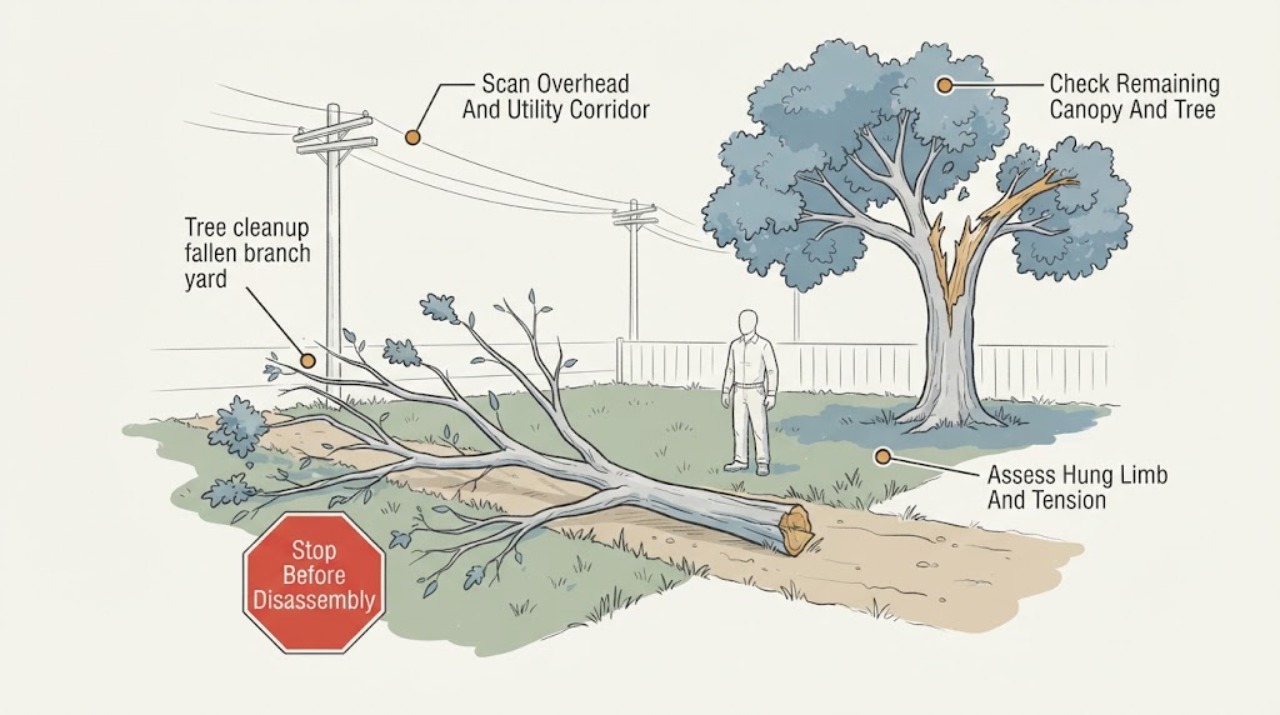
Tree cleanup fallen branch yard: What to Check and What to Do Next
Treat a fallen branch as a tree-hazard assessment before treating it as yard waste. From a safe distance, look for overhead or downed utilities, branches still hanging or supported by the fallen limb, visible tension or movement, damage to roofs or fences, blocked public access, and active or forecast severe weather.