
Repair problem
Gutter Leaking Seam Troubleshooting Guides
Published FixGraph guidance for diagnosing and responding to gutter leaking seam.
Matching published guides
Choose a guide that matches the service, equipment, and conditions you are seeing.
-
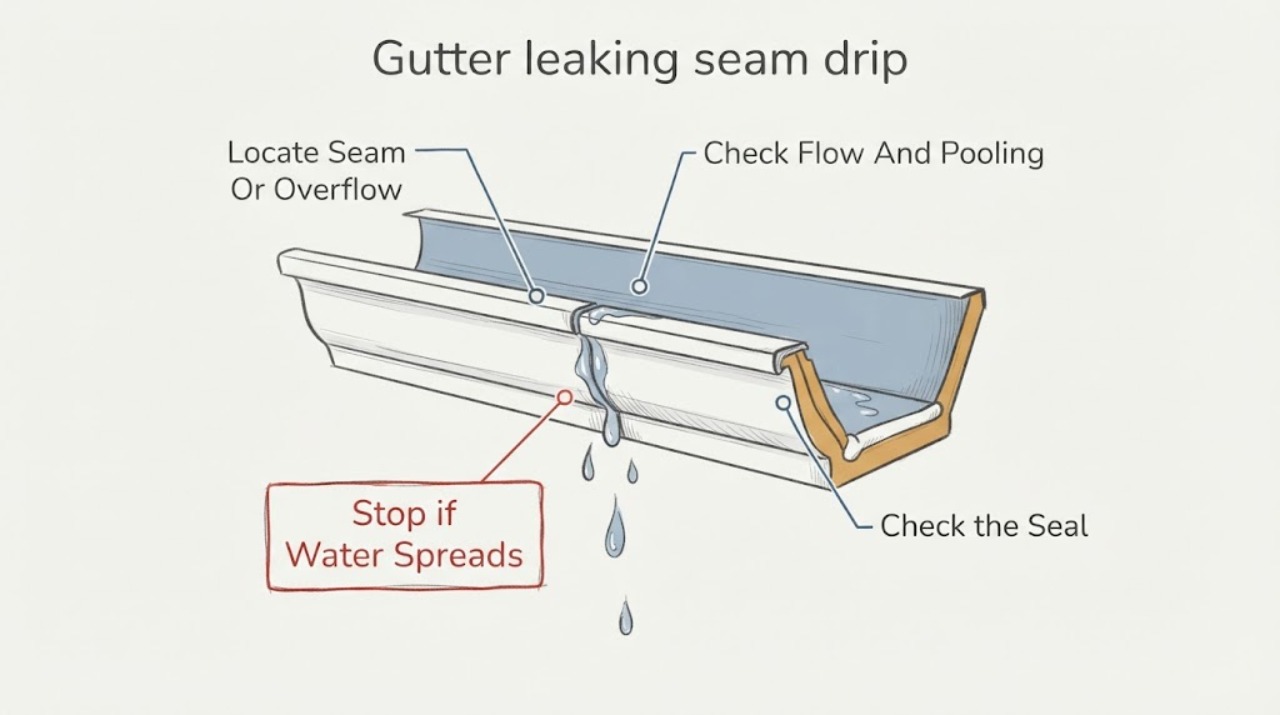
Gutter leaking seam drip at joint: What to Check and What to Do Next
A drip at a gutter seam is usually either a failed joint seal or water escaping from an upstream blockage, sag, or overflow that only appears at the joint. First observe the area during light rain or a controlled flow from a safe, reachable position and distinguish water coming through the seam from water spilling over the top edge.
-
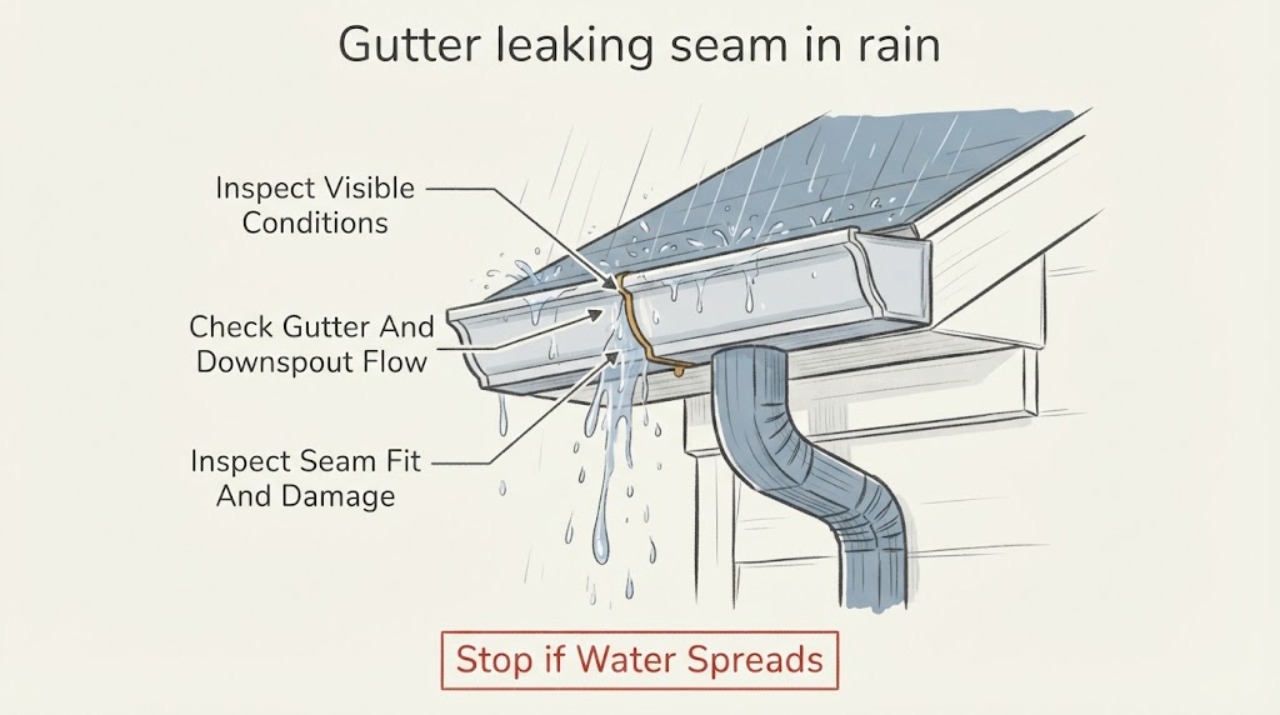
Gutter leaking seam in rain: What to Check and What to Do Next
If a gutter seam leaks in rain, first determine whether water is coming through the joint or backing up and escaping because the gutter or downspout cannot carry the flow. A leak that appears at one aligned seam while the channel and downspout flow normally points to failed sealant or a loose lap.
-
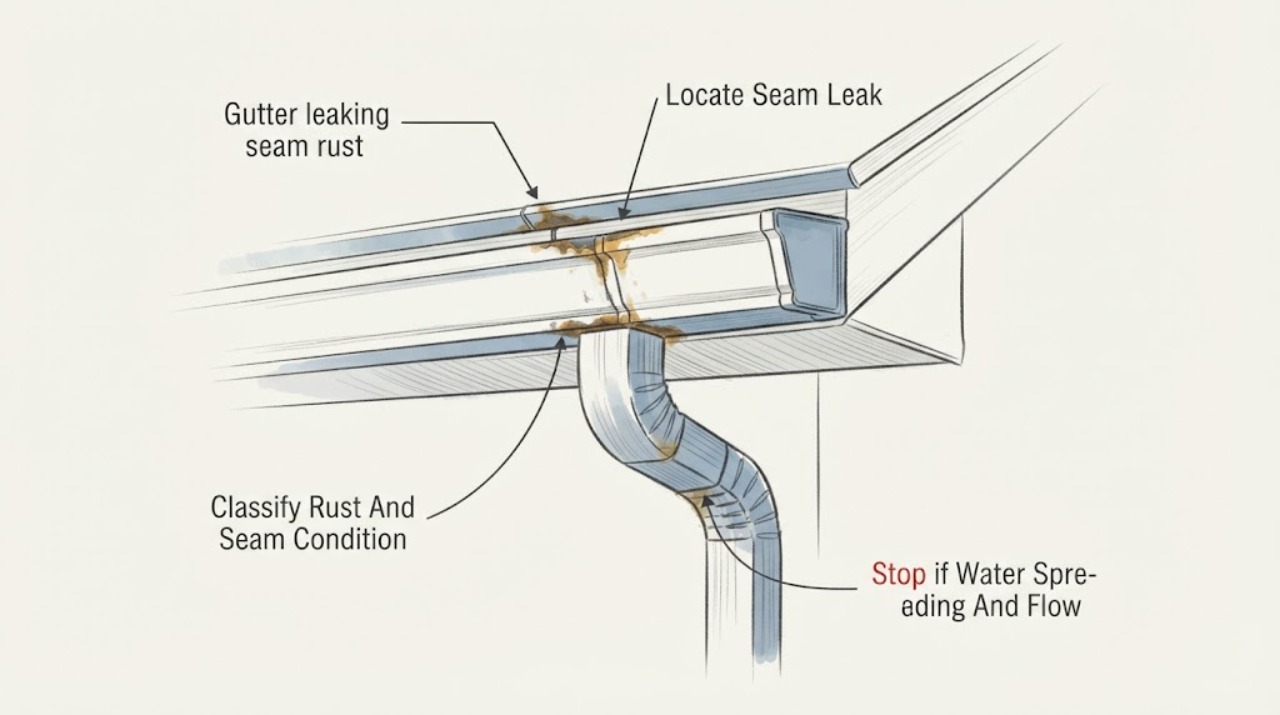
Gutter leaking seam rust: What to Check and What to Do Next
A rusty gutter seam can be a surface-coating problem, a joint that has opened, or a hole where corrosion has perforated the metal. First observe the leak during rain or a cautious ground-level water test and mark the exact point: seam, end cap, downspout outlet, or gutter bottom.
-
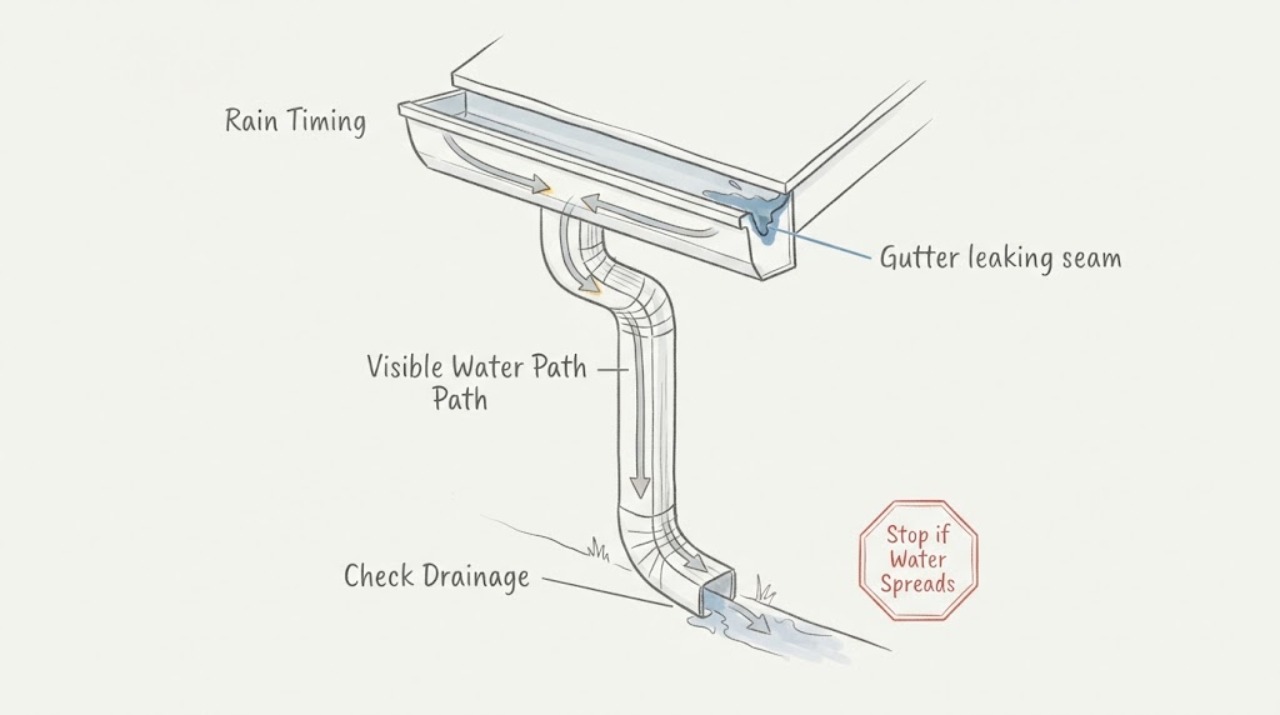
Gutter leaking seam: What to Check and What to Do Next
A leak that appears at a gutter seam may come from an open or failed joint, but water can also run from an overflow, a sag, a downspout restriction, roof flashing, or the end cap before it reaches the visible drip. From indoors, a safe window, or ground level, record exactly when the leak appears, where water lands, whether the gutter overflows, and whether the wall or foundation is getting wet.