
Repair problem
Vinyl Floor Plank Damaged Troubleshooting Guides
Published FixGraph guidance for diagnosing and responding to vinyl floor plank damaged.
Matching published guides
Choose a guide that matches the service, equipment, and conditions you are seeing.
-
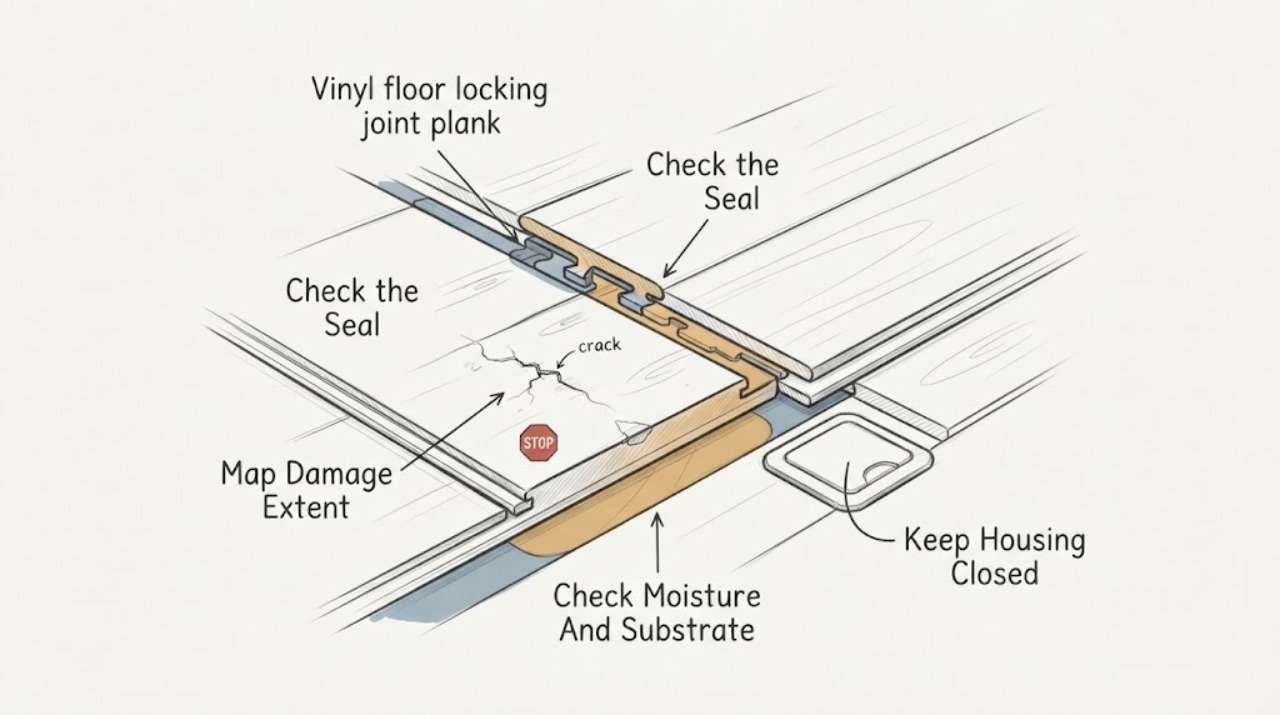
Vinyl floor locking joint plank damaged: What to Check and What to Do Next
First determine whether the damage is only a surface scratch or chip, or whether the vinyl plank's locking joint has opened, lifted, or lost its interlock. From a standing position, document the gap and raised lip, count whether one plank or a row is affected, and look for nearby moisture, a wavy or uneven floor, tight perimeter edges, or a raised trip edge.
-
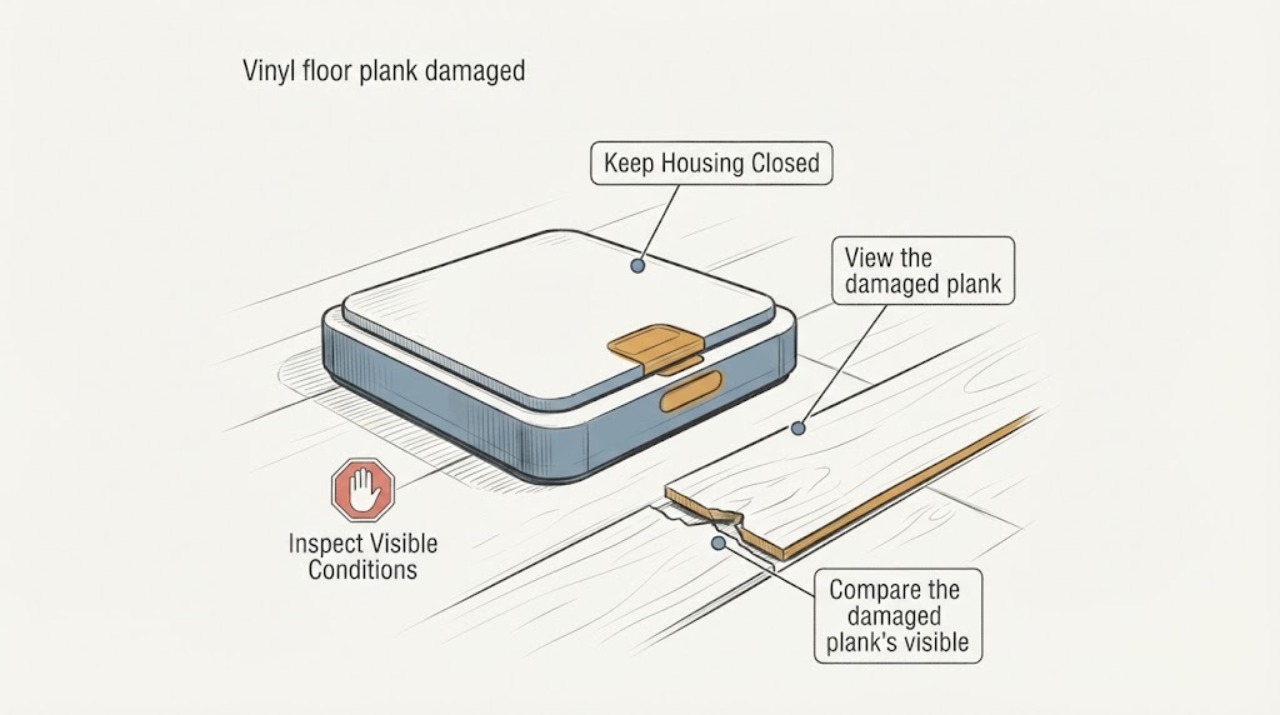
Vinyl floor plank damaged: What to Check and What to Do Next
First classify the damage visually: a surface scratch or scuff is a different decision from a cracked, chipped, separated, raised, or soft plank. Record the location, edge and joint condition, nearby moisture history, and whether adjacent planks are changing.
-
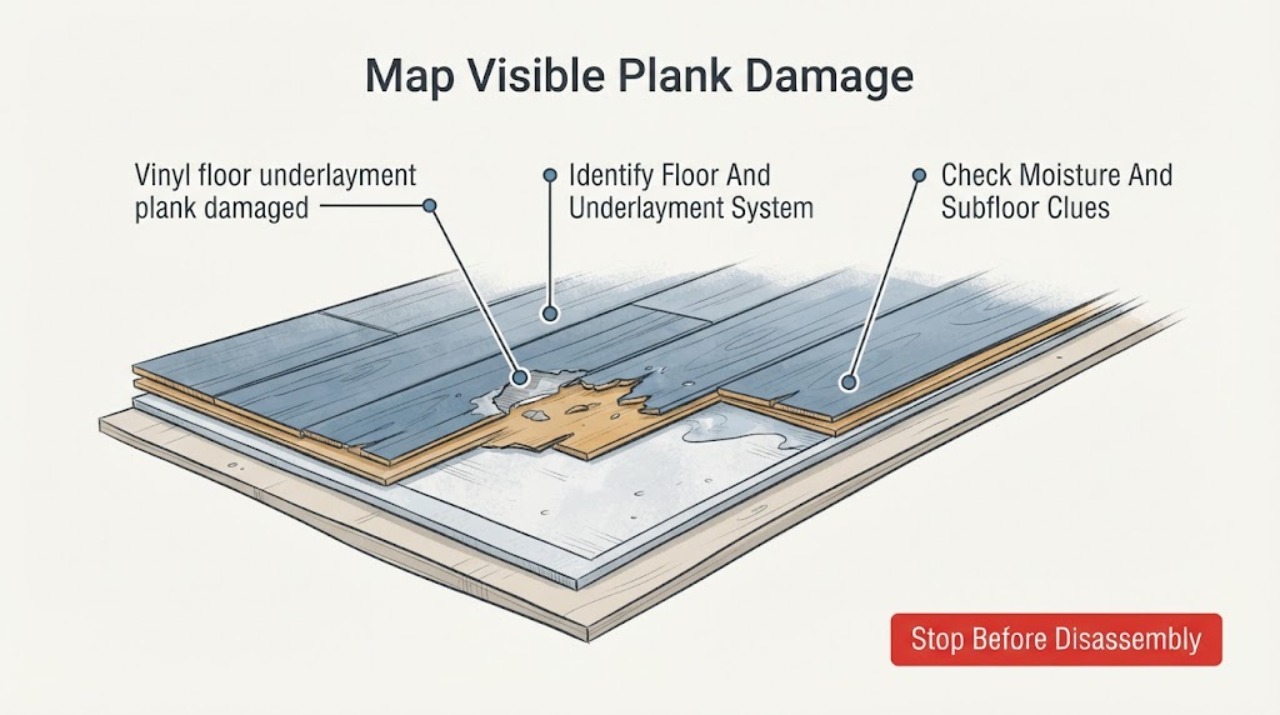
Vinyl floor underlayment plank damaged: What to Check and What to Do Next
When a vinyl plank is damaged and the underlayment may also be involved, first determine whether the problem is limited to the visible plank or reflects moisture, a soft or uneven substrate, a failed locking edge, or an incompatible added underlayment. Photograph the pattern, identify the flooring and installation method from records or an unused carton, and check for dampness, movement, gaps, or damage spreading beyond one plank.