
On this page
Start here
Quick answer
A walk-in tub that drains slowly should be treated as a drain-path or control problem until the cause is known. Keep the tub empty and dry, and do not enter it to perform a test. From a stable position outside the tub, record the visible drain cover and control position, prior drain behavior, other-fixture symptoms, and any accessible moisture or odor. Do not remove drain hardware, use chemical or pressure clearing, cut pipes, open hidden access, or fill the tub while someone is inside. Arrange plumbing or walk-in-tub service if the problem persists, affects more fixtures, leaves standing water, or comes with a leak, sewage odor, or unsafe access condition.
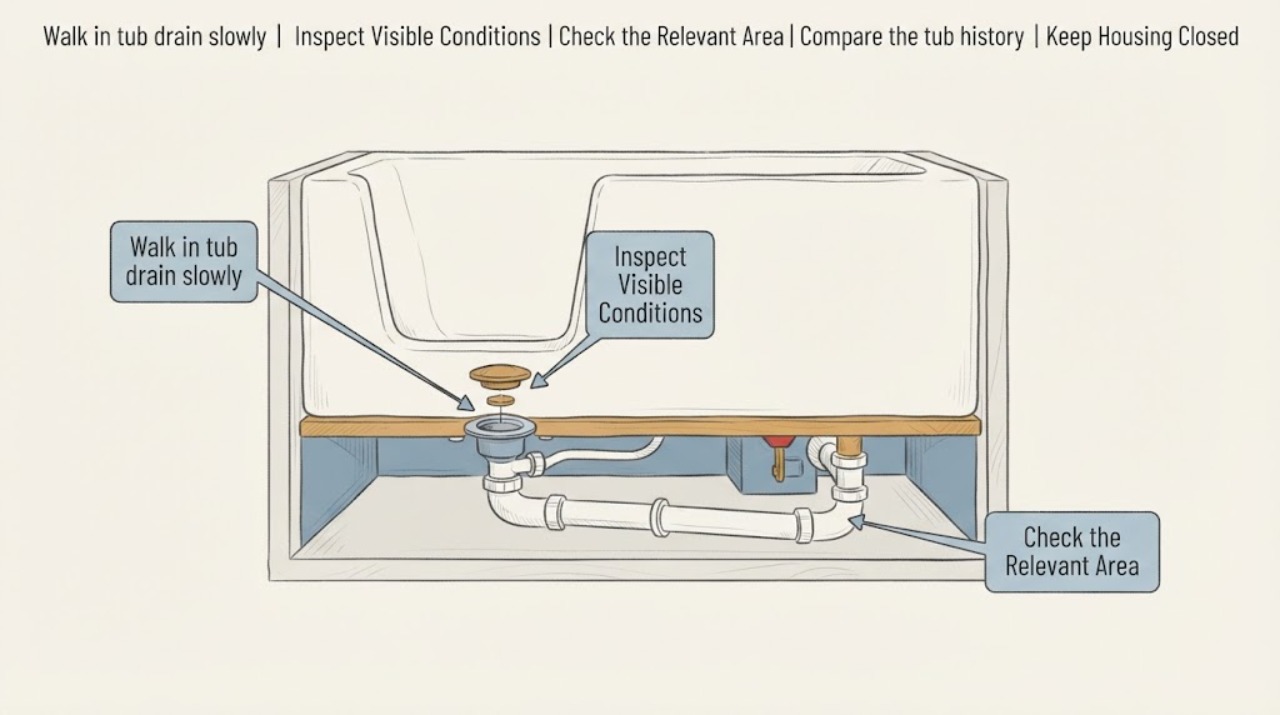
Work through in order
Diagnostic checks
Use only checks that match the exact appliance or system and its official guide.
-
Confirm the tub is empty, dry, and safe to observe
From a stable position outside the tub, look for standing water, a wet floor, a closed or open door, and any sign that a person would need to enter the tub to continue. Do not enter, fill, or reach across a wet basin; do not move the door or attempt a drain test.
Expected result: Record dry and empty, residual water only, standing water, or a visible leak around the tub or nearby floor. Note whether the door and surrounding floor are dry and whether access is safe without stepping into the tub.
Next step: Keep the tub unused until the drain path is assessed. Photograph visible water or a safe floor-level stain only from a stable position and include when it was noticed in the service request.
Stop if: Stop if water is near electrical equipment, the floor is slippery, sewage is present, the door or tub is damaged, or any further observation would require entering the tub.
Why this matters
Why: Residual or standing water makes a slow-drain complaint more urgent and creates slip and access risk. A dry tub with only a history of slow draining allows safe documentation without creating another water event.
-
Observe the visible drain control and cover
Without removing anything, look at the accessible drain opening, strainer or cover, and any drain lever or handle from outside the dry tub. Note the control's marked open/closed position and whether hair, lint, soap film, or another obstruction is plainly visible at the surface; do not pull, unscrew, pry, or insert a tool.
Expected result: Record a clear surface, visible debris, a cover that appears displaced, or a lever that does not appear to reach its marked position. Record whether the drain control is a lever, push control, or another model-specific mechanism without guessing its internal condition.
Next step: Provide a photo and the control description to a tub or plumbing technician. Only clean a plainly accessible surface according to the tub manual, with the tub dry and no disassembly; otherwise leave it untouched.
Stop if: Stop if the cover is loose, sharp, damaged, chemically wet, or requires reaching into the drain, removing hardware, or entering the tub.
Why this matters
Why: A visible surface obstruction or control-position concern can explain slow drainage, but the cover, stopper, linkage, and waste line vary by model. A clear-looking opening does not rule out a restriction below it.
-
Compare the tub history with other fixtures
Use existing observations rather than creating a fill test: note whether a nearby sink, shower, toilet, or floor drain has also been slow, gurgling, or backing up, and when the walk-in tub symptom first appeared. Do not intentionally send a large volume of water through any fixture to reproduce the problem.
Expected result: Classify the issue as tub-only, several bathroom fixtures, or multiple fixtures in the home. Record whether the change was sudden or gradual and whether it followed plumbing work, a storm, a power event, or use of a drain product.
Next step: Give the fixture pattern and timeline to the service professional. Avoid using the affected fixtures more than necessary if water could back up or overflow.
Stop if: Stop normal water use and call promptly if multiple fixtures back up, wastewater rises, a sewer odor is strong, or the tub's surrounding floor becomes wet.
Why this matters
Why: A tub-only history points toward the tub drain control or its local waste connection; several affected fixtures raise concern for a shared branch or larger drainage restriction. The pattern cannot identify a hidden blockage without professional assessment.
-
Check accessible moisture and odor clues
From a dry, stable floor position, look around the visible tub base, adjacent trim, and any already-open user-accessible cabinet area for moisture, staining, swelling, or a sewage-like odor. Do not remove a panel, crawl under the tub, open a concealed access hatch, or touch wastewater.
Expected result: Record no visible moisture, a localized damp mark, a recurring stain, a sewage odor, or water appearing away from the drain opening. Note whether the clue was present before any recent use or cleaning.
Next step: Keep the area unused and arrange service. Tell the technician where and when moisture or odor was observed, and keep children and pets away from any contaminated water.
Stop if: Stop immediately for sewage, a spreading leak, water near electrical equipment, mold-like growth, or any need to crawl, lift, or remove a concealed panel.
Why this matters
Why: Moisture away from the drain opening can indicate a leak or connection problem rather than a simple slow surface drain. A sewage odor or wastewater clue requires sanitation and plumbing judgment, not chemical treatment or a tub-fill test.
-
Record prior products, service, and model information
If safely visible, record the tub brand/model label, drain-control style, recent service, and any product already poured into the drain. Read labels only; do not add, mix, neutralize, or dispose of a drain chemical through the tub.
Expected result: Record no product used, a labeled cleaner used, an unknown product, or a mechanical attempt already made. Note whether the slow drain started after that event and whether the product container is available for the technician.
Next step: Keep any container closed and in its original labeled container, away from children and pets, and tell the professional the exact product and approximate timing. Do not attempt another clearing method.
Stop if: Stop if an unlabeled or leaking chemical container, fumes, skin/eye exposure, or a reaction is present; move to fresh air and use the appropriate emergency or poison-control response.
Why this matters
Why: Drain chemicals can create exposure and compatibility hazards, and the product history changes how a professional should approach the drain. EPA warns against improper disposal or mixing of household hazardous products and advises following product-label handling and disposal directions.
Use your observations
Decision map
Find the observation that best matches what you see, then follow the next safe action.
-
PATH 01Safety boundary
What you see
The tub is empty and dry, the issue appears tub-only, and no leak, sewage odor, or visible damage is present.
Do this next
Arrange normal-priority walk-in-tub or plumbing service and provide the drain-control, surface, timeline, and model observations. Do not create a fill test.
Why this path and its safety boundary
Safety stop: Do not enter the tub, remove the drain assembly, use chemicals, or apply pressure clearing.
-
PATH 02Safety boundary
What you see
Several fixtures are slow, gurgling, or backing up, or wastewater rises outside the tub.
Do this next
Limit water use and request prompt plumbing assessment for a shared drainage problem. Keep people and pets away from wastewater.
Why this path and its safety boundary
Safety stop: Do not add drain opener, mix products, use pressure equipment, or continue normal bathing while drainage is uncertain.
-
PATH 03Safety boundary
What you see
There is standing water, a leak away from the drain, a sewage odor, or moisture near electrical equipment.
Do this next
Keep the area unused and request prompt plumbing or tub service. Use emergency or utility guidance when water and electricity may interact.
Why this path and its safety boundary
Safety stop: Do not enter the tub, touch wastewater or electrical equipment, open hidden access, or attempt a fill-and-drain test.
-
PATH 04Safety boundary
What you see
A drain chemical or unknown product was already used, or a prior mechanical attempt may have left a tool or damaged the drain.
Do this next
Stop all further treatment and tell the technician the exact product or attempt, timing, and container information. Follow label and local hazardous-waste guidance for storage or disposal.
Why this path and its safety boundary
Safety stop: Do not mix products, neutralize chemicals, insert another tool, or use pressure against an unknown drain condition.
Helpful context
Understand the symptom
What a slow drain can mean
The symptom may be limited to the visible drain opening, the tub's stopper or lever, the connected waste line, or a larger household drain restriction. Walk-in tubs also have a door and user-safety constraints: a filled tub must not be used as a troubleshooting setup when draining is uncertain. The safe homeowner goal is to separate an isolated history from a broader plumbing problem and give a technician accurate observations.
Keep the tub dry
Do not fill the tub to time the drain, climb into a wet or occupied tub, remove a drain cover or stopper, insert a tool, pour cleaner, use compressed air or high pressure, cut or disconnect pipe, or open a concealed access panel. If a chemical product has already been used, do not add another product or attempt mechanical clearing; tell the service professional exactly what was used.
Only after diagnosis
Potential parts
- drain-hair-catcher
Only consider a model-approved surface catcher if a technician or the tub manual confirms that the drain opening and door-safe flow path support it after the underlying slow-drain cause is addressed.
Confirm the exact tub drain opening and manufacturer fit information; do not use a part that restricts emergency drainage or interferes with the stopper. - tub-drain-tool
Only consider a drain tool if a qualified professional identifies a suitable, non-destructive tool for this tub and confirms that using it will not require disassembly or pressure clearing.
Walk-in tub drain geometry varies; do not infer fit or safe use from a generic tool description. - enzyme-drain-maintainer
Only consider a maintenance product if the tub manufacturer and service professional approve its ingredients and use for the specific tub, plumbing, and wastewater setup; it is not a cure for an active slow drain.
Verify the label, tub materials, septic or wastewater conditions, and professional approval before any use; never mix products.
When checks do not resolve it
Need a professional?
Arrange walk-in-tub or plumbing service when the drain remains slow, the visible opening is clear, the issue returns, or any part of the drain control or waste connection may be involved. Call promptly for standing water, multiple affected fixtures, a leak, sewage odor, or water near electrical equipment.
Have this ready
- Provide the tub brand/model if visible, drain-control type and position, whether the tub was empty and dry, visible drain or floor clues, other-fixture symptoms, timeline, odors, recent service, and the exact name of any product already used.
Common questions
FAQ
Can I fill a walk-in tub to see how fast it drains?
Not when the drain is already slow or uncertain. Keep the tub empty and dry; a fill test can create standing water, a leak, or an unsafe entry and does not identify a hidden restriction.
Should I pour drain cleaner into a slow walk-in-tub drain?
Do not add chemical drain opener or mix products. Keep the product container and label information for the service professional and follow local disposal guidance if a product was already used.
What does it mean if other bathroom fixtures are slow too?
Multiple slow or backing-up fixtures suggest a shared drainage issue rather than only the tub's visible opening. Limit water use and arrange prompt plumbing assessment.
Read the exact guide
Official sources
- Fast-Drain Technology | Walk-In BathKOHLER · Supports identifying the drain control as model-specific and recognizing that consistent draining depends on the connected plumbing system.
- How to Care for Your Septic SystemU.S. Environmental Protection Agency · Supports avoiding chemical drain openers and limiting harmful materials entering bathtub and household drains; it does not diagnose this tub.
- Household Hazardous Waste (HHW)U.S. Environmental Protection Agency · Supports not mixing or improperly disposing of hazardous household products and preserving label information for professional handling.
Community feedback
Share a repair observation
Share a plain-text repair observation. Accepted observations are published automatically; this page may take a moment to update.