
Repair service
Walk In Tubs Guides
Walk-in tub features, maintenance, and access guidance.
Published walk in tubs guides
Choose the guide that best matches the service and problem you are seeing.
-
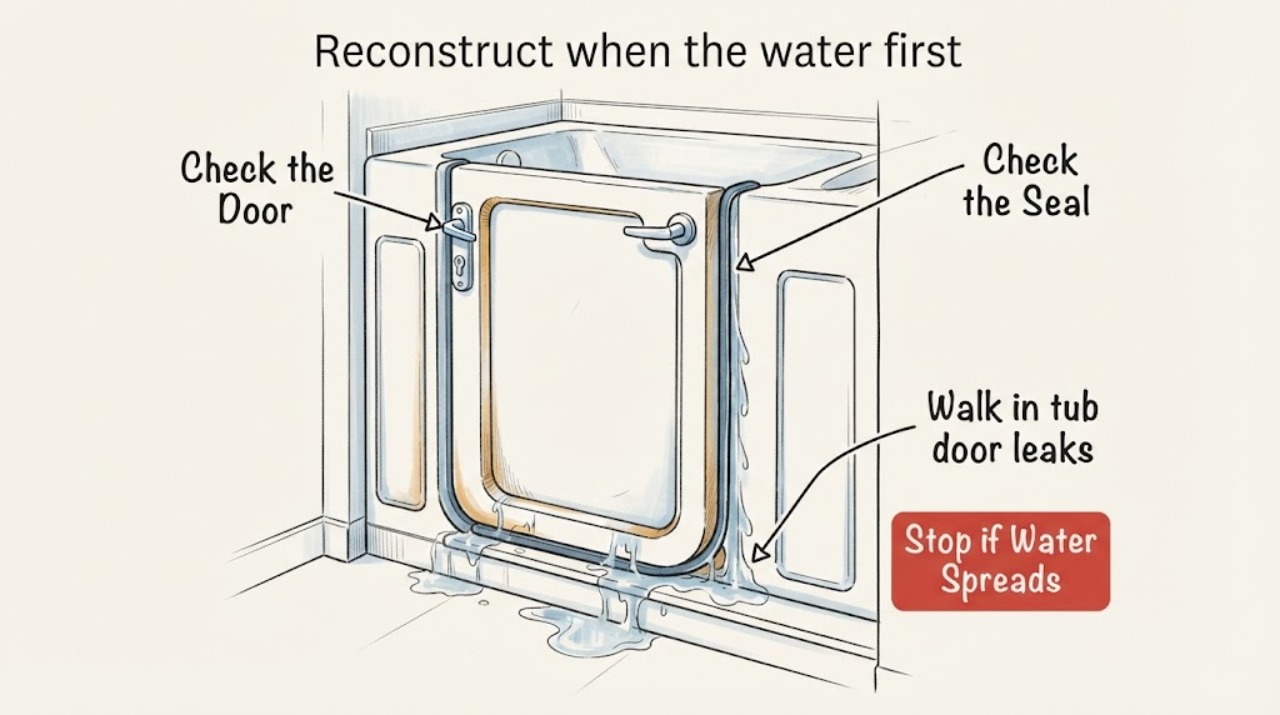
Walk in tub door leaks: What to Check and What to Do Next
Stop using the walk-in tub until the floor is dry and the source of the water is understood. A leaking door can wet the bathroom floor and create a slip hazard, and continuing to fill the bath can increase damage below or around the tub.
-
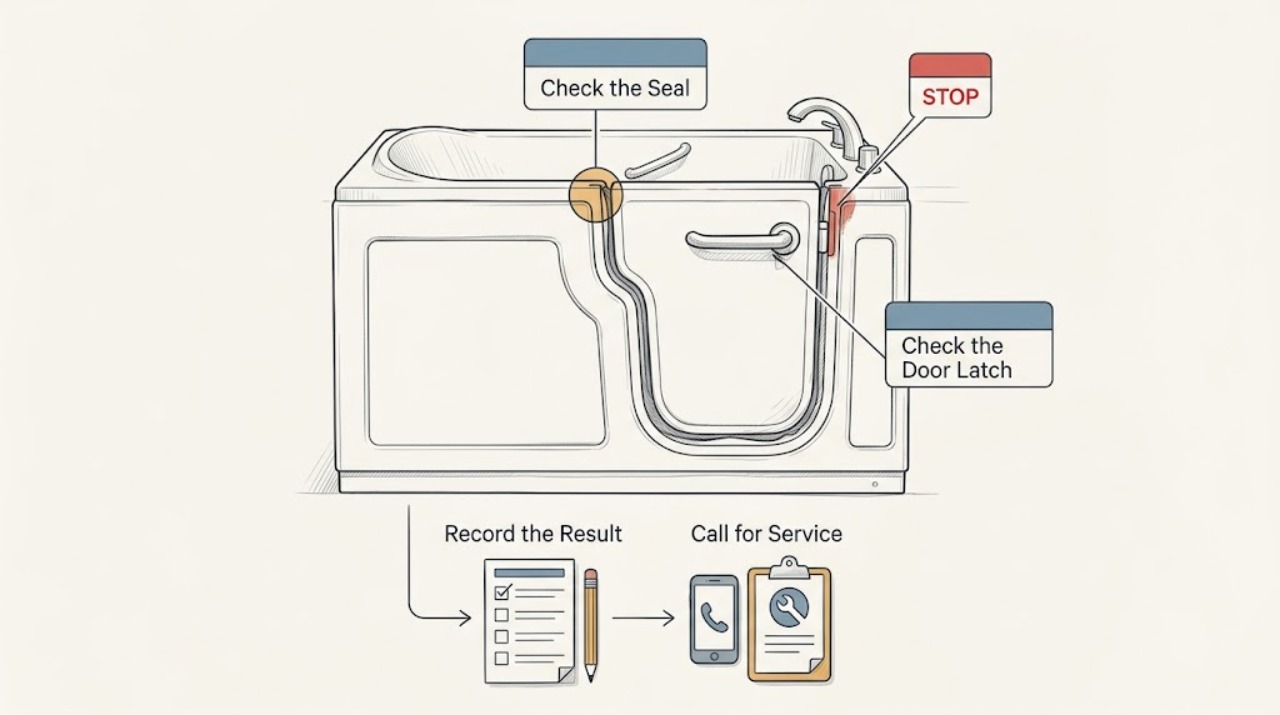
Walk in tub door seal worn: What to Check and What to Do Next
Do not refill or use the walk-in tub to prove a suspected seal leak. With the tub empty and dry, inspect the seal for cuts, flattening, gaps, hardening, or separation, then check whether the door sits evenly and fully against the frame without forcing the handle.
-
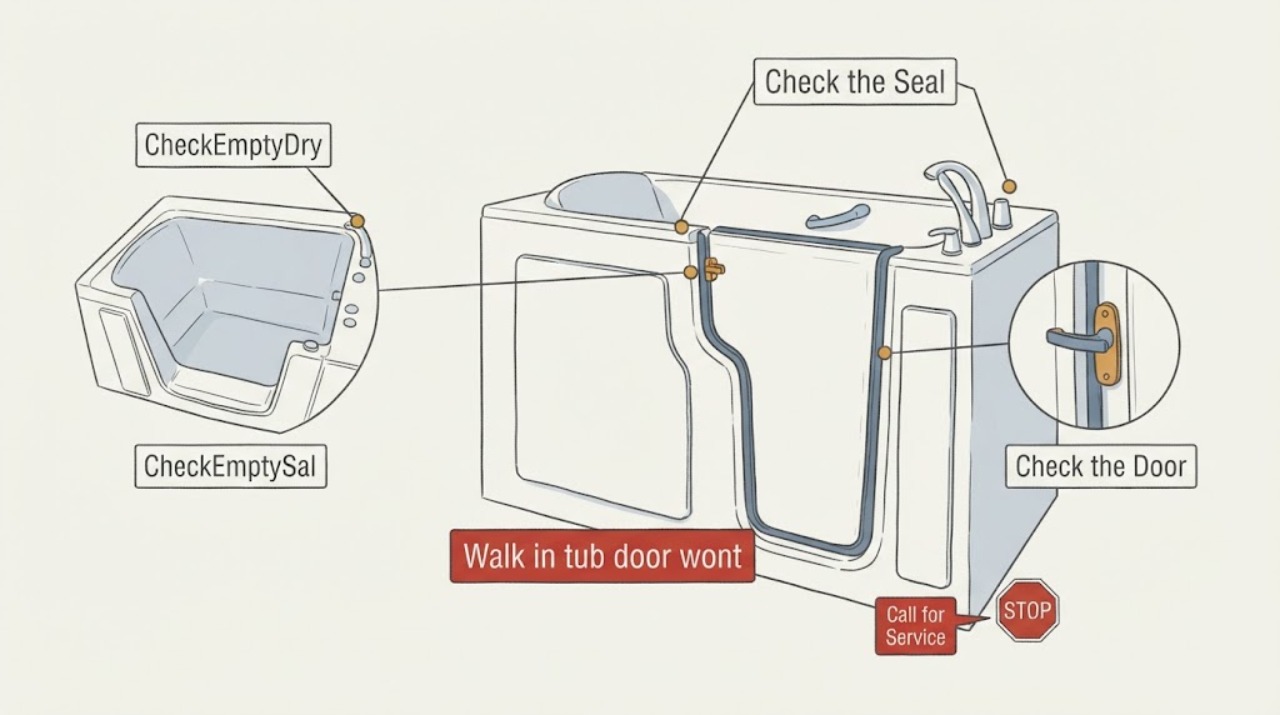
Walk in tub door wont latch misalignment: What to Check and What to Do Next
Do not fill or use a walk-in tub when its door will not latch smoothly and securely. With the tub empty and dry, look from a normal standing position for an uneven gap, rubbing, a door that sits high or low at one side, debris on the gasket or jamb, or a latch that does not line up with its receiver.
-
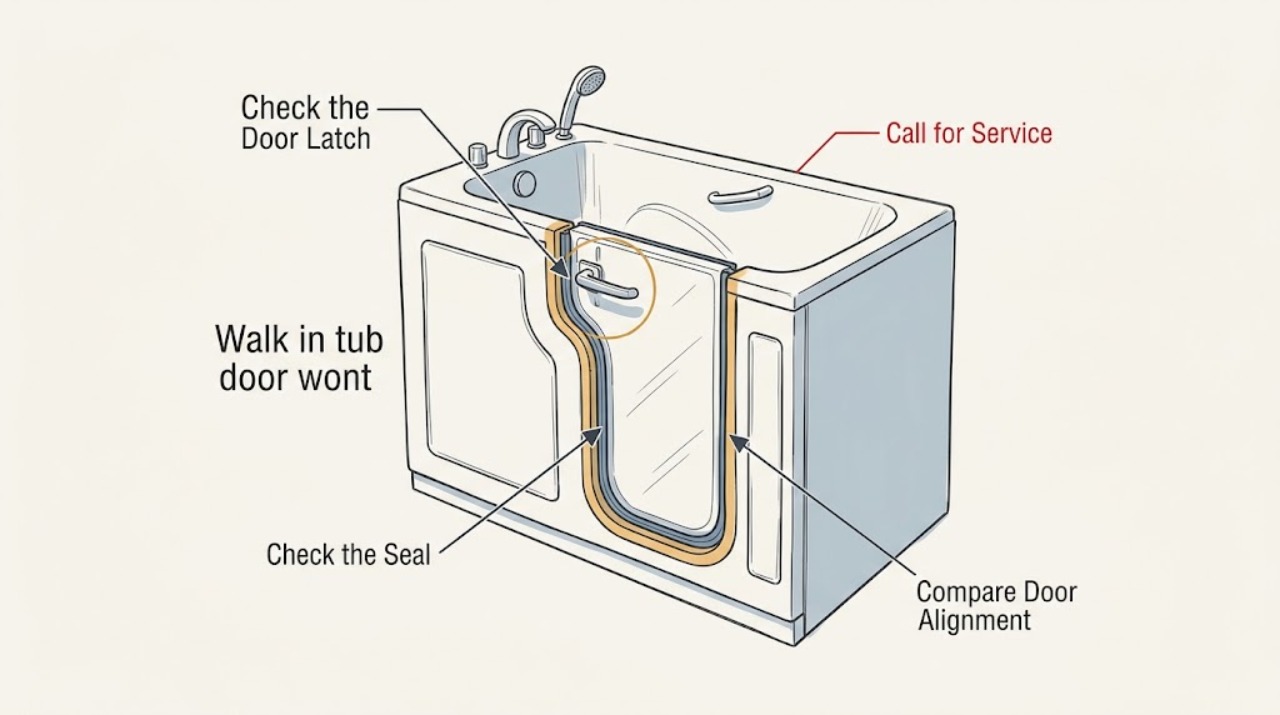
Walk in tub door wont latch not sealing: What to Check and What to Do Next
A walk-in tub door that will not latch or does not seal should stay out of use until the cause is identified. With the tub empty and the floor dry, observe whether the latch stops before its normal position, whether the door gap is uneven, and whether the gasket is dirty, displaced, torn, or permanently deformed.
-
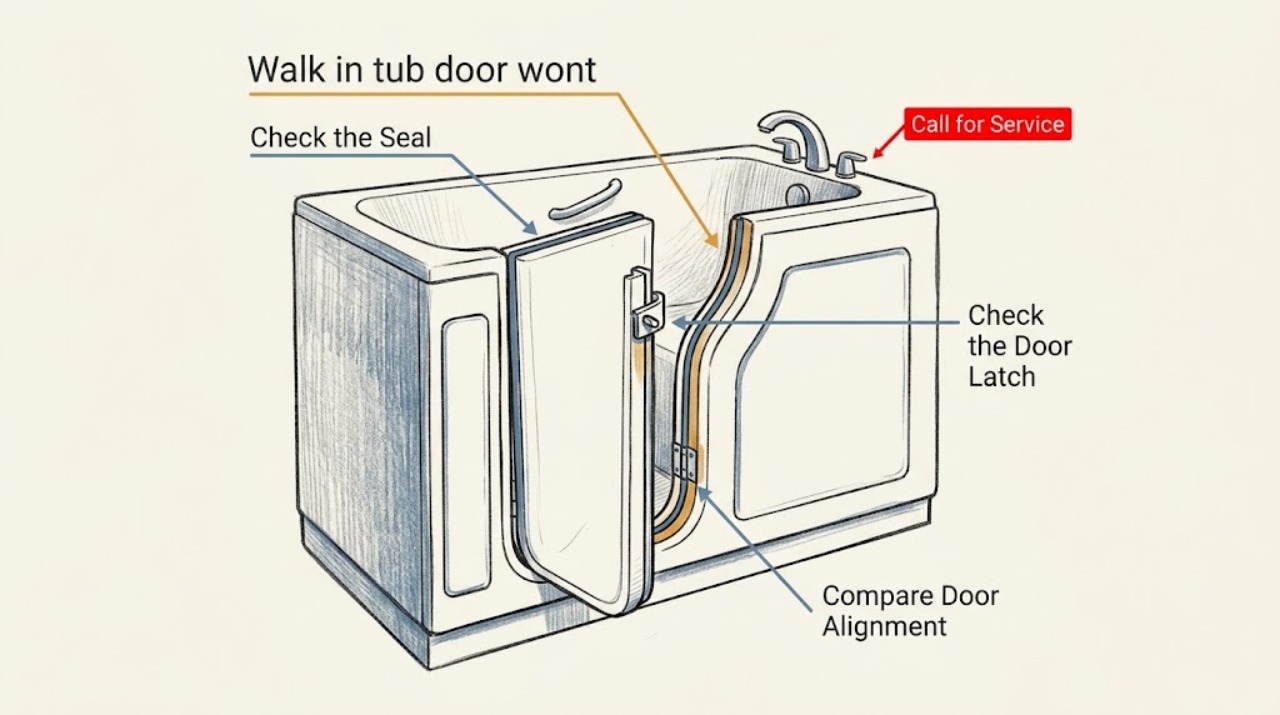
Walk in tub door wont latch: What to Check and What to Do Next
Keep the walk-in tub empty and do not force the door closed. From a stable standing or seated position, inspect the door seal, latch and handle, frame alignment, sill, and visible debris without disassembly.
-
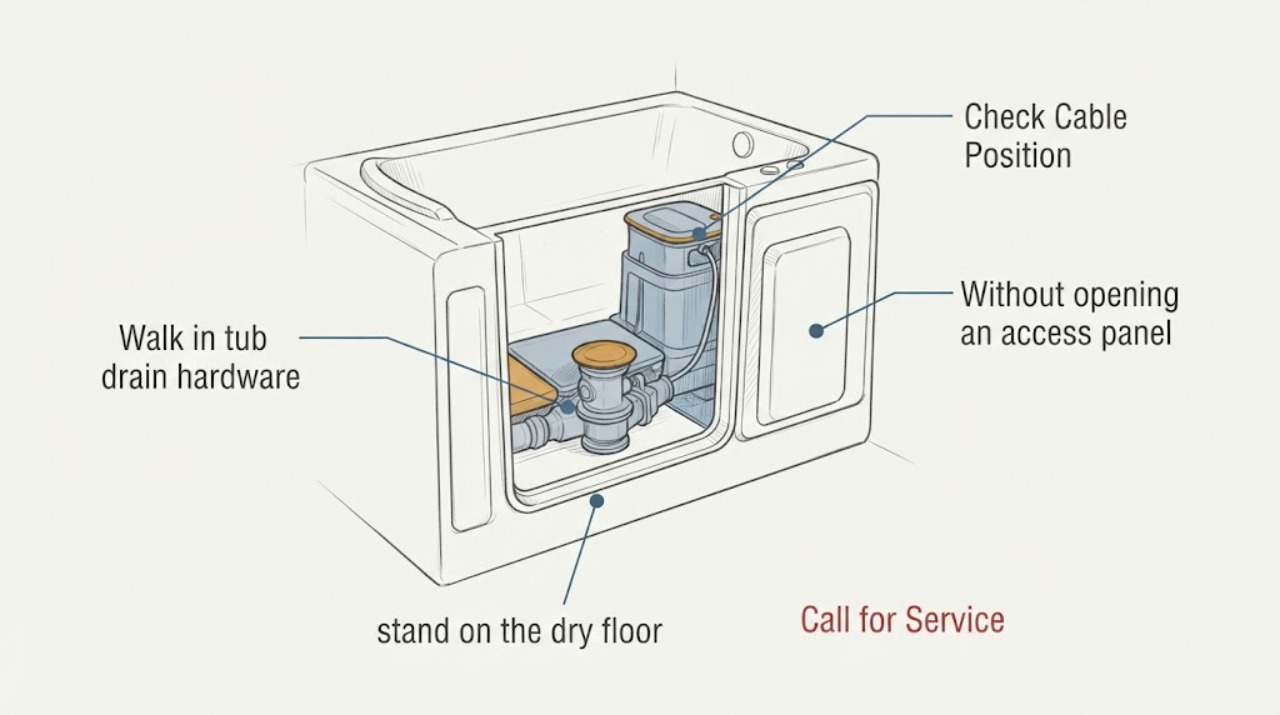
Walk in tub drain hardware worn: What to Check and What to Do Next
Keep the walk-in tub empty and dry while you assess worn drain hardware. From a dry standing position, inspect the drain grate or stopper, overflow cover, visible linkage or control, and any accessible staining or moisture without opening hidden panels.
-
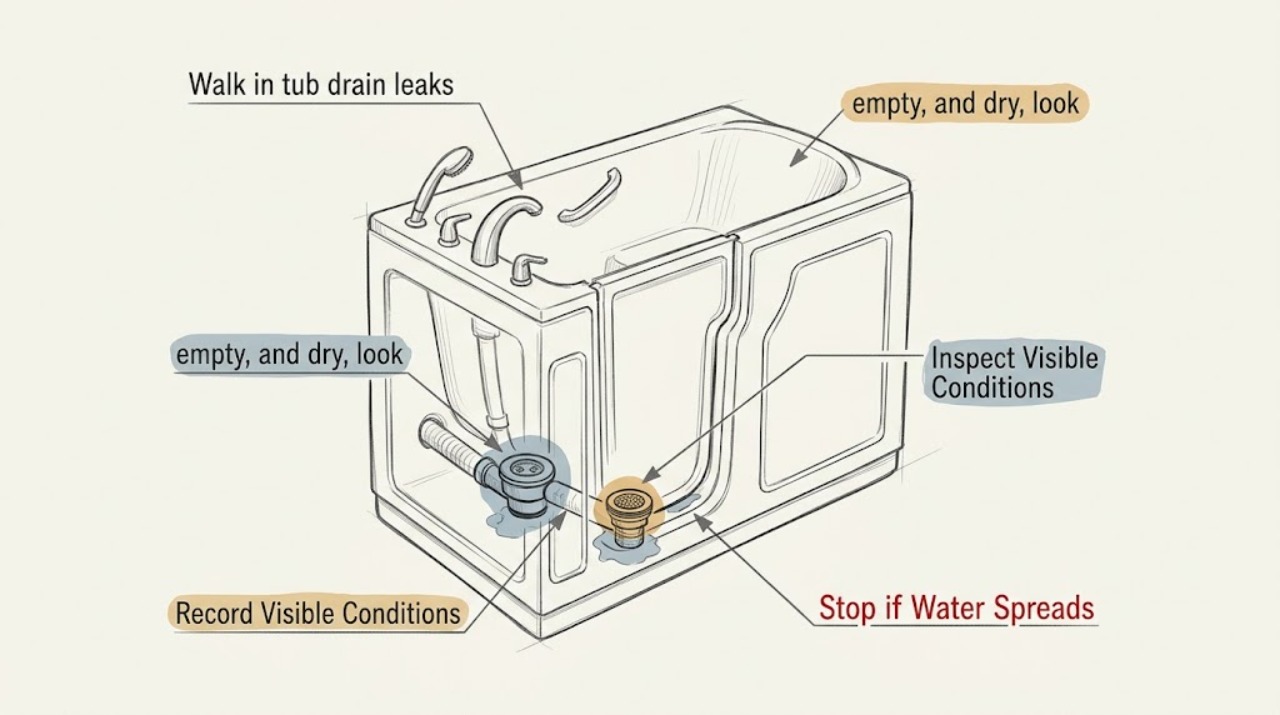
Walk in tub drain leaks: What to Check and What to Do Next
Do not fill a walk-in tub just to reproduce a drain leak. With the tub empty and dry, observe where moisture appears—at the drain or overflow trim, around the door or threshold, beneath the tub, or on the surrounding floor—and record whether it follows an earlier bath or drain operation.
-
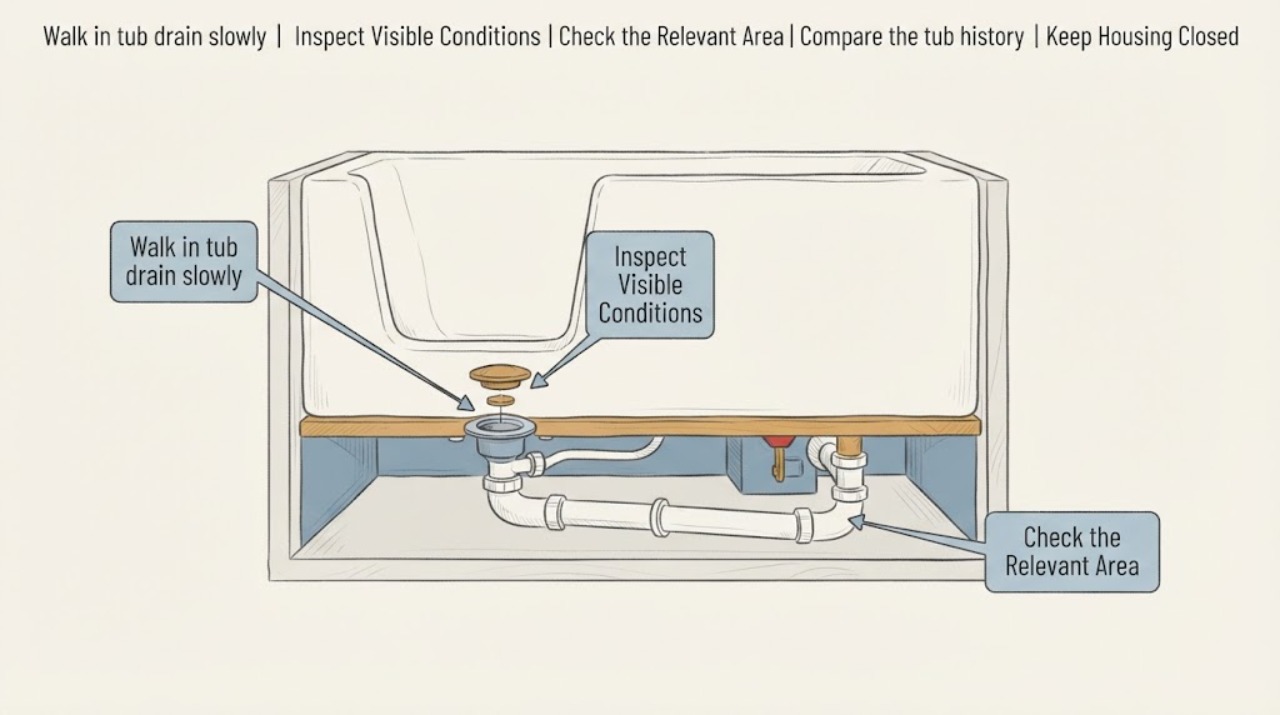
Walk in tub drain slowly: What to Check and What to Do Next
A walk-in tub that drains slowly should be treated as a drain-path or control problem until the cause is known. Keep the tub empty and dry, and do not enter it to perform a test.
-
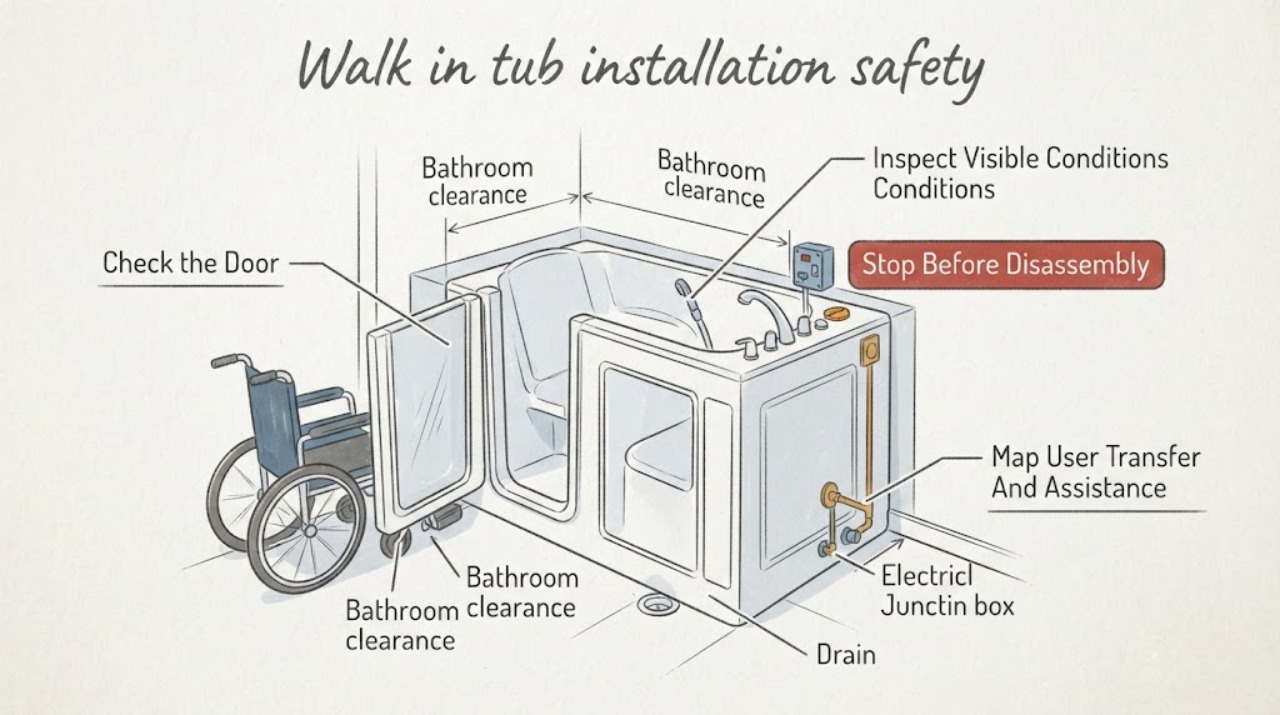
Walk in tub installation safety upgrade: What to Check and What to Do Next
Plan the safety upgrade around the person who will use the tub and the room that must support a safe transfer. From a dry floor and without entering an unsafe tub, document the user's transfer method and assistance needs, clear path and door swing, floor and threshold condition, drain and water locations, visible electrical context, tub-door access, and what happens if the user needs help or power is interrupted.