
On this page
Start here
Quick answer
Unplug and cool the kettle, clear scale or debris from the lid rim and hinge, then reseat the lid until its latch or alignment mark reaches the closed position. A cracked, warped, or non-latching lid is unsafe to use and needs a correct replacement or service.
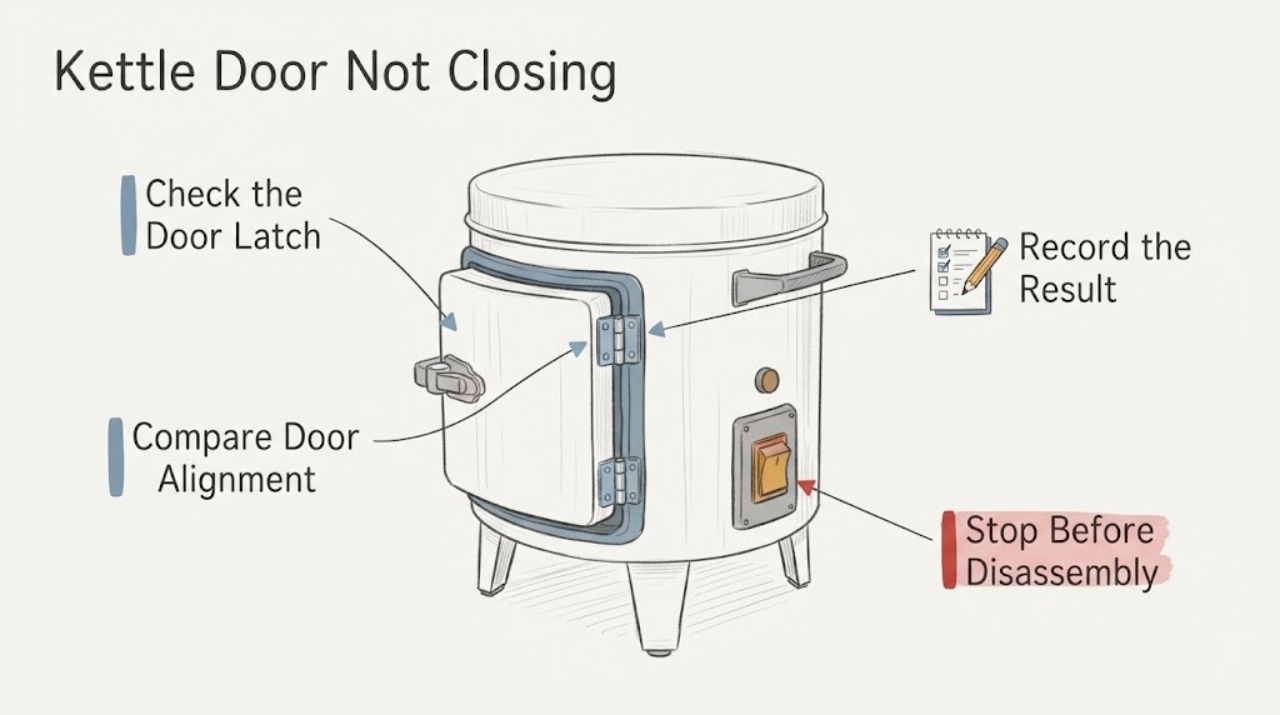
Work through in order
Diagnostic checks
Use only checks that match the exact appliance or system and its official guide.
-
Check 1
Unplug the kettle and let it cool completely before inspecting the lid, hinge, latch, and rim.
Expected result: The lid is hot, spring-loaded, cracked, or the hinge/latch is visibly damaged.
Next step: Do not force or operate a damaged lid; arrange replacement or service.
Why this matters
Why: Heat and damaged plastic can make the lid bind and create a scalding risk; the lid must be safe before operation.
-
Check 2
Remove the lid if the design allows, clean scale or debris from the rim and hinge area with a soft damp cloth, and dry it without immersing the base.
Expected result: The lid now sits evenly, or scale/debris remains in the hinge or sealing surface.
Next step: Repeat cleaning only while cool; continue to alignment if the rim is clear.
Why this matters
Why: Debris can stop the lid from reaching its designed closed position; the manual prohibits immersing the kettle or base.
-
Check 3
Refit the lid and rotate or press it until the manufacturer alignment marks or latch engage; do not place the kettle on its base until it closes securely.
Expected result: The lid closes and stays latched, closes but springs back, or cannot reach the close mark.
Next step: Replace the lid or contact service instead of bypassing the closure.
Why this matters
Why: A secure latch allows normal safe use; spring-back or an unreachable mark indicates a hinge, latch, or warped lid fault.
Use your observations
Decision map
Find the observation that best matches what you see, then follow the next safe action.
-
PATH 01Next step
What you see
The lid closes after cleaning and aligns with the close mark without force.
Do this next
Run only the normal fill and boil procedure with the lid firmly closed.
Why this path and its safety boundary
Why it matters: The earlier obstruction or misalignment was likely preventing closure.
-
PATH 02Next step
What you see
The lid will not latch, is cracked, or requires force to close.
Do this next
Keep it unplugged and obtain the correct lid or qualified service.
Why this path and its safety boundary
Why it matters: The safety and spill boundary cannot be confirmed, so the kettle should not be used.
Helpful context
Understand the symptom
This guide focuses on kettle door not closing and uses the observed symptom to choose the next safe check.
When checks do not resolve it
Need a professional?
Arrange qualified service if the checks do not restore normal operation or if the appliance shows damaged wiring, burning smell, smoke, gas odor, sparking, or repeated tripping.
Common questions
FAQ
Should I boil the kettle with the lid partly open?
No. Philips instructions require the lid to be properly closed; do not operate it if the lid cannot latch.
Can I soak the kettle to remove scale?
No. Unplug and cool it, clean the exterior with a soft cloth, and keep the kettle and base out of water.
What does the close mark mean?
On applicable Philips designs, turn the lid clockwise until the marks align with the close position. Other models may use a latch, so follow the model manual.
Read the exact guide
Official sources
- EN 9Philips · kettle lid alignment and close position
- EN User manualPhilips · electric kettle lid closure and safe use
Community feedback
Share a repair observation
Share a plain-text repair observation. Accepted observations are published automatically; this page may take a moment to update.