
On this page
Start here
Quick answer
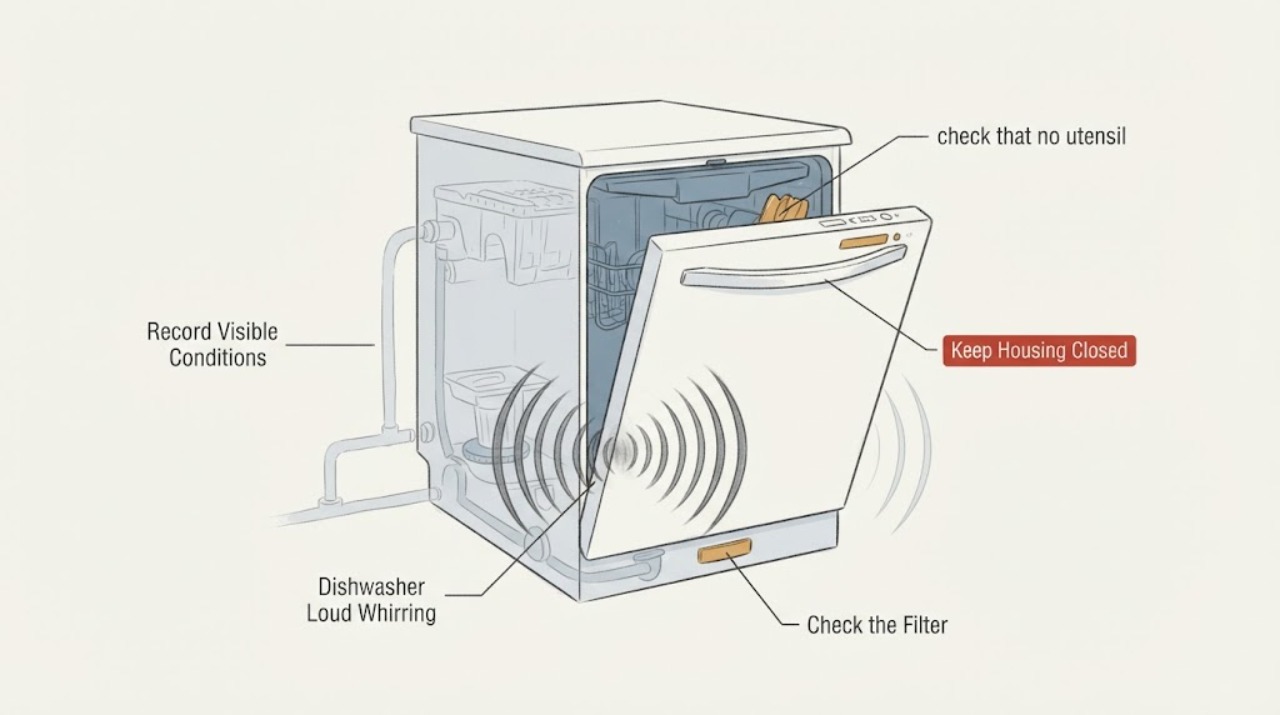
Do not decide to replace the LG LDT5678SS from the word whirring alone. First record when the noise occurs, pause the cycle and check that dishes or utensils are not touching the spray path, then inspect and reseat the accessible filter according to the LG manual. A sound during water entry, a growling air-suction sound or a rattling filter/load points to a different check than a squeal or grind, which LG says may indicate a pump problem. Keep the machine out of service if the sound is harsh, the dishwasher leaks, drains poorly, smells hot or stops cleaning. Before approving a motor repair or replacement, use the exact LDT5678SS support page and confirm the direct-drive motor warranty terms with LG; the product page lists a 10-year motor coverage exception, but parts, labor and eligibility must be verified.
Work through in order
Diagnostic checks
Use only checks that match the exact appliance or system and its official guide.
-
Check 1
Pause or cancel the cycle and note whether the loud whirring occurs during fill, washing, draining or drying. Record whether it is a steady whir, an air-suction growl, a rattle, a squeal or a grind, and whether cleaning performance, draining or leakage changed at the same time.
Expected result: The sound is tied to water entry, a filter or drain event, a spray/wash period, or a high-pitched squeal or grind that persists across the cycle.
Next step: Use the matching external check below. Stop running the dishwasher and arrange service for grinding, a burning smell, leaking, poor draining or a rapidly worsening sound.
Why this matters
Why: LG maps those sound patterns to different possible sources: water flow, filter/load, drain obstruction or a possible pump problem. Timing narrows the next check but does not prove a motor failure.
-
Check 2
With the cycle stopped and the interior safe to access, check that no utensil or dish projects into the spray path, strikes another item, or touches a rack or spray arm. Reload only loose items and do not reach into a moving dishwasher.
Expected result: A dish or utensil is protruding or rattling, or the load is secure while the noise continues.
Next step: Correct the accessible load and run only a supervised short check if there is no leak, odor or harsh mechanical noise. If the sound remains, stop testing and inspect the filter and drain path.
Why this matters
Why: LG says improperly loaded dishes can rattle and utensils can hit spray nozzles or other dishes. A secure load makes that explanation less likely but does not identify the wash motor or pump.
-
Check 3
After the dishwasher is stopped, inspect the accessible filter as described in the LDT5678SS manual. Check that it is seated and not visibly clogged with food or foreign material; do not remove the pump cover, insert tools into the pump or run the unit with the filter loose.
Expected result: The filter is loose or clogged, or it is clean and firmly seated while a growl or whir remains.
Next step: Clean and reseat the filter using the exact manual procedure. If noise, standing water or slow draining remains, keep the dishwasher off and arrange service rather than reaching into the pump.
Why this matters
Why: LG identifies a loose or clogged filter as a source of rattling and says food waste or foreign objects can contribute to air-suction or drain noise. A clean, seated filter does not rule in a failed pump or motor.
-
Check 4
If the noise occurs while water enters, observe the visible supply hose and shutoff area for a kink or an obvious restriction without disconnecting the line. If the unit is making an air-suction or growling sound, note whether the sink drains slowly and whether water remains in the tub after the cycle.
Expected result: The whistling or growling is limited to fill/drain events, the visible supply path is kinked, the sink drains slowly, or the noise continues during washing with normal drainage.
Next step: Follow the exact model guidance for an accessible hose or filter condition. Do not loosen plumbing, use a chemical cleaner in the dishwasher, or dismantle the drain or pump; call service if the path is restricted or the sound persists.
Why this matters
Why: LG says high water volume can make inlet whistling louder, and a clogged drain path or excess food waste can contribute to growling. A wash-period whir with normal water movement needs a different diagnosis and cannot be assigned to the motor from timing alone.
-
Check 5
Record the LDT5678SS model and serial numbers, the approximate purchase or delivery date, the sound recording or description, and the result of the load and filter checks. Ask LG to assess the motor symptom and confirm the exact warranty terms before authorizing a motor repair or replacing the dishwasher.
Expected result: LG confirms a model- and date-eligible direct-drive motor claim, or the coverage does not apply or the cause has not been diagnosed.
Next step: Use the confirmed coverage and technician diagnosis to compare repair and replacement decisions. If the noise is unexplained or hazardous, leave the dishwasher off and use LG service rather than buying a guessed pump or motor.
Why this matters
Why: The LDT5678SS product page lists Direct Drive Motor coverage as 10 years under extended warranty information, but separately lists labor and parts terms and directs owners to the detailed warranty document. Coverage does not itself prove that the motor caused the noise.
Use your observations
Decision map
Find the observation that best matches what you see, then follow the next safe action.
-
PATH 01Next step
What you see
The noise is rattling and stops after a protruding utensil is reloaded or the filter is reseated.
Do this next
Use the corrected load or clean filter and monitor a normal cycle; do not order a motor from the original sound description.
Why this path and its safety boundary
Why it matters: LG's documented load or filter explanation fits better than a confirmed motor failure.
-
PATH 02Next step
What you see
The sound is a whistle during water entry or a growl during drain/filter activity, with a visible supply or drainage condition.
Do this next
Follow the exact model's external filter or hose guidance and call service for a restricted line, slow sink drain or persistent standing water; do not open the pump.
Why this path and its safety boundary
Why it matters: The timing and observation point toward water flow, filter or drain-path conditions rather than proving a wash motor defect.
-
PATH 03Next step
What you see
The sound is a persistent squeal or grind during washing, or the dishwasher also leaks, drains poorly, smells hot or cleans poorly.
Do this next
Stop running the dishwasher and arrange LG-qualified diagnosis. Provide the exact model and symptom record before choosing a repair or replacement.
Why this path and its safety boundary
Why it matters: LG says squealing and grinding can indicate a pump problem, but the symptom still does not distinguish the pump, motor, obstruction or another assembly.
-
PATH 04Next step
What you see
The wash system still makes a loud whir after the load and filter checks, but there is no leak, odor or loss of cleaning performance.
Do this next
Have LG assess the unit and confirm the motor warranty before comparing a covered repair with replacement. Do not open the base or replace a motor based only on sound.
Why this path and its safety boundary
Why it matters: The noise may require internal diagnosis even though the dishwasher still operates; the available public guidance does not establish that the direct-drive motor has failed.
Helpful context
Understand the symptom
Whirring is a symptom, not a motor verdict
The LDT5678SS uses LG's Inverter Direct Drive motor and is specified as a LoDecibel dishwasher, but those facts do not identify the source of a new loud sound. LG's noise guide separates a rattling load or filter, water-entry whistle, air-suction growl and squealing or grinding. Describe the cycle stage and result of the simple external checks before deciding whether the wash motor needs service.
Use the warranty question after the symptom is scoped
LG's product page for LDT5678SS lists a 10-year Direct Drive Motor warranty exception, but also shows separate labor, parts and other coverage categories and points to the detailed warranty information. A suspected motor noise should therefore be documented with the model, serial number, sound timing and cleaning result before service is authorized; a coverage statement is not proof that the motor is the failed component or that a replacement is the better choice.
When checks do not resolve it
Need a professional?
Arrange LG service when the noise is a persistent squeal, grind or loud wash-period whir after the load and filter checks, or when there is poor cleaning, standing water, leaking, a hot smell or a sudden worsening. Do not remove the pump cover, open the motor assembly or select a replacement part from the sound alone.
Have this ready
- Provide the complete model LDT5678SS, serial number, purchase or delivery date, cycle stage and sound type, a short recording if safe, whether the filter was clean and seated, whether the dishwasher drains normally, and any leak or odor.
Common questions
FAQ
Does loud whirring prove the LDT5678SS motor is bad?
No. LG's guidance separates load/filter rattling, water-entry whistle, drain or air-suction growling and squealing or grinding that may indicate a pump problem. A technician must diagnose the internal source before a motor repair or replacement decision.
Does the LDT5678SS have a motor warranty?
LG's LDT5678SS product support page lists Direct Drive Motor coverage as 10 years under its extended warranty information. Confirm the detailed terms, production date, parts and labor coverage with LG; the listing does not prove that the current noise is a covered motor failure.
Can I keep using the dishwasher if it is loud but still cleans?
Do not keep running it if the sound is grinding or squealing, is getting worse, or comes with a leak, poor draining, hot smell or loss of cleaning. A normal load and filter check may explain a rattle, but an unexplained wash-period whir should be assessed before internal parts are replaced.
Read the exact guide
Official sources
- LDT5678SS.ASSESNA: Support, Manuals, Warranty & MoreLG USA Support · Exact LG product support page identifying LDT5678SS, linking its manuals and service support, and listing warranty categories including Direct Drive Motor 10 years under extended warranty information.
- Owner's ManualLG USA Support · Opened LG dishwasher manual content supporting model-level timing of noise, water-entry whistle and safe external installation/leveling context; this article does not use it to assert an internal part fault.
- LDT5678_ LG Builder Spec SheetLG Electronics USA · Official builder specification identifying LDT5678SS, Inverter Direct Drive motor, LoDecibel operation and dishwasher features; it does not diagnose the reported noise or establish a repair part.
- LG Dishwasher - Common NoisesLG USA Support · LG manufacturer noise guidance distinguishing load/filter rattling, water-entry whistle, air-suction or drain growling, and squealing or grinding that may indicate a pump problem.
Community feedback
Share a repair observation
Share a plain-text repair observation. Accepted observations are published automatically; this page may take a moment to update.