
On this page
Start here
Quick answer
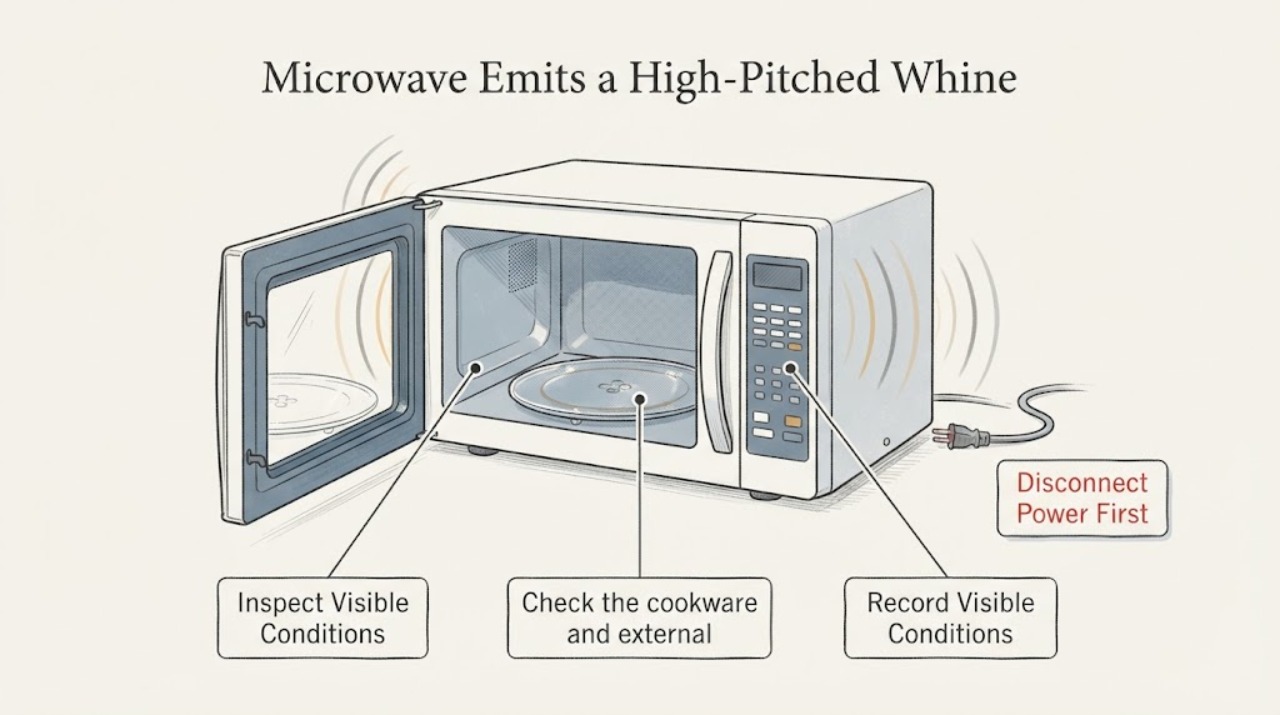
A high-pitched whine is not automatically a failed part. First separate a steady sound that occurs only during heating from a sudden or unusually loud change. After the microwave is cool and disconnected from power from a dry, accessible position, check the visible turntable and support, rotation path, cookware, food residue and level surface. Stop using it and arrange LG service for sparks, smoke, a strong continuing burning smell, visible cavity damage, or a loud noise that persists after these checks. Do not remove the microwave cover, bypass the door interlock or perform high-voltage tests.
Before you begin
Safety first
- Do not remove the microwave cover, bypass the door interlock, probe high-voltage parts, handle a capacitor, or run repeated tests after sparking, smoke or a strong burning smell. Unplug only from a dry, accessible position and use qualified appliance service.
Work through in order
Diagnostic checks
Use only checks that match the exact appliance or system and its official guide.
-
Check 1
Listen only during normal use from outside the microwave and note when the whine starts, whether it follows heating or the turntable, whether it is steady or sudden, and whether it occurs every cycle. Do not run an empty oven or repeat a dangerous event just to record it.
Expected result: The sound is mild and repeatable only during heating, changes with the turntable, or is a sudden/unusually loud change accompanied by poor heating, sparks, smoke or odor.
Next step: If there are no red flags, continue with the safe visible checks below. If the noise is sudden, unusually loud, or paired with sparks, smoke, strong odor or poor heating, stop use and arrange service.
Why this matters
Why: A repeatable operating sound without red flags can fall within normal LG microwave noise behavior; a sudden loud change or a safety symptom needs a service decision rather than a component guess.
-
Check 2
After the oven is cool, disconnect power only from a dry, accessible position, then inspect the visible cavity, turntable, support and rotation area. Look for food buildup or carbonized residue, a damaged cavity, a cracked support, debris on the axis or wheels, or a tray that is not seated.
Expected result: Visible residue, debris, damage or a mis-seated tray/support is present, or the visible interior is clean and intact.
Next step: Remove only visible residue and correct the tray/support position as the exact model's care instructions allow. If there is cavity/rack damage, persistent noise, or no visible cause, leave the oven disconnected and use service.
Why this matters
Why: LG identifies food buildup, cavity damage, turntable/support problems and debris as possible causes of abnormal noise or sparking; a clean, intact visible area does not clear an internal fault.
-
Check 3
Check the cookware and external placement without opening the cabinet: use cookware suitable for microwave use, remove gold, silver or metallic patterns, confirm the visible tray and support can rotate freely, and verify the unit is on a level surface.
Expected result: Metallic or unsuitable cookware, a blocked or misaligned rotation path, or an uneven placement is found; or those visible conditions are normal.
Next step: Stop using unsuitable cookware and correct only the visible tray/support or placement issue. If the whine continues with suitable cookware and correct setup, stop troubleshooting and request service rather than opening the microwave.
Why this matters
Why: LG says unsuitable cookware, turntable/support alignment and an uneven surface can create noise or sparks. Correcting those visible conditions may remove the symptom, but it does not prove that an internal part is healthy.
-
Check 4
Treat any visible arcing or sparks, smoke, strong continuing burning smell, damaged cavity or rack support, repeated breaker/GFCI operation, or a sudden persistent loud noise as a stop condition.
Expected result: A red flag is present, or the microwave has only a mild operating sound and no visible safety symptom.
Next step: For a red flag, stop the microwave, unplug only if it is safe to reach the plug, keep the door closed, and contact LG or qualified appliance service. Otherwise monitor the sound and arrange service if it becomes louder, changes suddenly or affects operation.
Why this matters
Why: LG directs immediate stopping and service for continuing strong burning smell or smoke, continuing sparking or damage, and unusually loud noise that remains after external checks. The absence of a red flag does not authorize cabinet or high-voltage work.
Use your observations
Decision map
Find the observation that best matches what you see, then follow the next safe action.
-
PATH 01Next step
What you see
The whine is mild, steady and repeatable only during heating, with no sparks, smoke, strong odor, visible damage or heating problem.
Do this next
Check the visible tray/support, cookware, rotation path and level surface, then monitor. Request service if the sound changes, becomes unusually loud or affects operation.
Why this path and its safety boundary
Why it matters: This pattern can be consistent with normal high-frequency operating or vibration noise described by LG, although sound alone cannot certify an internal component.
-
PATH 02Next step
What you see
The sound changes with the turntable, or food residue, debris, a mis-seated support, unsuitable cookware or an uneven surface is found.
Do this next
With the oven cool and power safely disconnected, correct only the visible setup and clean visible residue. Stop and use service if the sound remains or the cavity/rack is damaged.
Why this path and its safety boundary
Why it matters: LG lists these visible conditions as possible sources of vibration, abnormal noise or sparking; they do not prove a failed internal part.
-
PATH 03Next step
What you see
Sparks, smoke, a strong continuing burning smell, visible cavity/rack damage, repeated power interruption or another sudden dangerous change occurs.
Do this next
Stop using the microwave, unplug only from a dry safe position if possible, keep clear of the cabinet interior and arrange qualified appliance service. Do not restart it to reproduce the event.
Why this path and its safety boundary
Why it matters: LG treats continuing smoke/strong burning odor, continuing sparking and damage as conditions for immediate stopping and service.
-
PATH 04Next step
What you see
The external setup is correct and visible, but a sudden, unusually loud or persistent whine remains.
Do this next
Leave the microwave out of use and give service the exact model, when the sound occurs, whether heating is normal, and any visible red flags. Do not remove the cover or perform high-voltage measurements.
Why this path and its safety boundary
Why it matters: The official guidance supports service at this point but does not establish which internal component is responsible for an unspecified LG model.
Helpful context
Understand the symptom
When the whine may be normal
LG's general microwave noise guidance says some humming and vibration during high-frequency operation can be normal. The useful distinction is the pattern: a mild, repeatable sound during heating with no smoke, sparks, damage or heating problem is different from a sudden change or a sound that is unusually loud. Because no model was supplied, this page stays at the LG-family level and does not identify a magnetron, fan, transformer or other internal part from the sound alone.
Check the visible setup before calling
LG points to turntable and support alignment, debris around the rotation axis or wheels, an uneven surface, unsuitable cookware and food buildup as causes of abnormal noise. Once the oven is cool and safely disconnected, inspect and clean only visible areas permitted by the model's care instructions. Re-seat the tray and support and remove visible residue; do not open the cabinet to chase the source.
Treat sparks, smoke and strong odor as stop conditions
LG associates sparking with food residue or carbonization, unsuitable metallic cookware, a damaged cavity, or an incorrectly installed rack. A slight smell or minor noise on first use can be temporary, but LG says to stop immediately, unplug and contact service if a strong burning smell continues or smoke appears. Do not keep restarting the oven to reproduce an arc or odor.
Why an internal diagnosis is not safe here
The assigned topic has no model number, noise recording, or opened model-specific service procedure. A persistent whine after the external checks can indicate a fault that requires service, but the evidence does not justify naming a component or giving a cover-removal, live-measurement, capacitor, or door-interlock procedure. Keep the microwave out of use until a qualified technician evaluates a persistent or dangerous symptom.
When checks do not resolve it
Need a professional?
Call LG or qualified appliance service for a sudden or unusually loud persistent whine, sparks that continue after visible causes are removed, smoke, a strong continuing burning smell, visible cavity/rack damage, repeated power interruption, or a sound that remains after the external checks. Do not attempt cabinet or high-voltage work.
Safety scope: Do not remove the microwave cover, bypass the door interlock, probe high-voltage parts, handle a capacitor, or run repeated tests after sparking, smoke or a strong burning smell. Unplug only from a dry, accessible position and use qualified appliance service.
Have this ready
- Provide the exact model from the rating label, when the sound occurs, whether it follows heating or the turntable, whether heating remains normal, and whether sparks, smoke, odor, damage or a breaker/GFCI interruption occurred.
Common questions
FAQ
Does every high-pitched microwave sound mean the magnetron is failing?
No. LG describes some humming and vibration during high-frequency operation as normal and lists visible setup issues that can create abnormal noise. Without a model-specific service diagnosis, the sound does not identify the magnetron or any other internal component.
What should I do if the whine is accompanied by sparks or smoke?
Stop using the microwave. If it is safe to reach the plug from a dry position, unplug it, keep the cabinet closed and arrange service. LG says continuing sparks, smoke or a strong burning smell require stopping use and service; do not restart the oven to reproduce the event.
Can I remove the cover to locate the high-pitched noise?
No. The opened LG guidance supports visible checks of the tray, support, cookware, residue and placement, not cabinet removal or high-voltage testing. Leave a persistent or unusually loud sound to qualified service.
What if the noise changes when the turntable moves?
With power safely disconnected and the oven cool, check that the tray and support are seated, the rotation path is clear of debris and the unit is level. If the sound remains or the support/cavity is damaged, stop use and arrange service.
Read the exact guide
Official sources
- LG Microwave - Troubleshooting Loud Noise While CookingLG USA Support · Opened official LG guide marked for microwave models generally. It supports distinguishing normal high-frequency vibration from unusually loud noise and checking the turntable, support, rotation path, debris and level surface; it does not identify an internal component for an unspecified model.
- New LG Microwave Burning Smell or Noise: Causes and SolutionsLG USA Support · Opened official LG guide. It supports a conditional safety stop for persistent strong burning smell or smoke and distinguishes minor first-use odor/noise from a continuing dangerous symptom; it does not establish a model-specific fault.
- LG Microwaves - How to Prevent SparkingLG USA Support · Opened official LG guide. It supports checking visible food residue, unsuitable cookware, cavity damage and rack-support installation, and service when sparking continues; it does not authorize cabinet or high-voltage work.
- LG Microwave Oven - Troubleshooting No Power IssueLG USA Support · Opened official LG guide. It supports external outlet, GFCI and breaker observations only; it is included for the power-safety branch and does not support opening the appliance or diagnosing an internal high-voltage fault.
- LG Microwave - Things to CheckLG USA Support · Opened official LG troubleshooting guide. It supports visible checks for tray/support placement, food buildup and unsuitable metallic cookware across LG microwave guidance; it is not a model-specific internal repair manual.
Community feedback
Share a repair observation
Share a plain-text repair observation. Accepted observations are published automatically; this page may take a moment to update.