
LG appliance guidance
LG Microwave Repair Guides
Troubleshooting and repair guidance for published LG Microwave problems, symptoms, and maintenance questions.
Published LG Microwave guides
Choose the guide whose symptom or condition most closely matches what you are seeing.
-
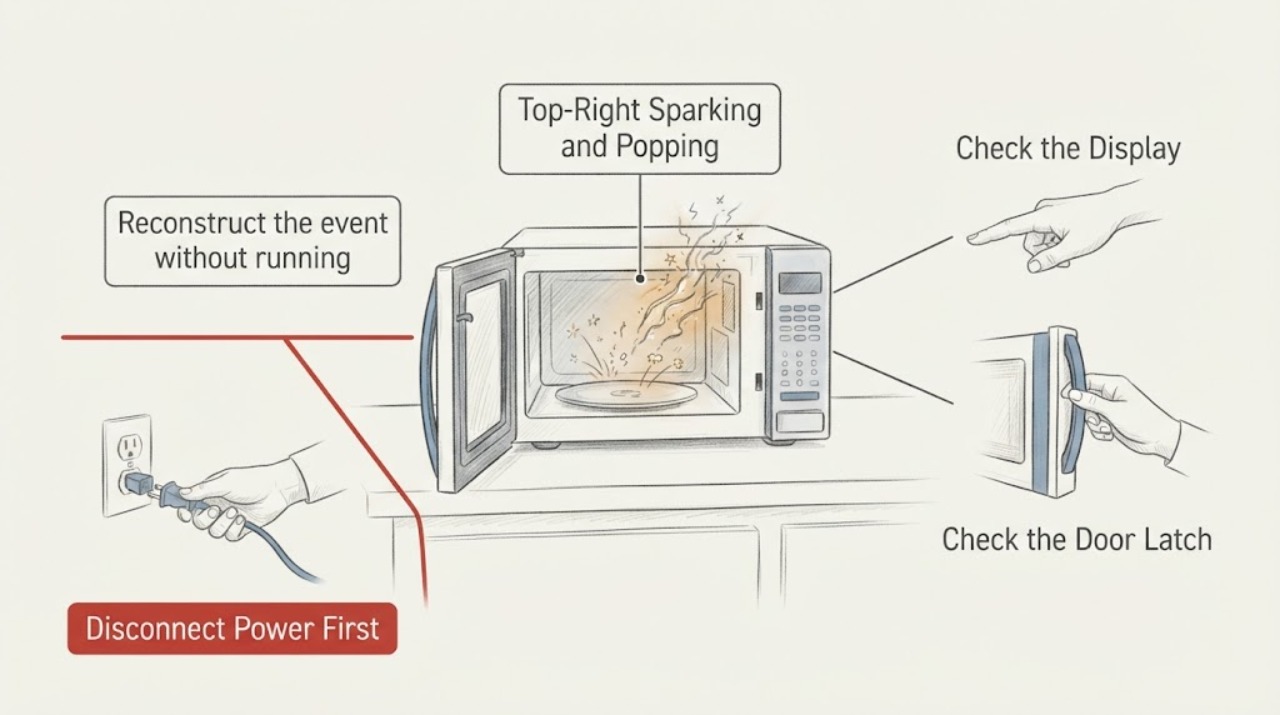
LG LMV1831BD Top-Right Sparking and Popping: Stop Using It
Treat a top-right spark with a loud pop on the LG LMV1831BD as an immediate stop condition, especially when it recurs after the microwave has sat unused for hours. If it is still running and the controls respond normally, press Stop/Clear without opening the door; then unplug it from a dry, safe location and keep the door closed.
-
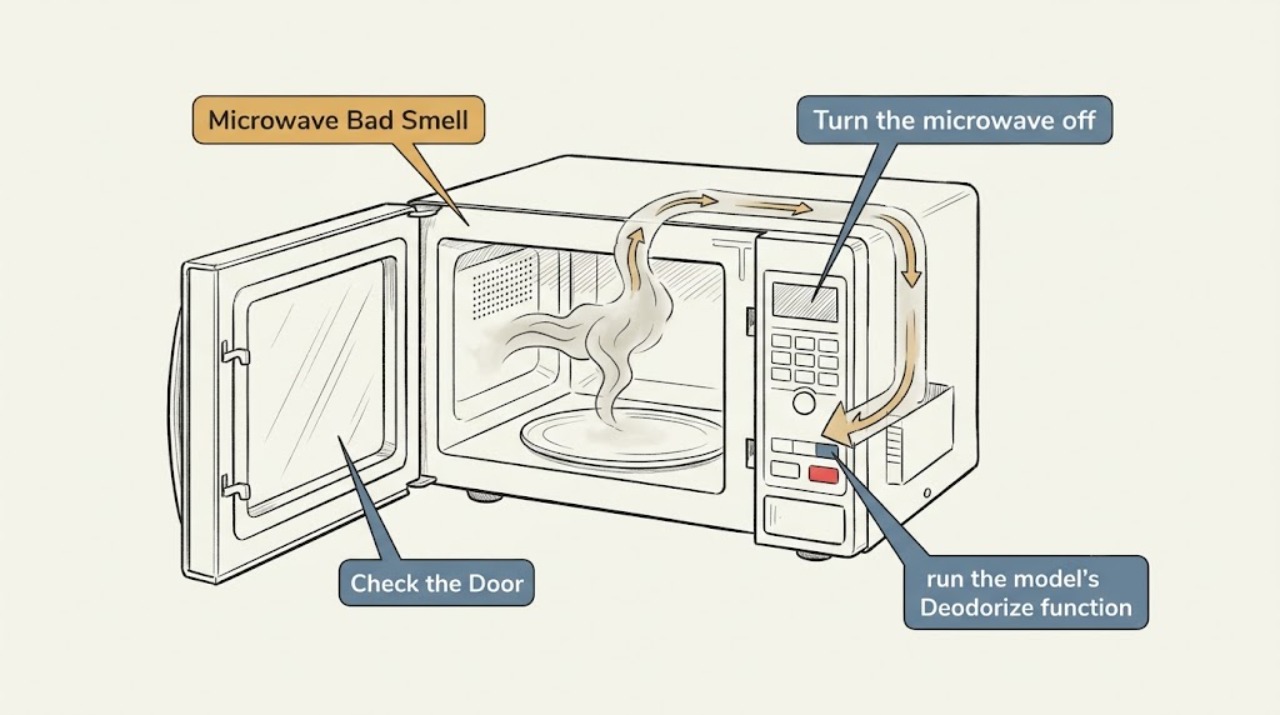
LG Microwave Bad Smell: Find the Odor Source Safely
Identify whether the odor is food residue, a first-use manufacturing smell, or a continuing burnt smell. Empty the cavity, clean accessible residue with the LG method, and use Deodorize only if your model provides it. Stop immediately for smoke, arcing, or a strong electrical/burning odor.
-
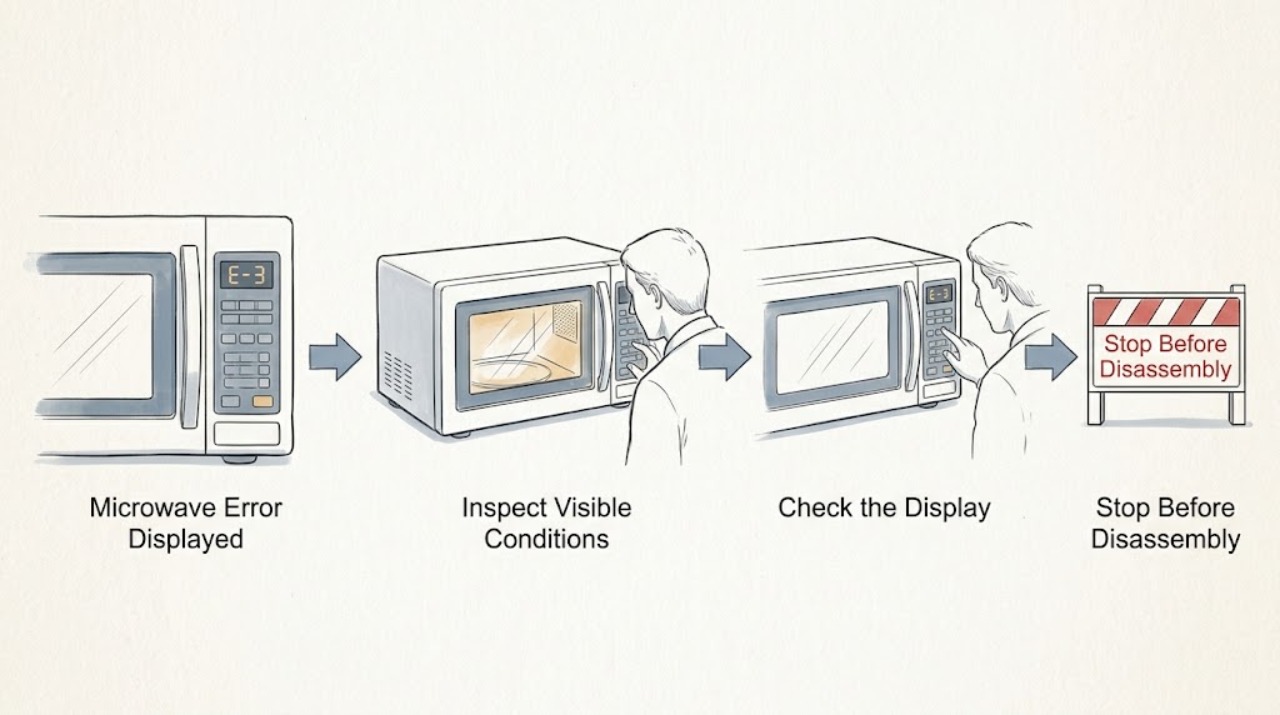
LG Microwave Error Displayed: Identify the Code Before Resetting
Write down the exact characters and when the LG microwave shows them before clearing power. Clean the touch panel only for visible residue, then perform one model-appropriate power reset. If the same code returns, the door is damaged, or the code indicates a fault you cannot identify in the manual, stop using the unit and arrange service.
-
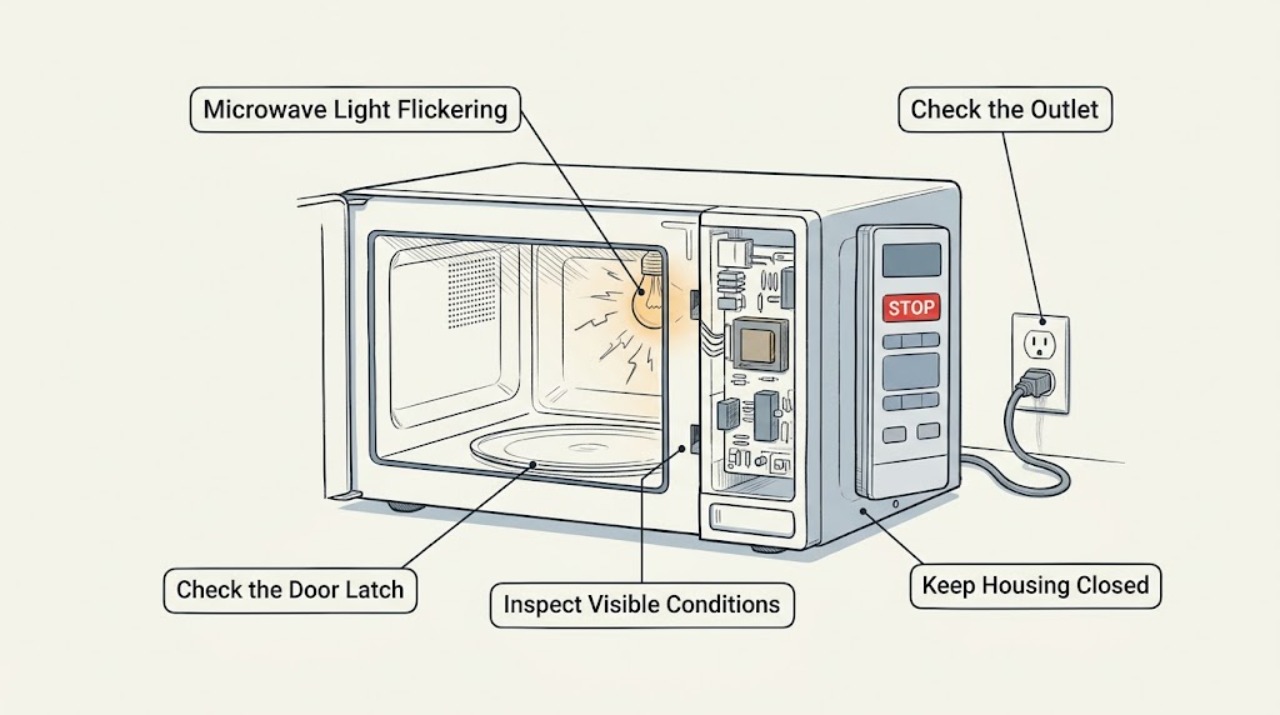
LG Microwave Light Flickering: Separate Normal Cycling from a Fault
Watch whether the cavity lamp flickers only when the door moves, during cooking, or while the microwave is idle. Check the door area and control display without opening the cabinet. A lamp that flickers with smoke, sparks, a hot plug, repeated power loss, or a damaged door is a stop condition requiring qualified service.
-
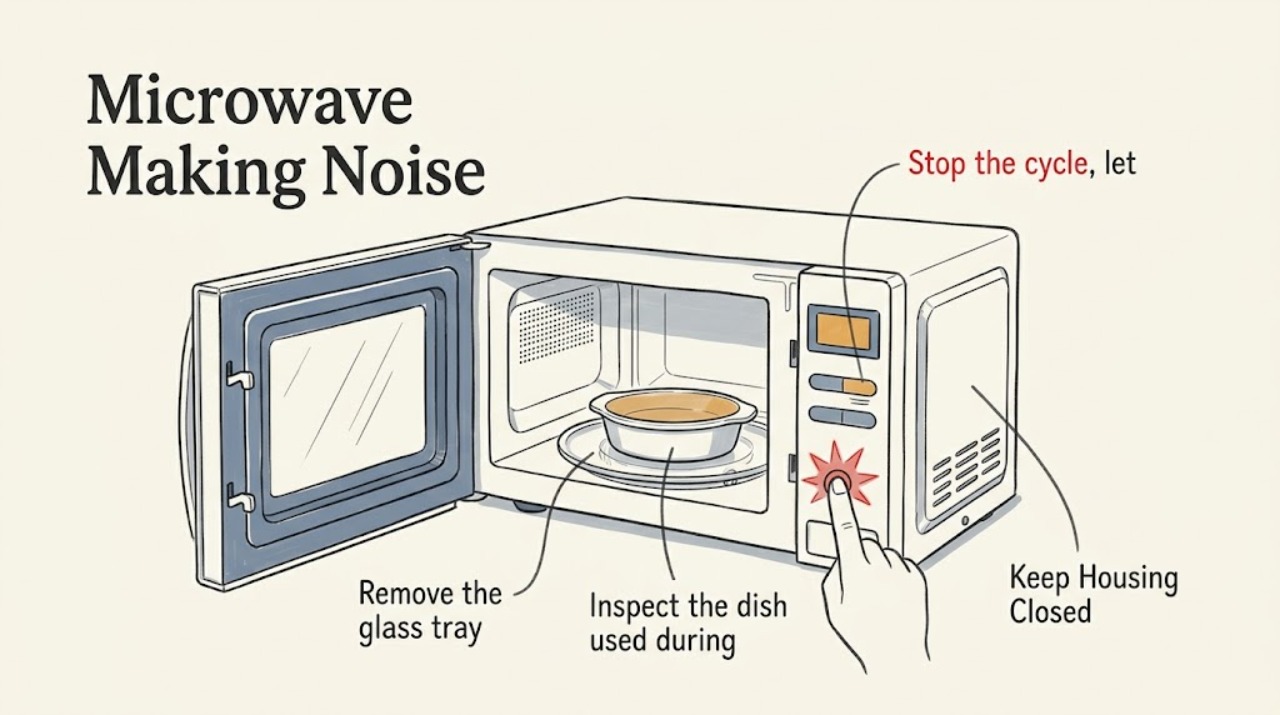
LG Microwave Making Noise: Locate the Sound Before Service
Stop the cycle and identify whether the noise is a scrape, rattle, hum, pop, or spark. Clean food buildup, check the glass tray and support ring, and remove cookware with metallic decoration. If the sound continues with smoke, arcing, a burnt smell, or a damaged rotating part, stop using the microwave and arrange service.
-
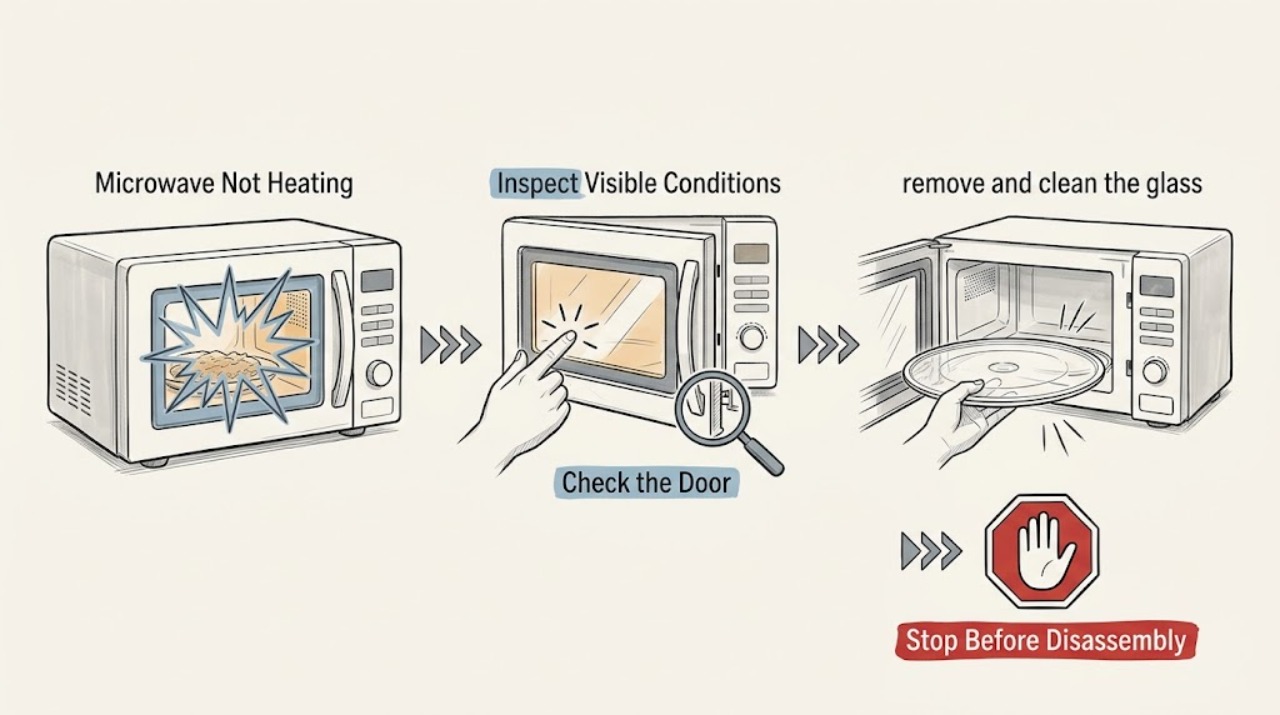
LG Microwave Not Heating: Use a Water Test to Split the Causes
Test the LG microwave with one cup of water in a microwave-safe container using a short normal cycle. Before blaming a heating part, check frozen food, cooking settings, door operation, and whether the glass tray rotates freely. If the water remains cold while the cycle runs, stop and arrange qualified service; never open the cabinet.
-
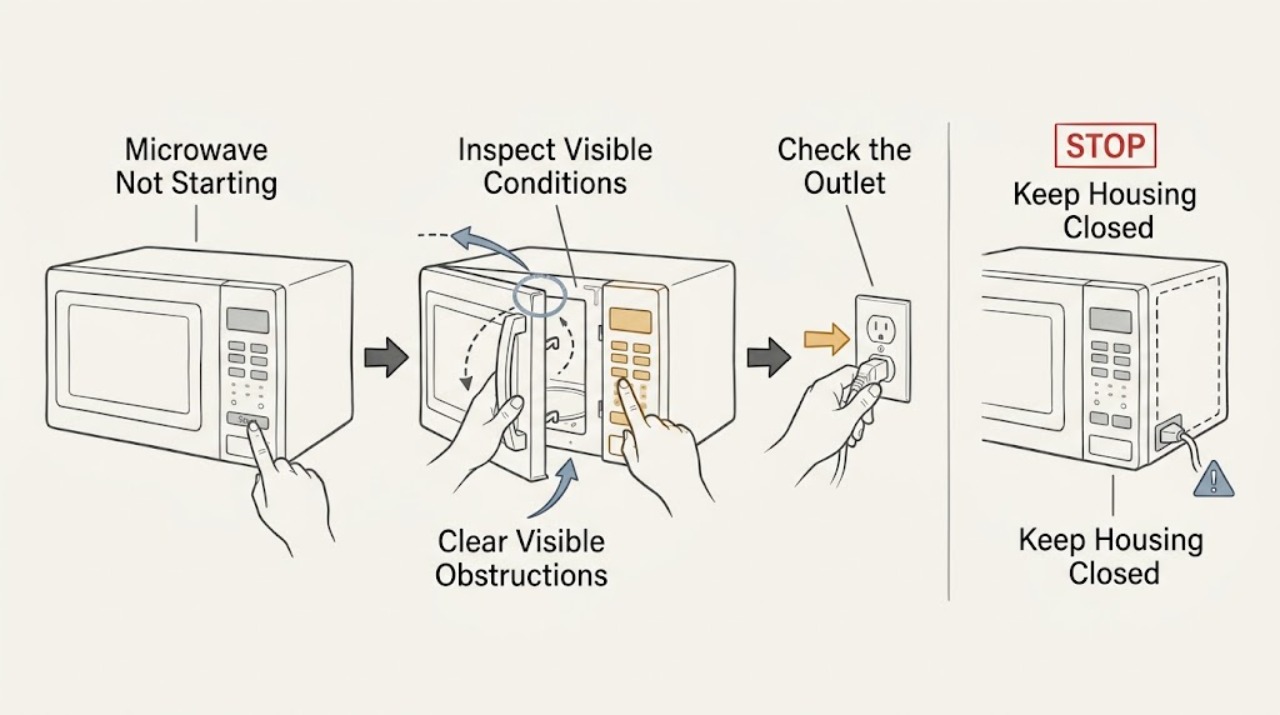
LG Microwave Not Starting: Check the Door, Lock, and Power Path
Check the LG microwave door for an obstruction, confirm the latch engages, and see whether other buttons produce a chime or display response. A control lock, a door-state problem, or a power interruption can prevent starting. If the door is damaged, an error remains, or the unit still will not start after one documented reset, stop and arrange service.
-
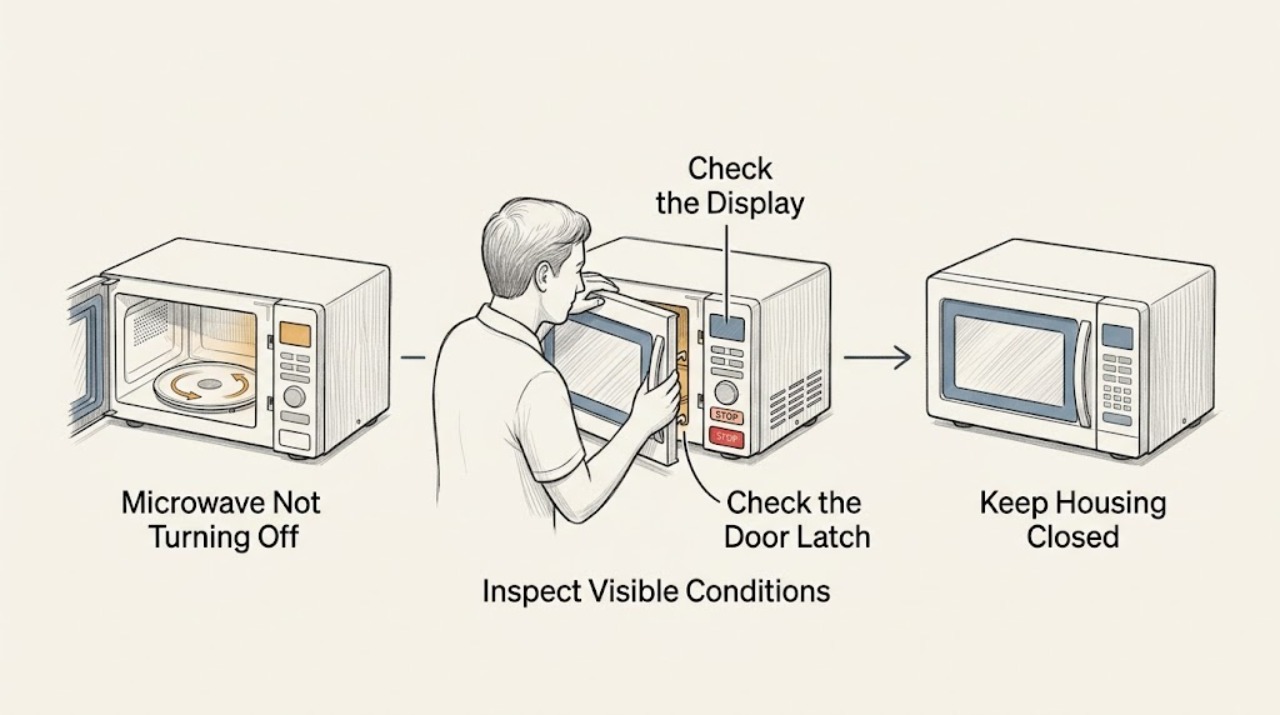
LG Microwave Not Turning Off: Stop Safely and Check the Controls
Press Stop/Clear once and note whether the timer, fan, light, and heating stop. If the microwave continues heating, sparks, smokes, or the controls do not respond, keep clear of the door and disconnect power only if it is safe, then arrange qualified service. Do not bypass the door interlock or open the cabinet.
-
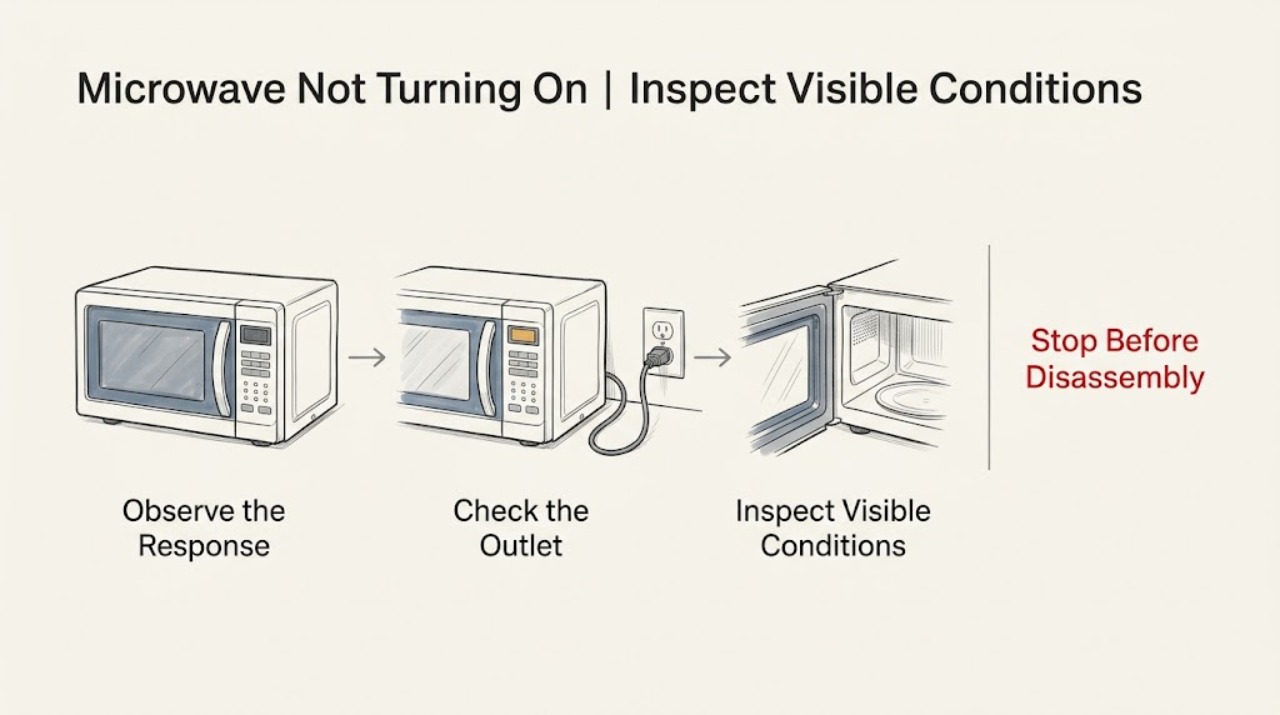
LG Microwave Not Turning On: Trace Power Before Requesting Service
Check whether the LG microwave display is blank, whether the wall outlet works, and whether another appliance on the circuit was affected. Press a key or open and close the door once to distinguish energy-saving display behavior from loss of power. If the outlet is live but the display stays dead, a breaker trips again, or the cord is damaged, stop and arrange safe electrical or appliance service.
-
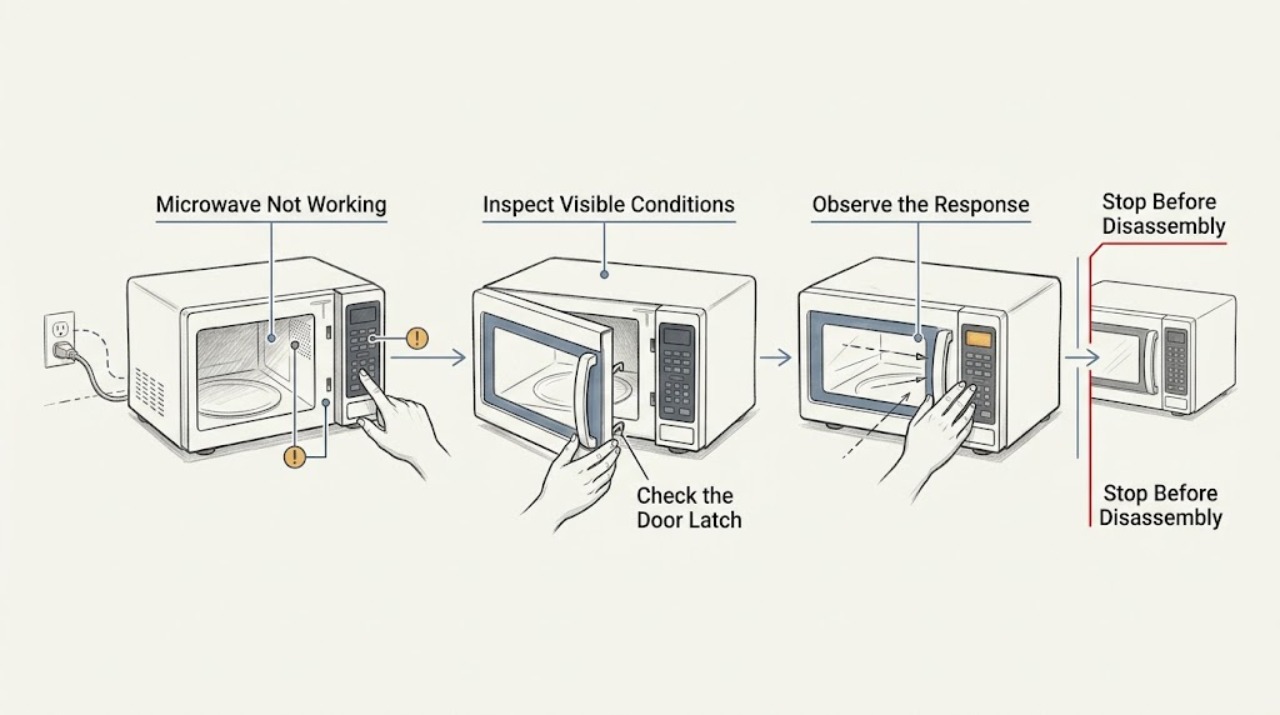
LG Microwave Not Working: Classify the Failure Before Service
Classify the LG microwave problem as no display, no response, no start, or a running cycle with no heat. Check the visible power connection, door/latch, control lock, and a cup-of-water test only when the unit starts normally. Stop for smoke, arcing, a damaged door, repeat breaker trips, or a cold water test.
-
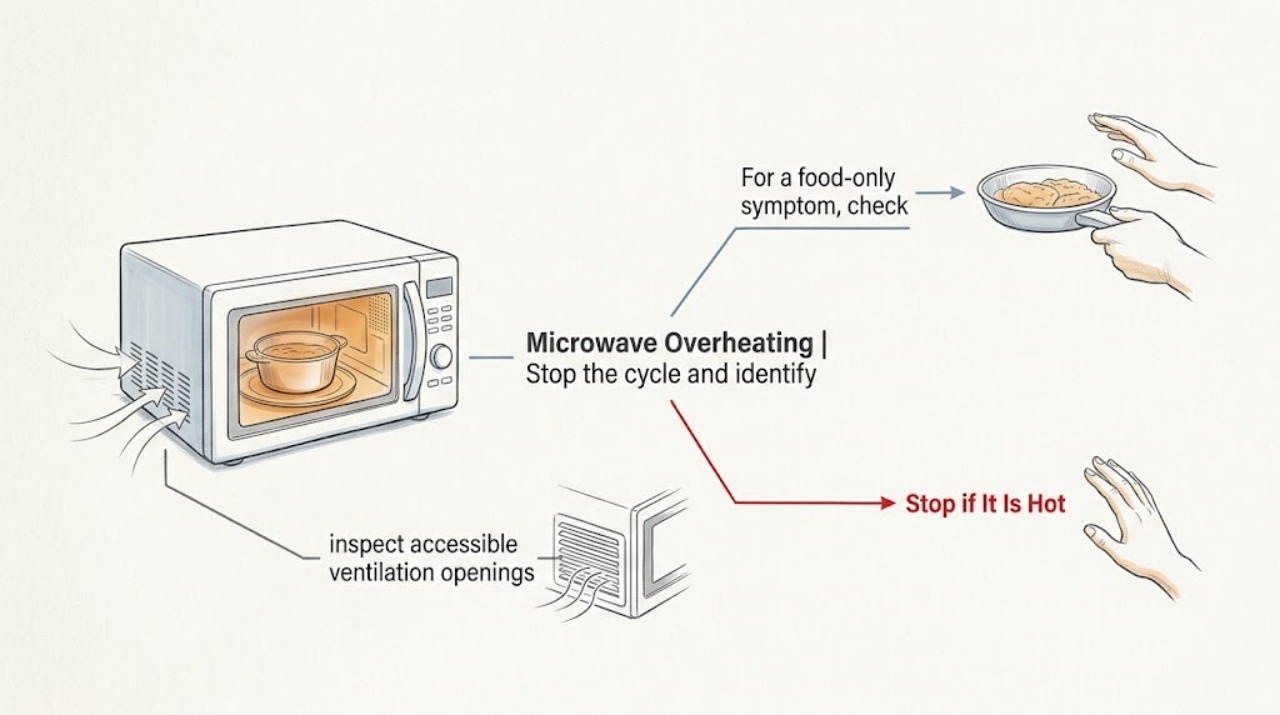
LG Microwave Overheating: Check Ventilation and Stop at the Right Point
First determine whether the food or the microwave cabinet is overheating. Stop the cycle for smoke, scorching, sparks, a hot plug, or a damaged door. For a food-only problem, check cooking time, power, load size, and ventilation openings; do not operate the microwave empty or remove its cover.
-
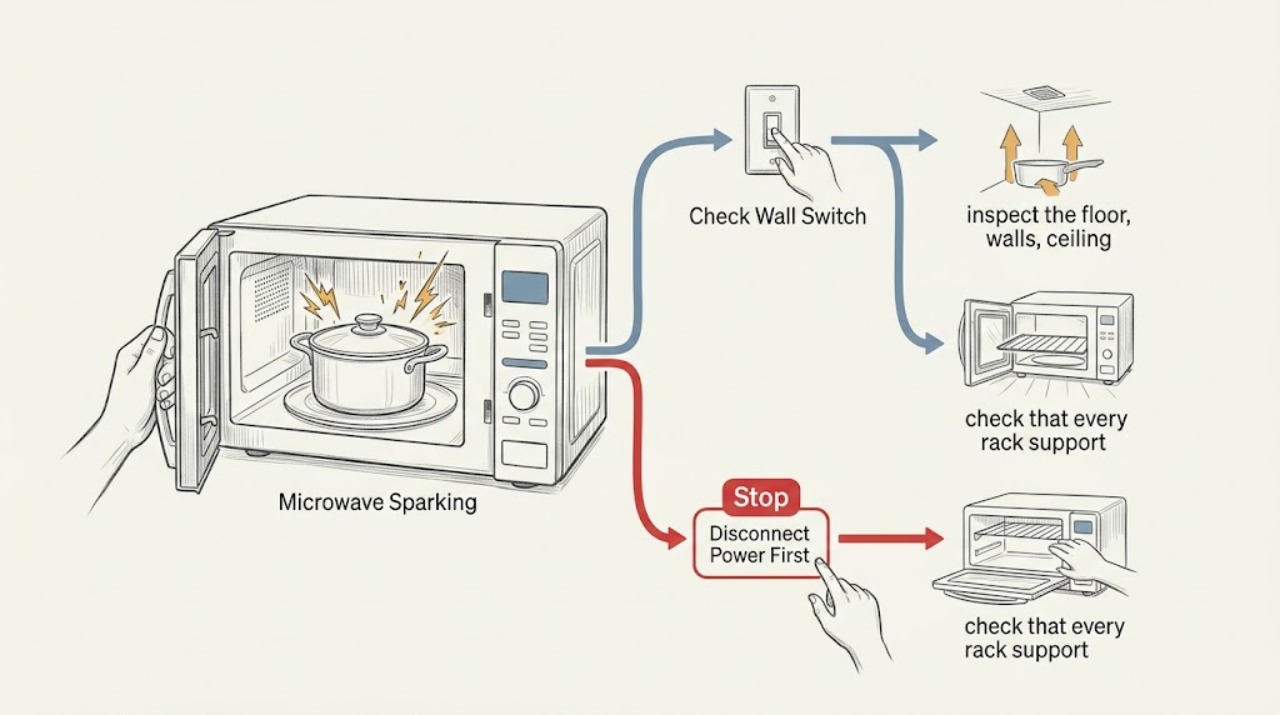
LG Microwave Sparking: Check the Load, Rack, and Cavity
Stop the cycle and let the LG microwave cool. Remove any metal or non-microwave-safe item, look for food residue or cavity damage, and check that an included rack sits on all of its supports. A clean cavity that still sparks, or any charring or damaged interior, needs qualified service rather than repeated testing.