
On this page
Start here
Quick answer
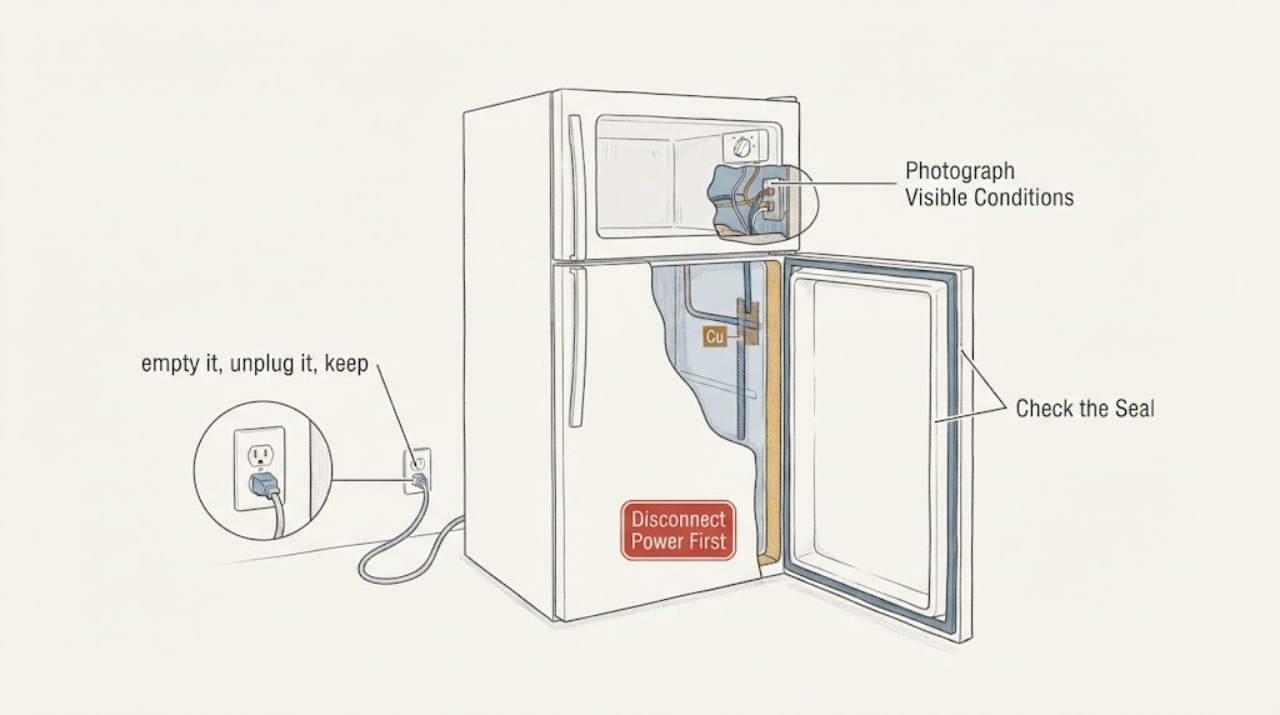
Do not drill, puncture, or open the cabinet of a Magic Chef 10.1 cu. ft. refrigerator to convert it to a kegerator unless the exact model documentation and a qualified refrigeration technician establish a safe, approved method. The opened Magic Chef HMDR1000 family manual does not provide a kegerator conversion or cooling-line map, says repairs or part replacement outside the manual should go to a qualified technician, and warns that laying the unit flat may damage the coolant system. Keep the plan reversible and external; if it requires piercing the cabinet, changing refrigeration tubing, opening the sealed system, or modifying electrical or temperature controls, stop and obtain model-specific professional advice.
Work through in order
Diagnostic checks
Use only checks that match the exact appliance or system and its official guide.
-
Check 1
Unplug the refrigerator before handling it and photograph the complete rating label, including the model suffix and serial information. Compare that identity with the Magic Chef 10.1 cu. ft. HMDR1000 manual family before planning any modification.
Expected result: The label identifies an HMDR1000 variant covered by the opened manual, identifies a different model, or is missing or unreadable.
Next step: Use the exact suffix for any manufacturer or qualified-technician review. If the label cannot be confirmed, do not drill or order a conversion part based on capacity alone.
Why this matters
Why: The 10.1 cu. ft. capacity establishes a product family but does not establish identical cabinet construction, liner routing, controls, or accessory compatibility across suffixes.
-
Check 2
Map the proposed keg, beverage line, and any tower or fitting against the refrigerator without drilling, removing the liner, bending tubing, or opening the sealed system. Check whether the intended route can remain entirely external or use an already documented opening while preserving the door seal and normal control access.
Expected result: The plan needs a new hole through the cabinet, liner, floor, ceiling, side, or back; needs a door-seal alteration; or can remain reversible and external.
Next step: Proceed only with a documented, reversible arrangement that is confirmed for the exact model. If a new penetration or seal alteration is required, stop and obtain a qualified refrigeration-technician assessment.
Why this matters
Why: The Magic Chef manual provides no cooling-line map or conversion approval, so a new penetration is an unverified risk to concealed tubing, insulation, wiring, and sealing surfaces. A reversible layout does not prove compatibility, but it avoids an unsupported cabinet alteration.
-
Check 3
Before moving the refrigerator for any planning or door work, empty it, unplug it, keep it upright, and use the handling method in the manual. Do not lay it flat to make drilling or fitting easier.
Expected result: The unit can remain upright and stable, or the proposed move requires laying it flat or forcing the door, liner, or cabinet into a new position.
Next step: Keep the appliance upright and stop if safe handling cannot be maintained. Have a qualified technician handle any movement or door-related work that the manual does not describe.
Why this matters
Why: The Magic Chef manual specifically warns that laying the refrigerator flat may damage the coolant system and recommends unplugging and emptying before door work. A movement problem is a handling risk, not permission to change the cabinet.
-
Check 4
Classify the proposed work before touching the appliance: external placement only; an accessory that uses an existing documented opening; cabinet drilling or liner removal; refrigerant-tubing work; or electrical and temperature-control modification.
Expected result: The work stays external and reversible, or it would pierce the cabinet, expose tubing, open the sealed system, change controls, or alter wiring.
Next step: Keep an external plan conditional on exact-model compatibility. For cabinet, refrigerant, or control work, stop and arrange a qualified refrigeration-technician review rather than testing or modifying the unit yourself.
Why this matters
Why: Only the first category can be considered from the opened consumer documentation. The latter categories are not described by the Magic Chef manual and can affect coolant-system integrity, electrical safety, temperature control, or food safety.
-
Check 5
After any permitted external handling, inspect without opening the cabinet for a damaged cord, crushed line, door that no longer seals, new oil or residue, hissing, loss of cooling, or a control that no longer behaves normally. Do not energize a unit with obvious electrical or sealed-system damage merely to confirm a theory.
Expected result: The refrigerator remains intact and cooling normally, or there is physical damage, unusual odor or sound, a compromised seal, or cooling loss.
Next step: Stop the conversion and unplug when safe if damage or abnormal operation appears. Keep the doors closed as appropriate for food safety and request qualified appliance/refrigeration service with the exact model and photos.
Why this matters
Why: The observed signs do not identify a failed part, but they are consistent with damage that should be assessed before further use. EPA's circuit-integrity boundary and the Magic Chef service warning make this a professional-service decision.
Use your observations
Decision map
Find the observation that best matches what you see, then follow the next safe action.
-
PATH 01Next step
What you see
The rating label confirms an HMDR1000 variant and the proposed setup stays external, reversible, and clear of the cabinet, controls, door seal, and electrical parts.
Do this next
Get exact-suffix compatibility confirmation from Magic Chef or a qualified technician before installing any accessory, and monitor that the refrigerator maintains normal operation.
Why this path and its safety boundary
Why it matters: The setup is within the narrow boundary supported by the opened documentation, but neither the product page nor manual confirms conversion-kit fit or performance.
-
PATH 02Next step
What you see
The plan requires a new hole through the cabinet, liner, top, side, back, floor, or door, or requires removing insulation or a panel to find a route.
Do this next
Do not drill or dismantle the cabinet. Stop and obtain exact-model advice from a qualified refrigeration technician; do not infer a safe spot from an online diagram for another model.
Why this path and its safety boundary
Why it matters: The available Magic Chef documentation does not establish a safe penetration location, so the proposed work could damage concealed cooling lines, insulation, wiring, or sealing surfaces.
-
PATH 03Next step
What you see
The plan includes cutting or joining refrigerant tubing, adding or removing refrigerant, connecting service gauges, or opening the sealed system.
Do this next
Stop the DIY conversion and use an appropriately certified refrigeration technician. Do not vent refrigerant, charge the system, or test an opened circuit yourself.
Why this path and its safety boundary
Why it matters: EPA identifies work that could violate refrigerant-circuit integrity as a Section 608 certification matter, and specifically includes cutting refrigerant lines among the examples.
-
PATH 04Next step
What you see
The refrigerator is laid flat, the door seal or cabinet is damaged, cooling is lost, or there is hissing, oil-like residue, electrical damage, or an abnormal control response.
Do this next
Stop the conversion, unplug when safe, preserve food safety, and arrange qualified service using the exact model and the observed symptoms. Do not continue drilling, cooling tests, or internal disassembly.
Why this path and its safety boundary
Why it matters: The unit may have suffered handling, sealed-system, sealing, or electrical damage; the observation alone does not identify a component or make a repair safe.
Helpful context
Understand the symptom
Confirm the exact refrigerator before planning a conversion
The opened Magic Chef product page identifies a 10.1 cu. ft. freestanding top-freezer refrigerator and names HMDR1000ST as one model. The matching official family manual covers HMDR1000WE, HMDR1000BE, HMDR1000SE, and HMDR1000ST. Because the task identifies the appliance by capacity rather than a complete suffix, read the rating label before ordering a tap, drilling accessory, or service. A capacity match alone does not prove that another suffix has the same cabinet, door, liner, or control arrangement.
Treat the cabinet as a protected cooling system
The Magic Chef manual does not publish a safe drilling zone or approve a kegerator conversion. Do not infer that a side, top, back, floor, or interior wall is clear because no tubing is visible. A hole can damage concealed refrigerant tubing, insulation, wiring, or the door seal. The safe decision from the available documentation is to keep the conversion reversible and external unless model-specific engineering information and qualified service establish otherwise.
Separate reversible layout work from sealed-system work
A keg or beverage line may be considered only if it can use an existing opening or an accessory explicitly documented for the exact refrigerator family without puncturing the cabinet, relocating tubing, opening the sealed system, bypassing temperature controls, or altering electrical protection. The opened Magic Chef sources do not confirm compatibility for any conversion kit, shank, tower, line, or thermostat. Do not use a generic kit listing as proof of fit.
Stop before refrigerant or internal-control work
EPA states that Section 608 certification applies when service or repair could violate refrigerant-circuit integrity, and its examples include cutting refrigerant lines and adding or removing refrigerant. That boundary is relevant to a conversion that would pierce the cabinet or alter the sealed system. If the plan requires a hole through the enclosure, tubing work, charging, leak testing, internal thermostat changes, or control rewiring, stop and have a qualified refrigeration technician assess the exact model.
When checks do not resolve it
Need a professional?
Call a qualified refrigeration technician before any cabinet penetration, liner removal, refrigerant-tubing work, sealed-system opening, control modification, or electrical rewiring. Stop and request service immediately if the unit is damaged, loses cooling, develops hissing or residue, has a damaged cord, or no longer seals or controls temperature normally.
Common questions
FAQ
Where can I drill a Magic Chef 10.1 cu. ft. refrigerator to install a kegerator tower?
The opened Magic Chef documentation does not provide a safe drilling location or approve a kegerator conversion. Do not choose a side, top, back, floor, door, or liner location by guesswork. Have the exact suffix reviewed by a qualified refrigeration technician before any cabinet penetration.
Does the 10.1 cu. ft. size confirm that a conversion kit will fit?
No. The official product page confirms the 10.1 cu. ft. top-freezer family and identifies HMDR1000ST as one variant, while the manual covers several HMDR1000 suffixes. Capacity alone does not confirm cabinet, door, seal, control, tubing, or accessory compatibility.
Can I cut or join the cooling lines myself if I unplug the refrigerator first?
No. Unplugging removes electrical power but does not make sealed-system work safe or authorized. EPA says certification is required for work that could violate refrigerant-circuit integrity and specifically includes cutting refrigerant lines among those activities. Use an appropriately qualified refrigeration technician.
What should I do if the refrigerator was laid down during the conversion attempt?
Stop further modification and return to the handling instructions for the exact manual. The opened Magic Chef manual warns that laying the unit flat may damage the coolant system. Keep it upright, inspect only for visible damage, and arrange qualified service if cooling, sealing, or operation is abnormal.
Read the exact guide
Official sources
- 10.1 Cu. Ft. Top Mount Refrigerator — User Manual (HMDR1000WE / HMDR1000BE / HMDR1000SE / HMDR1000ST)Magic Chef / MC Appliance · Exact official family manual. It supports the no-unsanctioned-repair boundary, qualified-technician escalation, upright handling, and coolant-system protection. It does not authorize a kegerator conversion or provide a safe drilling map.
- 10.1 cu. ft. Top Freezer RefrigeratorMagic Chef / MC Appliance · Official brand-owner product page for the 10.1 cu. ft. family. It identifies a freestanding top-freezer layout and lists HMDR1000ST as one exact variant; the task's capacity-level identity still requires confirmation of the complete rating-label suffix.
- EPA's Refrigerant Management Program: Questions and Answers for Section 608 Certified TechniciansU.S. Environmental Protection Agency · Official EPA service boundary used only to support escalation for work that could violate refrigerant-circuit integrity; it is not a refrigerator conversion procedure.
- Section 608 Technician Certification RequirementsU.S. Environmental Protection Agency · Official EPA requirements page used for the professional boundary around refrigerant-circuit work; it does not establish Magic Chef model construction or part compatibility.
Community feedback
Share a repair observation
Share a plain-text repair observation. Accepted observations are published automatically; this page may take a moment to update.