
On this page
Start here
Quick answer
Start by deciding whether the Magic Chef refrigerator smell comes from spoiled food, a spill trapped around a shelf or gasket, or a recurring odor with a temperature problem. Discard questionable food, clean removable surfaces and the interior using a safe food-appliance method, and verify the refrigerator is at or below 40°F. A persistent smell with leaking, warm food, smoke, or an electrical odor needs service.
Before you begin
Safety first
- Clean only accessible, removable surfaces. Do not remove sealed-system panels or work near electrical components.
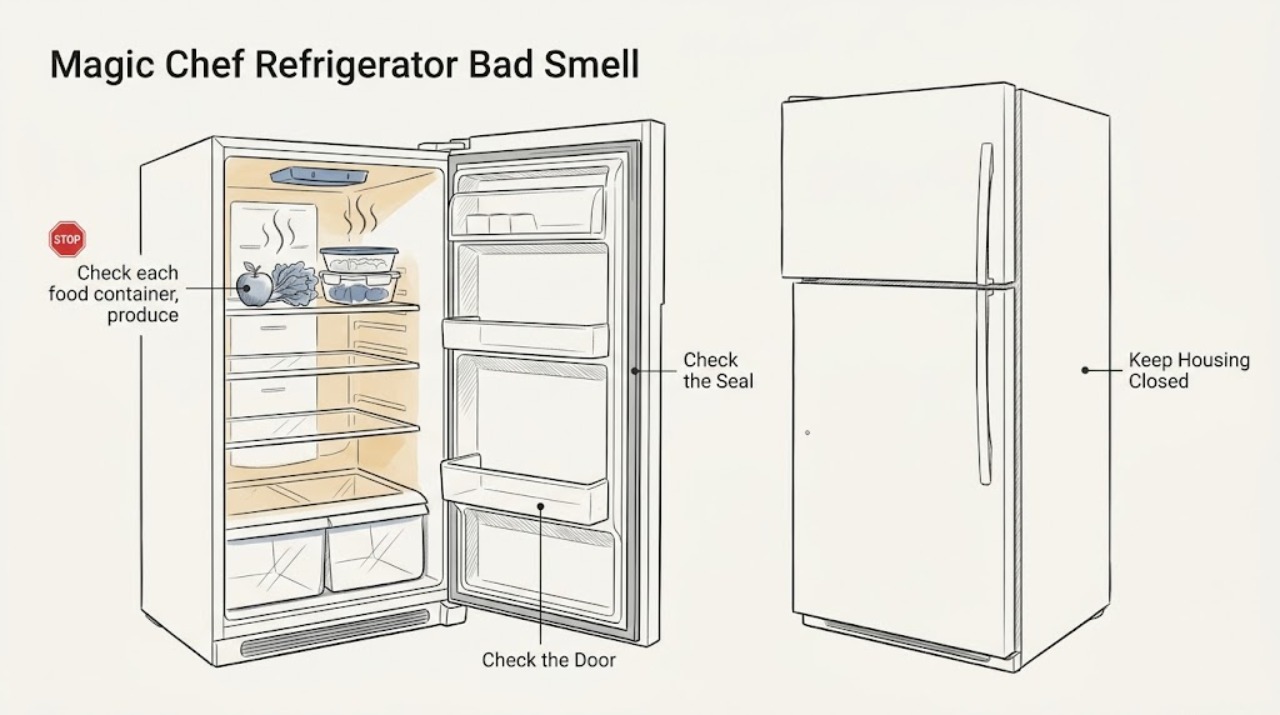
Work through in order
Diagnostic checks
Use only checks that match the exact appliance or system and its official guide.
-
Check 1
Check each food container, produce drawer, ice compartment if equipped, and the floor under the drawers for spoiled food, leaking packaging, mold, or an unidentifiable residue.
Expected result: A clear food or spill source is present, or the odor remains with no obvious source.
Next step: Discard questionable food without tasting it, contain raw-food leaks, and continue with the clean-surface inspection.
Why this matters
Why: Spoilage and spills can create strong odors without a refrigerator mechanical fault; no visible source calls for a broader interior and temperature check.
-
Check 2
Remove only shelves, bins, and other user-removable pieces allowed by the model and inspect their undersides, the door gasket, drawer tracks, and cabinet seams for residue or moisture.
Expected result: Residue is under a shelf or bin, inside a gasket fold, or no residue is found and the cabinet is dry.
Next step: Wash removable pieces and wipe accessible interior surfaces with the model-approved method. Do not pry panels or pour liquid into vents.
Why this matters
Why: Odor can remain in hidden spill locations that are missed by wiping the main shelf surface; a clean dry interior shifts attention to temperature, drain, or an external source.
-
Check 3
Place an appliance thermometer in the refrigerator compartment and check whether the unit maintains 40°F or below while the door remains closed as much as practical.
Expected result: The compartment is at or below 40°F, or it is warmer and food has been held above a safe temperature.
Next step: Move perishable food to safe cold storage if needed and request service for a persistent warm condition rather than repeatedly cleaning the odor.
Why this matters
Why: The USDA treats 40°F or below as the refrigerator safety target; warmth can allow spoilage and odor to continue and creates a food-safety decision.
-
Check 4
After cleaning and drying, note whether the smell returns only after a particular food is stored, spreads from the rear or lower cabinet, or returns with a leak, unusual heat, or electrical smell.
Expected result: The odor is load-specific and fades, or it returns from the cabinet with a mechanical or electrical symptom.
Next step: For a recurring mechanical, electrical, or chemical smell, stop using the refrigerator if safe and arrange qualified service.
Why this matters
Why: A load-specific recurrence supports contamination from that food; a cabinet-level recurring odor with another fault needs diagnosis beyond deodorizing.
Use your observations
Decision map
Find the observation that best matches what you see, then follow the next safe action.
-
PATH 01Next step
What you see
Spoiled food or a spill is found and the refrigerator remains at or below 40°F
Do this next
Discard questionable food and clean the affected parts, gasket, and interior; monitor for recurrence.
Why this path and its safety boundary
Why it matters: The odor is most consistent with a removable contamination source.
-
PATH 02Next step
What you see
No source is visible or the odor returns after cleaning
Do this next
Record the odor location and thermometer reading, then request model-specific service if it persists.
Why this path and its safety boundary
Why it matters: Residue may be hidden, or the smell may be associated with a drain, temperature, or external component issue.
-
PATH 03Next step
What you see
Food has been warm, liquid is leaking, smoke appears, or the smell is electrical or chemical
Do this next
Protect or discard food as appropriate and stop using the unit for hazardous symptoms; arrange qualified service.
Why this path and its safety boundary
Why it matters: Food safety or appliance safety has overtaken routine odor removal.
Helpful context
Understand the symptom
Odor is a location and temperature clue
A smell that follows one container is different from odor spread through the cabinet or a smell that returns while the refrigerator is warm. Find the reservoir before assuming the cooling system is the source.
When checks do not resolve it
Need a professional?
Provide the odor location, recent spill or food history, thermometer reading, and whether the smell returns with cooling or another appliance function.
Safety scope: Clean only accessible, removable surfaces. Do not remove sealed-system panels or work near electrical components.
Common questions
FAQ
Can a bad smell mean my Magic Chef refrigerator is not cooling?
It can, but first check for spoiled food or hidden spills and measure the compartment with an appliance thermometer. If it is above 40°F or the odor returns with warmth, request service and protect perishable food.
How do I clean a smell from a refrigerator safely?
Discard questionable food, remove washable shelves and bins, wash them, and clean the interior and gasket using the food-safety guidance and your model manual. Do not pour cleaner into vents or sealed panels.
Should I keep food that smells normal after the refrigerator was warm?
Do not rely on smell alone to judge safety. Use the refrigerator thermometer and USDA time-and-temperature guidance; when safety is uncertain, discard the questionable perishable food.
Read the exact guide
Official sources
- Refrigeration & Food SafetyUSDA Food Safety and Inspection Service · 40°F refrigerator target, door closure, and food-safety handling
- Manual DownloadsMagic Chef · Magic Chef model-specific owner manual lookup
- Removing Odors from Refrigerators and FreezersUSDA Food Safety and Inspection Service · Spoiled-food disposal and refrigerator/freezer odor-removal steps
Community feedback
Share a repair observation
Share a plain-text repair observation. Accepted observations are published automatically; this page may take a moment to update.