
On this page
Start here
Quick answer
The MSS25C4MGZ is a Maytag side-by-side refrigerator, but ‘condenser fan noise’ is only the reported suspicion. Evaporator and condenser airflow, compressor cycling, refrigerant, the water line, ice maker and cabinet vibration can all sound different in an open-plan room. Start with a recording and timing note, then check the refrigerator’s level, stable floor contact, clearances and accessible external condenser area with power disconnected as the model instructions allow. A soft airflow or steady hum can be normal; a persistent harsh scrape, grind or rattle, worsening noise, cooling change or noise that started from new deserves Maytag warranty/service rather than fan disassembly or a guessed replacement part.
Before you begin
Safety first
- Do not reach toward a moving fan, alter fan speed, add acoustic material, remove a fan shroud or perform live electrical tests. Disconnect before any model-permitted cleaning and use qualified Maytag service for persistent, harsh or functionally accompanied noise.
Work through in order
Diagnostic checks
Use only checks that match the exact appliance or system and its official guide.
-
Check 1
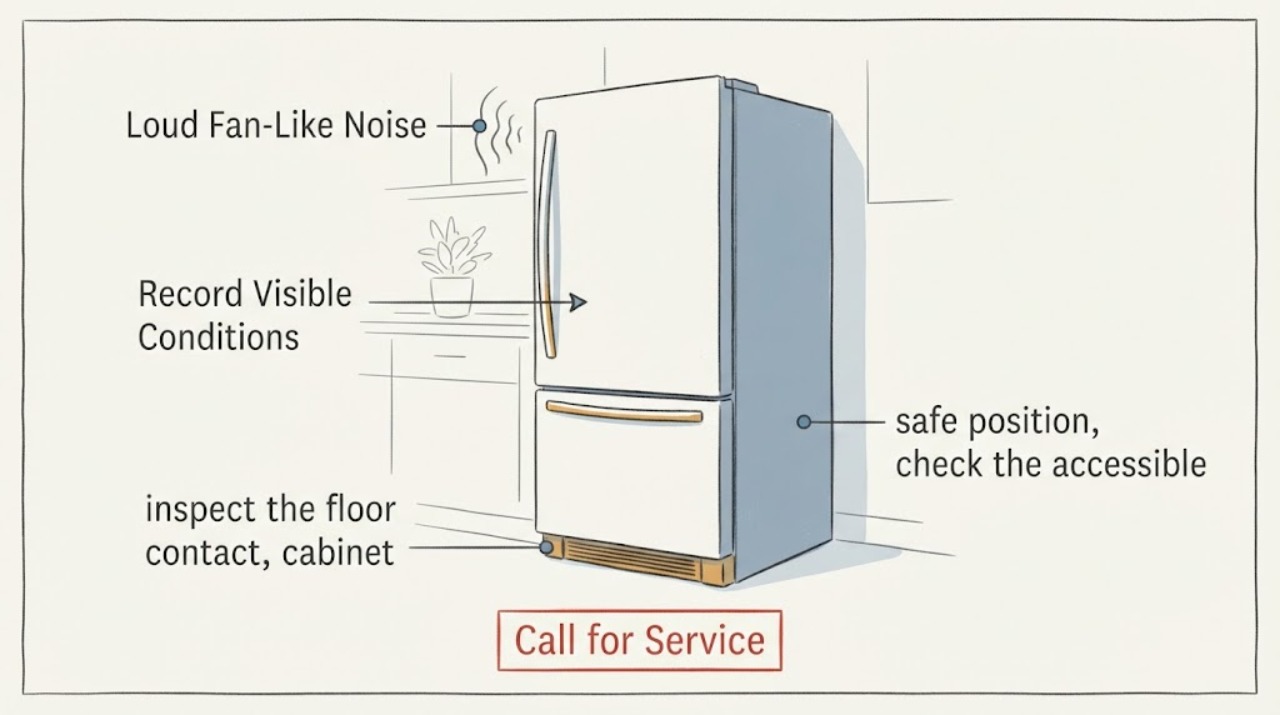
Make a short recording from the normal listening position and note when the sound occurs: continuously, after a door closes, after loading warm groceries, during ice/water use, or only in a cooling/defrost cycle. Do not put a hand near a moving fan or remove a panel to locate it.
Expected result: The sound is a soft airflow/steady hum, a brief repeatable tone, or a harsh scrape, grind, buzz or rattle that persists independently of normal cycling.
Next step: Continue to the external installation checks only if the unit is cooling normally and there is no heat, burning smell or exposed electrical damage. Document the recording and stop for warranty/service when the sound is harsh, worsening or accompanied by cooling trouble.
Why this matters
Why: Maytag describes soft airflow, low hum, brief high-pitched/pulsating operation and some clicks or refrigerant sounds as possible normal operation; a harsh persistent pattern is not identified as a specific failed fan by sound alone and needs service assessment.
-
Check 2
With the refrigerator closed and stable, inspect the floor contact, cabinet level and surrounding clearances from the outside. Remove loose objects from the top and confirm the cabinet is not rubbing a wall or cabinet; use a level only as an external check and follow the exact MSS25C4MGZ literature before adjusting feet.
Expected result: The cabinet rocks, the floor is uneven, an item or adjacent surface vibrates, or the refrigerator is stable and clear of contact.
Next step: If an external vibration source is found, correct only the documented leveling or clearance issue and reassess. If the cabinet is stable but the loud sound remains, do not infer a fan failure; use the service/warranty branch.
Why this matters
Why: Maytag links humming/rattling transfer to an unlevel refrigerator, uneven floor, loose items, refrigerant/water-line movement and nearby surfaces; correcting the external source may change the sound without implicating a fan.
-
Check 3
From a dry, safe position, check the accessible condenser area, grille and lower/rear surroundings only as the exact owner literature permits. If user cleaning is documented, unplug first, use a soft vacuum gently on dust, reinstall any removed panel and keep fingers/tools away from fan blades.
Expected result: Dust or an external obstruction is visible in an area the model allows the owner to clean, or the accessible area is clear and the sound persists.
Next step: Perform only the documented external cleaning, restore guards/panels, and use service if the noise remains. Do not reach through a grille, slow the fan, add damping material or open the cabinet to chase the sound.
Why this matters
Why: Maytag says restricted airflow or dust can contribute to buzzing on models that allow user cleaning, but a clear area does not prove the motor, blade or fan type is defective.
-
Check 4
Check the non-noise symptoms without disassembling: refrigerator/freezer temperatures, door closure, visible frost, water/ice operation and any burning smell or electrical damage. Do not use a door switch or other method to force a hidden fan to run.
Expected result: Cooling and doors are normal, or the noise is paired with rising temperature, heavy frost, water/electrical damage, heat or burning odor.
Next step: If cooling or safety symptoms are present, keep the refrigerator closed, disconnect only from a dry safe position if necessary and arrange qualified Maytag service. If performance is normal but the noise remains objectionable, preserve the recording and request warranty/service for this new unit.
Why this matters
Why: A sound alone cannot distinguish compressor, evaporator fan, condenser fan, refrigerant, water-line or cabinet vibration. A paired cooling or safety symptom raises the need for prompt service and makes continued experimentation inappropriate.
-
Check 5
Before contacting Maytag or the seller, record the full MSS25C4MGZ model/serial label, installation date, sound recording, location or listening position, cooling temperatures and any change after the external checks. Do not order a condenser/evaporator fan or open the appliance based only on the topic wording.
Expected result: The noise is reproducible and documented, or it cannot be reproduced after stable leveling/clearance checks.
Next step: Use Maytag’s exact-model service/warranty route or the retailer’s new-appliance support. Ask the technician to identify the actual sound source and confirm any part by the model’s service information before replacement.
Why this matters
Why: A documented pattern gives service a useful symptom without converting the user’s fan suspicion into a component diagnosis; absence of a repeatable sound does not establish that a part was fixed.
Use your observations
Decision map
Find the observation that best matches what you see, then follow the next safe action.
-
PATH 01Next step
What you see
The noise is a soft airflow, low steady hum or brief repeatable tone, and the MSS25C4MGZ is level, stable, cooling normally and free of heat or odor.
Do this next
Keep the external installation stable, monitor temperatures and record changes. Schedule service if the sound becomes harsh, persistent or functionally abnormal.
Why this path and its safety boundary
Why it matters: Maytag identifies these sounds as possible compressor/fan airflow or normal operating changes; this pattern does not establish a condenser-fan fault.
-
PATH 02Next step
What you see
The sound changes when a loose top item, adjacent cabinet, uneven floor or cabinet contact is removed or corrected.
Do this next
Keep the documented clearance/leveling correction and do not add unapproved padding or open the appliance. Request service if noise returns or cooling changes.
Why this path and its safety boundary
Why it matters: The observed improvement points to vibration transmission or installation, not a confirmed internal fan failure.
-
PATH 03Next step
What you see
The refrigerator is stable and externally clear, but the new-unit noise remains a harsh scrape, grind, strong buzz or persistent loud airflow that is objectionable in the open-plan room.
Do this next
Preserve the recording and model/serial information, stop opening or modifying the appliance and contact Maytag warranty/service or the retailer. Do not buy a fan by the reported label.
Why this path and its safety boundary
Why it matters: Maytag’s public guidance cannot identify which fan or other component is responsible from sound alone; the unresolved symptom is appropriate for warranty/service assessment.
-
PATH 04Next step
What you see
Noise is accompanied by rising refrigerator/freezer temperature, heavy frost, visible electrical damage, burning odor or abnormal heat.
Do this next
Keep doors closed, move food only if needed for temperature safety, disconnect power only from a dry safe position when appropriate and arrange prompt qualified service. Do not run a hidden-fan test or remove panels.
Why this path and its safety boundary
Why it matters: The symptom set exceeds an acoustic adjustment and may affect safe cooling or electrical operation; no public source here supports a user-level fan diagnosis.
Helpful context
Understand the symptom
Identify the sound before naming a fan
Maytag’s normal-sounds guidance says a steady hum can come from the compressor and fans, a soft whoosh from evaporator or condenser airflow, and high-pitched or pulsating sounds can occur as fans or compressors adjust. Rattling can also come from refrigerant, the water line, objects on top or an unlevel cabinet. In an open-plan kitchen, the room can make a normal sound more noticeable, so record when it starts, where it is loudest without touching the cabinet, whether it changes after a door opening or cooling cycle, and whether temperatures remain normal. This observation is more reliable than assigning the sound to the condenser fan from the outset.
Use installation checks that can transmit vibration
Maytag’s side-by-side humming guidance says the refrigerator should be level from side to side and front to back, with the brake feet snug and the rollers off the floor where applicable. The same manufacturer guidance associates vibration with an unlevel floor, cabinet items and water or refrigerant flow. Remove loose items from the top, check that the cabinet is stable and not pressing against surrounding surfaces, and follow the exact model installation instructions for any leveling adjustment. Do not wedge, pad or disassemble the cabinet as an improvised noise cure.
Keep cleaning and service within the documented boundary
Maytag’s buzzing guide allows gentle vacuuming of the condenser area and fan shroud only if the model permits user cleaning, after unplugging and removing an applicable rear access panel, then reinstalling the panel before restoring power. Because the exact MSS25C4MGZ page directs owners to model literature and the complaint began with a new appliance, do not reach toward a fan, alter its speed, add sound-deadening material or remove a shroud unless the exact documentation and a qualified service route authorize it. A persistent loud noise is useful warranty evidence, not proof of a failed fan.
When checks do not resolve it
Need a professional?
Safety scope: Do not reach toward a moving fan, alter fan speed, add acoustic material, remove a fan shroud or perform live electrical tests. Disconnect before any model-permitted cleaning and use qualified Maytag service for persistent, harsh or functionally accompanied noise.
Have this ready
- Provide MSS25C4MGZ model/serial information, purchase and installation date, a sound recording, where the sound is loudest, whether it changes with cooling/door cycles, temperature observations and what external leveling/clearance checks changed.
Common questions
FAQ
Is the loud sound definitely the MSS25C4MGZ condenser fan?
No. Maytag says the evaporator fan and condenser fan can both create airflow noise, while the compressor, refrigerant, water line, ice maker and cabinet vibration can sound similar. Use timing, sound quality and external checks to describe the symptom; do not order or adjust a fan from the label alone.
Can a new Maytag side-by-side refrigerator hum or whoosh normally?
Yes. Maytag says a low hum from compressor/fan operation and a soft whoosh from evaporator or condenser airflow can be normal. A new appliance can sound different from an older refrigerator, but a harsh, persistent or worsening noise still merits documentation and warranty/service evaluation.
What should I check before requesting service?
Record the sound and timing, remove loose items from the top, check the cabinet and floor are stable and level, confirm the refrigerator is not rubbing nearby surfaces, and use only model-permitted external condenser cleaning with power disconnected. Do not open the fan area or run a live component test.
Should I replace the condenser fan because the refrigerator is loud from new?
Not based on the report alone. The exact model page identifies the refrigerator, but Maytag’s noise guidance does not prove which component is making the sound or that any part is defective. Keep the appliance unmodified and use the new-appliance warranty/service route for a persistent objectionable noise.
Read the exact guide
Official sources
- Humming Noise - Side by Side RefrigeratorMaytag Product Help · Opened Maytag side-by-side guide. It says compressor/fan humming can be normal and supports external front-to-back/side-to-side leveling and stable brake-foot contact.
- MSS25C4MGZ | MaytagMaytag · Exact Maytag product/support page for the assigned model; used for identity and the model-specific service/manual routing boundary, not for a fan diagnosis.
- Refrigerator Noise - High-Pitched or PulsatingMaytag Product Help · Opened Maytag guide explaining fan airflow, refrigerant and compressor-speed changes and that normal high-pitched sounds are typically brief, soft and repeat with regular operation.
- Refrigerator Noise - BuzzingMaytag Product Help · Opened Maytag guide linking buzzing to compressor, condenser/evaporator fans, cooling demand and leveling. Its cleaning advice is conditional on model-permitted access and power disconnection; it does not authorize fan diagnosis or modification.
- Refrigerator Normal Sounds and NoisesMaytag Product Help · Opened Maytag guidance listing normal hum, airflow, high-pitched/pulsating, rattling and vibration sources, plus level/clean/secure-item checks. It does not identify a failed fan from the symptom.
- Rattling or Vibrating Noise - Side by Side RefrigeratorMaytag Product Help · Opened Maytag side-by-side guide. It attributes rattling/vibration possibilities to refrigerant, water line, items on top and an unlevel refrigerator and sends unresolved cases to service.
Community feedback
Share a repair observation
Share a plain-text repair observation. Accepted observations are published automatically; this page may take a moment to update.