
Brand-independent appliance guidance
General Beverage Cooler Repair Guides
Brand-independent troubleshooting and repair guidance for common beverage cooler problems and maintenance questions.
General beverage cooler guides
Use these guides when the problem is not limited to a specific manufacturer.
-
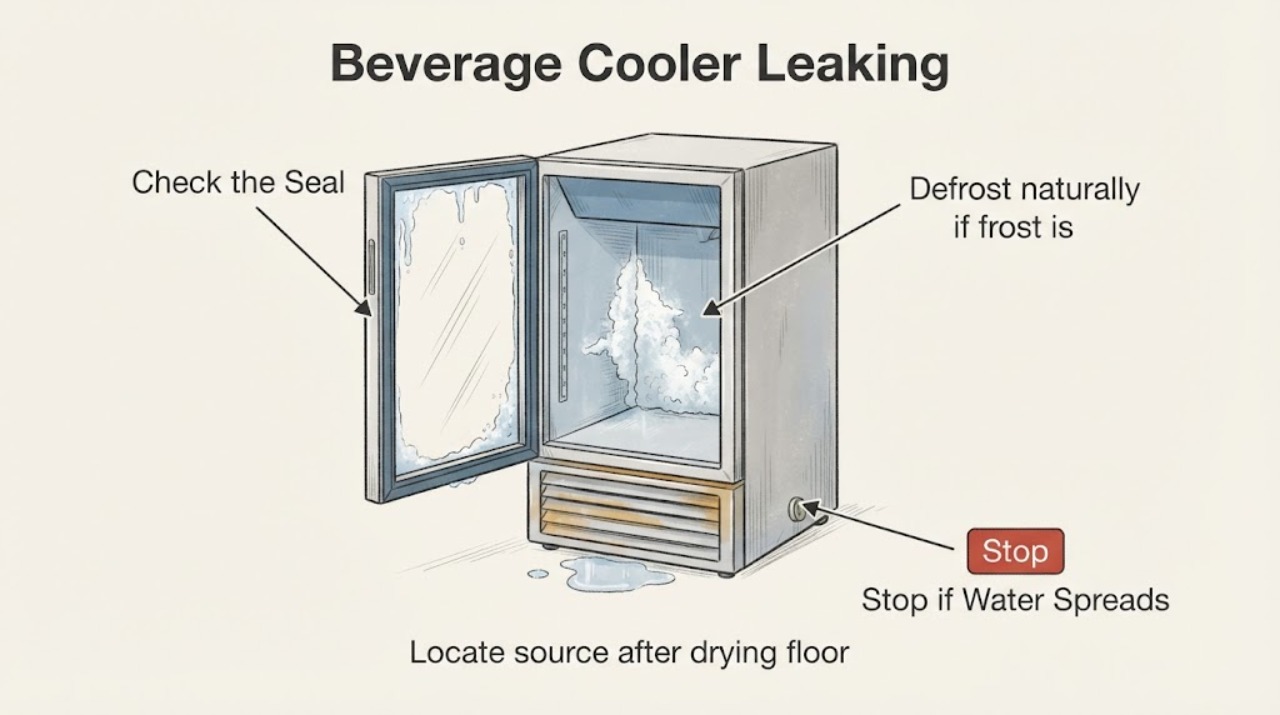
Beverage Cooler Leaking
A beverage cooler leaking water may have condensation from a poor seal, frost melt, or an internal drain problem. Locate the source, check level/gasket/airflow, and defrost naturally if needed. Water near electrics, repeated leaks or loss of cooling needs appliance service.
-
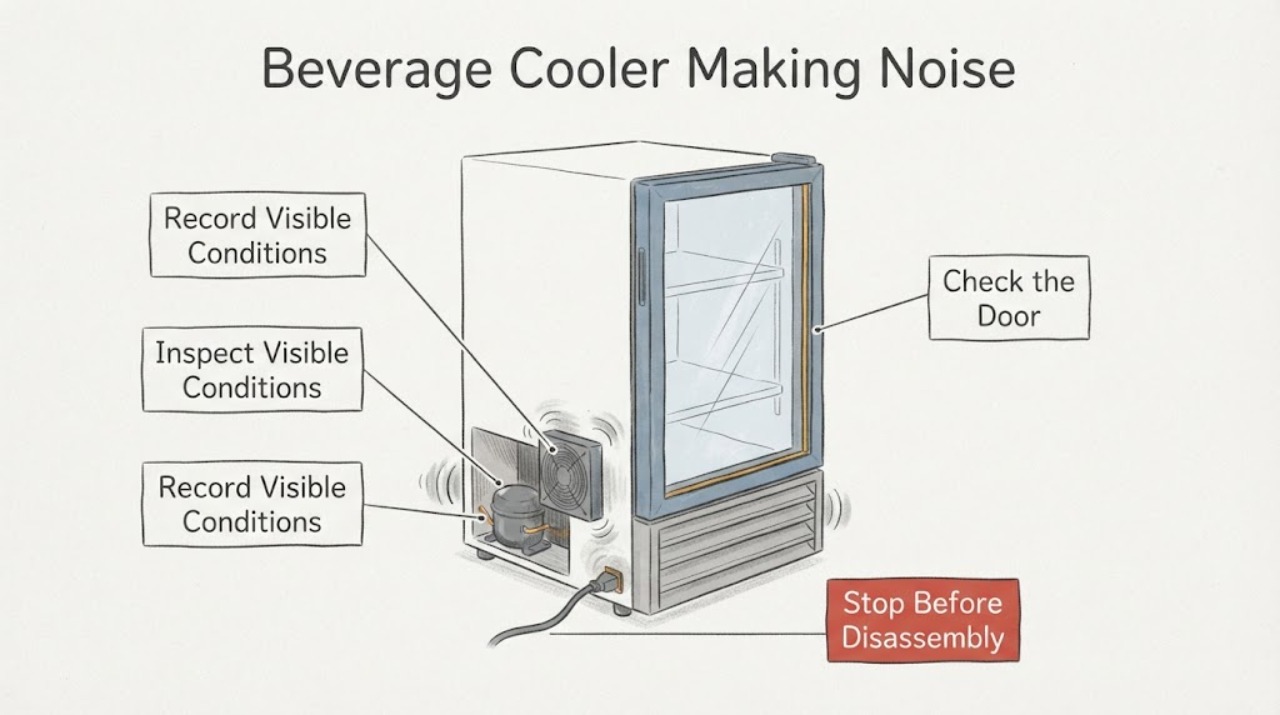
Beverage Cooler Making Noise
A beverage cooler may make normal compressor, fan, clicking, or expansion sounds, but a new loud vibration or unusual noise should first be separated by timing and location. Make sure the unit is on a stable, level surface, remove loose bottles and shelves that can rattle, and listen for whether the sound follows compressor or fan operation.
-
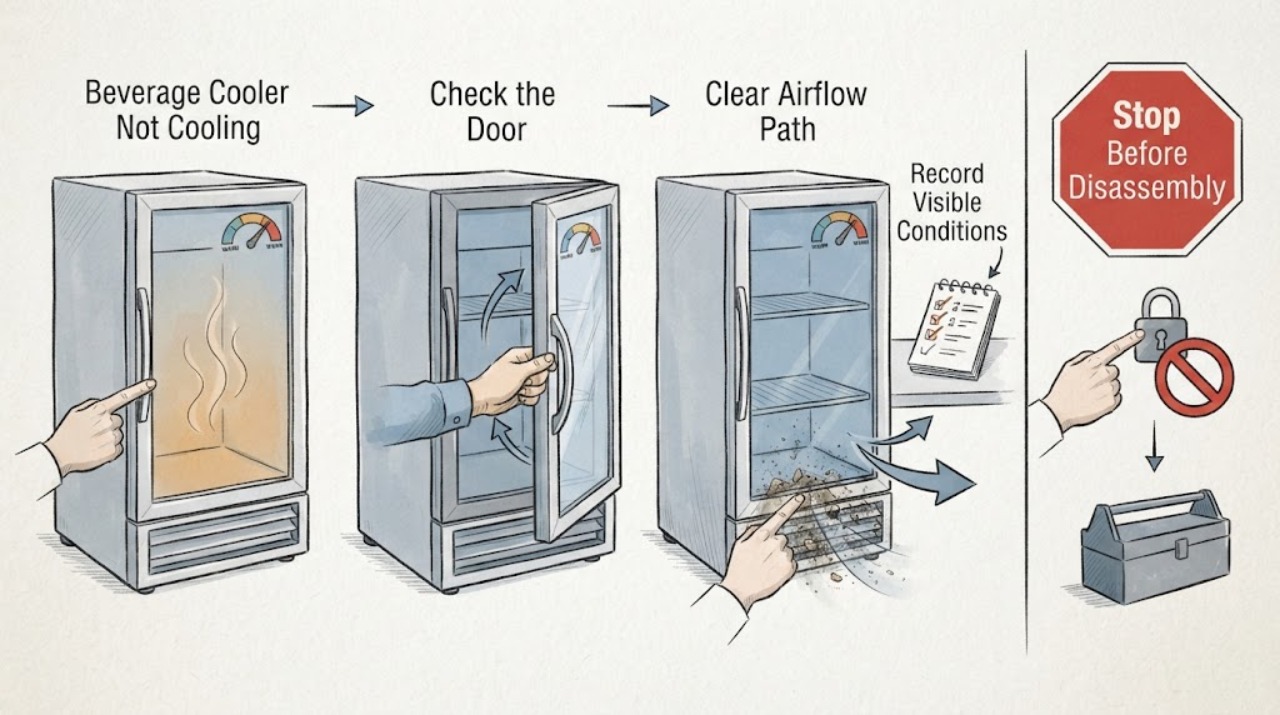
Beverage Cooler Not Cooling
If a beverage cooler is not cooling, confirm power and the temperature setting, keep the vents clear, allow time after loading, and listen for the compressor. A compressor that runs without cooling, or a unit with no compressor response after stable power, needs service for sealed-system or control diagnosis.
-
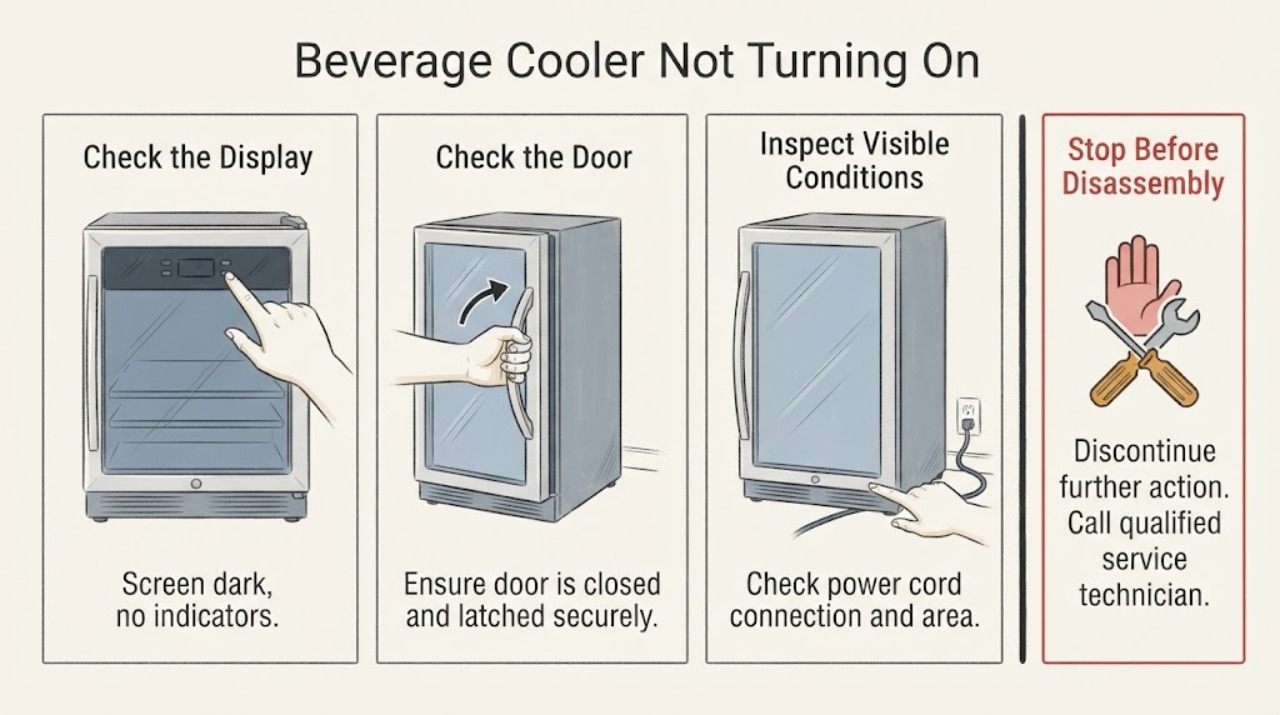
Beverage Cooler Not Turning On Troubleshooting Guide
A beverage cooler with not turning on should be checked through power, setpoint, door seal, and ventilation or condenser access. Keep the door closed during recovery and arrange service for a persistent symptom, active leak, or abnormal heat.
-
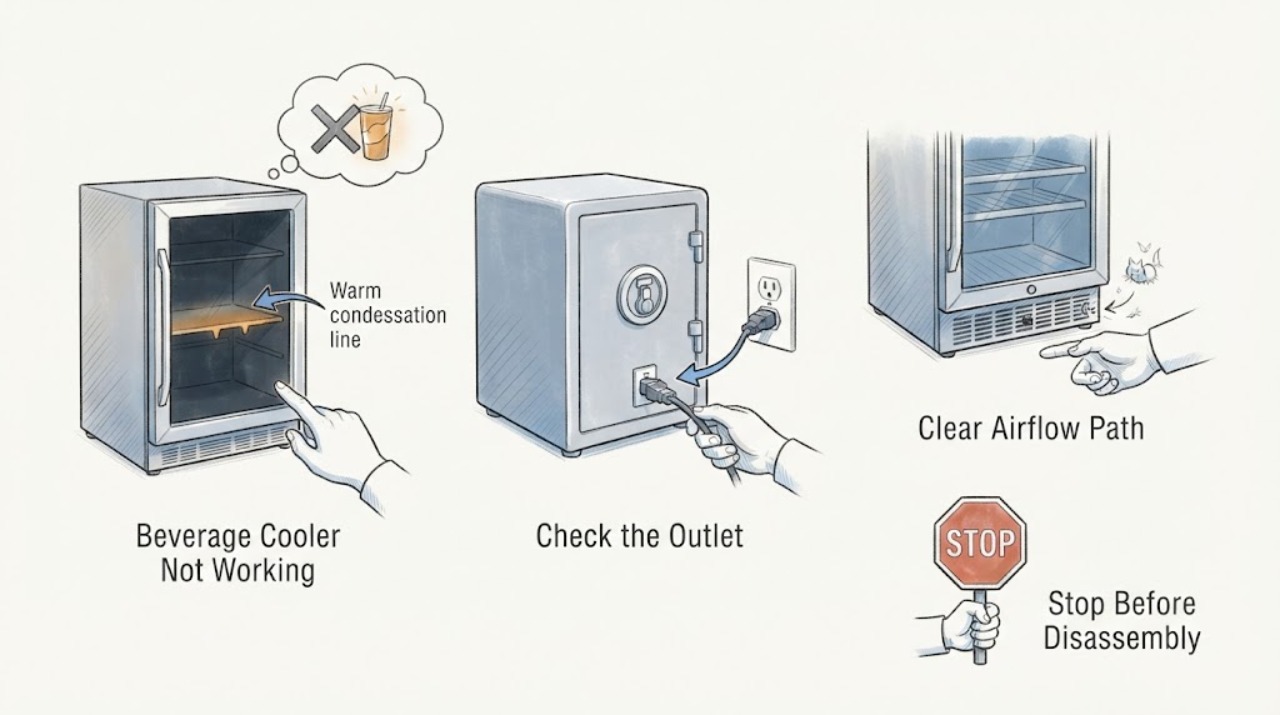
Beverage Cooler Not Working
For a beverage cooler that is not working, determine whether the display is blank, the compressor or fan is silent, or the unit runs without cooling. Check the plug, outlet, door seal, temperature setting, ventilation clearance, and visible frost or water according to the exact model manual. If the breaker trips, the cord is hot or damaged, refrigerant or water leaks, or the cooler remains warm after safe external checks, stop and arrange qualified service.
-
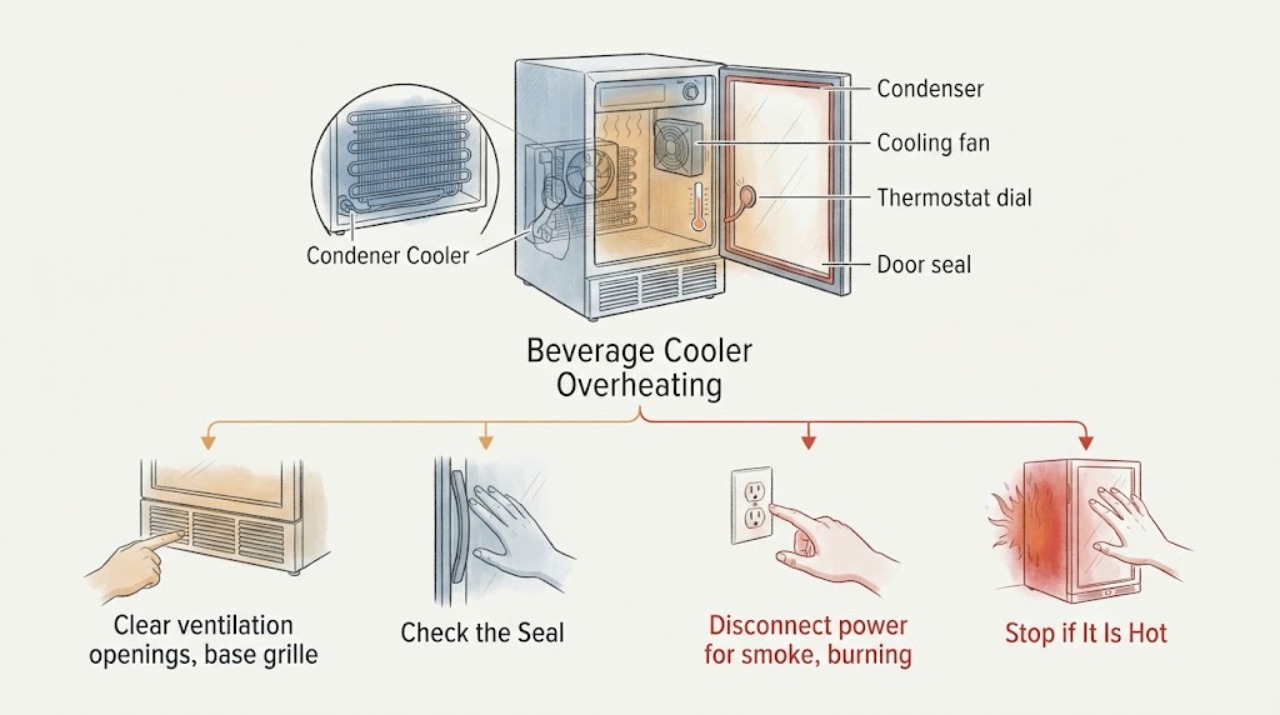
Beverage Cooler Overheating: Check Ventilation, Load, and Room Temperature
When a beverage cooler overheats, clear every ventilation opening, keep the door sealed, reduce a warm load, and check room temperature and controls. Dometic's official cooler guidance says warm exterior walls indicate overheating and recommends uncovering ventilation openings so heat can escape. If the cooler stays hot, cannot hold temperature, makes abnormal fan noise, or trips power, stop use and arrange service.