
Repair problem
Ant Recurrence Troubleshooting Guides
Published FixGraph guidance for diagnosing and responding to ant recurrence.
Matching published guides
Choose a guide that matches the service, equipment, and conditions you are seeing.
-
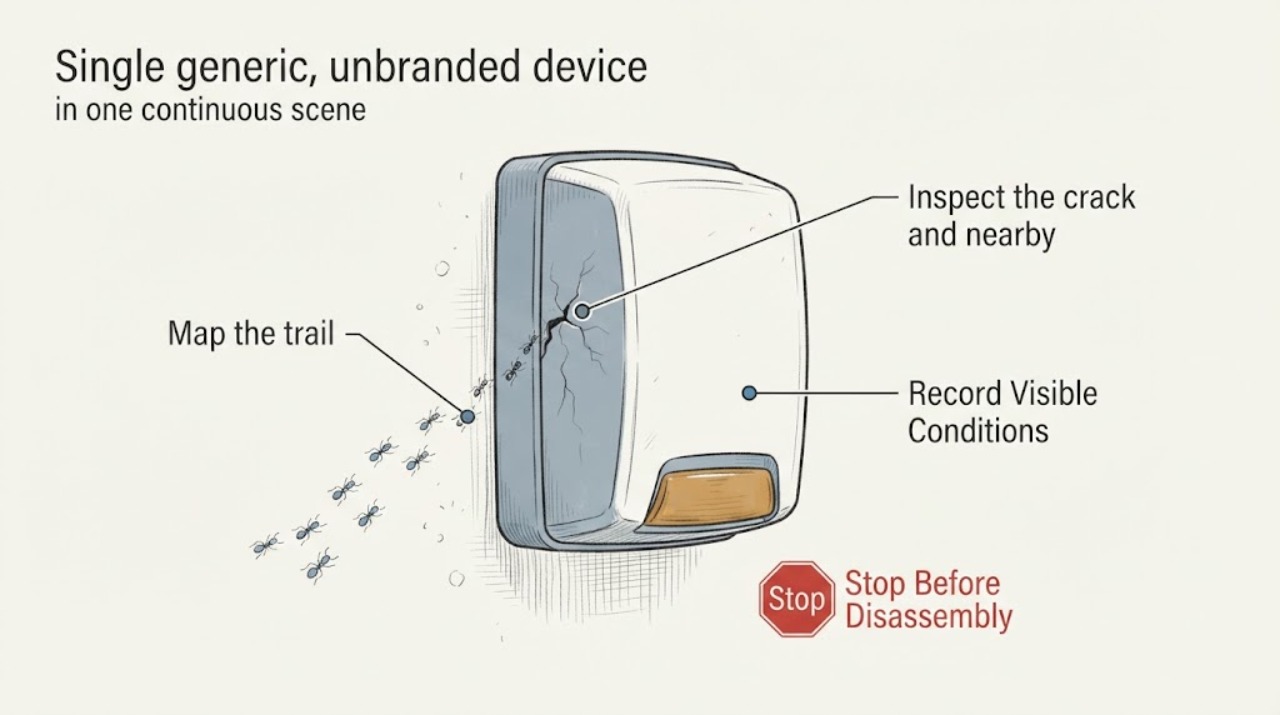
Ants entry crack recurrence: What to Check and What to Do Next
When ants keep returning through a crack, first map the trail and the exact entry point, then record whether activity follows food, moisture, weather, or a repeatable time of day. A crack may be only an access route, while recurring activity can also reflect an outdoor nest, a hidden indoor nest, or moisture-damaged wood.
-
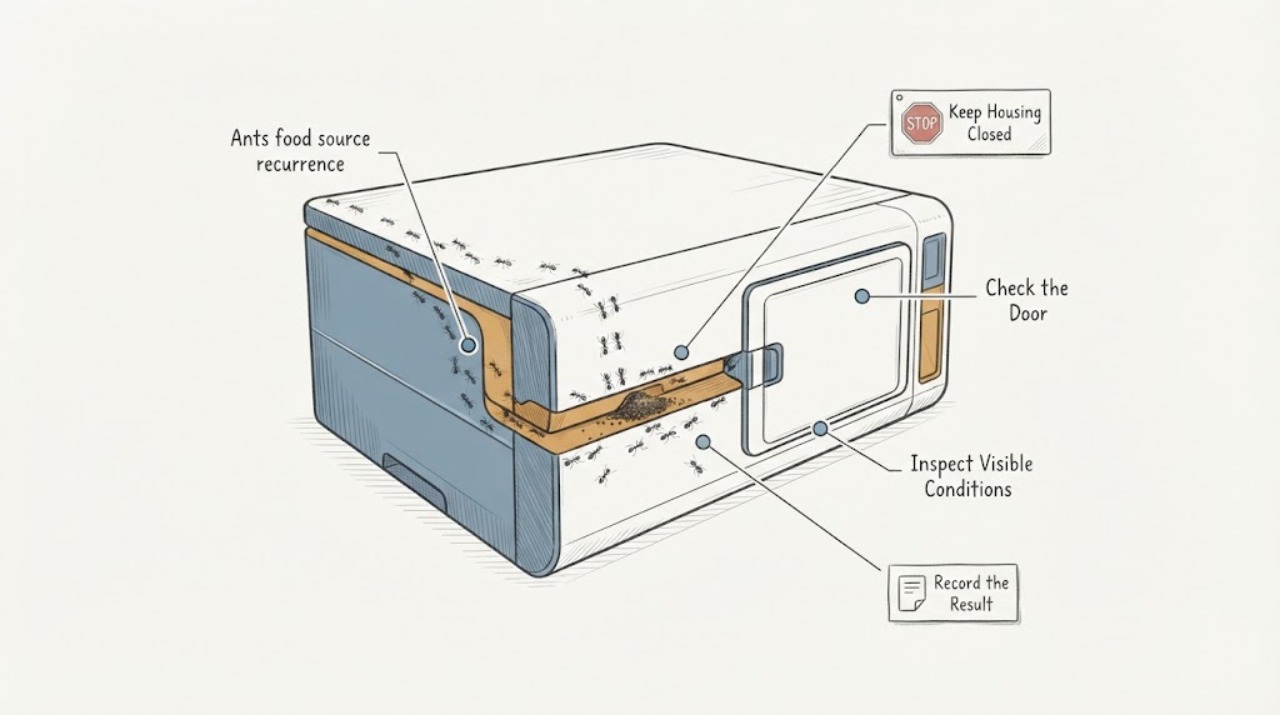
Ants food source recurrence: What to Check and What to Do Next
Recurring ants usually mean that a food, water, shelter, or entry condition remains available, but a trail alone does not identify the species or nest. Observe the trail route, food residue, moisture, time, and location from safe positions; store food and clean ordinary food-contact surfaces without applying pesticide to them.
-
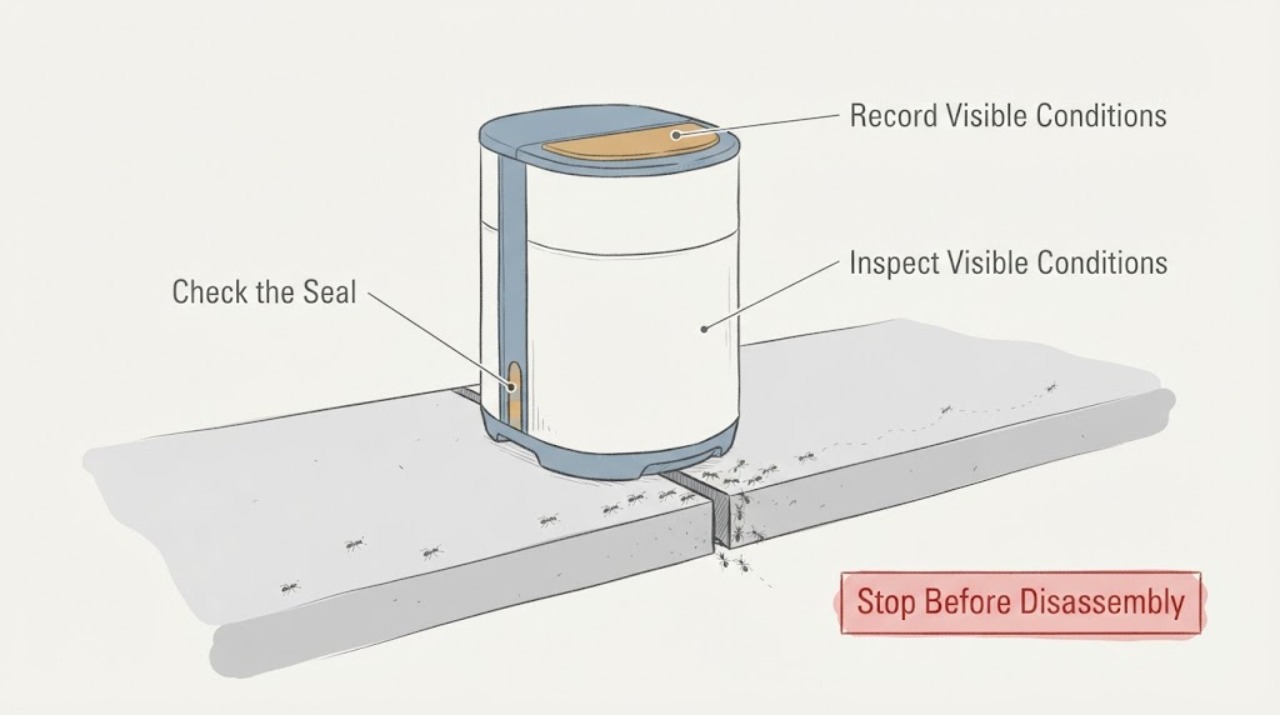
Ants foundation joint recurrence: What to Check and What to Do Next
When ants keep returning at a foundation joint, first observe the trail, entry location, timing, moisture, food or shelter conditions, and any visible wood or foundation damage from a safe ground-level position. Recurrence often means the entry path or a moisture and shelter condition remains, not that stronger pesticide is automatically needed.
-
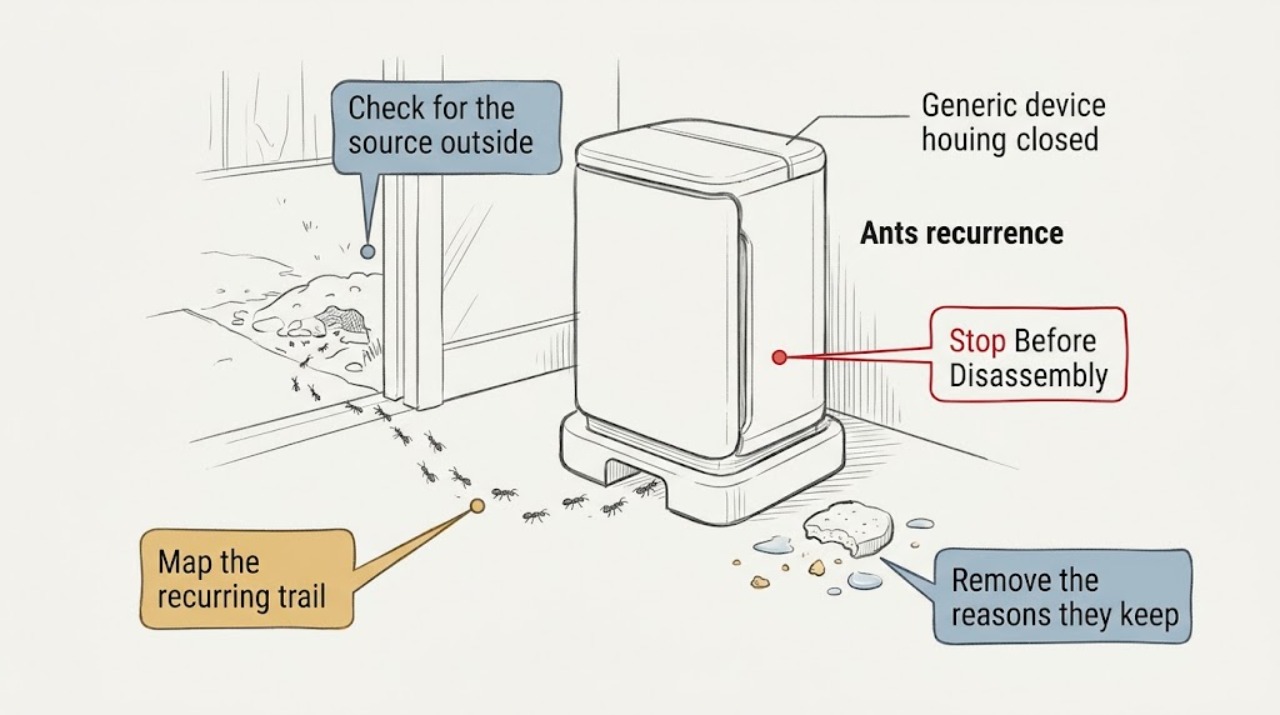
Ants recurrence: What to Check and What to Do Next
When ants return after a prior treatment, look for the reason the colony still has access: a food or water source, an unsealed entry route, an outdoor nest or moisture-damaged wood, or a treatment that did not match the ant species. Follow one trail to its entry point, clean away food and pheromone residue, correct leaks and vegetation contact, and seal accessible cracks.