
On this page
Start here
Quick answer
Recurring ants usually mean that a food, water, shelter, or entry condition remains available, but a trail alone does not identify the species or nest. Observe the trail route, food residue, moisture, time, and location from safe positions; store food and clean ordinary food-contact surfaces without applying pesticide to them. Do not mix pesticides, spray food surfaces, inject chemicals into voids, or touch electrical equipment. Widespread recurrence, stinging or allergic reactions, suspected carpenter-ant structural damage, or activity around wiring should be escalated to a qualified pest professional.
Before you begin
Safety first
- Do not mix pesticides, spray food or food-contact surfaces, inject chemicals into voids, touch electrical equipment, open walls, or use repeated unsupervised treatments to force a result.
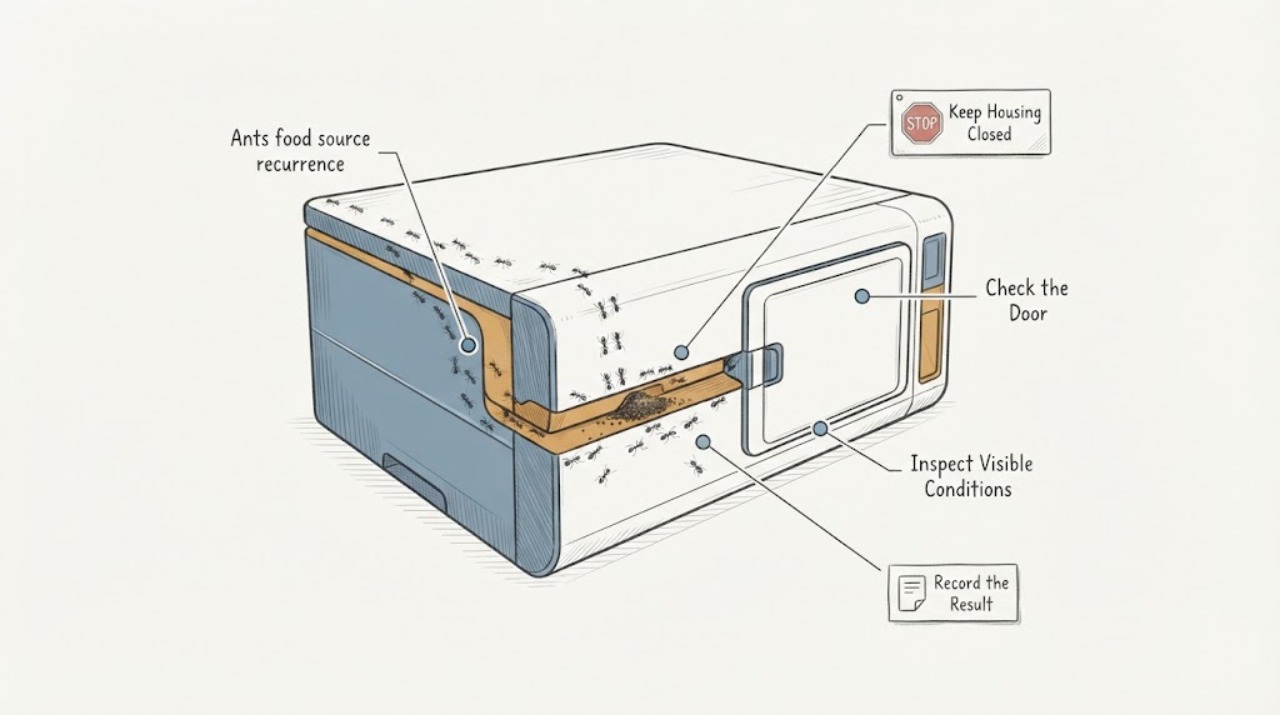
Work through in order
Diagnostic checks
Use only checks that match the exact appliance or system and its official guide.
-
Check 1
From a safe position, follow the visible ant trail with your eyes and take a dated photo without touching ants, disturbing a nest, or reaching behind appliances. Note whether the trail runs from a wall, window, door, pipe opening, plant, pantry, sink, or another repeatable entry area.
Expected result: A trail that repeatedly follows one gap or route differs from scattered ants with no consistent path.
Next step: Record the room, route, and time, then keep the area clear for inspection. Do not inject, dust, or spray into a crack, wall, cabinet, or electrical opening.
Stop if: Stop and seek professional help if ants are emerging from electrical equipment, the route is inside a sealed void, or observation would require moving an appliance or opening a wall.
Why this matters
Why: A repeatable route can help a pest professional distinguish an entry point from a nearby food or nesting condition; it does not identify the species or colony by itself.
-
Check 2
Inspect accessible counters, floors, pantry exteriors, recycling containers, pet-feeding areas, and the outside of small appliances for visible crumbs, sticky residue, food packaging, or discarded food. Observe without spraying pesticide on food-contact surfaces or handling contaminated material unsafely.
Expected result: A repeated residue or food container near the trail differs from a clean area where ants still return.
Next step: Remove accessible food from the area, store it in closed containers, and clean food-contact surfaces using the normal food-safe method for that surface. Keep dated trail photos before cleaning.
Stop if: Stop and arrange professional help if activity is widespread, food has been contaminated, ants are biting or stinging, or cleaning would require contact with pesticides or an electrical appliance.
Why this matters
Why: A recurring food source can sustain foraging, while continued activity in a clean area shifts attention toward water, entry gaps, shelter, or an unobserved source.
-
Check 3
From dry, accessible locations, look for visible moisture clues near the trail: dripping or damp plumbing fittings, condensation, wet soil at a plant, pet-water spill, damp window area, or moisture-damaged wood. Do not open cabinets, repair plumbing, touch electrical equipment, or disturb wet or decayed material.
Expected result: Ants near a persistent moisture clue differ from ants in a dry area with no visible water pattern.
Next step: Photograph the moisture clue and request plumbing, building, or pest assessment as appropriate; keep the area dry by ordinary safe housekeeping only.
Stop if: Stop immediately for active leaks near electricity, visibly rotted or unstable wood, sewage, strong chemical odor, or any need to touch wet wiring or enter a confined space.
Why this matters
Why: Water can be a supporting condition and damp or damaged wood can provide shelter for some ants, but the observation does not diagnose a nest or structural damage.
-
Check 4
Keep a short dated log of when ants reappear and where they are seen, comparing morning, evening, after food preparation, after watering plants, and after rain without deliberately disturbing the trail or changing conditions to test it.
Expected result: Activity tied to a particular time, food event, watering event, or weather condition differs from steady activity across the day and rooms.
Next step: Share the log and photos with a pest professional and avoid repeated unsupervised pesticide applications that could scatter or obscure the pattern.
Stop if: Stop self-observation if ants spread quickly to multiple rooms, people are stung, symptoms occur, or activity involves wiring, HVAC openings, or inaccessible spaces.
Why this matters
Why: Timing and location help a professional determine whether the recurrence is linked to foraging, moisture, exterior entry, or a persistent indoor condition.
-
Check 5
From a safe distance, compare the size and appearance of the ants and any nearby visible debris, wood discoloration, or softened-looking trim without collecting, crushing, or handling specimens. Note whether the same type appears indoors and outdoors.
Expected result: Small, occasional foragers differ from repeated larger ants accompanied by coarse debris or moisture-damaged wood; visual appearance alone is not reliable species identification.
Next step: Use clear photos for professional identification and request building or pest assessment if wood damage, moisture, or a concealed nest is suspected.
Stop if: Stop and keep clear if ants sting, a person has an allergic reaction, structural wood appears compromised, or inspecting would require opening a wall or contacting an electrical component.
Why this matters
Why: The distinction can affect the urgency and type of professional inspection, especially when wood damage or a hidden nest is possible.
Use your observations
Decision map
Find the observation that best matches what you see, then follow the next safe action.
-
PATH 01Next step
What you see
Ants are widespread, rapidly recurring, stinging, associated with an allergic reaction, or emerging from electrical or inaccessible areas.
Do this next
Stop DIY treatment, keep people and pets away from the affected area, and request qualified pest or emergency medical/electrical help as indicated.
-
PATH 02Next step
What you see
A clear food residue or container is adjacent to a repeatable trail and no moisture, wiring, or structural warning is visible.
Do this next
Remove accessible food, store it closed, clean food-contact surfaces safely without pesticide, and continue a dated observation log before choosing any treatment.
-
PATH 03Next step
What you see
The trail is near a leak, condensation, damp wood, or another visible moisture condition.
Do this next
Arrange pest and appropriate plumbing or building assessment; do not open finishes, repair concealed plumbing, or disturb wet or decayed materials.
-
PATH 04Next step
What you see
Activity continues after accessible food and water clues are addressed, appears in several rooms, or is accompanied by wood debris or suspected structural damage.
Do this next
Request professional species identification, nest-location assessment, and building inspection rather than mixing or repeatedly applying pesticide.
Helpful context
Understand the symptom
Ant recurrence is a pattern to investigate, not proof that one missed crumb is the whole cause. Ants may follow a repeatable path to food or water, enter through a gap, or be associated with moisture or damaged wood. Integrated pest management starts with monitoring and identification before choosing a control method.
Document the locations and timing before cleaning away evidence. It is reasonable to remove accessible food residue and keep food in closed containers using normal household food-safety practices, but do not apply pesticide to counters, dishes, food, pet bowls, or other food-contact surfaces.
If the activity is broad, keeps returning after sanitation and exclusion concerns are addressed, involves stinging or allergic symptoms, or shows large ants with wood debris or moisture-damaged timber, stop experimenting and request professional identification and treatment.
Only after diagnosis
Potential parts
- exterior-caulk
Only consider sealing after a professional confirms the visible opening is a suitable pest entry point and no moisture or structural problem is being concealed.
Exterior material, movement, moisture, and the size and location of the gap affect suitability; do not seal an active leak, electrical opening, or occupied nest. - ant-bait-station
Only consider a ready-to-use, correctly labeled station after the ant is identified and a professional or label directs safe placement away from children, pets, food, and electrical areas.
Bait effectiveness varies by species and colony behavior; never mix bait, transfer pesticide, spray over food surfaces, or place a station where it can contaminate food or be touched. - weatherstrip
Only consider weatherstripping after a professional confirms that a door or window gap is the relevant entry route and the opening still closes safely.
Door and frame geometry, weather exposure, and ventilation needs vary; weatherstrip will not address a wall void, moisture source, or nest.
When checks do not resolve it
Need a professional?
Call a qualified pest professional when ants recur despite safe sanitation and observation, appear in multiple rooms, emerge from inaccessible or electrical areas, or are accompanied by moisture, wood damage, stinging, or suspected structural impact.
Safety scope: Do not mix pesticides, spray food or food-contact surfaces, inject chemicals into voids, touch electrical equipment, open walls, or use repeated unsupervised treatments to force a result.
Common questions
FAQ
Why do ants keep coming back after I clean them up?
A repeatable food, water, shelter, or entry condition may remain, and wiping visible ants does not identify the species or nest. Track the trail, timing, residue, moisture, and location before choosing a control method.
Should I spray pesticide on a counter or food area?
No. Do not spray food, dishes, pet bowls, or food-contact surfaces. Remove accessible food, store it closed, and use the normal food-safe cleaning method for the surface; seek professional pest guidance if activity persists.
Can moisture be the reason ants recur?
Yes, moisture can support foraging or shelter conditions, but a visible damp spot does not prove a nest. Record the clue and arrange appropriate pest, plumbing, or building assessment without opening or disturbing materials.
When should recurring ants be treated as a professional issue?
Escalate when activity is widespread or persistent, ants sting or cause symptoms, larger ants appear with wood debris or damaged wood, activity reaches electrical or inaccessible areas, or safe sanitation does not change the pattern.
Read the exact guide
Official sources
- IPM Update—Ants, April 2021U.S. Environmental Protection Agency, Region 7 · Supports checking trails, crumbs, spills, food storage, moisture, leaks, gutters, entry gaps, and wood conditions while avoiding pesticide misuse.
- Pest Control: Resources for Housing ManagersU.S. Environmental Protection Agency · Supports separating food, water, entry, moisture, electrical, and structural observations and escalating conditions that require multiple trades.
- Integrated Pest Management (IPM) PrinciplesU.S. Environmental Protection Agency · Supports observing and identifying recurring ant conditions before selecting treatment and avoiding unnecessary or broad pesticide use.
Community feedback
Share a repair observation
Share a plain-text repair observation. Accepted observations are published automatically; this page may take a moment to update.