
Repair problem
Ceiling Drywall Damage Troubleshooting Guides
Published FixGraph guidance for diagnosing and responding to ceiling drywall damage.
Matching published guides
Choose a guide that matches the service, equipment, and conditions you are seeing.
-
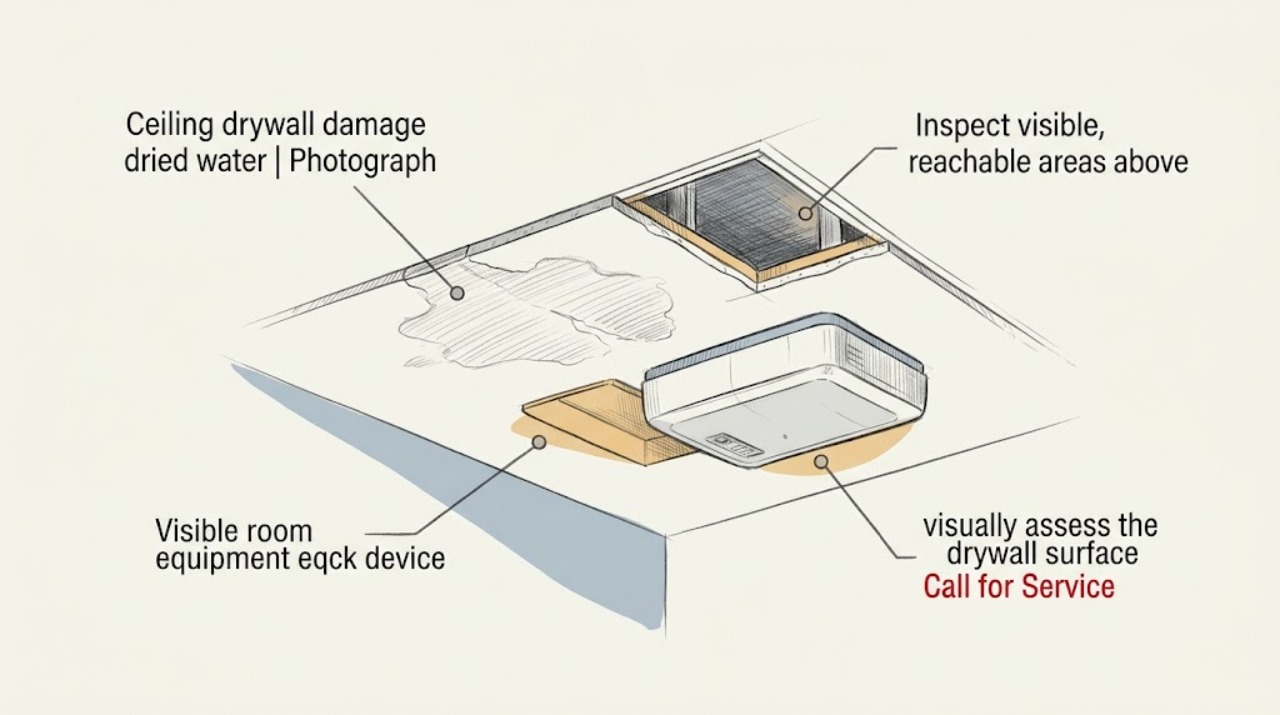
Ceiling drywall damage dried water stain: What to Check and What to Do Next
A dried ceiling water stain is evidence of a past leak, not proof that the ceiling is safe or that the source is fixed. From the floor, photograph the stain and check for active dampness, swelling, sagging, cracking, soft drywall, a musty odor, and nearby plumbing, roof, attic, or HVAC routes.
-
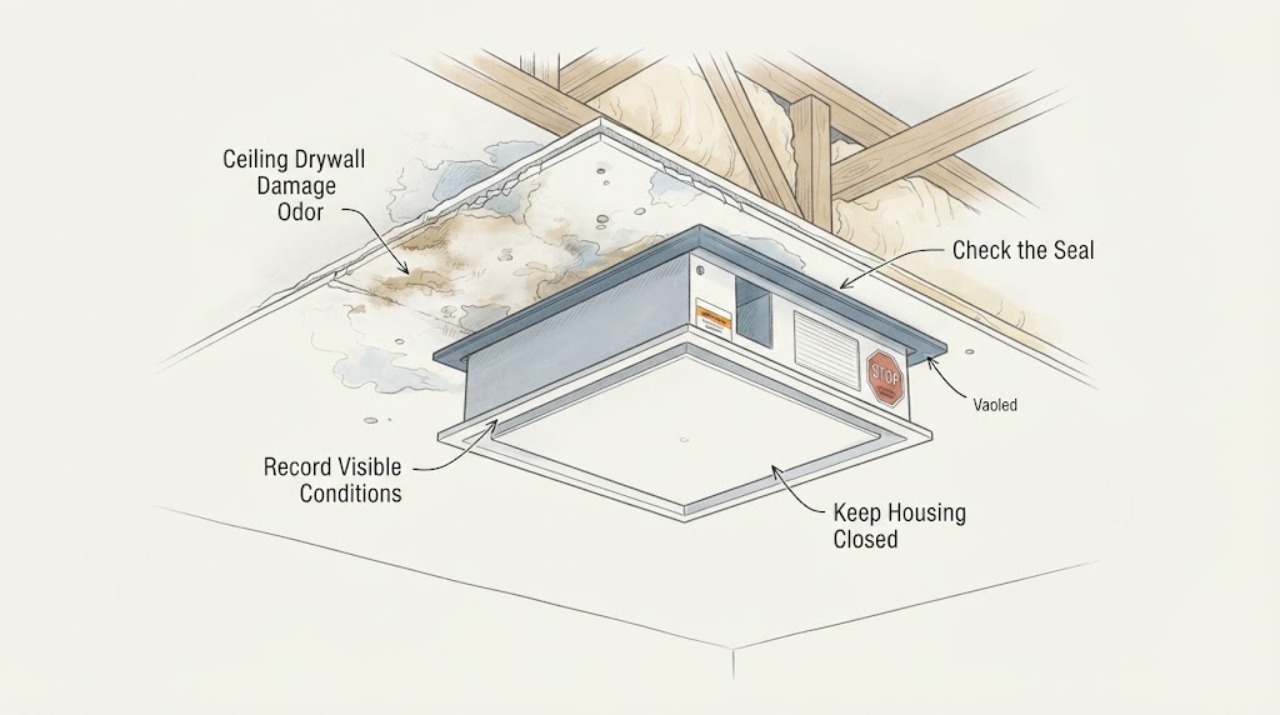
Ceiling Drywall Damage Odor: What to Check and What to Do Next
A musty or damp smell near damaged ceiling drywall usually means you should look for an active or old moisture source and possible mold, but odor alone cannot identify what is inside the ceiling. From the floor and without pressing, cutting, or opening the ceiling, record the odor character, water stains, bubbling paint, cracks, sagging, active drips, and any nearby plumbing, roof, or HVAC clues.
-
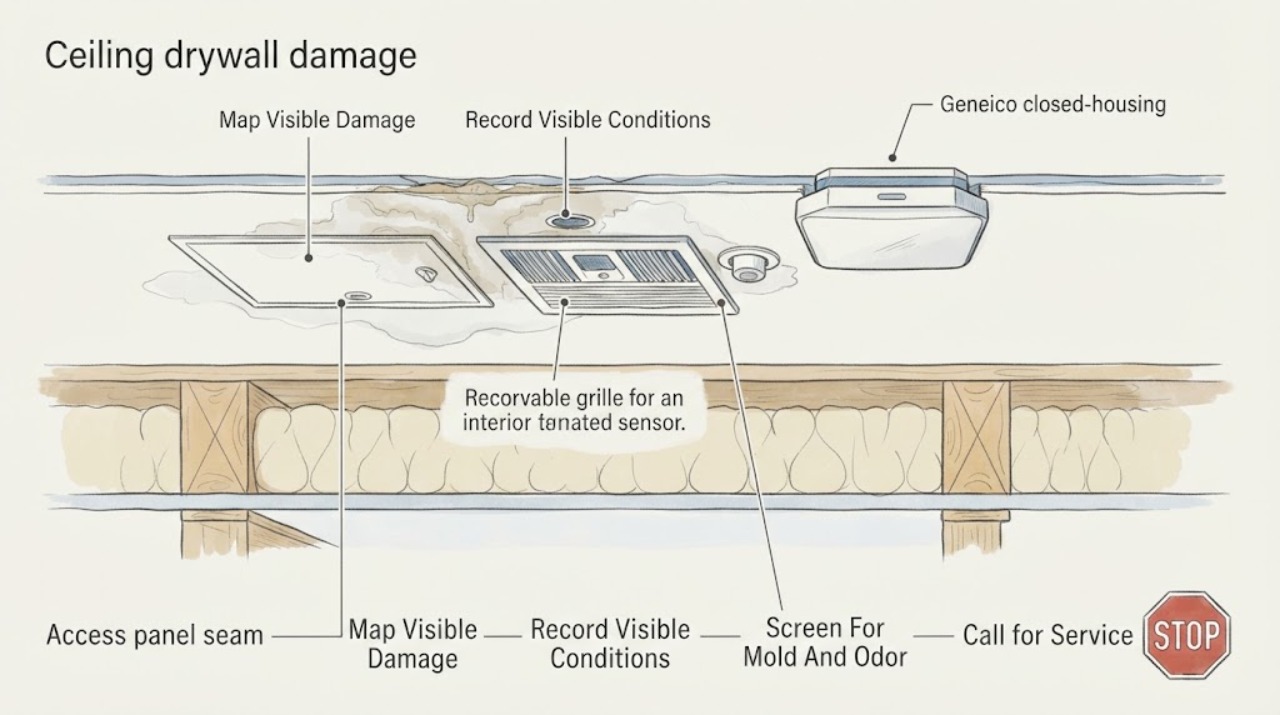
Ceiling drywall damage: What to Check and What to Do Next
Treat ceiling drywall damage as a moisture and safety issue before treating it as a painting or patching job. From a safe standing position, photograph the stain, bubbling, cracking, sagging, or detached finish; record when it appeared and whether there was a roof, plumbing, HVAC, spill, or condensation event; and look for musty odor, visible mold, spreading dampness, or nearby lights and electrical equipment.
-
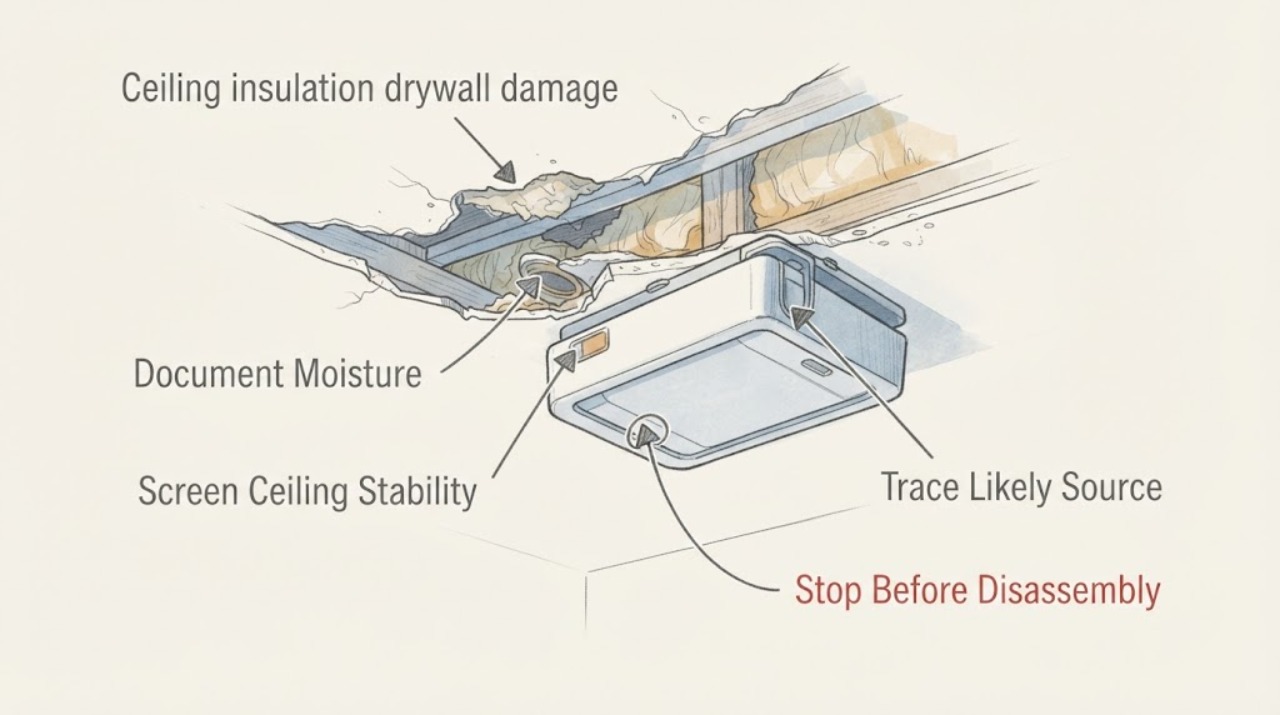
Ceiling insulation drywall damage: What to Check and What to Do Next
Treat ceiling drywall damage with insulation involvement as a moisture and safety assessment, not a cosmetic stain. From a safe position, document whether water is still entering, the drywall is swollen or sagging, insulation is wet or compressed, mold or sewage is present, and any light or fan is affected.