
On this page
Start here
Quick answer
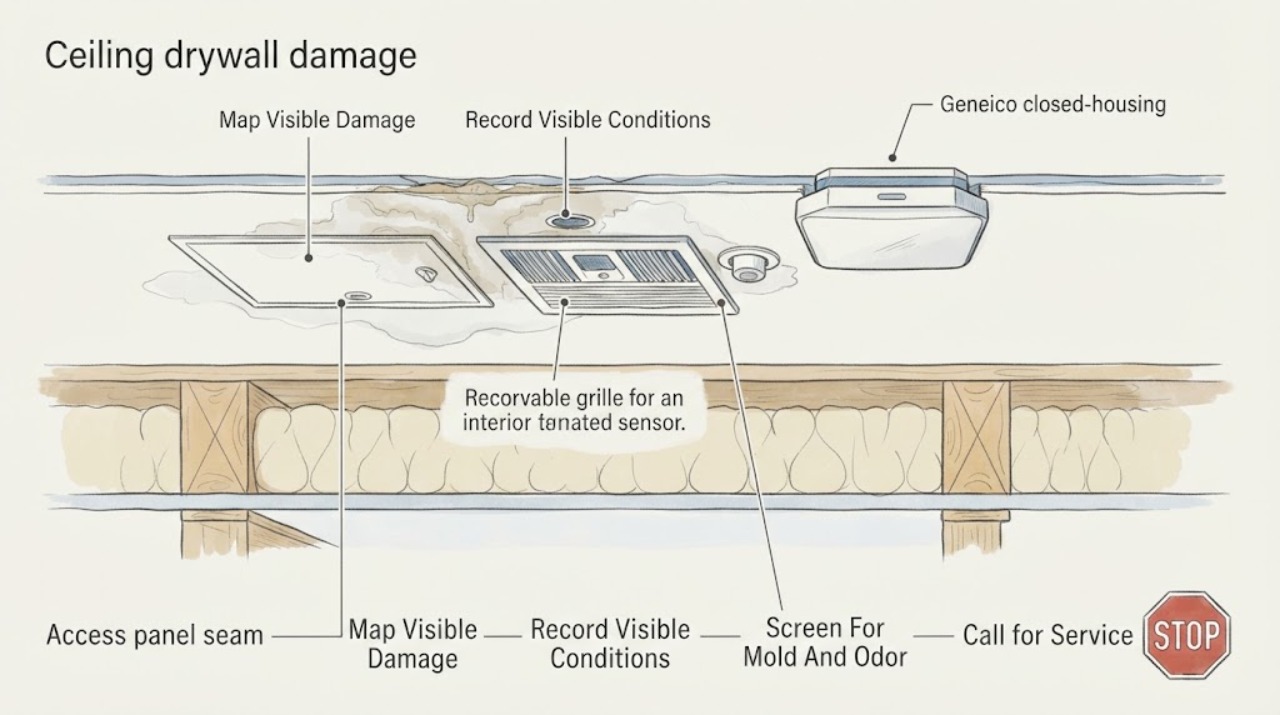
Treat ceiling drywall damage as a moisture and safety issue before treating it as a painting or patching job. From a safe standing position, photograph the stain, bubbling, cracking, sagging, or detached finish; record when it appeared and whether there was a roof, plumbing, HVAC, spill, or condensation event; and look for musty odor, visible mold, spreading dampness, or nearby lights and electrical equipment. Keep people and furniture out of the area without touching the ceiling, wet material, or wiring. Do not cut, puncture, scrape, paint over, demolish, or remove the drywall, and do not attempt DIY mold remediation. A bulging or sagging ceiling, active dripping, persistent moisture, visible mold, musty odor, sewage or contaminated water, or water near electricity requires prompt professional restoration and appropriate electrical service.
Work through in order
Diagnostic checks
Use only checks that match the exact appliance or system and its official guide.
-
Check 1
From the floor, photograph and describe the visible ceiling condition: stain, discoloration, bubbling paint, cracking seam, peeling finish, sagging, detached material, or debris below. Use room landmarks for location and do not touch, press, puncture, scrape, or climb toward the damage.
Expected result: The area is a flat dry-looking stain, actively wet, bubbled or peeling, cracked, visibly sagging, or shedding material.
Next step: Keep people and pets out from under the area, document the date and change, and request water-damage restoration or qualified building service. Do not cover or paint the damage.
Stop if: Stop immediately for sagging, a bulge, falling material, active dripping, or any need to stand on furniture or touch the ceiling.
Why this matters
Why: A stable stain may be old or may conceal a continuing source, while bubbling, peeling, sagging, or falling material suggests that the ceiling assembly needs professional assessment. The visible surface does not establish whether framing, insulation, or a cavity is affected.
-
Check 2
Record when the damage first appeared and whether it followed rain, a roof issue, plumbing work or overflow, an HVAC or condensation event, a spill, a neighboring-unit leak, or no known event. Do not run water, spray the ceiling, open a fixture, or create a test leak.
Expected result: The damage follows a recent event, recurs after rain or equipment use, grows without a new event, or has an unknown history.
Next step: Stop the activity that is clearly associated with the damage when it can be done safely, keep the area isolated, and give the timeline and photos to restoration or the relevant roof, plumbing, or HVAC professional.
Stop if: Stop the observation for active water, rapid spreading, a ceiling movement, or a source that would require opening a wall, ceiling, appliance, or electrical enclosure.
Why this matters
Why: Timing helps a professional distinguish a likely ongoing source from residual staining or condensation, but it cannot identify a concealed leak from the room below. A growing mark or recurring wetness raises urgency.
-
Check 3
From the room entrance or another dry position, note musty odor, visible spot-like growth, damp air, recurring condensation, or symptoms that began after the damage. Do not touch, scrape, brush, sample, vacuum, spray, or clean suspected mold or water-damaged porous material.
Expected result: There is no odor or visible growth, a musty odor, visible suspect growth, recurring condensation, or a health concern associated with the room.
Next step: Close off or limit access to the area and request restoration or indoor-environment service. If occupants have health concerns, seek medical advice and do not disturb the material.
Stop if: Stop immediately for visible growth, strong odor, respiratory symptoms, or any task that would release dust or spores.
Why this matters
Why: Moisture and porous ceiling materials can support mold growth, and odor or visible growth is a reason to plan professional assessment and source control. Appearance alone does not identify the type or extent of contamination.
-
Check 4
From a dry location, note whether the damage is near a ceiling light, fan, smoke alarm, wiring outlet, HVAC opening, or other electrical equipment, and whether any device flickers, trips, smells hot, or is visibly wet. Do not touch the device, switch, wet surface, or ceiling material near it.
Expected result: The damage is remote from electrical equipment, near a device but dry, visibly wet near a device, or accompanied by flicker, heat, odor, or a trip.
Next step: Keep clear, avoid operating the affected device, and arrange qualified electrical and water-damage assessment. Use emergency services for smoke, fire, sparking, or an immediate life-safety hazard.
Stop if: Stop all inspection for wet electrical equipment, sparks, smoke, hot odor, an electrical trip, or any need to touch a switch or fixture in the affected area.
Why this matters
Why: Water near electrical equipment changes the response from ordinary restoration scheduling to immediate electrical safety. A dry nearby device does not prove that concealed wiring is unaffected.
-
Check 5
Take dated photos from the same safe position and note whether the mark, crack, bubble, odor, or dampness is stable, shrinking, spreading, or appearing in another room. Record nearby rooms and visible floor or wall effects without moving heavy items or opening finishes.
Expected result: The damage is stable, drying without new signs, spreading, recurring, or accompanied by wall, floor, or neighboring-room damage.
Next step: Send the dated record and room map to a restoration professional and retain any roof, plumbing, HVAC, or insurance event documentation. Keep the area isolated until assessed.
Stop if: Stop monitoring if the ceiling changes shape, water spreads, new odor or growth appears, or safe access would require contact with damaged material.
Why this matters
Why: Change over time helps a professional prioritize an ongoing source and determine whether the visible ceiling is part of a larger water event. A stable appearance does not prove that concealed materials are dry or sound.
Use your observations
Decision map
Find the observation that best matches what you see, then follow the next safe action.
-
PATH 01Next step
What you see
The ceiling is bulging, sagging, shedding material, or actively dripping
Do this next
Keep everyone out from under it, do not touch or puncture the ceiling, and request prompt restoration and source-control service. Use emergency assistance if there is immediate structural or life-safety danger.
-
PATH 02Next step
What you see
There is visible mold, musty odor, sewage or contaminated water, or significant moisture history
Do this next
Do not clean, scrape, paint, or remove the drywall. Isolate the area and use a qualified restoration or remediation professional who can plan source control, containment, drying, and material decisions.
-
PATH 03Next step
What you see
Water damage is at or near a light, fan, alarm, outlet, wiring path, or other electrical equipment
Do this next
Do not touch or operate the affected device. Keep clear and arrange qualified electrical and water-damage assessment; call emergency services for smoke, sparking, or fire.
-
PATH 04Next step
What you see
The mark recurs after rain, plumbing, HVAC use, or indoor condensation
Do this next
Give the timing to the relevant roof, plumbing, HVAC, or restoration professional and stop the associated use only when safe. Do not create a leak test or open concealed areas.
-
PATH 05Next step
What you see
The surface looks stable but the cause and cavity condition are unknown
Do this next
Do not paint over, patch, or seal it yet. Schedule a restoration or building assessment to verify moisture and determine whether the drywall and surrounding materials can remain.
Helpful context
Understand the symptom
Why paint alone is not the first decision
Drywall can sometimes dry in place when it has no obvious swelling and its seams remain intact, but that is a professional assessment rather than a homeowner repair rule. Water can affect the paper facing, gypsum, insulation, framing, and concealed cavity, and a surface stain can remain after the source has stopped. The first useful decision is whether the area is stable and dry or still receiving moisture.
Professional-service boundary
Keep the inspection visual and from a normal standing location. Do not touch or press damaged drywall, climb to reach it, open the ceiling, disturb insulation, scrape or sample suspected mold, use bleach or other cleaners, run fans through suspected contamination, or work near wet electrical equipment. Isolate the area from people and pets and let a qualified restoration professional plan drying, containment, and any removal.
Only after diagnosis
Potential parts
- moisture-meter
A moisture meter may be useful to a qualified restoration professional when mapping accessible materials after the source is controlled; a reading alone cannot clear a concealed cavity or prove that drywall is safe to retain.
Confirm the instrument's material modes, calibration, safe contact method, and professional interpretation before relying on a result; do not probe swollen or contaminated drywall. - dehumidifier
A dehumidifier may be part of a professional drying plan after the water source, electrical safety, and contamination status are assessed; it is not a substitute for source control or remediation.
Confirm safe electrical placement, room conditions, drainage, and the restoration plan before operation; do not run equipment in contaminated or electrically unsafe conditions. - stain-blocking-primer
Consider a stain-blocking primer only after a professional confirms the material is dry, structurally stable, free of active moisture or mold, and ready for cosmetic restoration.
Confirm the ceiling finish, substrate, prior contamination, and product instructions; paint or primer must not be used to conceal unresolved water damage.
When checks do not resolve it
Need a professional?
Call a qualified water-damage restoration professional for ceiling drywall damage with persistent moisture, swelling, sagging, spreading stains, musty odor, visible mold, contaminated water, or unknown cavity conditions. Add qualified electrical service when water is near a light, fan, alarm, outlet, wiring path, or other electrical equipment.
Have this ready
- Provide dated photos, ceiling and room location, visible damage type, change over time, source and event history, odor or suspected mold, nearby electrical equipment, affected rooms or materials, and whether the area is currently wet or still changing.
Common questions
FAQ
Can I paint over a ceiling water stain?
Not before the moisture source and material condition are assessed. Paint can hide an unresolved leak and is inappropriate over moldy or still-wet material. Photograph the damage and arrange professional restoration first.
What does a bubbling or sagging ceiling mean?
It can indicate that drywall or concealed materials have been affected by moisture and may no longer be stable. Keep people out from under it, do not touch or puncture it, and request prompt professional service.
Should I clean visible mold on damaged ceiling drywall?
Do not disturb or clean ceiling drywall under this observation-only workflow. Visible mold, musty odor, or contaminated water requires source control and a qualified restoration or remediation assessment, especially when the material is porous or overhead.
Read the exact guide
Official sources
- Mold Cleanup in Your HomeU.S. Environmental Protection Agency · General mold and water-damage guidance; this article intentionally limits the homeowner to observation and isolation.
- MoldCenters for Disease Control and Prevention · General health and moisture context for water-damaged ceilings; it is not a ceiling repair procedure.
- Mold Course Chapter 4: General Remediation IssuesU.S. Environmental Protection Agency · General building moisture and mold guidance; it does not authorize homeowner ceiling demolition or remediation.
- Mold, Testing, and RemediationCDC National Institute for Occupational Safety and Health · General damp-building and mold remediation context; it does not replace a site-specific professional assessment.
Community feedback
Share a repair observation
Share a plain-text repair observation. Accepted observations are published automatically; this page may take a moment to update.