
On this page
Start here
Quick answer
A musty or damp smell near damaged ceiling drywall usually means you should look for an active or old moisture source and possible mold, but odor alone cannot identify what is inside the ceiling. From the floor and without pressing, cutting, or opening the ceiling, record the odor character, water stains, bubbling paint, cracks, sagging, active drips, and any nearby plumbing, roof, or HVAC clues. Fix the water source and dry or remove water-damaged porous materials according to a qualified assessment; do not paint over the mark, spray fragrance to mask it, or rely on a home air test to clear hidden damage. If the ceiling is bulging or falling, water is near a light or other electrical fitting, the water may contain sewage or chemicals, or the odor is burning or rapidly worsening, keep people out of the area and arrange urgent qualified help.
Before you begin
Safety first
- Do not press, cut, patch, paint, or open a damaged ceiling; enter a wet cavity; remove a light fitting; use fans on potentially contaminated water; mix cleaners; or mask odor with fragrance or ozone. Keep people clear of sagging ceilings, active leaks, wet electrical fittings, smoke, burning odors, sewage, and chemical contamination.
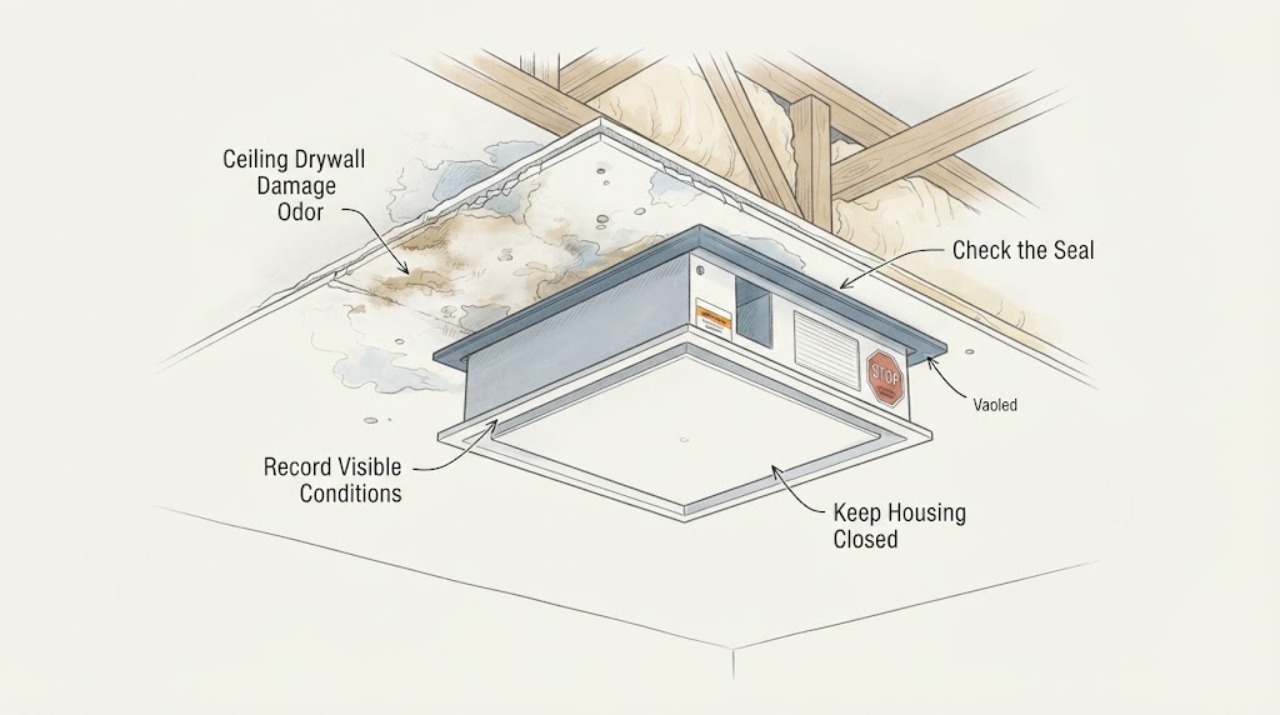
Work through in order
Diagnostic checks
Use only checks that match the exact appliance or system and its official guide.
-
Check 1
From the floor and without touching the damaged area, describe the odor and note when it is strongest: musty or damp, sewage-like, chemical or solvent-like, burning or electrical, or a new material smell. Record whether it is constant, follows rain, appears after bathing or plumbing use, or starts when heating or cooling runs.
Expected result: The odor is musty and strongest near the damaged ceiling, follows a known water event, changes with rain or plumbing/HVAC use, or is burning, chemical, or sewage-like.
Next step: Keep a dated odor and event log and continue only with safe visual checks. For burning, chemical, sewage, or rapidly worsening odor, leave the area as appropriate and arrange urgent qualified help rather than trying to neutralize the smell.
Stop if: Stop the inspection for breathing difficulty, eye or skin irritation, strong chemical or sewage odor, smoke, a burning smell, or any sign of an immediate electrical or structural hazard.
Why this matters
Why: A musty odor near a water mark raises concern for damp or mold-affected building materials, while timing with rain, plumbing, or HVAC operation helps locate the source. Burning, chemical, or sewage-like odor is not a routine mold-cleaning symptom and needs a separate safety response.
-
Check 2
Visually inspect the ceiling from a stable floor position for a water ring, darkened or spreading stain, bubbling or peeling paint, visible mold-like growth, cracks, sagging, bulging, or an active drip. Include the edges around lights, fans, vents, and the wall-to-ceiling joint without removing covers or climbing under a weak surface.
Expected result: The surface is dry and flat with an old stable mark, or it is damp, stained, bubbling, cracked, sagging, bulging, visibly growing, or actively dripping.
Next step: Photograph the full ceiling and close detail with a size reference from a safe position. Keep people and belongings away from a sagging or bulging area and arrange water-damage or building service before attempting cosmetic repair.
Stop if: Stop immediately for sagging, bulging, falling material, active water, a wet electrical fixture, exposed wiring, or a crack that appears to be widening.
Why this matters
Why: A stain with bubbling, dampness, visible growth, sagging, or renewed spread suggests continuing or concealed moisture and possible loss of ceiling integrity. A flat stable mark does not rule out moisture or growth behind the finish, especially when the odor persists.
-
Check 3
From accessible dry areas, look for a plausible moisture source above or beside the ceiling: roof or gutter evidence, a bathroom or kitchen fixture, plumbing on the floor above, an air-conditioning condensate area, condensation, or a recent spill or flood. Do not open the ceiling, remove insulation, enter a wet cavity, or handle contaminated water.
Expected result: There is an active drip or wet area, a recent leak that appears dry, condensation or HVAC water, a flood or sewage history, or no visible source despite the odor.
Next step: Document the source and stop further water use or arrange the appropriate water shutoff only when it is clearly labeled and safely reachable. Request qualified plumbing, roofing, HVAC, or water-damage assessment as indicated; do not cover the stain before the source is corrected.
Stop if: Stop for sewage or chemical contamination, standing water near electrical equipment, an unsafe attic or crawlspace, active ceiling failure, or any need to enter the cavity to trace the leak.
Why this matters
Why: An active or recurring source must be corrected or the odor and growth can return. No visible source does not clear the cavity: water can travel from a roof, pipe, or condensate path and leave hidden damp drywall or insulation.
-
Check 4
If the area is safe and the surface is not sagging, compare the odor and visible condition after the suspected water source has been stopped and the room has had ordinary ventilation. Do not use paint, air freshener, ozone, or an unapproved chemical to hide the odor, and do not run fans on water that may be contaminated.
Expected result: The odor fades as the area dries, returns after rain or fixture use, remains despite a dry-looking surface, or becomes stronger after the room is closed.
Next step: Keep the area documented and ask a qualified professional to assess moisture in the ceiling assembly, not just the painted surface. If water was sewage-contaminated or otherwise unsafe, use containment and remediation expertise rather than consumer cleanup.
Stop if: Stop if drying exposes visible growth, the ceiling softens or deforms, occupants develop symptoms, or the water source is contaminated or unknown.
Why this matters
Why: An odor that returns with moisture or remains after the surface looks dry suggests an unresolved source or damp material in the ceiling assembly. Fading odor does not prove that porous drywall, insulation, or the cavity is clean and dry.
-
Check 5
Prepare a handoff record with photos, room and ceiling location, odor description and timing, suspected water source, dates of leaks or storms, occupants' symptoms if any, and any prior drying or repair. Ask the professional whether the ceiling drywall, insulation, cavity, and adjacent electrical or HVAC components need separate inspection.
Expected result: The damage is small and superficial with no ongoing odor or moisture, or the odor, damage, or affected area is persistent, hidden, extensive, contaminated, or associated with sensitive occupants.
Next step: Use the record to obtain a water-damage, mold-remediation, roofing, plumbing, HVAC, or electrical evaluation as indicated. Do not make a repair decision from a color or odor alone and do not seal wet or mold-affected materials behind new finish.
Stop if: Stop and keep the area unoccupied for structural movement, active water, contaminated water, smoke, electrical damage, or symptoms that worsen in the room.
Why this matters
Why: Simple surface findings may be handled only when the source is fixed and the material can be safely cleaned and dried. Persistent odor, porous-material damage, hidden moisture, contaminated water, structural change, or health concerns raise the need for trained assessment and controlled remediation.
Use your observations
Decision map
Find the observation that best matches what you see, then follow the next safe action.
-
PATH 01Next step
What you see
The odor is musty or damp and the ceiling has a fresh or spreading stain, bubbling paint, visible growth, dampness, or a known roof, plumbing, or HVAC leak.
Do this next
Stop the water source through the appropriate qualified trade, keep the area undisturbed, and arrange a moisture and water-damage assessment before cosmetic repair or painting.
Why this path and its safety boundary
Why it matters: Moisture-affected drywall or a hidden cavity is more likely than an ordinary room odor, and mold can recur if the source is not corrected.
-
PATH 02Next step
What you see
A persistent musty odor remains but the ceiling looks dry and there is no obvious leak or visible growth.
Do this next
Request a professional moisture and visual investigation. Do not cut into the ceiling or rely on a short-term air sample as the sole clearance decision.
Why this path and its safety boundary
Why it matters: Hidden damp drywall, insulation, roof materials, a pipe chase, or another building material remains possible; a dry-looking paint surface does not clear the cavity.
-
PATH 03Next step
What you see
The damaged ceiling is sagging, bulging, cracking, actively dripping, or shedding material.
Do this next
Keep people and belongings clear, avoid the area below, and arrange urgent qualified building or water-damage service. Do not press the surface, climb to inspect it, or attempt a patch.
Why this path and its safety boundary
Why it matters: The issue includes a ceiling-integrity and falling-material hazard, not just odor or surface staining.
-
PATH 04Next step
What you see
The water may contain sewage or chemicals, the odor is strong or unusual, or occupants develop respiratory, eye, skin, or other symptoms around the room.
Do this next
Keep occupants away as appropriate and arrange qualified remediation or health advice. Do not use fans, mix cleaners, disturb porous drywall, or try to mask the odor until the water and material condition are understood.
Why this path and its safety boundary
Why it matters: Containment, protective measures, and an experienced remediation assessment may be needed; ordinary household cleaning can spread contamination or expose occupants.
-
PATH 05Next step
What you see
The odor is burning or electrical, smoke is visible, a nearby light or fitting is wet, or wiring shows damage.
Do this next
Leave the area for smoke or escalating danger, keep clear of the wet fitting, contact emergency services for fire, and arrange qualified electrical and water-damage service before restoring or testing the area.
Why this path and its safety boundary
Why it matters: This is an electrical or fire-safety boundary rather than a mold-cleanup problem; water intrusion can involve concealed electrical equipment.
Helpful context
Understand the symptom
What a ceiling odor can mean
A musty, earthy, or damp odor alongside a ceiling stain makes moisture and mold a leading concern, especially after a roof, plumbing, bathroom, or air-conditioning leak. The odor is not a reliable species identification or proof of the exact leak path. It can also come from hidden damp materials or compounds released by building materials. The useful next step is to find and stop water entry, document the visible damage, and decide whether the porous ceiling material can be dried or needs professional removal.
Keep the inspection non-destructive
Inspect from the floor or another stable ordinary viewpoint. Do not press a swollen ceiling, cut an exploratory hole, remove a light fitting, enter a wet attic or cavity, or disturb suspected mold to improve the smell. Ceiling drywall can conceal damp insulation, wiring, or growth above the visible finish, so a restoration or building professional should handle inaccessible or extensive damage.
Only after diagnosis
Potential parts
- ceiling drywall or gypsum board
Consider replacement only after the moisture source is fixed and a qualified assessment finds that the porous drywall is swollen, mold-affected, persistently damp, or otherwise not suitable to dry in place.
Confirm the existing ceiling assembly, thickness, fire or moisture requirements, finish, and local repair requirements; do not cover wet or mold-affected material to hide the odor. - ceiling insulation
Consider this category only when an assessment finds insulation wet, contaminated, mold-affected, compressed, or unable to dry safely after the leak is corrected.
Use the assembly and safety requirements identified by a qualified building or remediation professional; do not enter a ceiling cavity or disturb insulation as a homeowner test.
When checks do not resolve it
Need a professional?
Arrange qualified service for persistent musty odor, concealed or recurring moisture, water-damaged or mold-affected drywall, bubbling or spreading stains, a sagging or bulging ceiling, contaminated water, occupant symptoms, or any odor that is burning, chemical, or sewage-like. For smoke, active fire, exposed electrical hazard, or imminent ceiling failure, leave the area and contact emergency services. Do not cover the damage before the moisture source and material condition are assessed.
Safety scope: Do not press, cut, patch, paint, or open a damaged ceiling; enter a wet cavity; remove a light fitting; use fans on potentially contaminated water; mix cleaners; or mask odor with fragrance or ozone. Keep people clear of sagging ceilings, active leaks, wet electrical fittings, smoke, burning odors, sewage, and chemical contamination.
Common questions
FAQ
Does a musty smell prove there is mold inside the ceiling?
No. A musty smell raises concern for damp or mold-affected material, but odor can also come from bacteria or building materials. Use the odor with visual and moisture investigation; do not infer the exact cause or mold type from smell alone.
Can I paint over a stained ceiling to remove the odor?
Do not paint over wet, moldy, or water-damaged material to hide the problem. Correct the moisture source first and have the porous drywall and cavity assessed for drying, cleaning, removal, or replacement.
Should I cut a hole in the ceiling to look for hidden mold?
Not as a homeowner test. A ceiling cavity may contain damp insulation, wiring, or unstable material. Photograph what is visible from a safe position and arrange a qualified moisture or remediation investigation, especially if the surface is soft, bulging, or contaminated.
Read the exact guide
Official sources
- Biological Contaminants and Indoor Air QualityU.S. Environmental Protection Agency · Ceiling water damage, biological odors, cleaning boundaries, and moisture control
- Indoor Air Quality and Moisture ControlCenters for Disease Control and Prevention · Ceiling stains, odors, sagging drywall, and moisture-source investigation
- A Brief Guide to Mold, Moisture and Your HomeU.S. Environmental Protection Agency · Ceiling moisture, odor, and mold-control decisions
- MoldCenters for Disease Control and Prevention · Ceiling drywall odor and possible mold after water damage
- Physical Condition Standards: Inspection ManualU.S. Department of Housing and Urban Development · Visible ceiling damage and escalation for bulging or sagging conditions
- Mold Course Chapter 4:U.S. Environmental Protection Agency · Water-damaged ceiling drywall and inaccessible or contaminated material
- Mold, Testing, and Remediation | MoldNational Institute for Occupational Safety and Health, CDC · Persistent ceiling odor and decisions about inspection or remediation
Community feedback
Share a repair observation
Share a plain-text repair observation. Accepted observations are published automatically; this page may take a moment to update.