
Repair problem
Ceiling Water Stain Troubleshooting Guides
Published FixGraph guidance for diagnosing and responding to ceiling water stain.
Matching published guides
Choose a guide that matches the service, equipment, and conditions you are seeing.
-
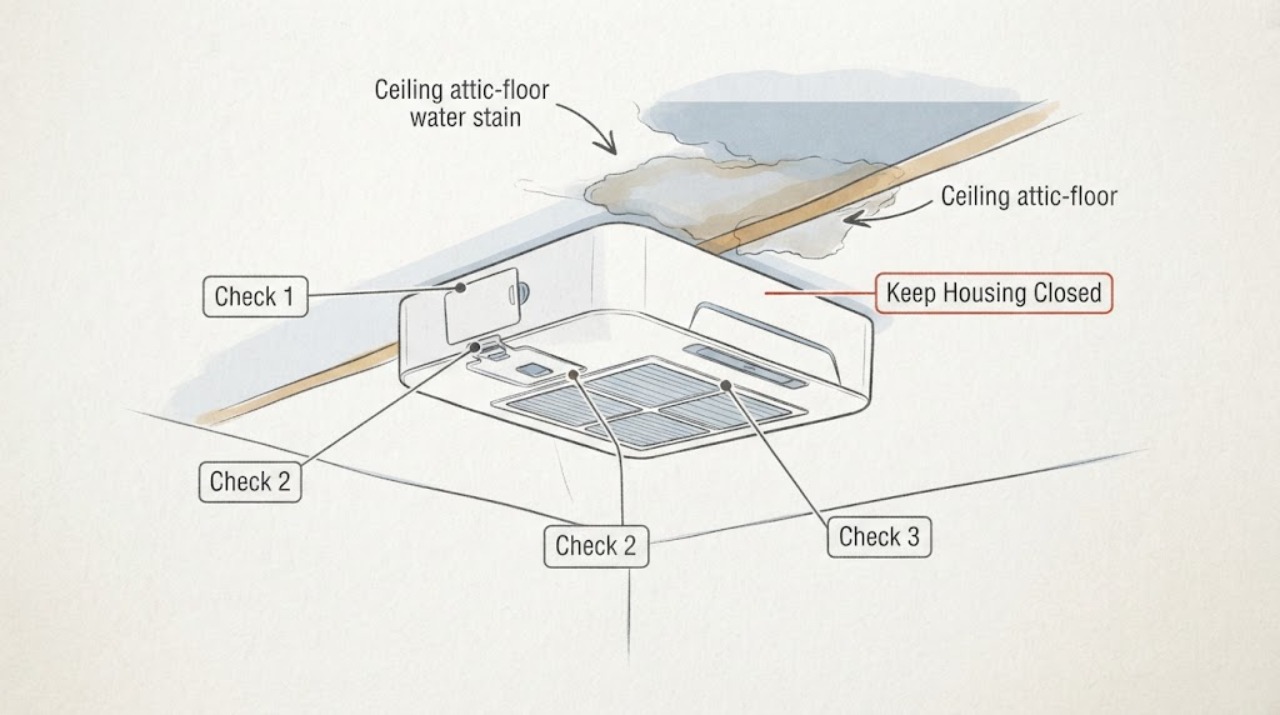
Ceiling attic-floor water stain: What to Check and What to Do Next
A ceiling water stain near an attic floor does not prove that the attic floor is the source. From safe, stable access, document whether the stain is active or expanding, correlate it with rain, snowmelt, plumbing, HVAC use, or indoor humidity, and look only for visible moisture paths.
-
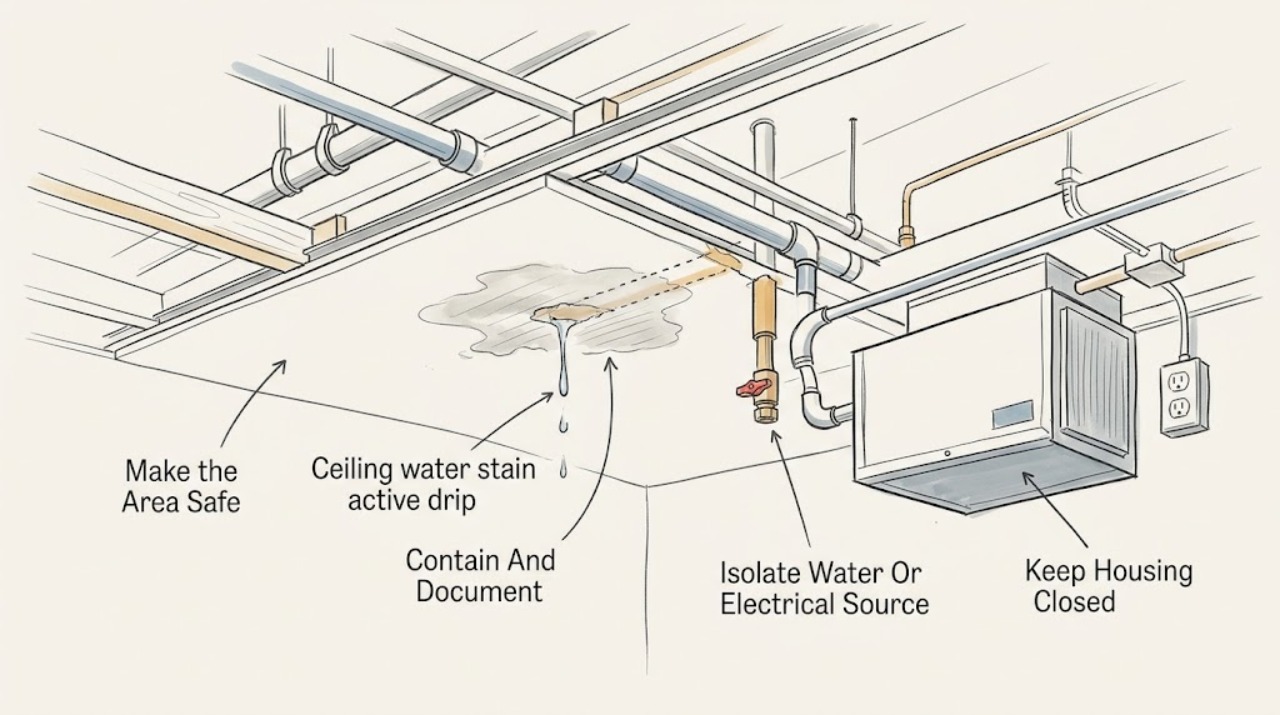
Ceiling water stain active drip: What to Check and What to Do Next
An active drip through a stained ceiling needs immediate containment and source control, not paint or a cosmetic patch. Keep people and contents out of the drip area, use a container only from stable dry footing, and take dated photos without touching a bulging or sagging surface.
-
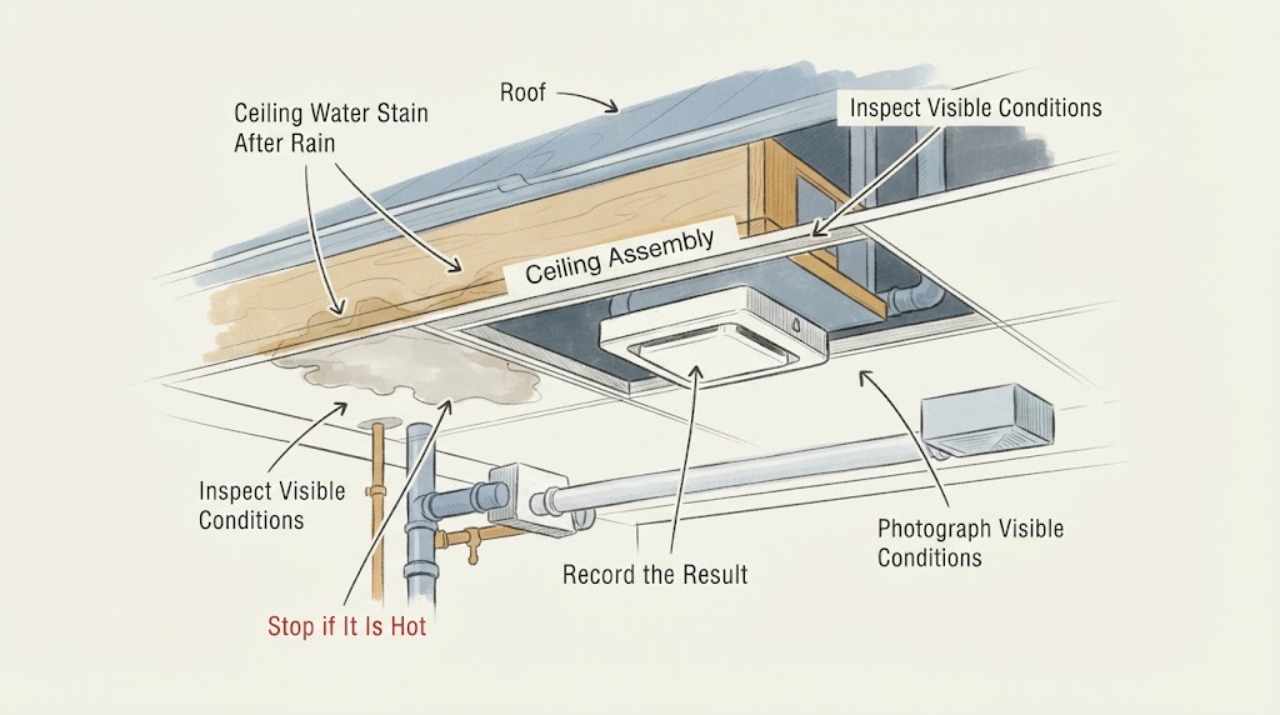
Ceiling Water Stain After Rain: What to Check and What to Do Next
A ceiling stain that appears or grows after rain is evidence of moisture entry, but the stain is not necessarily directly below the roof defect. Water can travel along roof components, framing, ducts or pipes before appearing indoors, and a plumbing or condensation problem can coincide with wet weather.
-
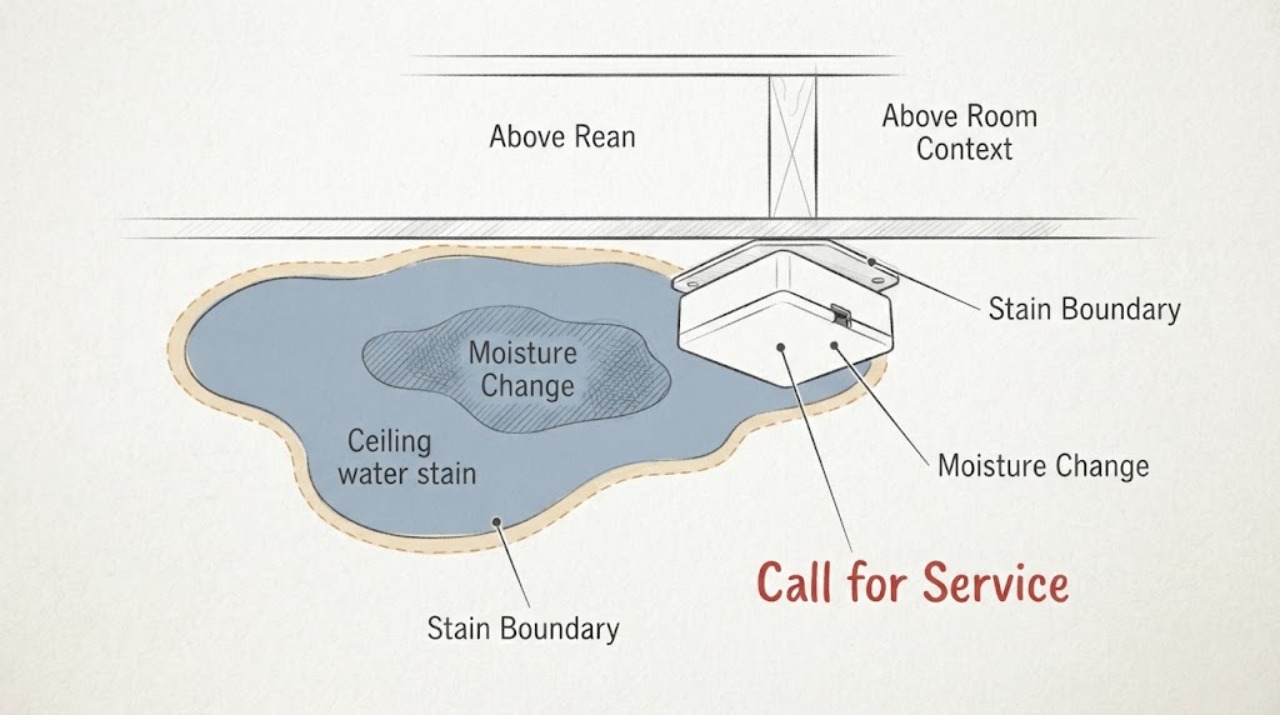
Ceiling water stain: What to Check and What to Do Next
A ceiling water stain means moisture has reached the ceiling or an adjacent building layer, but the visible mark may be older than the leak or may be below a roof, plumbing, HVAC, or bathroom source. From a safe, dry position, document the stain's size and edge, whether it changes after rain or plumbing use, and whether the ceiling is sagging or near electricity.