
Repair problem
Driveway Concrete Cracking Troubleshooting Guides
Published FixGraph guidance for diagnosing and responding to driveway concrete cracking.
Matching published guides
Choose a guide that matches the service, equipment, and conditions you are seeing.
-
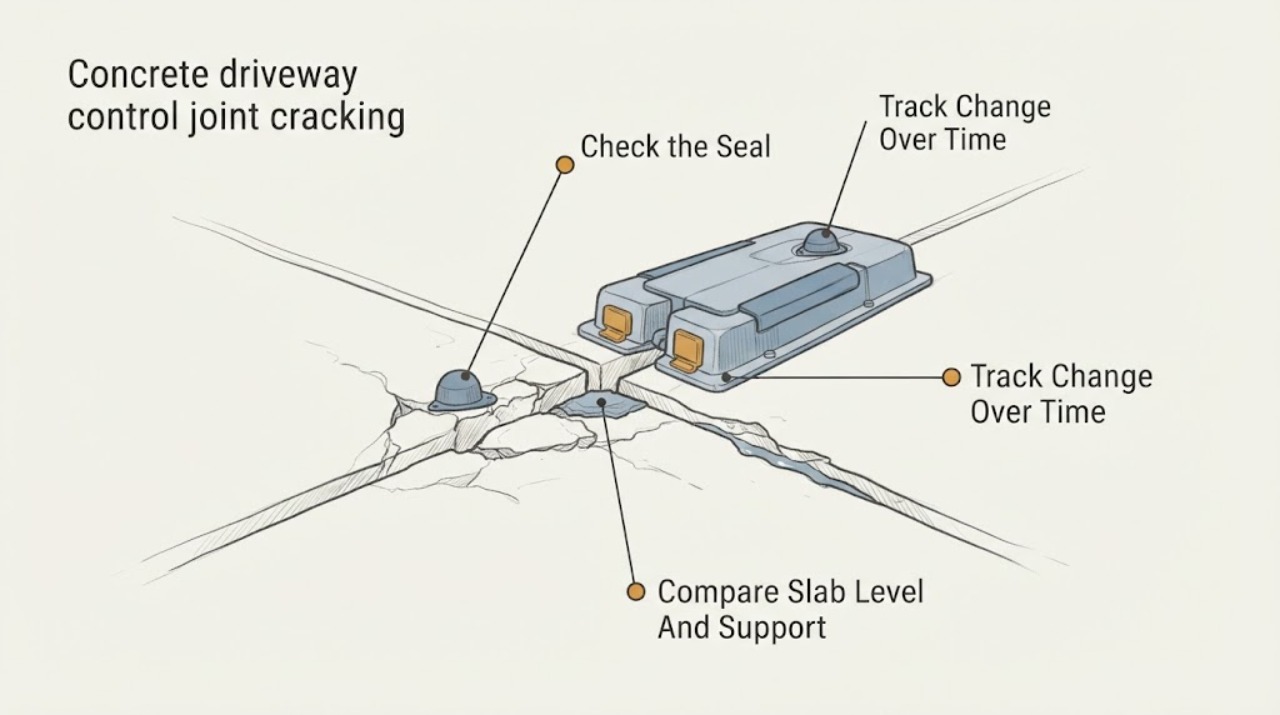
Concrete driveway control joint cracking: What to Check and What to Do Next
A crack that stays in a concrete driveway control joint can be the joint doing its intended job of guiding movement, so it is not automatically a structural failure. From safe ground, check whether the crack follows the joint, whether it is widening or branching, whether either slab is higher or lower, and whether water or traffic makes the area unsafe.
-
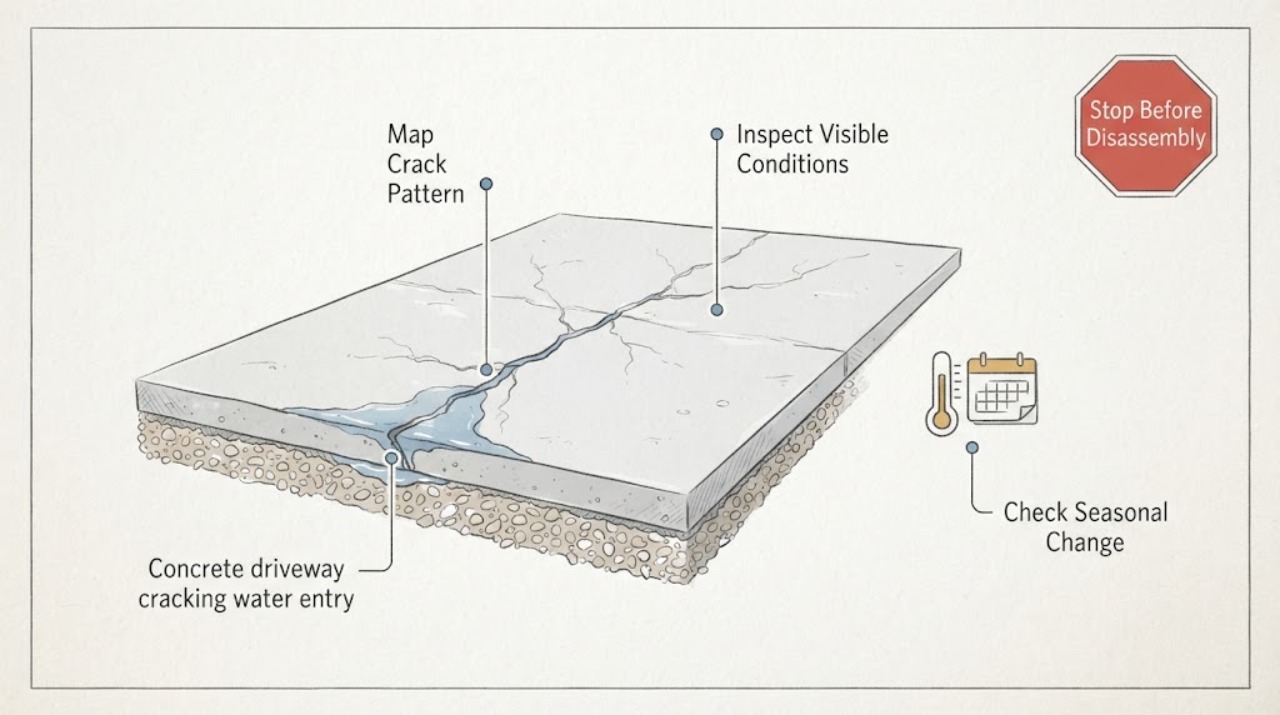
Concrete driveway cracking water entry: What to Check and What to Do Next
Concrete driveway cracks that admit water need a drainage and condition assessment before filler or sealer. From a safe walking position, map crack direction and width visually, note ponding and runoff, photograph edges and adjacent soil, and record seasonal change.
-
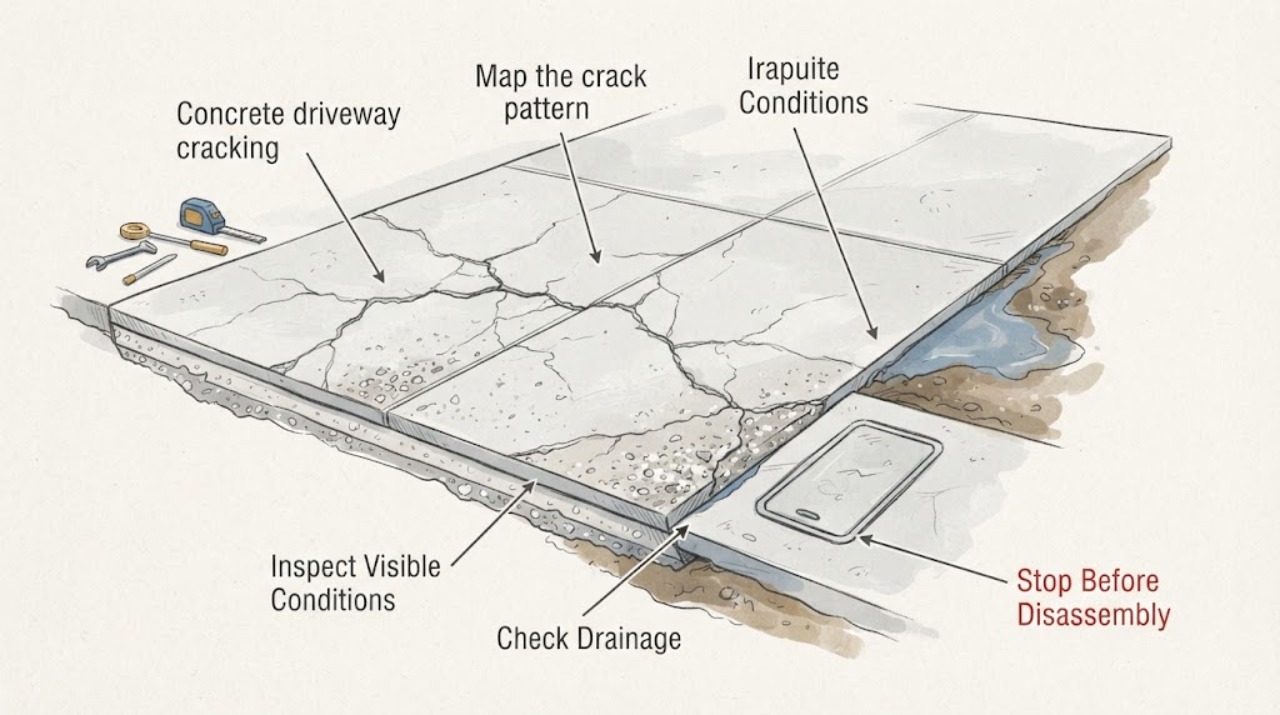
Concrete driveway cracking: What to Check and What to Do Next
A crack in a concrete driveway is not automatically a structural emergency, but its pattern and behavior matter. First record whether it follows a planned joint or crosses the slab, whether it is a tight surface line or is widening, and whether there is spalling, a height difference, ponding, edge settlement, or a void beneath the slab.
-
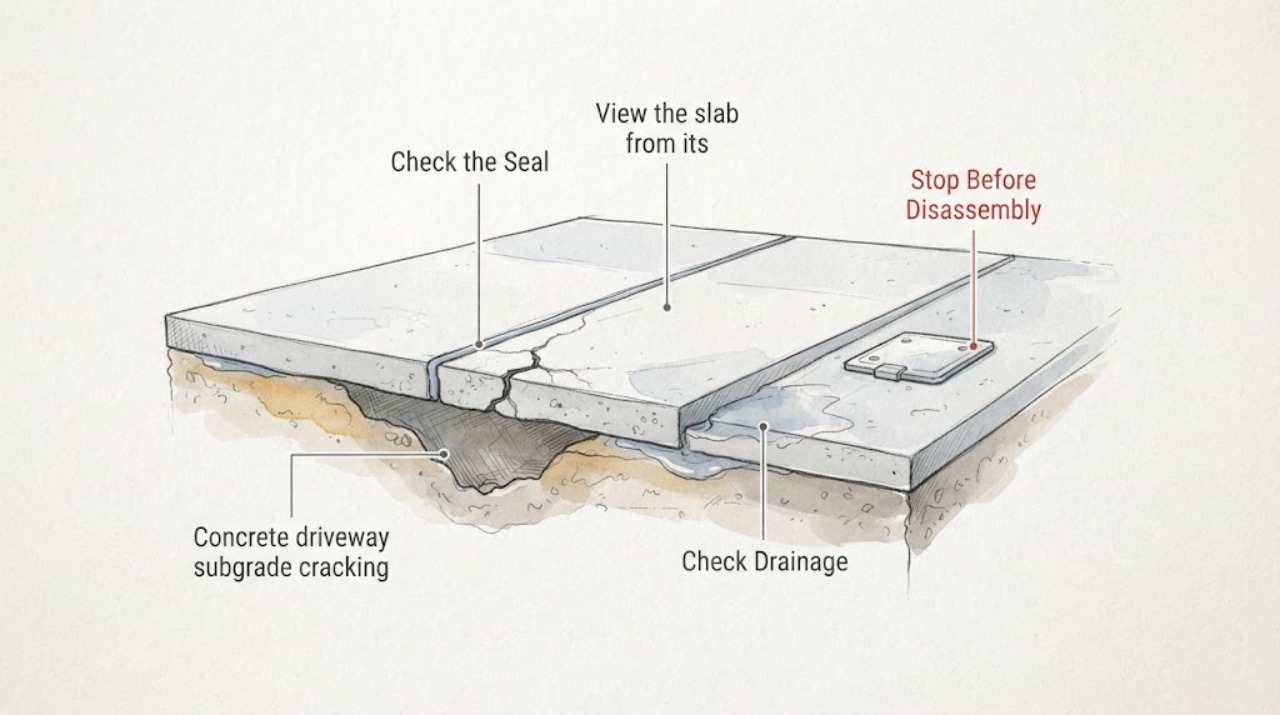
Concrete driveway subgrade cracking: What to Check and What to Do Next
Cracks in a concrete driveway do not prove that the subgrade failed, but cracking combined with settlement, a rocking or uneven slab, edge erosion, standing water, or a void-like appearance needs more than a surface filler. Inspect only from a safe position, record the crack pattern and drainage context, and keep vehicles and pedestrians away when the surface is unsafe.