
Repair problem
Eave Water Damage Troubleshooting Guides
Published FixGraph guidance for diagnosing and responding to eave water damage.
Matching published guides
Choose a guide that matches the service, equipment, and conditions you are seeing.
-
Roof edge eave water damage repeated overflow: What to Check and What to Do Next
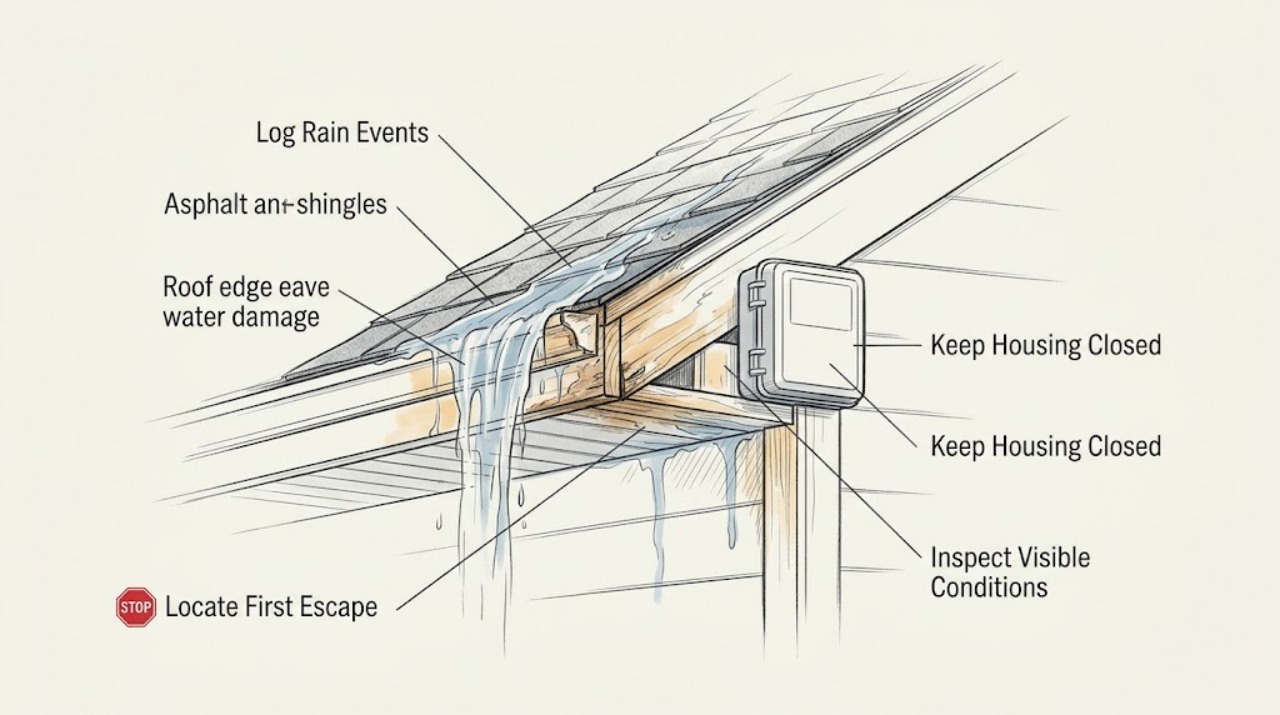
Repeated overflow at a roof edge can damage the fascia, soffit, siding, wall, or interior even when the gutter looks intact between storms. For each safe rain event, record when overflow begins, whether it starts at a valley or upper-roof discharge, the gutter lip or seam, the downspout connection, or the roof edge itself, and where the water lands.
-
Roof edge eave water damage peeling paint: What to Check and What to Do Next
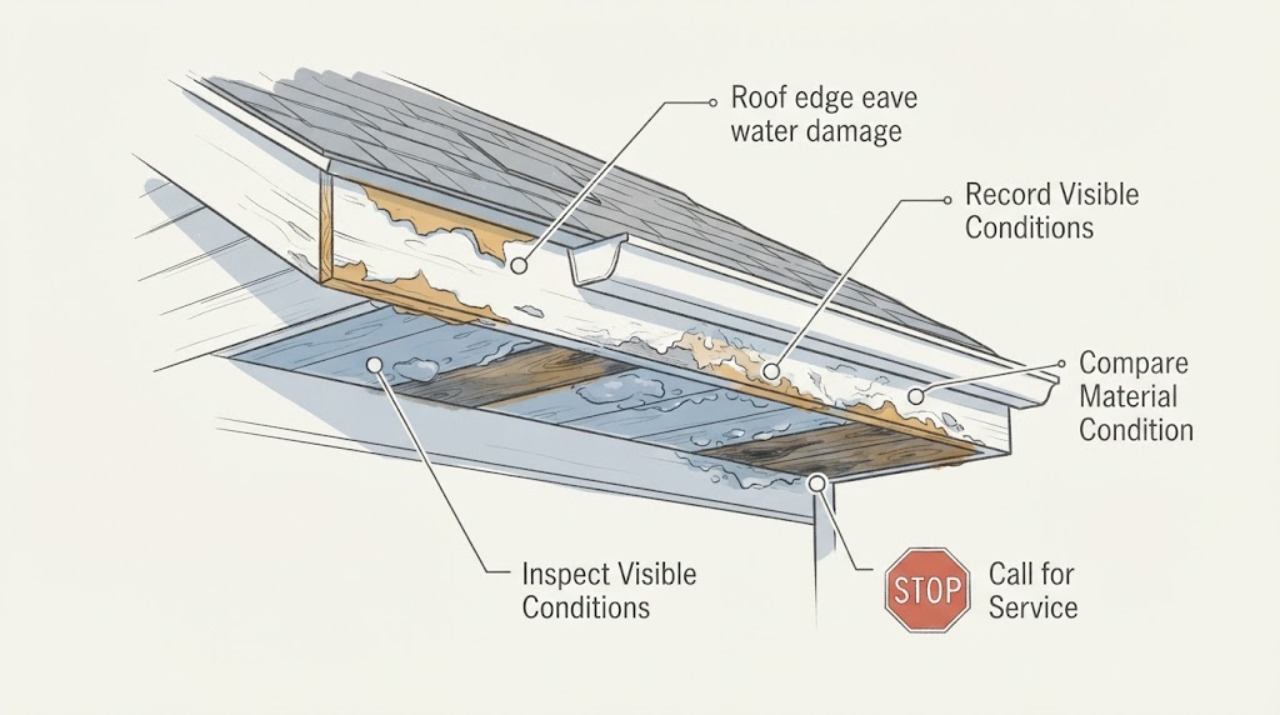
Peeling paint at a roof-edge eave is not automatically a cosmetic problem. From a safe ground-level or already accessible interior viewpoint, record where it starts and whether it follows rain, gutter overflow, a roof-to-wall transition, or a persistently damp area.
-
Roof edge eave water damage staining: What to Check and What to Do Next
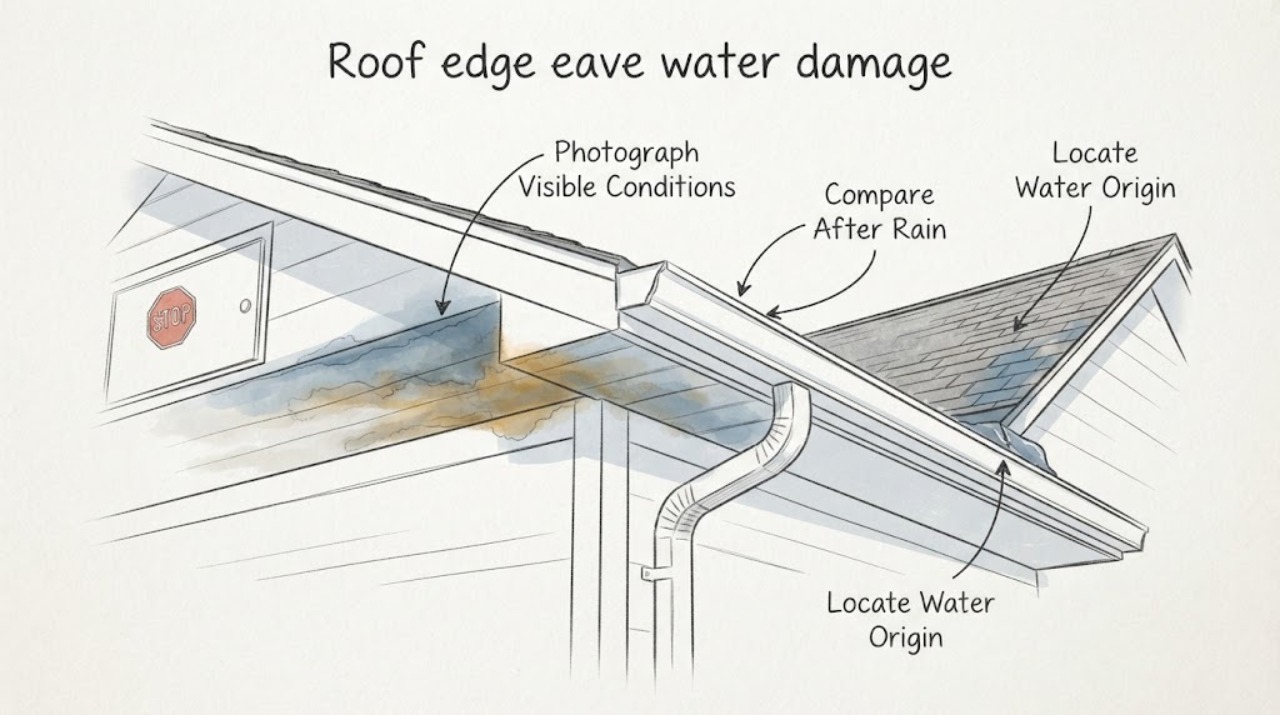
A stain at the roof edge or eave is evidence to document, not proof that an active leak is happening now. Photograph it from the ground and from safe interior living areas, then compare the same spot after rain: an old, dry, unchanged mark follows a different path from one that darkens, feels damp, spreads, or develops a musty odor after a storm.
-
Roof edge eave water damage: What to Check and What to Do Next
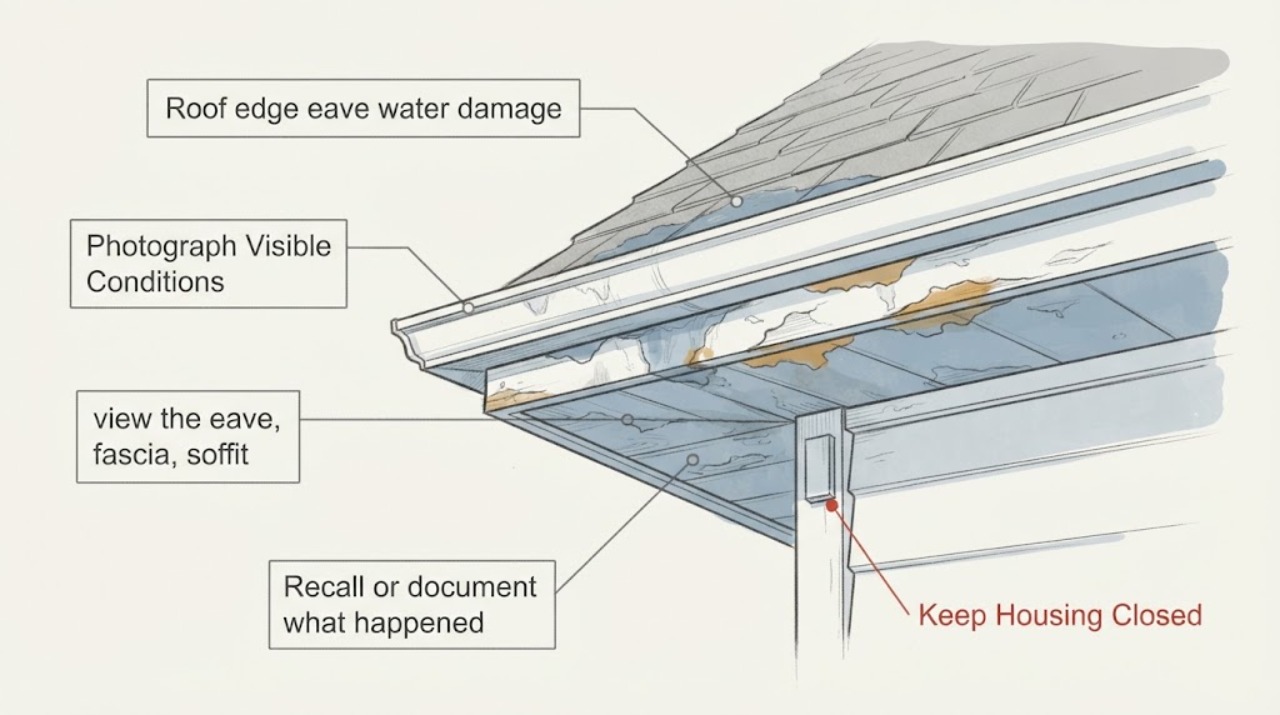
Treat eave water damage as a roof-and-drainage inspection need, not a caulk or soffit replacement job. From inside and from safe ground-level positions, photograph ceiling or wall stains, observe soft-looking or sagging eave and fascia materials without touching or probing, record gutter overflow history, and note whether moisture is active or follows rain.