
Repair problem
Patio Concrete Cracked Troubleshooting Guides
Published FixGraph guidance for diagnosing and responding to patio concrete cracked.
Matching published guides
Choose a guide that matches the service, equipment, and conditions you are seeing.
-
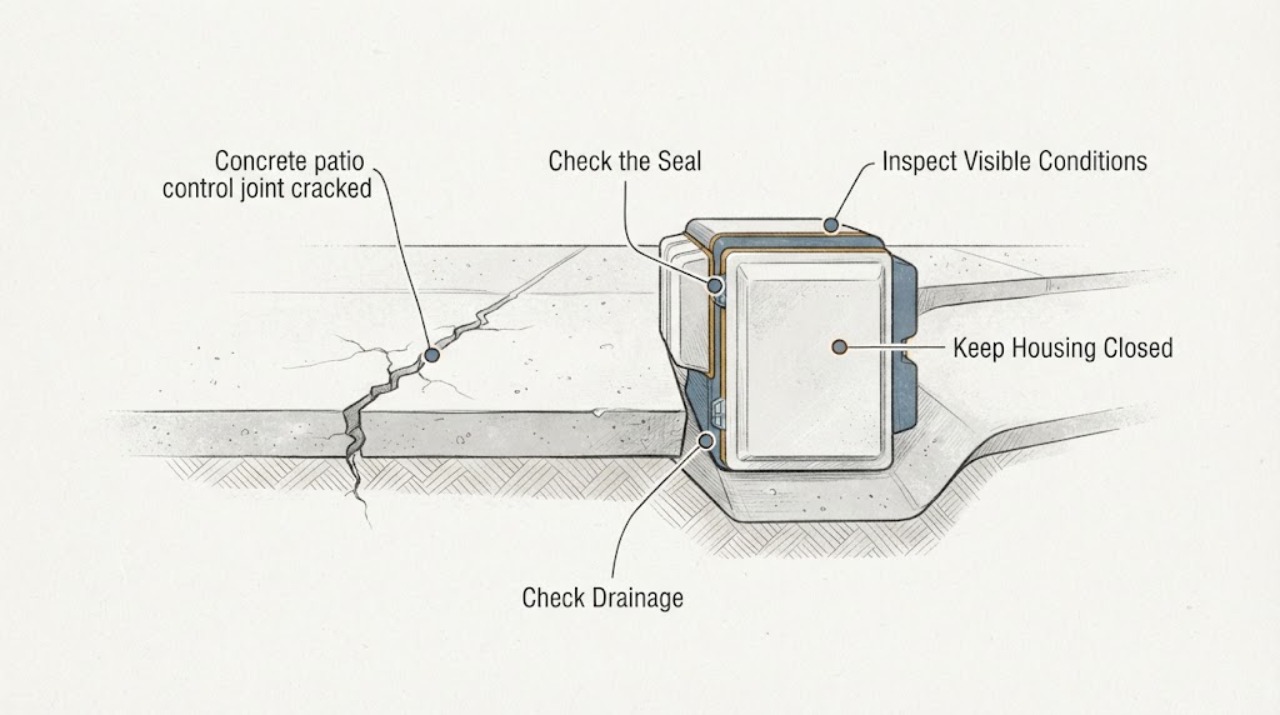
Concrete patio control joint cracked: What to Check and What to Do Next
A crack that follows an existing control joint is often the joint doing its intended job, but an open joint can still admit water or create a trip hazard. From a stable position, document whether the crack stays in the joint, whether either slab edge is higher, whether the opening is widening or spreading into the patio, and whether water collects or washes the adjacent ground.
-
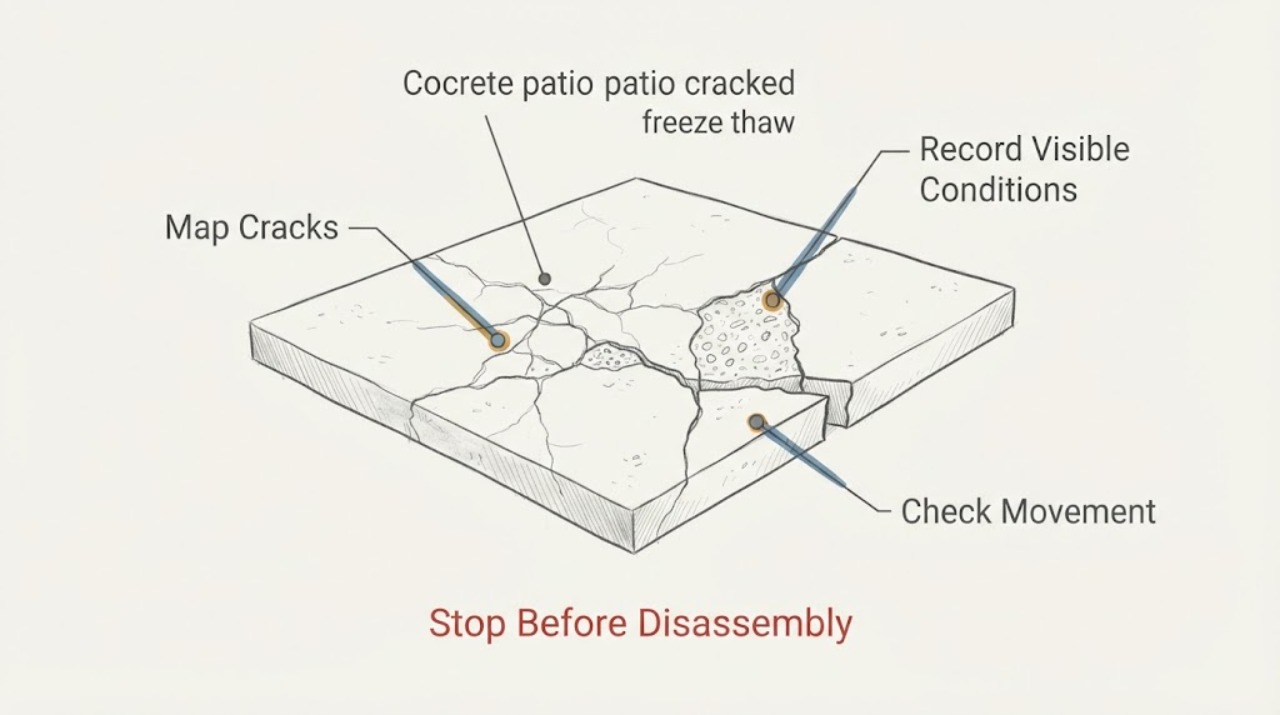
Concrete patio cracked freeze thaw: What to Check and What to Do Next
Freeze-thaw cracking is more likely when concrete stays saturated, but crack pattern, depth, movement, and other causes must be assessed before repair. From stable ground, map cracks, joints, ponding, edges, and trip hazards without chiseling, cutting, or grinding. Arrange concrete service for widening or moving cracks, spalling, exposed voids, unsafe edges, or recurring water exposure.
-
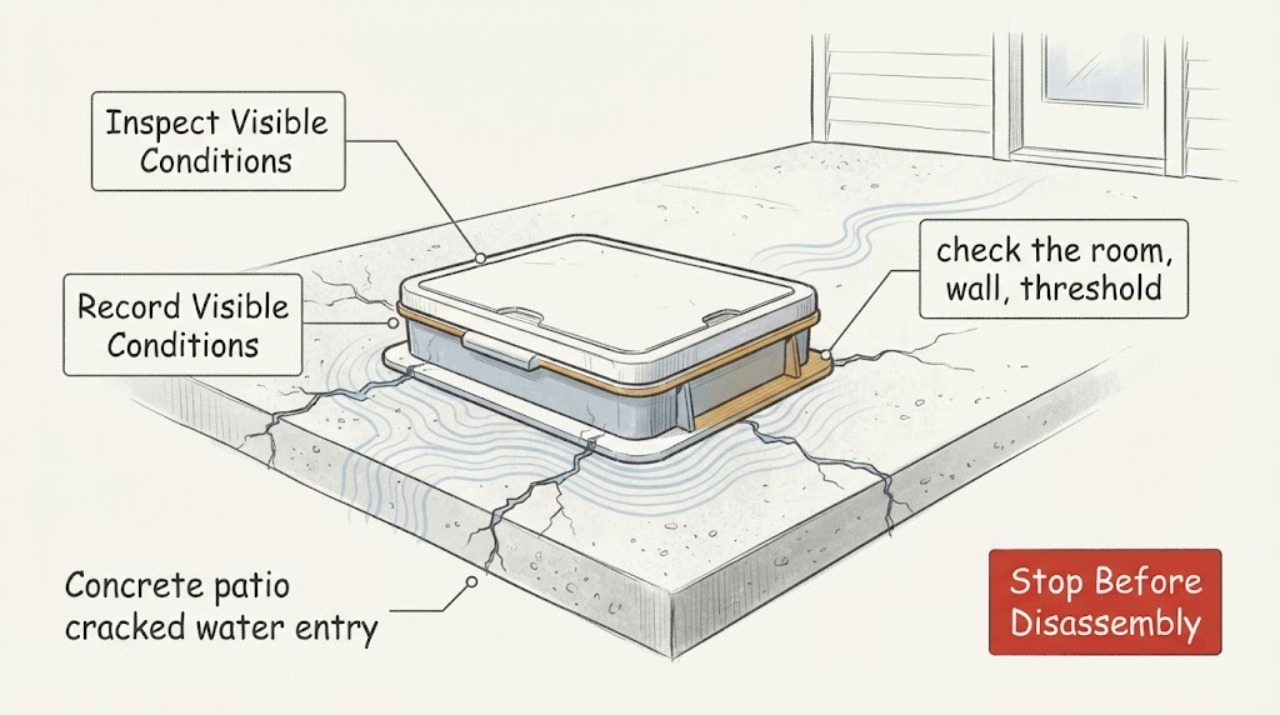
Concrete patio cracked water entry: What to Check and What to Do Next
When a cracked concrete patio is letting water in, start by observing the water path after normal rain or an existing watering event, not by creating a hose test. From a safe ground-level position, record whether water runs toward the foundation or door threshold, pools because of the patio slope, follows a crack, or leaves a damp mark inside or below.
-
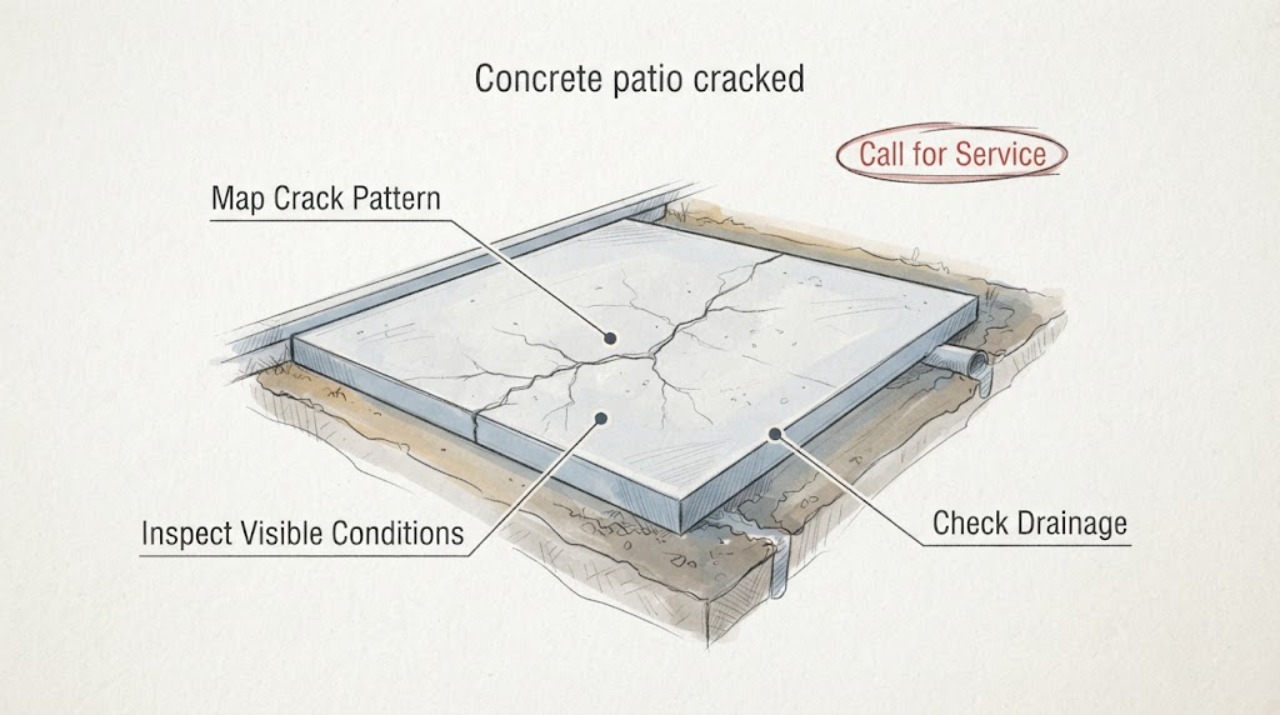
Concrete patio cracked: What to Check and What to Do Next
Do not start by filling or sealing a cracked patio. First photograph the whole slab and the crack close up, note whether the line follows a joint or crosses the slab, and observe whether either side is displaced, rocking, or creating a trip edge.