
Repair problem
Roof End Of Life Troubleshooting Guides
Published FixGraph guidance for diagnosing and responding to roof end of life.
Matching published guides
Choose a guide that matches the service, equipment, and conditions you are seeing.
-
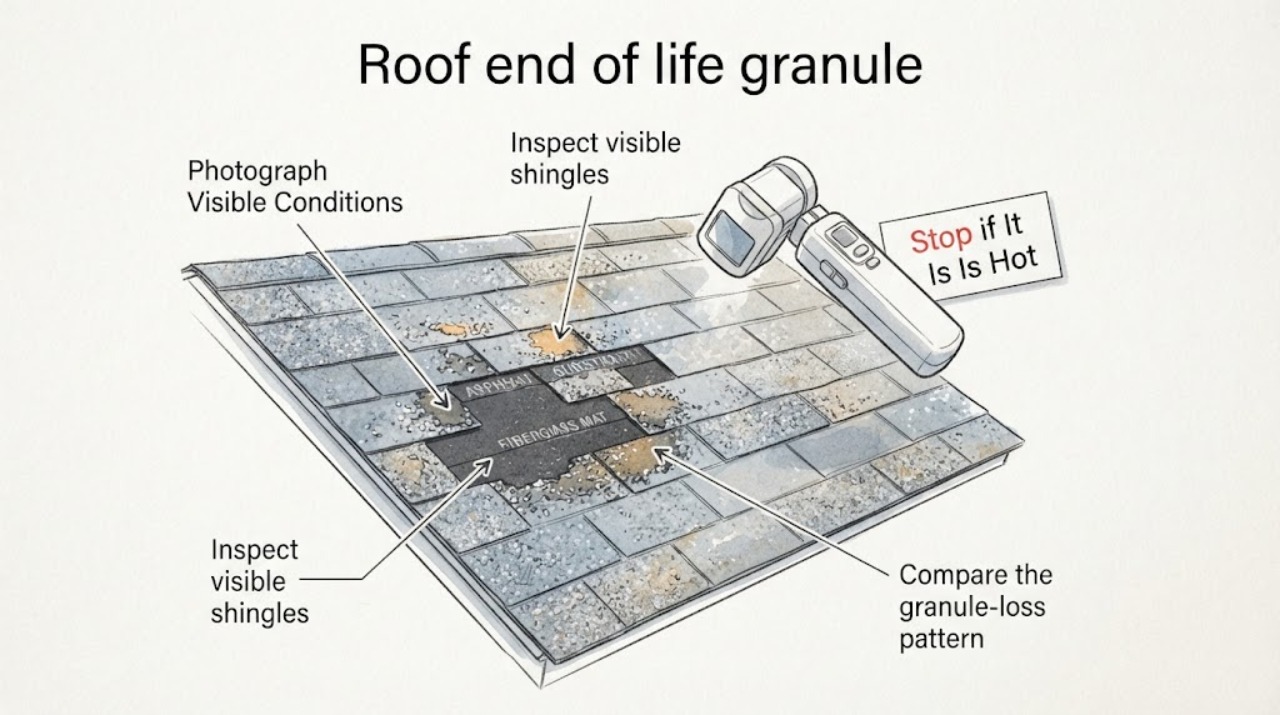
Roof end of life granule loss: What to Check and What to Do Next
Granules in a gutter do not by themselves prove that a roof has reached end of life: a new roof can shed some loose granules, and a storm or foot traffic can remove them locally. The stronger end-of-life pattern is widespread or growing bald areas that expose the shingle surface, combined with brittleness, curling, cracking, missing shingles, leaks, or a roof near the end of its expected service period.
-
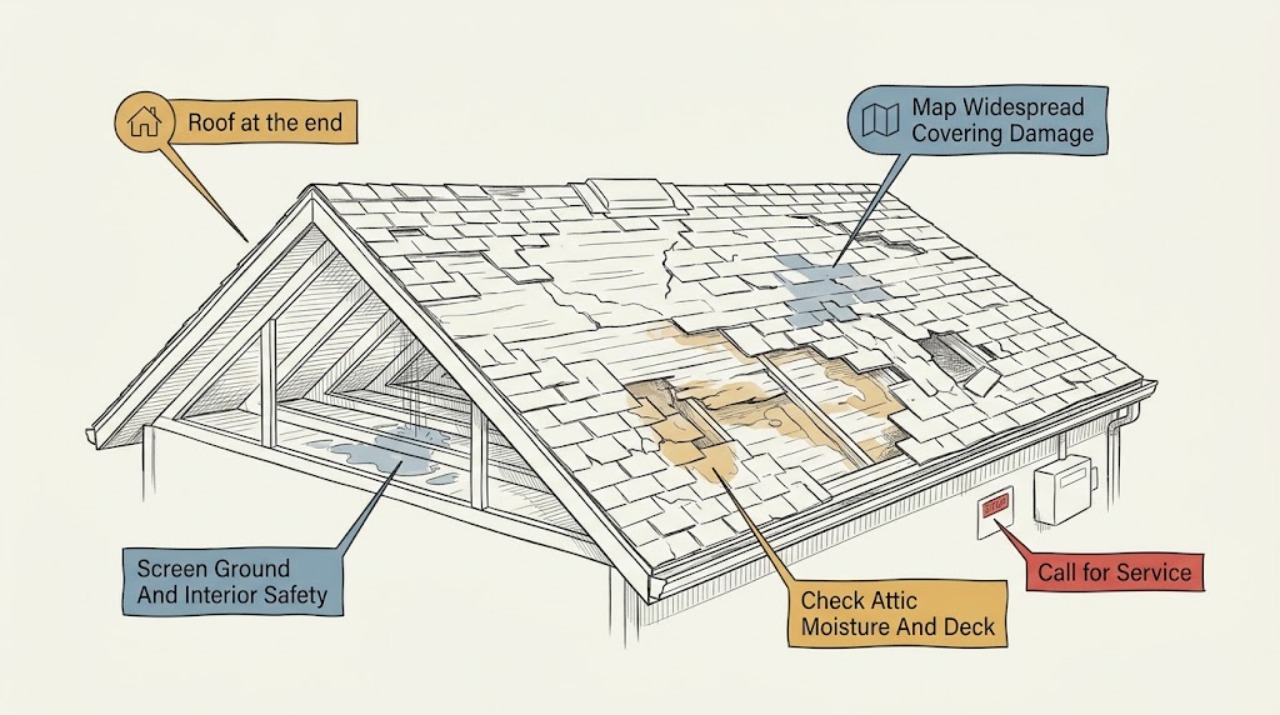
Roof at the end of its life with widespread damage: What to Check and What to Do Next
A roof with widespread missing, cracked, curled, brittle, or granule-shedding covering, recurring leaks, sagging, or decay is not a good candidate for patch-by-patch guessing. Start from the ground and from safe interior areas: document the roof age and repair history, photograph each damaged slope, check the attic and ceilings for moisture or structural signs, and keep people away from sagging or unsound areas.
-
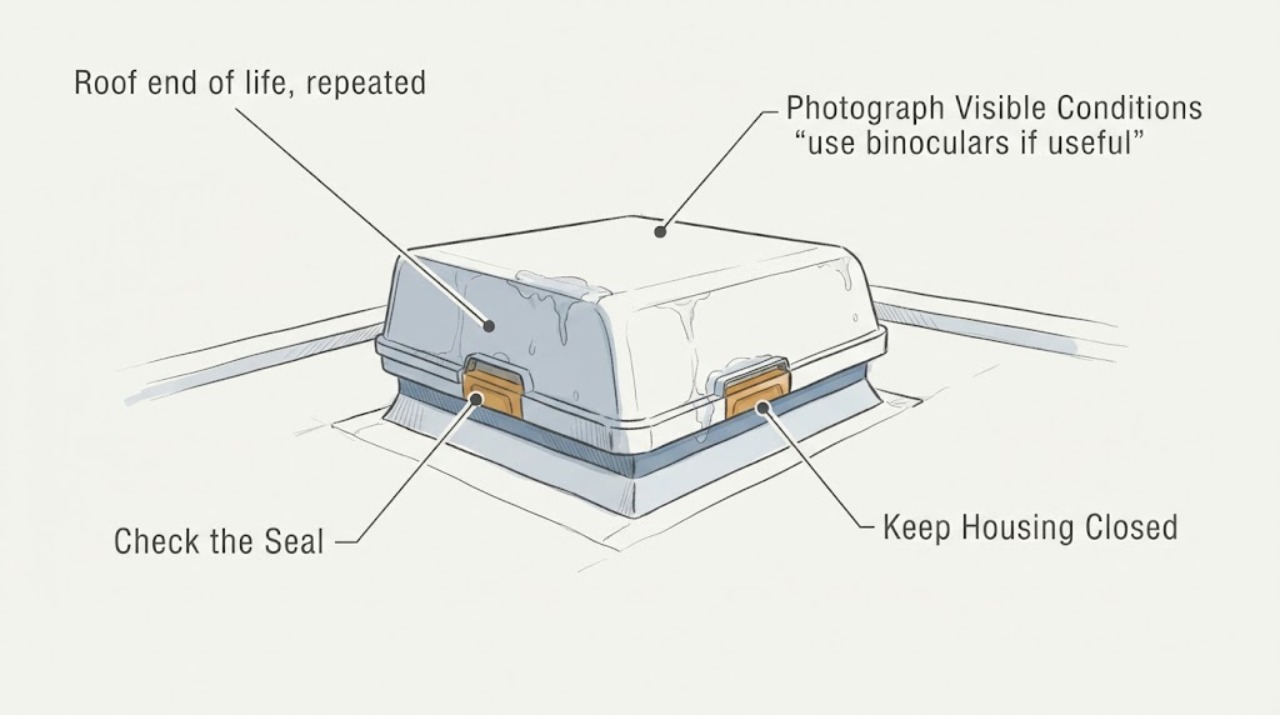
Roof end of life, repeated leaks: What to Check and What to Do Next
Repeated roof leaks are a reason to stop treating each stain as an isolated patch and have the whole roof system assessed. From inside, record where and when water appears; from the ground, look for missing, curling, cracked, or heavily worn covering, sagging, damaged flashing, and gutter or drainage problems.
-
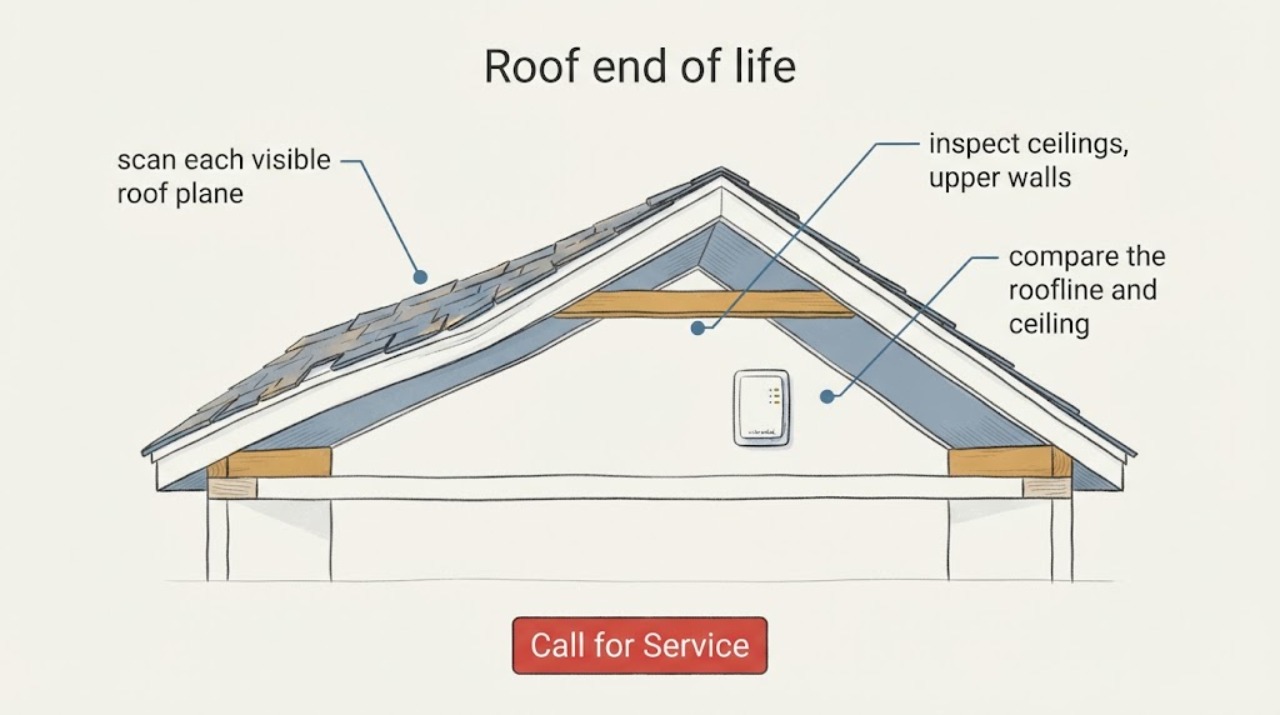
Roof end of life: What to Check and What to Do Next
A roof that appears near the end of its useful service should be assessed as a system, not judged from one missing shingle or a generic age claim. From the ground and from safe interior locations, document wear in several roof areas, repeated leaks or stains, sagging or other deformation, patch history, and any loose material or nearby utility hazard.