
On this page
Start here
Quick answer
Repeated roof leaks are a reason to stop treating each stain as an isolated patch and have the whole roof system assessed. From inside, record where and when water appears; from the ground, look for missing, curling, cracked, or heavily worn covering, sagging, damaged flashing, and gutter or drainage problems. A single localized defect on an otherwise sound roof may be repairable, while recurring or widespread leaks together with aging materials, granule loss, sagging, or damaged decking make replacement more likely. Do not climb onto a wet or visibly unsound roof. Protect belongings and arrange a qualified roofing inspection; use a professional temporary covering when rain is actively entering.
Before you begin
Safety first
- Homeowner checks are limited to dry interior observation and ground-level exterior observation. Roof access, concealed-layer removal, structural assessment, temporary coverings, and exterior repairs require trained professionals with appropriate fall protection.
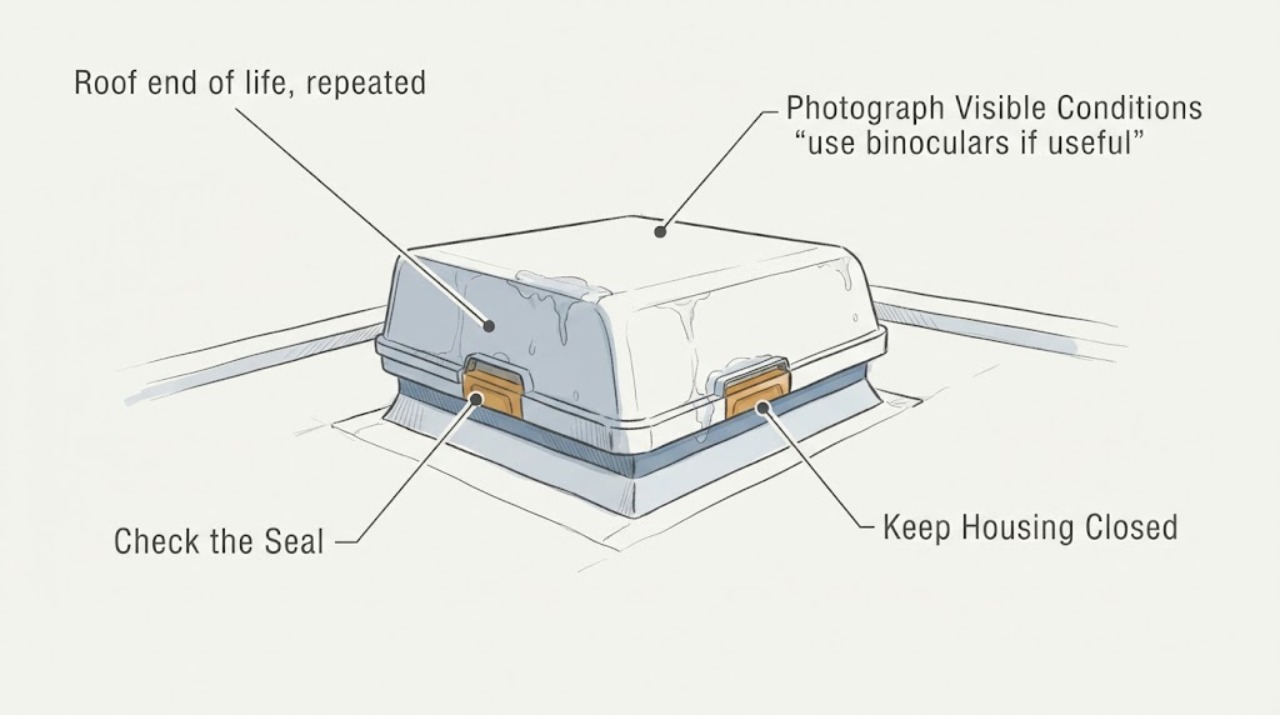
Work through in order
Diagnostic checks
Use only checks that match the exact appliance or system and its official guide.
-
Check 1
Make a leak log: note each room, ceiling or wall location, date, weather, and whether the water appears during wind-driven rain, steady rain, or without recent rain. Photograph stains and active drips from a dry, safe floor position.
Expected result: One stain tied to one weather direction differs from new stains in several rooms, repeated leaks after prior repairs, or water that continues after rain stops.
Next step: Give the log and photos to the roofer and ask for the source, affected layers, and whether the proposed remedy is localized or system-wide. Do not open ceilings or probe wet materials around electrical fixtures.
Why this matters
Why: A narrow pattern can still be a localized flashing or penetration defect, while multiple or recurring locations raise concern about broader covering, drainage, or concealed moisture damage. A stain's position alone does not prove the entry point.
-
Check 2
From the ground or another stable location, use binoculars if useful to inspect the roofline for missing, cracked, curled, buckled, brittle, or visibly worn covering, bare patches, dark wet areas, and sagging. Do not climb a ladder onto the roof.
Expected result: A few isolated displaced pieces differ from widespread surface wear, extensive granule loss, repeated missing areas, or a roofline or deck that appears to sag.
Next step: Photograph only what is visible and have a qualified roofer perform the close inspection. Keep people away from any area that looks unstable.
Why this matters
Why: A limited defect may support a repair discussion when the surrounding system is sound. Broad deterioration or sagging makes a simple patch less likely to be a durable answer and may indicate underlying decking or structural involvement.
-
Check 3
Inspect visible gutters, downspouts, eaves, and roof penetrations from the ground. Note overflow marks, sagging gutters, loose debris, water staining below a joint, and whether flashing around a chimney, vent, or skylight looks displaced or damaged.
Expected result: A leak that tracks with a blocked or damaged drainage path or one penetration differs from leaks spread across roof areas with several damaged details.
Next step: Do not climb onto the roof or dismantle flashing. Report the locations to the roofer, who can inspect the joints and drainage safely and distinguish a component repair from broader replacement work.
Why this matters
Why: Drainage or flashing can be the local cause and may be repairable, but repeated leaks after these areas were repaired suggest that the roof covering or concealed layers also need assessment.
-
Check 4
If there is a safe, dry attic access and firm walking surface, look only from the access area for dark spots, damp insulation, mold or mildew odor, daylight through the roof deck, or visibly sagging sheathing. Stop if the space is wet, cramped, unstable, or near exposed wiring.
Expected result: A dry attic with one trace differs from damp insulation, multiple dark areas, daylight, a sagging deck, or a persistent musty odor.
Next step: Photograph from the safe access point and arrange prompt professional assessment. Do not walk on questionable sheathing, move insulation to chase water, or touch wet electrical components.
Why this matters
Why: These findings can indicate that moisture has reached underlayment, insulation, or decking and that the visible ceiling stain understates the damage. They do not identify the roof entry point by themselves.
-
Check 5
Gather the roof's approximate installation age if known, prior repair invoices or inspection reports, and the locations of every earlier leak. Ask the roofer to compare the remaining material condition with the repair history and inspect concealed layers before recommending repair or replacement.
Expected result: A relatively localized history on sound surrounding materials differs from repeated patches, leaks in several areas, broad wear, or visible structural moisture damage.
Next step: Request a written scope that identifies the leak source, damaged layers, repair limits, expected durability, and replacement alternatives. Do not approve a cosmetic patch without understanding why earlier repairs failed.
Why this matters
Why: Age alone does not decide the remedy, but age combined with recurring leaks and broad deterioration is a stronger end-of-life pattern than one isolated defect. Repair cost and scope should be compared with the condition of the whole system, not just the newest stain.
-
Check 6
During active leaking, place a container under the drip from a dry floor position, move valuables away, and keep clear of wet ceilings and electrical fixtures. If water is spreading near electrical equipment, use only a safe, accessible shutoff if you know it controls the affected area; do not reach through water.
Expected result: A contained drip differs from a bulging ceiling, rapid flow, water near electrical equipment, fallen roof material, or a visibly sagging roof or ceiling.
Next step: Contact a qualified roofer for emergency temporary protection and arrange prompt inspection. Do not climb up to place a tarp, puncture a ceiling bulge, or perform exterior patching in rain or wind.
Why this matters
Why: Rapid or structurally concerning water entry needs immediate damage control and professional response; it is not a safe opportunity to locate the roof source from above.
Use your observations
Decision map
Find the observation that best matches what you see, then follow the next safe action.
-
PATH 01Next step
What you see
There is one recent leak, and ground-level observations show a small isolated defect with otherwise sound surrounding covering and no sagging or widespread wear.
Do this next
Request a repair scope that names the defect and includes a follow-up plan. Monitor the same area during the next comparable rain rather than assuming a ceiling stain is proof of success.
-
PATH 02Next step
What you see
Leaks recur after patches, occur in several rooms or roof areas, or continue at more than one flashing or penetration location.
Do this next
Ask for a whole-roof inspection and a repair-versus-replacement comparison. Do not keep layering temporary sealant over unknown entry points.
-
PATH 03Next step
What you see
Recurring leaks coincide with missing, curled, cracked, brittle, or heavily worn covering, extensive granule loss, or a visibly sagging roofline or deck.
Do this next
Arrange a professional assessment that documents the covering, underlayment, flashing, decking, and ventilation condition, then compare a durable replacement scope with any limited repair option.
-
PATH 04Next step
What you see
The interior shows damp insulation, multiple dark attic areas, mold or mildew odor, daylight through the deck, or a sagging ceiling or sheathing.
Do this next
Keep people out of the affected area and call a qualified roofer promptly. Do not enter unstable attic space, touch wet electrical components, or disturb moldy materials.
-
PATH 05Next step
What you see
Water is entering rapidly, a ceiling is bulging, water is near electrical equipment, or exterior material has fallen.
Do this next
Move away from the hazard, use only a known safe shutoff if accessible without contact with water, and contact appropriate emergency help and a qualified roofing professional. Never climb onto the roof during active weather.
Helpful context
Understand the symptom
Repair versus replacement is a system decision
A roof leak is a symptom, not a diagnosis. Water can enter at a damaged shingle, underlayment, flashing detail, vent, skylight, or other penetration and travel before it stains a ceiling. If one defect is found on otherwise sound materials, a targeted repair may make sense. When leaks recur in different places or the covering and underlying structure show broad wear, repeated patches may hide a roof that has reached the end of its useful service life.
Keep the inspection safe
The homeowner's useful contribution is a dated record of interior symptoms and ground-level observations. Do not walk the roof, crawl onto wet decking, enter a sagging area, or peel back roofing layers to find a leak. A roofing professional has the fall protection and experience needed to trace the source and assess hidden decking, insulation, flashing, and ventilation damage.
Only after diagnosis
Potential parts
- roof flashing
Consider this only when a qualified inspection traces a localized leak to damaged or failed flashing while the surrounding roof system remains serviceable.
Flashing details depend on the roof covering, slope, penetration, and local installation requirements; do not select a generic piece from a stain alone. - replacement roof covering
Consider replacement materials only when the inspection confirms broad deterioration, recurring or widespread leaks, or end-of-life damage that a localized repair cannot reliably address.
The correct covering, underlayment, ventilation details, and installation method depend on the existing assembly and local requirements; have the contractor specify them. - roof decking
Consider this only if the contractor finds rotten, softened, or otherwise compromised decking after exposing the affected area.
Decking thickness, fastening, and replacement limits are site- and code-dependent; do not infer a decking part or quantity from an interior stain.
When checks do not resolve it
Need a professional?
Arrange a qualified roofing inspection when leaks repeat, appear in multiple areas, return after a patch, or accompany missing, curling, cracked, brittle, heavily worn, or sagging roofing. Call promptly for damp insulation, mold or mildew odor, daylight through the deck, or suspected flashing, underlayment, or decking damage. Stop and seek immediate help for a bulging ceiling, rapid water entry, water near electrical equipment, fallen material, or an unstable roof. Do not climb onto a wet or unsound roof, enter unsafe attic space, or make an exterior repair in rain or wind.
Safety scope: Homeowner checks are limited to dry interior observation and ground-level exterior observation. Roof access, concealed-layer removal, structural assessment, temporary coverings, and exterior repairs require trained professionals with appropriate fall protection.
Common questions
FAQ
Do repeated roof leaks always mean I need a new roof?
Not always. A localized flashing or penetration defect on an otherwise sound roof may be repairable. Repeated or widespread leaks combined with broad wear, granule loss, curling or cracked covering, sagging, or concealed moisture damage make replacement more likely and deserve a whole-roof assessment.
Can I find the roof leak by looking at the ceiling stain?
A ceiling stain shows where water became visible, not necessarily where it entered. Water can travel through roofing layers or framing. Record the stain and weather pattern, then have a qualified roofer trace the source.
Is it safe to climb onto the roof to check repeated leaks?
Avoid climbing onto a wet, steep, damaged, or visibly unsound roof. Use ground-level observation and a safe interior view when available, and leave roof access and concealed-layer inspection to a trained professional with appropriate fall protection.
What should I do if rain is actively entering?
From a dry, safe floor position, contain the drip and move belongings away. Keep clear of bulging ceilings and water near electrical equipment. Do not climb up to tarp or patch the roof in active weather; call a qualified roofing professional for temporary protection and inspection.
Read the exact guide
Official sources
- How to Fix a Leaking Rooftop: Detection, Repair & Prevention GuideGAF · residential roof leak causes, inspection safety, repair versus replacement, and professional assessment
- Residential Roofing FAQsGAF · residential roof damage signs and repair-versus-replacement considerations
- How to assess roof damageGAF · residential roof damage signs, attic observations, ground-level inspection, and roof end-of-life indicators
Community feedback
Share a repair observation
Share a plain-text repair observation. Accepted observations are published automatically; this page may take a moment to update.