
On this page
Start here
Quick answer
A roof that appears near the end of its useful service should be assessed as a system, not judged from one missing shingle or a generic age claim. From the ground and from safe interior locations, document wear in several roof areas, repeated leaks or stains, sagging or other deformation, patch history, and any loose material or nearby utility hazard. Do not climb, use a ladder, lift shingles, probe the roof, or apply a temporary repair. Active leaking, ceiling or roof sag, falling material, exposed wiring, or unsafe weather calls for immediate isolation and qualified help. If the roof is stable but wear is widespread or repairs keep recurring, request a professional roof inspection and written replacement scope.
Work through in order
Diagnostic checks
Use only checks that match the exact appliance or system and its official guide.
-
Check 1
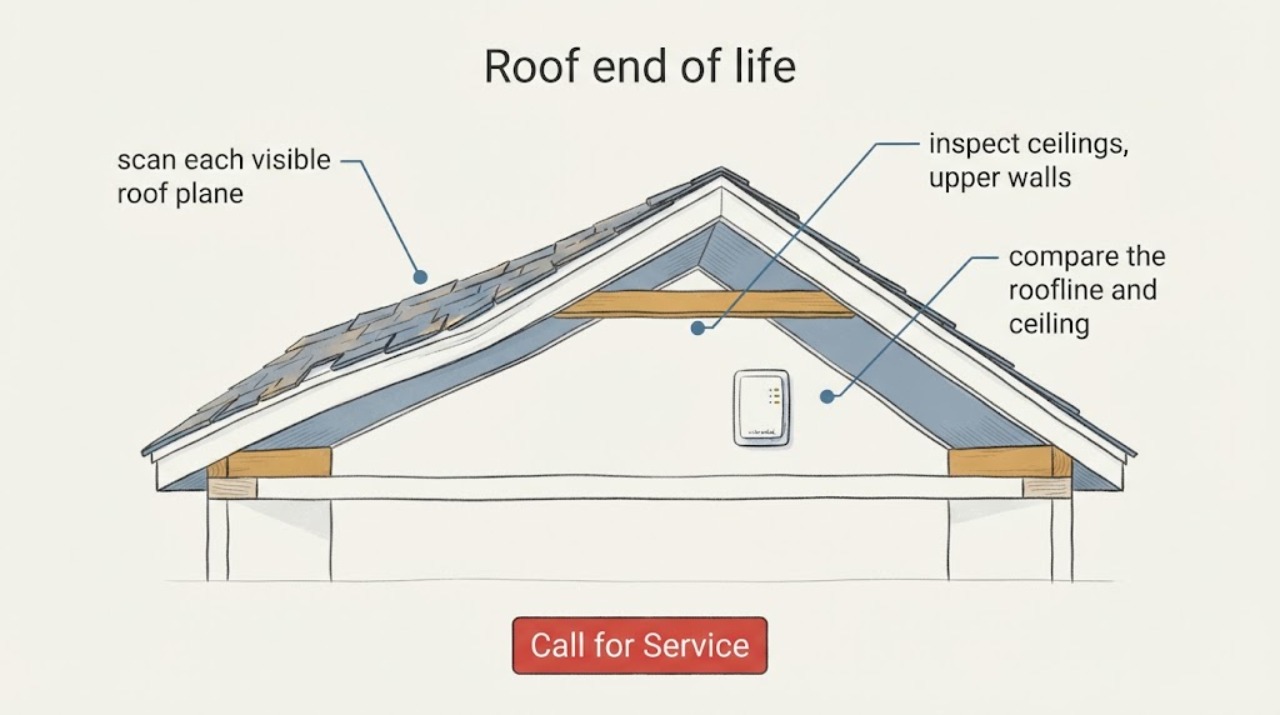
From stable ground and outside the roof fall zone, scan each visible roof plane with ordinary lighting or a camera zoom and note repeated patterns such as widespread discoloration, curling or missing-looking areas, exposed underlayers, heavy surface wear, or debris. Do not approach the eaves, climb, or reach toward the roof.
Expected result: Record whether wear is isolated to one small area, appears in several roof planes, or includes loose-looking material or debris below an edge.
Next step: Take location-labeled photos from the same safe viewpoints and request a professional inspection that addresses the visible pattern, roof assembly, and replacement versus repair options.
Stop if: Stop and keep people away from the area if material appears loose, begins falling, or weather makes the inspection unsafe. Arrange prompt professional or emergency assistance.
Why this matters
Why: A broad pattern is more consistent with system-wide aging than a single repairable spot, while material below an edge raises a falling-object and water-entry concern. A ground view cannot confirm the condition of hidden layers.
-
Check 2
From safe interior rooms, inspect ceilings, upper walls, and the attic access area only if it can be viewed without entering a hazardous space or touching anything. Note new or repeated stains, peeling finish, dampness, or water appearing after rain.
Expected result: Classify the interior evidence as none, an old dry stain, a recurring stain after weather, or active dripping, spreading dampness, or sagging material.
Next step: Photograph the stain with its room and approximate location, protect belongings from a safe position, and request a roofing assessment. If water is active, coordinate urgent leak and interior safety service rather than waiting for a routine replacement quote.
Stop if: Stop immediately if a ceiling or wall is bulging, sagging, shedding material, near electrical equipment, or at risk of collapse. Keep clear and contact emergency or qualified structural/roofing help.
Why this matters
Why: Repeated or active interior water evidence can indicate an unresolved roof, flashing, drainage, or condensation issue. A stain alone does not establish the roof’s age or prove replacement is required.
-
Check 3
From ground level and safe interior viewpoints, compare the roofline and ceiling lines for visible sagging, waves, uneven ridges, or a section that appears lower than adjacent areas. Do not press a ceiling, enter a crawlspace, or investigate by probing.
Expected result: Record a straight-looking profile, a localized irregularity, or a broad or increasing deformation visible from more than one viewpoint.
Next step: Keep occupants and belongings away from the affected area and tell the roofing professional exactly where the profile changes. Request structural evaluation when the deformation is broad, new, or worsening.
Stop if: Stop all inspection for any sagging ceiling, roofline movement, cracking with movement, or sounds of shifting material. Do not enter below or near the area; escalate promptly.
Why this matters
Why: Deformation may involve framing, decking, trapped moisture, or another structural condition and cannot be diagnosed from appearance. It is more urgent than ordinary surface wear.
-
Check 4
Review repair and weather history without disturbing the roof: note how many leak calls or patches occurred, which roof areas were involved, whether problems return after rain or wind, and whether the roof has had multiple repair campaigns.
Expected result: Record no prior repair, one isolated repair with no recurrence, or repeated repairs and recurring water evidence in different or overlapping areas.
Next step: Assemble dated photos, invoices, inspection notes, and weather timing for the roofer. Ask for a written comparison of repair, replacement, expected disruption, and the conditions that could change the scope.
Stop if: Stop if reviewing the history would require accessing the roof, opening a ceiling, moving unstable debris, or disturbing water-damaged material.
Why this matters
Why: Repeated repairs in multiple areas can support a replacement conversation, but the history does not by itself determine remaining life. The scope, cause, and quality of past work still need professional review.
-
Check 5
From the ground, identify any visible roof-area hazard that could affect a service visit, such as downed or nearby power lines, fallen branches, unstable debris, standing water around an entry, or severe weather. Do not approach or move the hazard.
Expected result: Record a clear access area, a weather-related obstruction, or an electrical, falling-object, or structural hazard near the home.
Next step: Keep people and pets away, notify the utility or emergency service for utility hazards, and tell the roofing company about the access condition before anyone visits.
Stop if: Stop immediately for downed wires, arcing, fire, active collapse, falling debris, or dangerous weather. Do not enter the area until responsible authorities or qualified professionals clear it.
Why this matters
Why: A roof may be ready for a scheduled assessment only when the surrounding work area is safe. Utility and structural hazards take priority over deciding between repair and replacement.
Use your observations
Decision map
Find the observation that best matches what you see, then follow the next safe action.
-
PATH 01Safety boundary
What you see
The roof appears stable from the ground, with limited wear, no recurring leak evidence, no deformation, and no falling material.
Do this next
A routine professional inspection can document condition and maintenance priorities. If a replacement is still being considered, request a written scope rather than relying on an age rule.
Why this path and its safety boundary
Safety stop: Do not climb or perform a closer inspection to confirm a cosmetic impression.
-
PATH 02Safety boundary
What you see
Wear is visible across several roof areas, repairs recur, or leaks return in more than one location.
Do this next
Arrange a professional roof inspection and ask for a written repair-versus-replacement assessment that addresses the roof covering, underlayers, flashing, drainage, ventilation, and likely hidden damage.
Why this path and its safety boundary
Safety stop: Do not lift shingles, probe the roof, or apply a patch that could hide the extent of the problem.
-
PATH 03Safety boundary
What you see
There is active leaking, a spreading interior stain, a soft or sagging ceiling, or visible roofline deformation.
Do this next
Keep occupants out of the affected area, protect belongings only from a safe position, and request urgent roofing and, when indicated, structural or water-mitigation help.
Why this path and its safety boundary
Safety stop: Do not enter below a bulging ceiling, touch wet electrical equipment, or make a temporary roof repair.
-
PATH 04Safety boundary
What you see
Loose material, falling debris, downed utility lines, smoke, fire, or severe weather is present.
Do this next
Leave the hazard zone, keep others away, and contact emergency services or the utility from a safe location. Reschedule roofing work until the site is cleared.
Why this path and its safety boundary
Safety stop: Do not approach, move debris, inspect during the storm, or allow anyone onto the roof.
-
PATH 05Safety boundary
What you see
The roof history is incomplete or previous patches obscure the pattern.
Do this next
Give the roofer all available dates, photographs, leak locations, and prior scopes and request an independent written assessment of the complete roof system.
Why this path and its safety boundary
Safety stop: Do not assume the roof is at end of life, or safe for access, solely because of an unknown age or a salesperson’s visual claim.
Helpful context
Understand the symptom
Why several observations matter
A roof can have a localized finish defect while the rest of the assembly remains serviceable, or it can show repeated leaks, widespread wear, and deformation that make a replacement discussion more appropriate. Ground and interior observations help describe the pattern, but they cannot verify the roof deck, underlayment, flashing, ventilation, or hidden water damage. A qualified roofing professional should make that determination.
Keep the assessment at a safe distance
Look only from stable ground, through ordinary windows, or from a dry interior location where no ceiling material is sagging. Use photographs or notes without approaching loose debris. Never inspect during wind, rain, snow, lightning, or other conditions that make the property unsafe, and do not disturb suspected damage while waiting for service.
When checks do not resolve it
Need a professional?
Call a qualified roofing professional for widespread wear, repeated leaks, deformation, uncertain repair history, or a replacement evaluation. Escalate active water, sagging, falling material, utility hazards, fire, or unsafe weather before arranging a routine inspection.
Have this ready
- Provide safe-viewpoint photos, the roof areas that look worn, interior stain locations and timing, any visible deformation, leak and repair history, dates of storms, and access or utility hazards around the home.
Common questions
FAQ
How can I tell if my roof is at the end of its life?
Look for a pattern, not one defect: widespread visible wear, recurring leaks or stains, deformation, and repeated repairs are useful reasons to request a professional assessment. Age alone is not enough, and hidden layers cannot be judged safely from the ground.
Should I climb onto the roof to confirm the damage?
No. Use ground-level and safe interior observations only. Do not climb, use a ladder, lift shingles, probe the roof, or inspect during unsafe weather. A qualified roofing professional can select safe inspection methods.
Do repeated roof leaks always mean I need a full replacement?
Not always, but leaks in several areas or repeated repairs justify a complete professional assessment. The roofer should identify the source, inspect the roof system, and explain whether localized repair or replacement is appropriate.
What should I do if the ceiling is sagging or water is active?
Keep people away from the area, avoid wet electrical equipment, and request urgent qualified help. Do not press the ceiling, open it, enter an unsafe attic, climb onto the roof, or apply a temporary roof repair.
How should I compare roof-replacement estimates?
Ask for written scopes that identify the roof areas, materials, preparation, flashing and drainage work, cleanup, timing, and exclusions. Verify licensing and insurance as applicable locally, compare more than one estimate, and do not sign under pressure.
Read the exact guide
Official sources
- How To Avoid Scams After Weather Emergencies and Natural DisastersFederal Trade Commission · Relevant when seeking roof inspection, repair, or replacement after damage or as part of a planned project; licensing and contract rules vary by location.
- Plan Ahead Before Going HomeFederal Emergency Management Agency · Relevant after a fire, storm, or other event when the property condition and utilities may be unsafe; local authorities and professionals control re-entry and repair decisions.
- Pictograph: Keep Leaves and Tree Limbs Away From Your HomeU.S. Fire Administration · Relevant to the safe ground-level review of roof debris and nearby branches; it does not assess roof service life or authorize roof access.
Community feedback
Share a repair observation
Share a plain-text repair observation. Accepted observations are published automatically; this page may take a moment to update.