
Repair problem
Solar Panel Dirty Troubleshooting Guides
Published FixGraph guidance for diagnosing and responding to solar panel dirty.
Matching published guides
Choose a guide that matches the service, equipment, and conditions you are seeing.
-
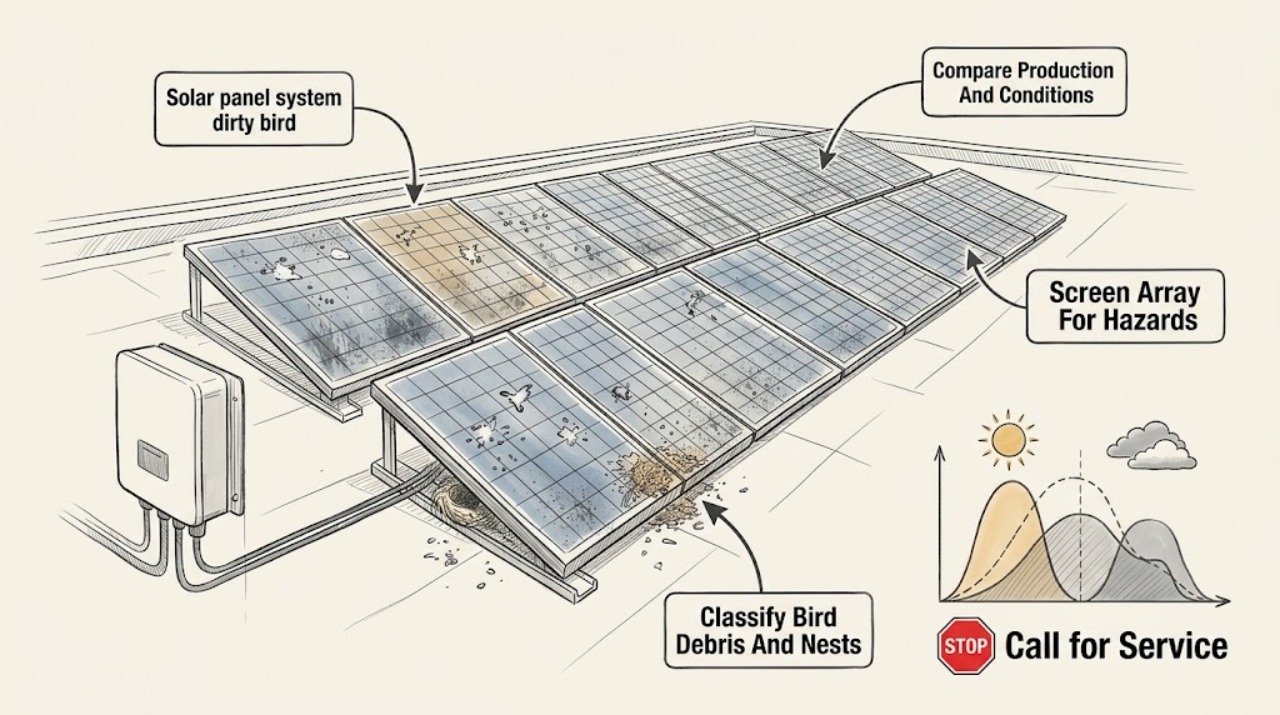
Solar panel system dirty bird debris: What to Check and What to Do Next
Bird droppings and nesting debris can shade the glass and reduce solar production, but a dirty panel is not automatically a failed panel or inverter. First check the system from the ground for cracked glass, loose or exposed wiring, a displaced module, nest material, and signs of heat or storm damage; compare production with recent weather and shade rather than relying on one cloudy-day reading.
-
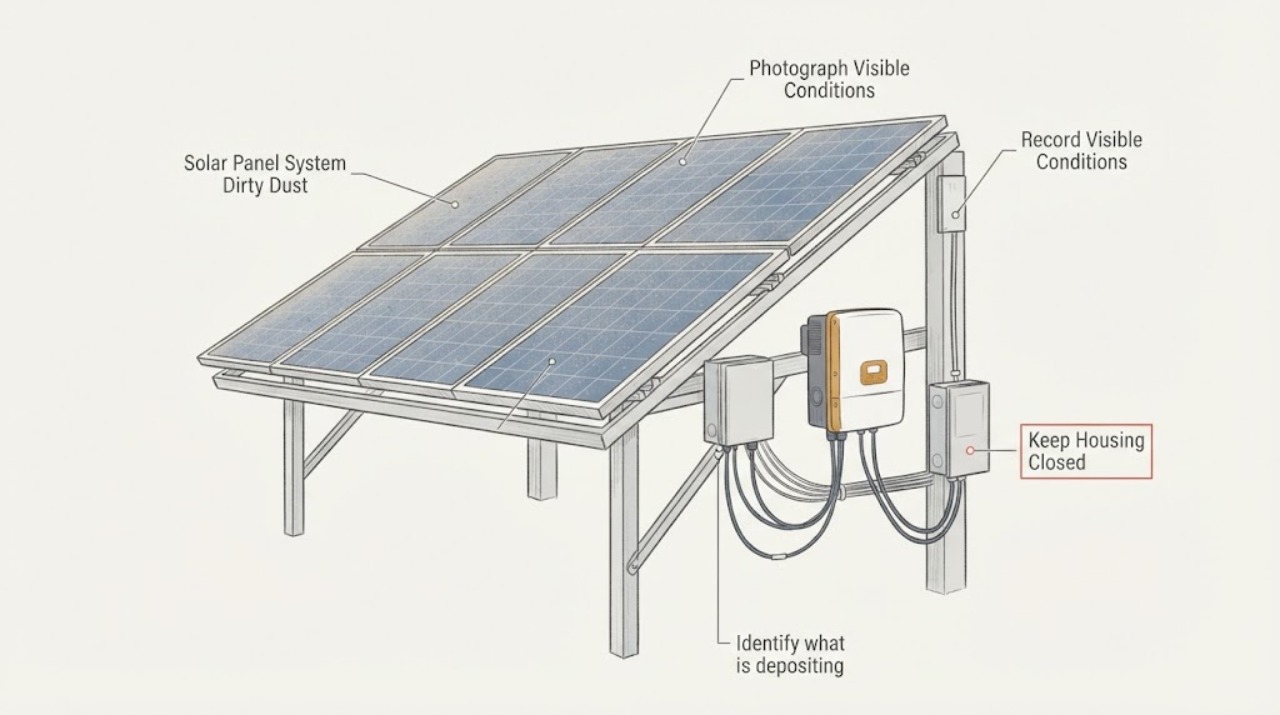
Solar Panel System Dirty Dust: What to Check and What to Do Next
Dust on a solar-panel system is a soiling condition that can reduce sunlight reaching the modules, but a dirty-looking surface does not prove it is the main cause of low production. First compare the visible dust pattern with the system's production trend under similar sunlight and check the inverter or monitoring status without opening electrical equipment.
-
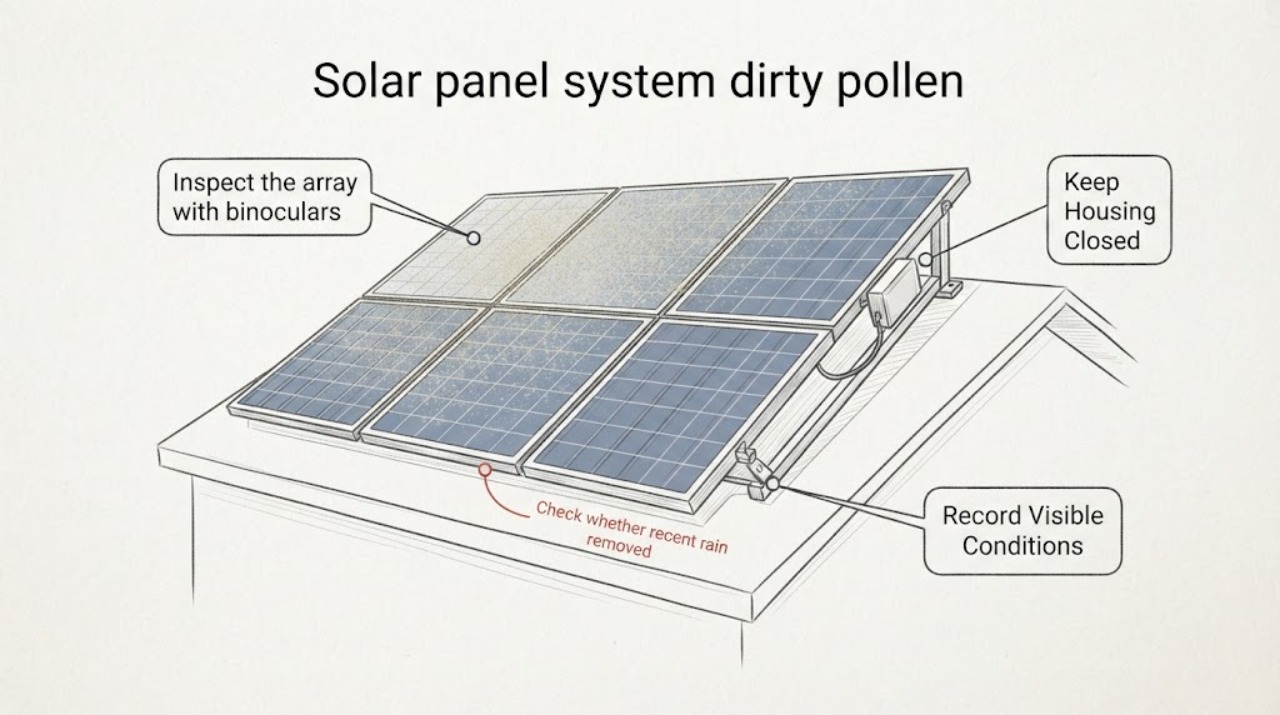
Solar panel system dirty pollen: What to Check and What to Do Next
Pollen on a solar panel system is a form of soiling: it can block light and reduce production, and rainfall may not remove enough of it in every location. Start from the ground or another safe access point by photographing the panel surface and checking the system monitor for a production change, while separating pollen from cloud, shade, inverter, or grid effects.
-
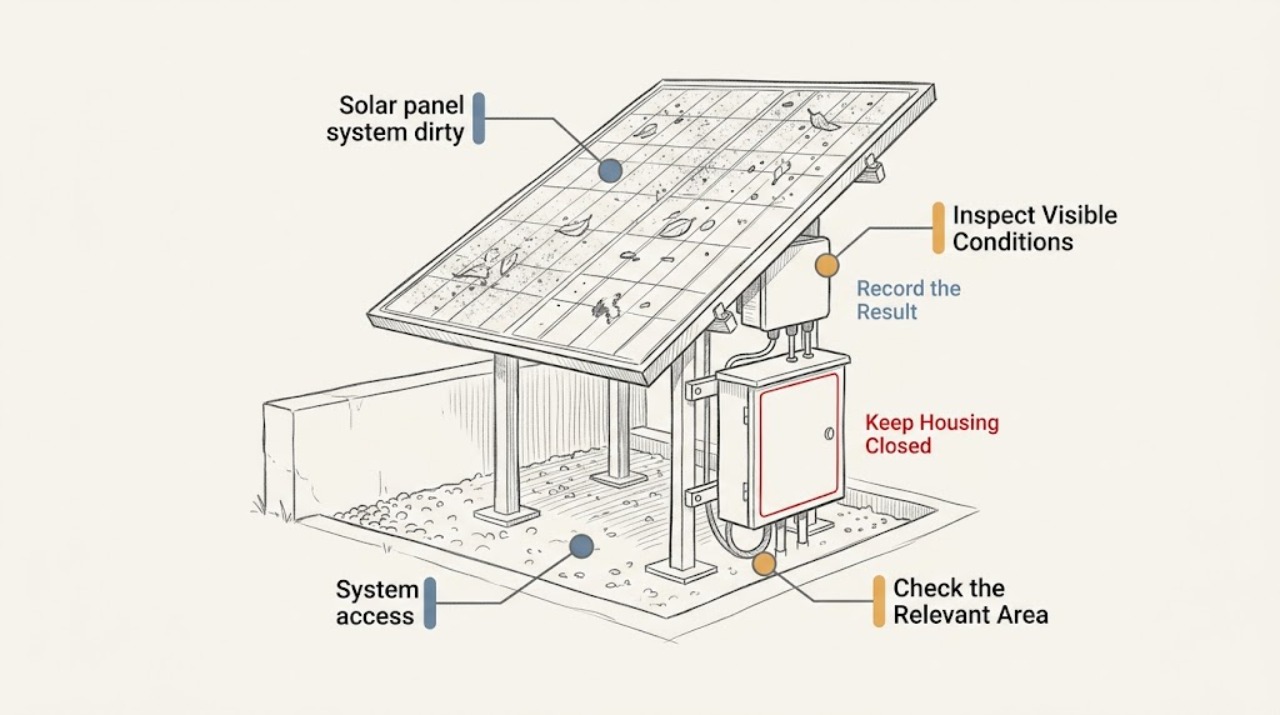
Solar panel system dirty: What to Check and What to Do Next
First separate visible soiling from a system fault. From a safe ground-level or window viewpoint, record what is visible on the array, its location and extent, nearby shade or debris, and any cracks, loose material, exposed wiring, burning odor, or unusual hot-spot report.