
Repair problem
Wood Siding Peeling Paint Troubleshooting Guides
Published FixGraph guidance for diagnosing and responding to wood siding peeling paint.
Matching published guides
Choose a guide that matches the service, equipment, and conditions you are seeing.
-
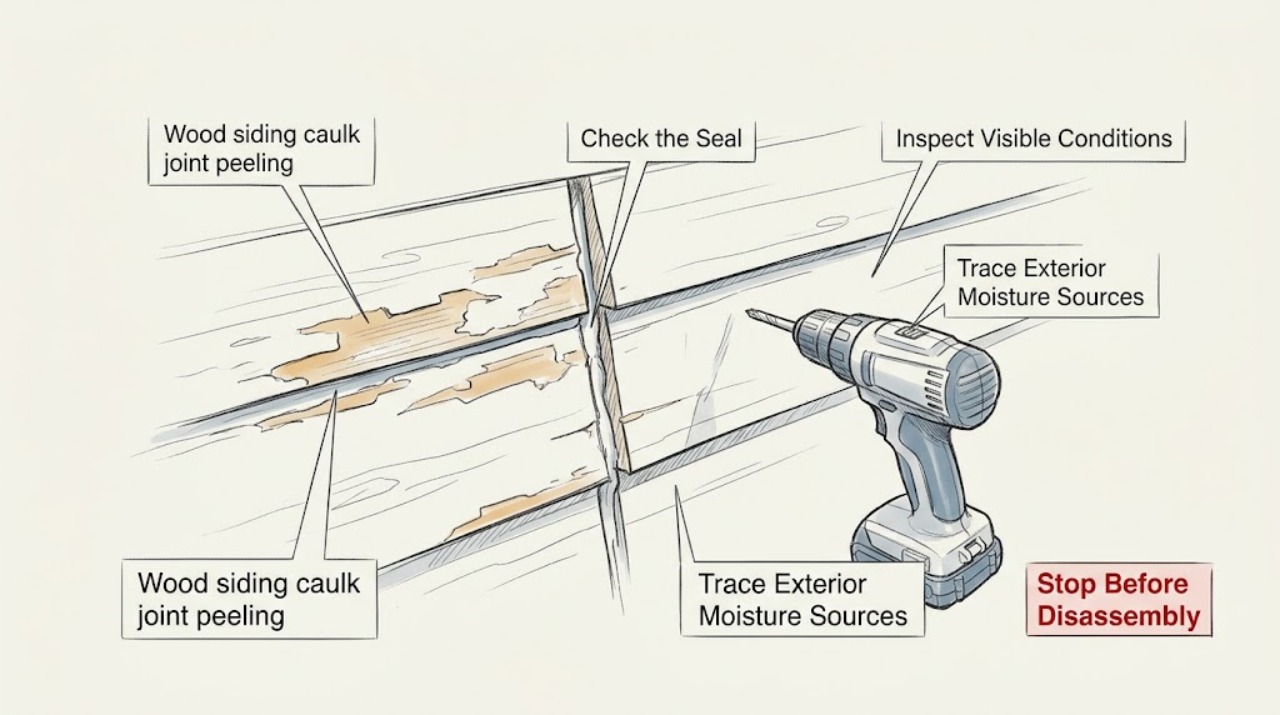
Wood siding caulk joint peeling paint: What to Check and What to Do Next
Peeling paint at a wood-siding caulk joint usually means the joint, paint bond, wood condition, or moisture path needs to be assessed before anything is recoated. From safe ground-level or interior viewpoints, document whether the joint is cracked or open, whether the wood is swollen or soft-looking, and whether rain, a roof or window detail, a gutter, sprinkler, or indoor moisture could be reaching the area.
-
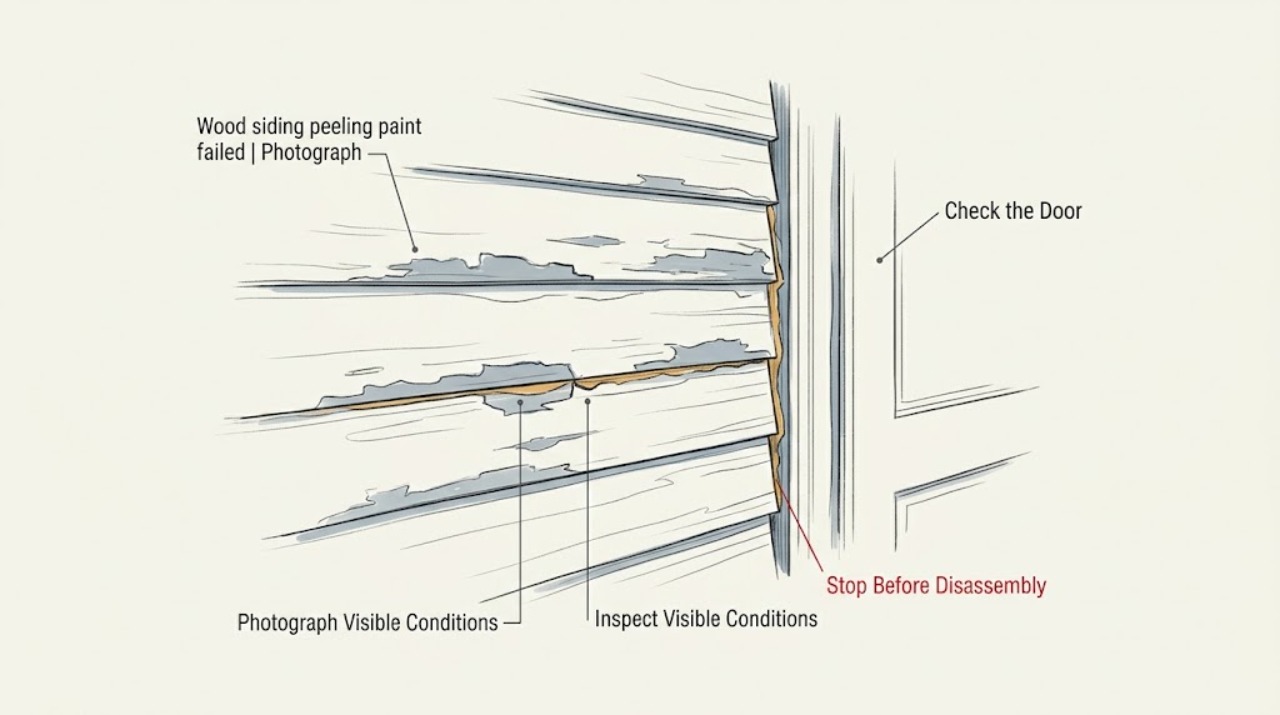
Wood siding peeling paint failed caulk: What to Check and What to Do Next
Peeling paint on wood siding with failed caulk should begin with a ground-level seam and moisture assessment, not another coat of paint. From stable ground, photograph failed joints around windows, doors, trim, corners, penetrations, and board ends; note cracked or missing caulk, gaps, soft or swollen wood, staining, and whether the damage follows rain or roof and gutter runoff.
-
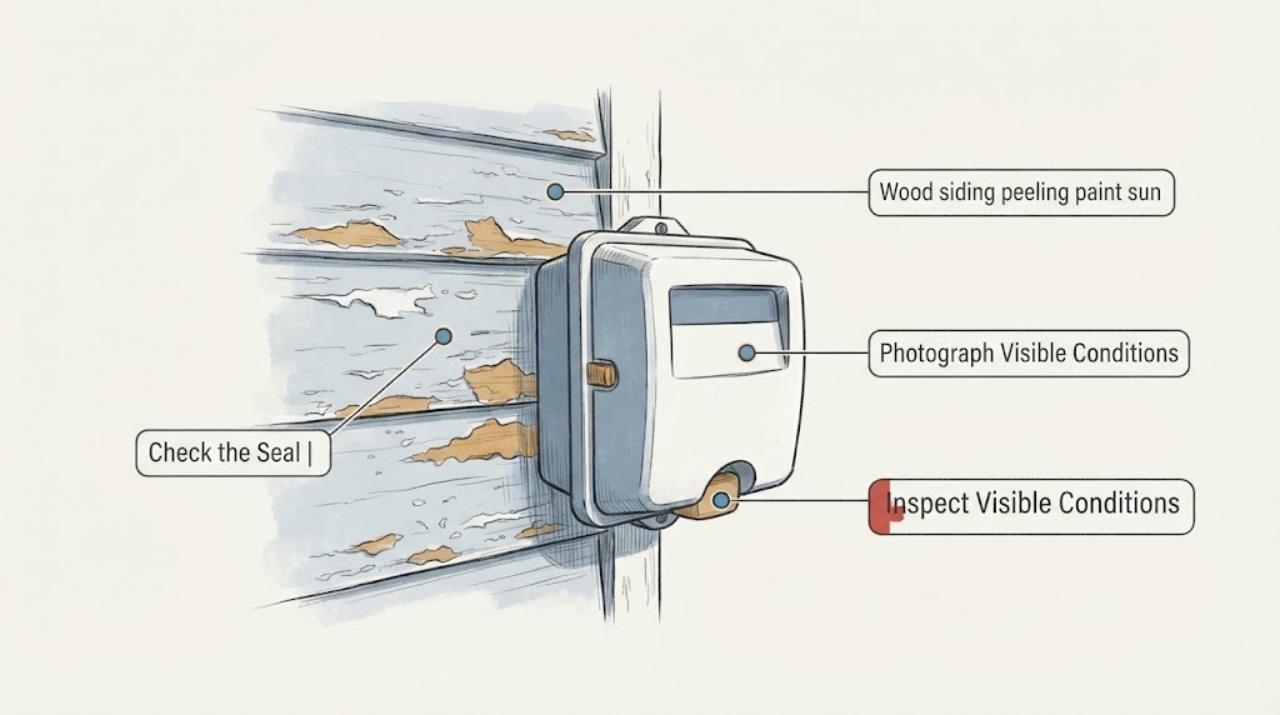
Wood siding peeling paint sun exposure: What to Check and What to Do Next
Sun-exposed wood siding can fade and weather faster, but peeling paint is not proof that sunlight is the only cause. Map the peeling by elevation and board location, then inspect from the ground for moisture entry at gutters, flashing, roof edges, joints, penetrations, and nearby vegetation.
-
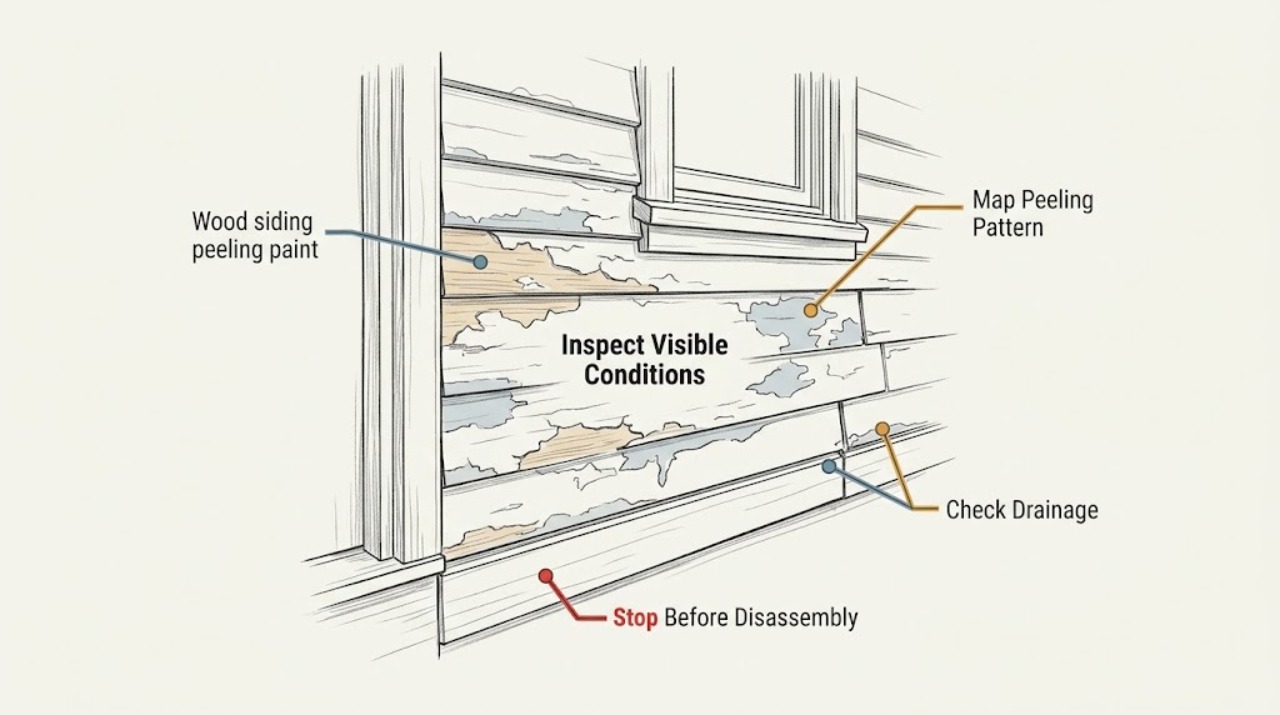
Wood siding peeling paint: What to Check and What to Do Next
Start with a ground-level or window view and document the pattern before disturbing the coating. Peeling concentrated below windows, at joints, near trim, under eaves, or beside downspouts makes moisture or drainage a priority; sun-facing or broad, age-related peeling may also involve exposure or prior preparation.