
On this page
Start here
Quick answer
Sun-exposed wood siding can fade and weather faster, but peeling paint is not proof that sunlight is the only cause. Map the peeling by elevation and board location, then inspect from the ground for moisture entry at gutters, flashing, roof edges, joints, penetrations, and nearby vegetation. Peeling over broad sun-facing areas with dry, sound wood points toward finish weathering or application conditions; blisters, peeling around joints or end grain, soft wood, stains, or dampness point toward moisture that must be corrected before repainting. Do not scrape, sand, pressure-wash, or heat old paint until the home's age and possible lead coating are addressed, and do not use a ladder or roof access without proper training and controls. Photograph the pattern, keep children and pets away from loose chips, and have a qualified siding or lead-safe painting professional assess the surface, moisture source, wood condition, and coating system before selecting primer, paint, caulk, or replacement boards.
Before you begin
Safety first
- The provider should map the failure, inspect moisture paths and wood soundness, identify the coating history and lead risk, and specify safe access and preparation. The repair plan should correct water entry, allow the substrate to dry, repair unsound wood, and use a compatible coating system under the manufacturer's conditions.
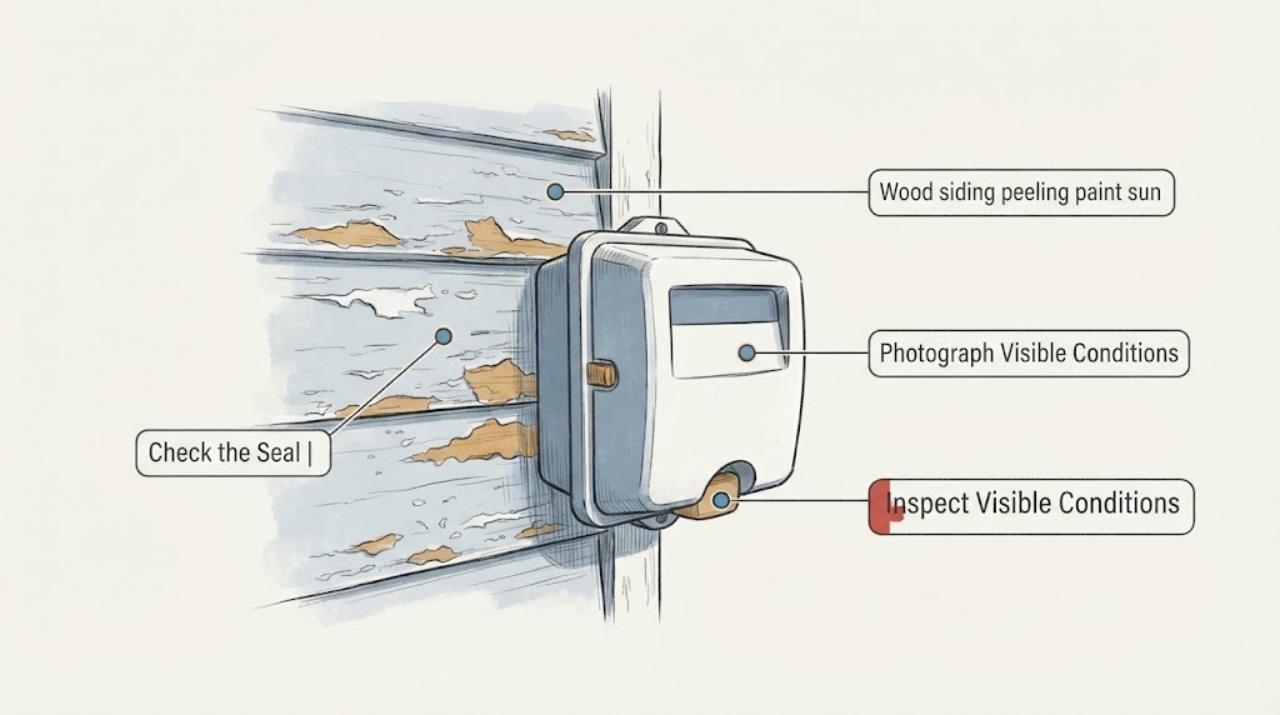
Work through in order
Diagnostic checks
Use only checks that match the exact appliance or system and its official guide.
-
Check 1
From the ground or another stable, low-risk position, photograph and map the peeling across each accessible elevation. Compare full-sun and shaded faces, upper and lower courses, board ends, laps, butt joints, trim, and areas beneath gutters or roof edges without touching loose paint.
Expected result: Record whether the failure is broad on one sun-facing wall, limited to joints or end grain, arranged as blisters and cracks, concentrated below a gutter or opening, or present on all elevations. Note exposed wood, paint chips, staining, and areas that look swollen or soft without probing them.
Next step: Keep the map and photos for a siding professional. Do not scrape, sand, probe, or climb to confirm a higher section; the distribution is enough to set the next inspection scope.
Stop if: Stop if paint is falling from height, boards are loose, the wall moves, glass or trim is damaged, the area is near overhead power lines, or the ground is wet, icy, or unstable.
Why this matters
Why: A broad sun-facing pattern with dry, sound wood makes finish weathering or coating exposure more plausible. Localized failure at joints, ends, penetrations, or roof and gutter lines makes moisture movement or a failed detail more likely. A pattern on every elevation can indicate a coating or preparation problem rather than sun alone.
-
Check 2
Inspect the visible moisture path from the ground: gutters and downspouts, roof and flashing edges, window and door trim, siding joints, penetrations, caulking, sprinklers, and shrubs or stored materials touching the wall. Do not remove siding or seal a joint during this check.
Expected result: Look for water marks, darkened or swollen wood, failed caulk, open seams, leaking or overflowing gutters, roof-edge defects, splashback, and vegetation holding against the siding. Note whether the peeling follows a path below one detail or appears unrelated to any visible water source.
Next step: Photograph the detail and request a moisture-source assessment. Do not cover the peeling with new paint, caulk over wet or rotten wood, or redirect water without understanding the wall assembly.
Stop if: Stop for active leaks entering the building, rotten or collapsing trim, unstable gutters, suspected mold or contaminated material, or any inspection that requires roof access or moving a ladder near utilities.
Why this matters
Why: A moisture mark or defective exterior detail can keep the wood wet and undermine paint adhesion; the coating should not be renewed until that source is corrected and the wood is dry. No visible source does not rule out concealed flashing, wall, or interior-moisture problems.
-
Check 3
Classify the visible coating and wood condition without disturbing the surface. Look for fading or chalking, blistering, peeling to bare wood, cracking or alligatoring, mildew-like discoloration, exposed end grain, insect holes, and board distortion.
Expected result: Record whether the paint lifts in sheets, flakes from multiple layers, forms raised blisters, cracks parallel and cross-grain, or leaves wood that appears sound versus soft, split, or decayed. Do not scrape to “test” adhesion or press a tool into the wood.
Next step: Send the classification to the professional and keep the surface undisturbed. Have the repair plan address soundness, moisture, coating layers, and application conditions rather than choosing a topcoat from color or sun exposure alone.
Stop if: Stop if loose chips are spreading, dust is being generated, the siding can be moved, or the inspection requires scraping, sanding, heat, chemicals, or pressure washing.
Why this matters
Why: Fading or chalking can be a finish-weathering clue; blisters and peeling to bare wood increase concern for trapped moisture or loss of adhesion; soft, split, or decayed boards require carpentry assessment before coating. Similar-looking failures can have different preparation and repair requirements.
-
Check 4
Before any surface preparation, record the home's construction year if known, previous paint or siding work, coating type, repair history, and whether the peeling area is near children’s play soil, entryways, or vegetation. Do not assume a newer outer coat makes an older layer safe to disturb.
Expected result: Note whether the home predates 1978, whether old layers are exposed, whether the paint is chipping into soil, and whether the proposed work would scrape, sand, drill, cut, or remove painted siding or trim.
Next step: Keep people and pets away from loose chips, avoid dry scraping and sanding, and contact a lead-safe certified contractor or qualified painter for testing and a preparation plan before disturbance. Follow local waste and renovation requirements.
Stop if: Stop immediately if anyone proposes dry scraping, uncontrolled sanding, burning or heating old paint, pressure washing chips into soil or drains, or disturbing a pre-1978 coating without lead-safe controls.
Why this matters
Why: In older homes, disturbing paint can create lead dust and chips even when the current siding or top coat looks newer. That changes the job from routine repainting to lead-safe planning, containment, cleanup, and possibly certified contractor work.
-
Check 5
Choose the repair scope only after combining the sun pattern, moisture findings, wood condition, coating age, and access limits. Provide the siding professional with photos, elevation map, construction age, recent weather or water events, and the areas not safely inspected.
Expected result: Confirm whether the likely scope is finish weathering on sound dry boards, moisture-source correction, localized wood or trim replacement, widespread coating failure, or lead-safe remediation. Record whether the work would require a ladder, roof, lift, or proximity to power lines.
Next step: Ask for a written plan that addresses the water source, dry time, wood repair, surface preparation, primer and finish compatibility, access, and cleanup. Do not repaint in direct sun or outside the coating manufacturer's conditions, and do not treat a one-coat improvement as proof the cause is fixed.
Stop if: Stop the DIY path if the job requires climbing, power washing, chemical or thermal paint removal, structural repair, work near utility lines, or disturbance of suspected lead paint.
Why this matters
Why: Sound, dry boards with exposure-related finish wear may need controlled preparation and a compatible exterior coating. Moisture, rot, widespread failure, lead risk, or elevated access changes the work to a qualified siding, painting, carpentry, or lead-safe contractor assessment.
Use your observations
Decision map
Find the observation that best matches what you see, then follow the next safe action.
-
PATH 01Next step
What you see
Peeling is concentrated on a sun-facing elevation, the wood appears dry and firm, and there are no visible water marks or failed exterior details.
Do this next
Arrange a qualified exterior-paint assessment for compatible preparation and coating conditions. Avoid direct-sun application and do not disturb older paint until lead risk is considered.
-
PATH 02Next step
What you see
Peeling forms blisters or follows gutters, roof edges, joints, penetrations, windows, trim, or board ends, with staining, swelling, dampness, or soft wood.
Do this next
Correct and verify the moisture source and have the wood assessed before repainting. Keep the area protected and do not seal or coat over wet or deteriorated material.
-
PATH 03Next step
What you see
Peeling is widespread across elevations or multiple layers, or the pattern is not explained by sun or visible moisture.
Do this next
Request a whole-wall coating and moisture assessment, including construction history and safe preparation plan. Do not start broad scraping, sanding, or pressure washing.
-
PATH 04Next step
What you see
The home may contain pre-1978 paint, chips are entering soil, or the work requires a ladder, roof, lift, power-line proximity, or unstable siding.
Do this next
Keep people and pets clear, stop surface disturbance, and use a lead-safe, qualified exterior contractor with appropriate access and hazard controls.
Helpful context
Understand the symptom
Sun exposure is a clue, not a complete diagnosis
Compare the sunny elevation with shaded elevations, but also compare board ends, joints, trim, penetrations, and areas below gutters. Sunlight can weather exterior wood and its finish, while peeling to bare wood is often associated with moisture behind the coating. A sun-facing pattern with dry, firm wood is a different repair path from blistering around joints, water marks, soft boards, or peeling beside a roof or gutter defect.
Fix the water path before the paint film
Repainting over wet or deteriorating wood usually hides rather than solves the cause. Look for leaking gutters, faulty flashing, roof defects, open joints, failed caulking, cracks or holes, and vegetation holding moisture against the siding. The siding must be allowed to dry and the wood condition assessed before a coating system is selected. Do not assume a sunny wall is dry just because its paint feels warm.
Surface preparation can create a separate hazard
Loose paint chips and dust may be a lead hazard in a pre-1978 home, and scraping or sanding can spread contamination. Keep children, pregnant people, and pets away from peeling areas, avoid dry disturbance, and use a lead-safe certified contractor when lead may be present or the project will disturb a substantial painted surface. Exterior work above safe reach, near power lines, or on a damaged wall belongs to a trained professional.
Safety boundary
Stop conditions
- Do not dry scrape, sand, burn, heat, pressure-wash, or chemically strip peeling paint before lead and containment requirements are addressed.
- Do not climb a ladder or roof on wet, icy, windy, unstable, or soft ground, and do not work near overhead power lines without professional controls.
- Stop for active leaks, collapsing or loose siding, unstable trim, falling chips, suspected mold or contaminated material, or structural movement.
- Keep children, pregnant people, pets, and food or play areas away from paint chips and dust; do not sweep chips into soil or drains.
- Do not repaint over damp wood, failed flashing, leaking gutters, open joints, or suspected rot.
Only after diagnosis
Potential parts
Only after the coating and wood assessment confirms a sound, dry substrate, the moisture source is resolved, and the product's surface and weather conditions are suitable.
When inspection confirms rot, splits, severe distortion, or unsound wood. Match the existing profile, exposure, installation, and finish system rather than substituting a generic board.
Only when the assessment identifies that exterior detail as the moisture source and establishes a compatible repair method before repainting.
When checks do not resolve it
Need a professional?
Arrange qualified siding or exterior-paint service when peeling persists, the wood is soft or damaged, a moisture source is suspected, the pattern is widespread, the home may contain lead paint, or the work requires elevated access, power washing, chemical/thermal removal, or structural repair.
Safety scope: The provider should map the failure, inspect moisture paths and wood soundness, identify the coating history and lead risk, and specify safe access and preparation. The repair plan should correct water entry, allow the substrate to dry, repair unsound wood, and use a compatible coating system under the manufacturer's conditions.
Have this ready
- Exact symptom: wood siding peeling paint under a sun-exposure condition
- Elevation map showing sun-facing versus shaded areas and locations near gutters, joints, trim, and openings
- Photos of blisters, cracks, bare wood, staining, swelling, and any failed flashing or caulking
- Home construction year, previous siding or paint work, and known coating history
- Recent rain, leaks, gutter overflow, irrigation, remodeling, or other moisture events
- Height, ladder, roof, power-line, lead, child/pet, and access constraints
Common questions
FAQ
Is sun exposure alone enough to make wood siding paint peel?
Sunlight can weather exterior wood and finishes, but peeling to bare wood is often associated with moisture behind the coating or loss of adhesion. Compare sun-facing and shaded areas while also checking gutters, flashing, joints, openings, and wood condition before blaming the sun alone.
Should I repaint peeling wood siding right away?
Not before the cause is understood. Correct exterior moisture, allow the wood to dry, and assess whether the substrate is sound. New paint applied over a continuing moisture problem can fail again and can hide deterioration.
How can I tell whether the peeling paint is caused by moisture?
Moisture is more likely when failure forms blisters or follows gutters, flashing, roof edges, joints, penetrations, or board ends and is accompanied by stains, swelling, dampness, or soft wood. The absence of a visible leak does not rule out concealed moisture, so do not repaint based on appearance alone.
Can I scrape and sand this siding myself?
First consider the home's age and lead risk. In a pre-1978 home, scraping or sanding can create dangerous lead dust; EPA recommends lead-safe practices and certified contractors for relevant renovation work. Height, power-line, unstable-siding, and chemical or thermal-removal hazards are additional reasons to use a professional.
Why is only one wall peeling while the other walls look fine?
Different sun and weather exposure can produce different finish wear, but one-wall peeling can also follow a local gutter, flashing, joint, opening, irrigation, or wall-moisture problem. Map the pattern and inspect the moisture path before selecting a paint product.
Read the exact guide
Official sources
- Exterior wood in the South: selection, applications, and finishesU.S. Department of Agriculture Forest Service, Forest Products Laboratory · The Forest Service report supplies general wood-finish and weathering context; climate, wood species, existing coating, and site details control an individual siding repair.
- Preservation Briefs 10: Exterior Paint Problems on Historic WoodworkNational Park Service, U.S. Department of the Interior · NPS preservation guidance supports the paint-failure and moisture-source reasoning; historic materials and modern siding may require different products and professionals.
- Lead-Safe Renovations for DIYersU.S. Environmental Protection Agency · EPA guidance supports the lead and surface-disturbance safety boundary; local rules and project size determine the exact legal requirements.
- Portable Ladder Safety QuickCardU.S. Department of Labor Occupational Safety and Health Administration · OSHA's quick card supports general ladder and power-line warnings; residential homeowners may not be covered by every workplace rule, but the physical hazards remain relevant.
- Ladder SafetyNational Institute for Occupational Safety and Health, CDC · NIOSH ladder guidance supports the decision to avoid improvised elevated siding work; it is not a complete residential painting or fall-protection plan.
- Home Danger Zone FinderU.S. Environmental Protection Agency · EPA's general lead-hazard guidance supports keeping people and pets away from exterior paint chips and considering lead-safe professionals; it does not diagnose a specific coating.
Community feedback
Share a repair observation
Share a plain-text repair observation. Accepted observations are published automatically; this page may take a moment to update.