
On this page
Start here
Quick answer
When a Beko washer dryer leaves dark spots or other marks on clothing, first save an affected item and note whether the mark appeared after washing or after a wash-and-dry cycle. Check the door seal and drum for visible residue, then inspect the detergent drawer for damp powder, blocked holes, detergent in the wrong compartment, or detergent mixed with softener. Beko's washer-dryer guidance links oily stains with missed drum cleaning and detergent residue with dosing or drawer problems. Clean only the accessible areas using the exact model manual, run the model's empty drum-cleaning programme when appropriate, and arrange service if marks continue or a drawer valve, seal, or internal part appears faulty.
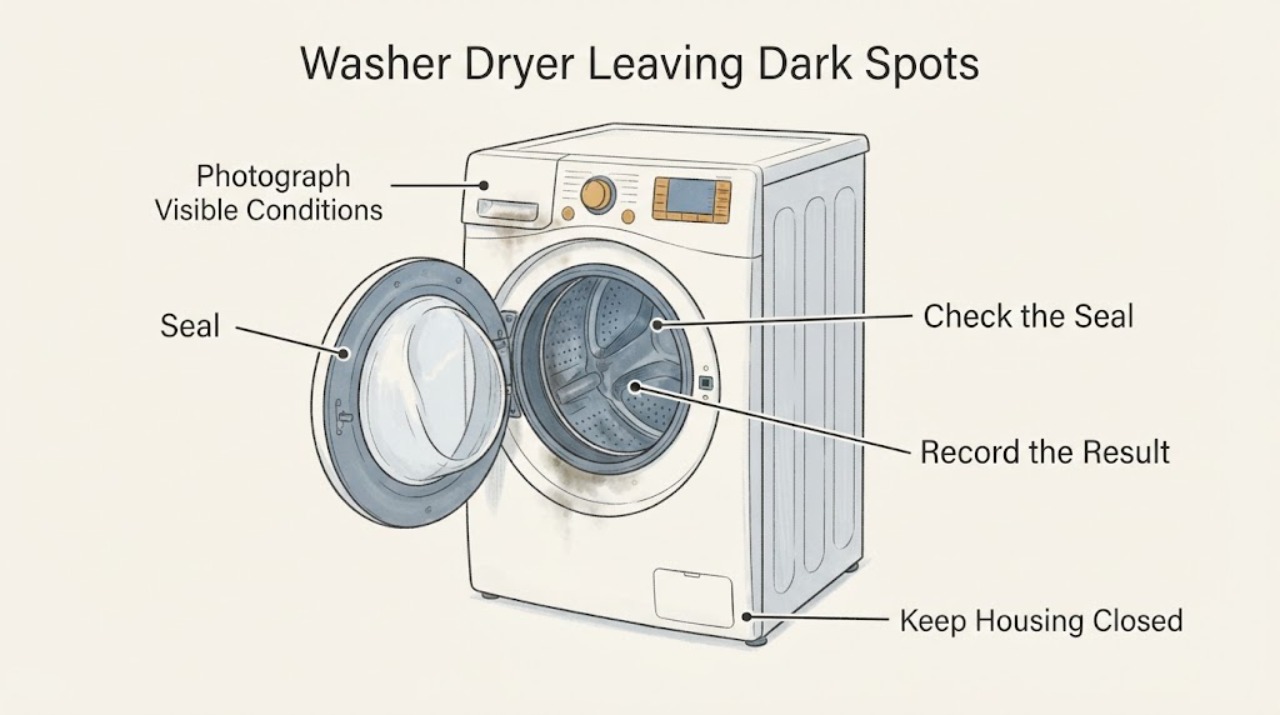
Work through in order
Diagnostic checks
Use only checks that match the exact appliance or system and its official guide.
-
Check 1
Set aside one affected garment, photograph the mark, and record its texture and colour. Note whether the mark appeared after washing, after drying, on every load, or only with one detergent or fabric type.
Expected result: The mark is oily or greasy, powdery or detergent-like, dark residue from the door area, a colour change, or an isolated pre-existing stain.
Next step: Use the matching drum, seal, drawer, dosing, or garment-care branch below. Do not increase detergent or heat until the source is identified.
Why this matters
Why: Beko treats oily stains, detergent left on laundry, and poor stain removal as different troubleshooting conditions, so the visible pattern changes the next check.
-
Check 2
With the washer dryer empty, unplug it if the model instructions require power isolation, then inspect the accessible door-seal folds, door edge, and drum for lint, mould-like build-up, greasy film, or a foreign object. Wipe only accessible surfaces with a suitable damp cloth.
Expected result: Residue is visible in the seal or drum, the seal is torn or displaced, or the accessible surfaces are clean.
Next step: Remove loose accessible residue, dry the seal, and leave the door open to air. Arrange service for a damaged seal or marks that continue with clean accessible surfaces.
Stop if: Do not pull the seal off, remove panels, or reach into a moving drum.
Why this matters
Why: Beko says build-up on the door seal can affect laundry cleanliness and recommends regular cleaning; a torn or displaced seal can require service rather than more cleaning.
-
Check 3
Remove the detergent drawer and siphon as the exact model manual shows. Wash them with lukewarm water, check that the compartments and holes are not blocked, dry the drawer before adding powder, and keep detergent sealed and dry.
Expected result: The drawer contains damp or caked detergent, detergent was in the wrong compartment, detergent and softener were mixed, holes are blocked, or the drawer is clean and correctly used.
Next step: Correct the compartment and dose, then run one suitable load. If residue returns or the drawer does not dispense correctly, contact an Authorised Service Agent.
Stop if: Do not pour detergent directly onto clothing, exceed the drawer's maximum line, or dismantle the drawer valves.
Why this matters
Why: Beko identifies these drawer and dosing conditions as causes of residue, detergent remaining on laundry, or poor dispensing. A clean drawer with a recurring problem leaves a possible valve or internal water-distribution issue.
-
Check 4
For oily marks or residue that remains after the seal and drawer are clean, run the model's empty Drum Cleaning programme or the exact manual's approved drum-cleaning method. Use only a washing-machine-suitable cleaner or anti-limescale product and keep all clothing out of the drum.
Expected result: The empty maintenance cycle removes visible build-up and later laundry is clean, or marks continue on separate loads.
Next step: If marks continue, stop repeated hot cycles and arrange model-specific service with the affected garment and photos available.
Stop if: Do not run the maintenance programme with clothing inside or mix cleaning chemicals unless the exact manual permits it.
Why this matters
Why: Beko links oily stains with the absence of regular drum cleaning and describes drum cleaning as a maintenance programme. Persistent marks after a clean cycle are less likely to be ordinary surface build-up.
-
Check 5
If the mark is a fabric stain rather than machine residue, check the garment label and select a suitable programme, temperature, and detergent. Pre-treat or use prewash only where the fabric and product instructions allow; use StainExpert only for durable colourfast cotton on models that provide it.
Expected result: The stain is removed with a care-label-appropriate treatment, remains after correct treatment, or the garment is delicate, pigmented, or unsuitable for the chosen programme.
Next step: Change the treatment to match the garment label. If correctly treated garments from different loads still acquire new marks, return to the machine-residue branch and request service.
Stop if: Do not use high-temperature or StainExpert treatment on garments that the care label excludes, and never dry clothing contaminated with flammable substances.
Why this matters
Why: Beko's stain guidance distinguishes stain type, fabric care, programme, and temperature; a machine fault should not be assumed from one load with the wrong treatment.
Use your observations
Decision map
Find the observation that best matches what you see, then follow the next safe action.
-
PATH 01Next step
What you see
The mark is present before washing, appears on only one garment, or disappears after a care-label-appropriate pre-treatment.
Do this next
Follow the garment label and compatible detergent instructions, and do not change the appliance or order a part from that isolated mark.
Why this path and its safety boundary
Why it matters: The clothing stain or treatment choice is more likely than a washer-dryer surface fault.
-
PATH 02Next step
What you see
Different loads develop oily or dark marks and the drum, seal, or drawer contains visible build-up.
Do this next
Clean the accessible area and run the exact model's empty drum-cleaning maintenance programme, then monitor one suitable load.
Why this path and its safety boundary
Why it matters: The recurring pattern is consistent with the Beko maintenance and residue paths for drum cleaning, seal cleaning, or detergent dispensing.
-
PATH 03Next step
What you see
Marks continue across separate loads after the accessible seal, drum, drawer, dosing, and model-approved maintenance checks are complete.
Do this next
Stop repeated test cycles and contact Beko or an Authorised Service Agent with the model number, photos, detergent details, and completed checks.
Why this path and its safety boundary
Why it matters: A drawer valve, damaged seal, internal residue source, or another model-specific fault remains possible; user cleaning has not established a replaceable part.
Helpful context
Understand the symptom
Classify the mark before changing the wash
Keep one stained item and photograph the mark in good light. Note whether it is oily or greasy, powdery or pale, dark and mould-like around the door opening, or more like a colour change. Also record whether it appeared after the wash or only after drying. This separates residue coming from the machine or detergent from a stain that was already on the fabric or a dye-care problem.
Inspect the seal, drum, and detergent drawer
With the appliance empty and stopped, wipe visible dirt from the door seal and inspect the folds without pulling the seal away. Look inside the drum and clean only accessible residue. Remove and wash the detergent drawer and siphon with lukewarm water as the manual describes, then refit it securely. Beko identifies wrong compartments, damp detergent, blocked drawer holes, mixed detergent and softener, and drawer-valve problems as distinct residue paths.
Clean the drum and correct dosing
If the marks are oily or recur across different loads, use the exact model's Drum Cleaning programme if available. Beko's washer-dryer manual says to run drum cleaning empty with a washing-machine-suitable detergent or anti-limescale product and repeat the maintenance process at the stated interval. Use only the detergent type and dose recommended for the load, put it in the correct compartment, and do not pour detergent directly onto clothing.
Treat the clothing according to its care label
For a stain that is clearly from the load rather than a machine residue, follow the garment care label and use the appropriate programme and temperature. Beko's guidance says heavily soiled items may need pre-treatment or a prewash, and its StainExpert programme is intended for durable, colourfast cotton only. Do not use that programme on delicate or pigmenting garments, and do not dry clothing contaminated with flammable substances.
When checks do not resolve it
Need a professional?
Contact Beko or an Authorised Service Agent when marks continue across separate loads after the accessible seal, drum, drawer, dosing, and model-approved maintenance checks, when the door seal is torn or displaced, when the detergent drawer does not dispense correctly, or when an internal valve or other part may be involved. Stop using the washer dryer for smoke, burning odor, sparking, a damaged cord, water near electrical equipment, or any need to open the cabinet.
Common questions
FAQ
Why is my Beko washer dryer leaving dark or oily spots on clothes?
Beko's washer-dryer guidance links oily stains with a lack of regular drum cleaning. Check the drum and door seal for accessible build-up, clean the detergent drawer, and run the model's empty drum-cleaning programme if the manual provides one.
Can detergent cause marks on clothes?
Yes. Beko identifies damp detergent, an incorrect compartment, blocked drawer holes, detergent mixed with softener, excess dosing, and detergent poured directly on laundry as residue paths. Clean and dry the drawer and use the correct compartment and dose.
When should I call for service?
Request service when marks continue across separate loads after the accessible seal, drum, drawer, dosing, and model-approved maintenance checks, or when the seal or detergent drawer is damaged or not dispensing correctly.
Read the exact guide
Official sources
- Washing Machine User ManualBeko · StainExpert programme, garment labels, detergent compartments, and stain treatment boundaries
- Washer-Dryer User ManualBeko · Detergent compartments, dosing, detergent residue, oily stains, drum cleaning, stain treatment, and service escalation
- How to Clean a Washing Machine DrumBeko UK · Drum build-up, empty drum cleaning, cleaning frequency, and service escalation
- How to Clean Your Washing Machine's Door SealsBeko UK · Visible dirt, mould or residue on the door seal, wiping, drying, and leaving the door open
Community feedback
Share a repair observation
Share a plain-text repair observation. Accepted observations are published automatically; this page may take a moment to update.