
On this page
Start here
Quick answer
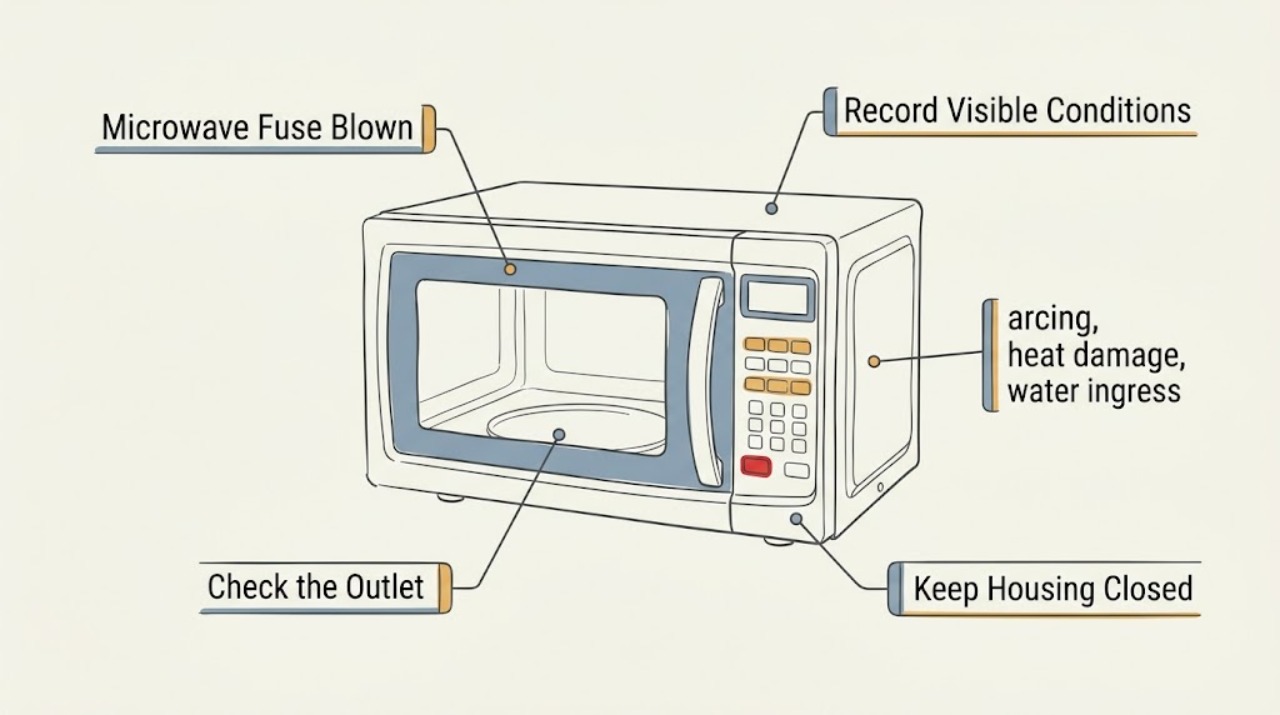
If a Bosch microwave blows a fuse or trips the breaker, stop using it and do not keep resetting the protection. From a dry, safe position, note whether the display is dead, whether other equipment works at the same outlet, and whether there was arcing, smoke, a burning smell, a hot plug, a damaged cord, or a door/cavity problem. Bosch owner guidance allows an external fuse/breaker or power check and, for some models, one brief reset; if the fault returns, Bosch directs you to after-sales service. A fuse that blows again when the microwave is connected is not a cue to open the cabinet or replace an internal fuse: microwave high-voltage and interlock work belongs to trained service personnel. Keep the appliance disconnected and use qualified electrical help for a damaged outlet, cord, plug, or repeated circuit trip.
Before you begin
Safety first
- The user boundary is external power observation and the exact manual's one permitted reset when no hazard is present. Do not open the microwave cabinet, replace an internal fuse, access the magnetron, capacitor, transformer, interlock, waveguide, or wiring, perform live testing, bypass safety controls, or restart after smoke, flame, arcing, water ingress, or electrical heat.
Work through in order
Diagnostic checks
Use only checks that match the exact appliance or system and its official guide.
-
Check 1
Stop the microwave, leave the door closed if there was smoke or flame, and disconnect it only from a dry, safe position if the plug and outlet are cool and undamaged. Record the complete Bosch model, whether the display is dead, and exactly when the fuse or breaker opened: on connection, when the door closed, when Start was pressed, or during cooking.
Expected result: The power protection opened immediately, opened only when cooking began, opened after an arc or burning smell, or the display and other controls remain normal.
Next step: Keep the appliance off while checking the external power path. If there was smoke, flame, arcing, a hot plug, or a damaged cord/outlet, skip further testing and arrange qualified service or electrical help.
Stop if: Do not touch a hot, wet, arcing, scorched, or damaged plug or receptacle, and do not open the microwave cabinet.
Why this matters
Why: Timing separates a household supply event from an appliance-side or microwave-operation fault, but timing alone cannot identify a failed internal fuse, interlock, capacitor, transformer, or control board.
-
Check 2
From outside the appliance, check whether the labeled household breaker or fuse for the outlet is open and whether another small appliance works at that outlet. Inspect only the accessible Bosch power cord and plug for cuts, looseness, discoloration, or heat; do not use an extension lead or power strip as a workaround.
Expected result: The outlet is dead for other equipment, the breaker will not hold, the cord or plug is damaged or hot, or the outlet works and the Bosch microwave alone loses power.
Next step: Restore only an obvious external switch position once when there is no damage or hazard. If the protection opens again, leave it open and obtain qualified electrical or Bosch service; do not repeatedly reset it.
Stop if: Do not replace a fuse with a different rating, change wiring, use an adapter or extension lead, or handle a wet or overheated outlet.
Why this matters
Why: A dead outlet or unstable protection points toward the household electrical supply and needs an electrician. A working outlet with a Bosch-only trip makes an appliance-side fault more likely, but does not identify an internal part.
-
Check 3
If the exact Bosch manual permits a short external reset and there has been no smoke, arcing, heat damage, water ingress, or repeat breaker trip, follow that manual's timing once. Bosch examples use a brief power interruption before restoring power; do not substitute a cabinet fuse replacement or a forced cooking test.
Expected result: The microwave returns to normal without a trip, the breaker or fuse opens again immediately, an error message returns, or the appliance remains dead.
Next step: If the fault returns or the appliance remains dead, keep it disconnected and contact Bosch or qualified appliance service with the exact model and timing. If the outlet or household protection is also abnormal, use qualified electrical service.
Stop if: Do not repeat the reset, press Start to see whether the fuse blows again, remove the outer case, or bypass a door interlock.
Why this matters
Why: A one-off reset can clear a transient control state, but Bosch's manuals treat a returning malfunction or error as a reason to call after-sales service. A repeat trip is evidence of an unresolved electrical or appliance fault, not proof of which component failed.
-
Check 4
With power isolated and the cavity cold, inspect only through the door for a scorch mark, cracked or damaged door, damaged seal, loose cavity surface, metal object, foil, or burned food residue that coincided with the trip. Do not remove a cover, scrape the cavity, or run the microwave with a different load to test the finding.
Expected result: The trip followed visible arcing or a metallic item, there is cavity or door damage, or there is no visible explanation for the fuse opening.
Next step: Leave the Bosch microwave disconnected and arrange qualified microwave service for any damage, repeat arcing, or unexplained fuse opening. Do not assume that removing the visible item has cleared the internal fault.
Stop if: Do not remove the waveguide cover, repair the door or seal, touch internal wiring, or restart after smoke, flame, scorching, or unexplained arcing.
Why this matters
Why: Metal or residue may explain an arc, but a fuse opening can also indicate an appliance-side electrical fault. Visible cavity/door damage or an unexplained trip crosses the safe user-check boundary even if the appliance later powers up.
-
Check 5
Prepare the service handoff without opening the appliance: provide the Bosch model and serial information, the outlet/breaker result, the exact trip timing, display state, any arc or smoke history, visible door/cavity observations, and whether one manual-authorized reset was attempted. Keep the microwave unplugged until cleared by qualified service.
Expected result: The fuse or breaker trips again with the Bosch connected, the microwave is dead despite a working outlet, the display shows an error, or the event is unexplained.
Next step: Contact Bosch after-sales service or a qualified microwave technician. Use a qualified electrician for outlet, cord, plug, or household protection faults; do not order an internal fuse or board from the symptom alone.
Stop if: Do not open the cabinet, probe the high-voltage section, replace an internal fuse, perform live measurements, or continue operating a tripping appliance.
Why this matters
Why: These patterns require diagnosis of the appliance-side power, interlock, microwave, or control system. Bosch's manuals require trained specialist repair and ask for the exact appliance identification when contacting service.
Use your observations
Decision map
Find the observation that best matches what you see, then follow the next safe action.
-
PATH 01Next step
What you see
Other equipment also loses power at the outlet, or the labeled household breaker/fuse will not hold with the Bosch microwave disconnected.
Do this next
Leave the circuit safe and use qualified electrical service. Do not reconnect the Bosch until the outlet and protection have been assessed.
Why this path and its safety boundary
Why it matters: The primary fault is in the household outlet, circuit, or protection rather than proven inside the microwave.
-
PATH 02Next step
What you see
The outlet works for other equipment, but the Bosch microwave trips the protection again when connected or when cooking starts.
Do this next
Keep the microwave disconnected and arrange Bosch or qualified microwave service. Do not keep resetting the breaker or replace an internal fuse yourself.
Why this path and its safety boundary
Why it matters: An appliance-side electrical or microwave fault is more likely. The observation does not distinguish an internal fuse, interlock, capacitor, transformer, magnetron, wiring, or control fault.
-
PATH 03Next step
What you see
A one-time manual-authorized power reset restores the display and the microwave remains cool, dry, undamaged, and free of odor or arcing.
Do this next
Do not use repeated test cycles. Follow the exact Bosch manual, monitor cautiously only if it permits normal use, and arrange service if the fuse opens again or any abnormal symptom appears.
Why this path and its safety boundary
Why it matters: The event may have been a transient power or control condition, but a clear reset does not prove that the appliance is safe under load.
-
PATH 04Next step
What you see
The fuse opening followed smoke, flame, arcing, a hot plug, a damaged cord or outlet, a scorch mark, door/seal damage, or an unexplained microwave-side event.
Do this next
Keep the appliance disconnected and obtain qualified Bosch/microwave service; use emergency or electrical help as appropriate for active fire, smoke, or dangerous power hardware.
Why this path and its safety boundary
Why it matters: This is a fire, electrical, microwave-cavity, or interlock safety concern, not a user-replaceable fuse decision.
Helpful context
Understand the symptom
A blown household fuse and a failed fuse inside a Bosch microwave are not the same troubleshooting decision. Bosch's opened manuals start with the plug, household fuse or circuit breaker, power interruption, and outlet. They then state that a recurring malfunction should go to after-sales service. The manuals do not make an internal fuse a user-replaceable part, and a microwave cabinet can contain hazardous high-voltage components even after the unit is unplugged.
First preserve the evidence: record what was running, whether the trip happened at plug-in, door close, start, or during heating, and whether the appliance had sparked or overheated. One safe external power check may separate a household supply problem from an appliance-side fault; repeated resets or a test run after arcing can make the situation less safe and less diagnosable.
When checks do not resolve it
Need a professional?
Arrange Bosch or qualified microwave service when the outlet is good but the fuse or breaker opens again, the microwave remains dead, a Bosch error returns after one permitted reset, or the event involved arcing, smoke, burning smell, scorch marks, door/seal damage, or unexplained power loss. Use qualified electrical service for a damaged outlet, cord, plug, or household circuit.
Safety scope: The user boundary is external power observation and the exact manual's one permitted reset when no hazard is present. Do not open the microwave cabinet, replace an internal fuse, access the magnetron, capacitor, transformer, interlock, waveguide, or wiring, perform live testing, bypass safety controls, or restart after smoke, flame, arcing, water ingress, or electrical heat.
Common questions
FAQ
Can I replace the fuse inside a Bosch microwave?
No. A household fuse or breaker can be checked externally when safe, but an internal microwave fuse is part of an appliance with hazardous high-voltage and interlock systems. Bosch says appliance repairs should be carried out by trained specialists; a repeat trip needs qualified diagnosis rather than a fuse substitution.
What if the Bosch microwave trips the breaker only when Start is pressed?
Keep it disconnected. The timing makes an appliance-side fault more likely than an outlet that is dead all the time, but it does not identify the failed component. Do not press Start repeatedly; arrange Bosch or qualified microwave service.
Is one reset safe after a Bosch microwave fuse trips?
Only if the exact Bosch manual permits it and there is no smoke, arcing, heat damage, water, damaged cord or outlet, or repeat trip. Follow the manual once from a safe position. If the fault returns, Bosch directs you to after-sales service; do not repeat the reset or run a confirmation cook cycle.
Read the exact guide
Official sources
- Bosch Use and Care Manual 9001885950_DBosch · Bosch microwave oven owner guidance; blown fuses, outlet checks, power interruptions, arcing, and service boundary
- User manual and installation instructions CEG732X.1., CEG932X.1.Bosch · Bosch microwave combination appliances; external fuse/breaker, outlet, reset, recurring malfunction, and repair-safety guidance
Community feedback
Share a repair observation
Share a plain-text repair observation. Accepted observations are published automatically; this page may take a moment to update.