
On this page
Start here
Quick answer
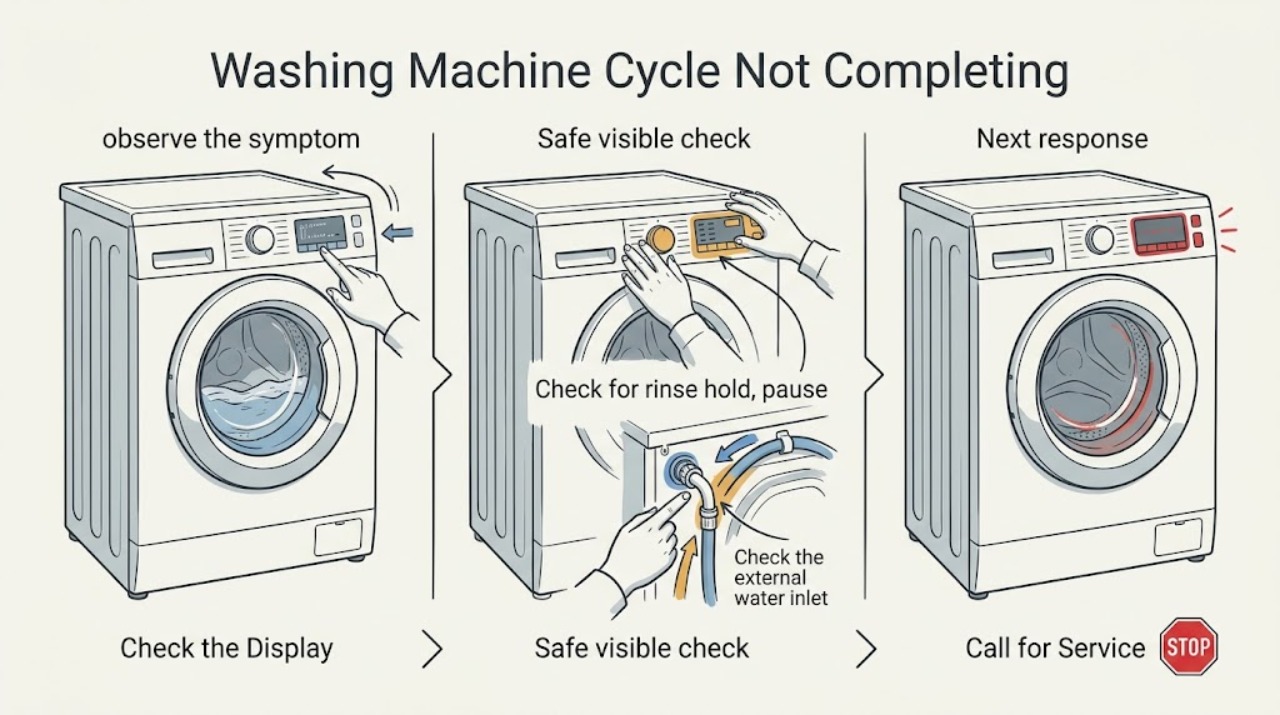
A Bosch wash cycle that appears stuck may be waiting for a normal rinse-hold setting, redistributing an unbalanced load, or adding rinses because of foam; it may also be unable to fill or drain. Check the display and cycle state first. If water remains, stop the programme, isolate power safely, and do not open the door while water is visible or the load may be hot. Check only the accessible inlet and drain path, then use the exact Bosch manual for the code or setting. Repeated electrical trips, leaks, hot water, a locked door that will not release, or an unresolved cycle fault require service.
Work through in order
Diagnostic checks
Use only checks that match the exact appliance or system and its official guide.
-
Read the display and stop without forcing the door
Observe the display, indicators, remaining time, and selected programme without reaching into the machine. Note whether it shows rinse hold, a foam or balance response, a water/drain symbol, an error, or a completed state with the door still locked. If water is visible through the door, the load may be hot, or the drum may still rotate, do not open the door.
Expected result: The time is changing, the programme is pausing or redistributing, rinse hold is selected, water is visible, or an error/door indicator remains.
Next step: Follow the matching branch. Keep the washer closed when water or rotation is present, and record any code exactly for the manual or service.
Why this matters
Why: A changing time or balance/foam response can be normal. Visible water, a locked door, or a fault indicator changes the task to safe draining and model-specific troubleshooting.
-
Check for rinse hold, pause, and balance behavior
Compare the selected programme and options with the exact Bosch manual. Check whether a rinse-hold or no-final-spin option was selected, whether Pause or delayed start is active, and whether the washer is repeatedly redistributing a load. Without opening a moving or water-filled machine, note whether the pause resolves by itself or remains indefinitely.
Expected result: A hold/no-spin option is active, the load is visibly bunched when the drum is safely accessible, the time changes during balancing, or no normal option explains the delay.
Next step: Use the manual's documented continue, drain, or spin selection only when the door and water conditions are safe. If the delay persists or an error appears, stop and continue with the inlet/drain checks or service escalation.
Why this matters
Why: Rinse hold can intentionally leave water in the drum, and balance or foam control can extend a cycle. An indefinite stop without one of those states points toward water, drain, door, or control trouble.
-
Check the external water inlet path
If the washer has stopped before or during filling, check from outside that the water tap is open and the inlet hose is not visibly kinked, crushed, or disconnected. Inspect only dry external connections. Do not remove an inlet valve, open a panel, or handle a wet electrical connection.
Expected result: The tap is closed, the hose is kinked or disconnected, a water symbol is shown, or the external inlet path is clear.
Next step: Correct only a clearly displaced external hose or tap setting according to the exact manual. If the indicator remains, water is leaking, or the connection is wet/damaged, keep the washer off and arrange service.
Why this matters
Why: A missing or restricted water supply can prevent the programme from advancing. A clear supply path with a persistent fill indication suggests a filter, valve, sensor, or control problem that is not identified by external inspection.
-
Check drainage and residual water safely
If water remains or the washer stopped at drain/spin, turn the programme Off and disconnect the mains plug from a safe, dry location. Check the accessible drain hose for kinks, crushing, blockage, or an insecure connection. If the exact manual permits pump-filter access, prepare for residual water with a suitable container and open the cover slowly; stop if water is hot, the floor or outlet is wet, or the filter cannot be accessed safely.
Expected result: The drain hose is kinked or blocked, water backs up at the drain, the pump/filter contains a plainly accessible foreign object, or the external drain path is clear but water remains.
Next step: Correct only an obvious external hose issue and reinstall any user-accessible filter securely as the manual directs. If water is hot, the appliance leaks, the path is clear, or the problem returns, keep power off and arrange service.
Why this matters
Why: A restricted hose, siphon, or pump can keep the programme from completing and leave the door locked. A clear path with retained water points toward a pump, pressure-sensing, or control fault.
-
Check load balance and excess foam
Once the washer is safely stopped, cool enough, and the door is unlocked, inspect the load without forcing the drum. Redistribute a visibly single-sided load only as the manual permits. Note excessive suds or foam at the drawer or door and compare detergent use with the model and detergent instructions. Do not add chemicals or run repeated cycles to force the programme to finish.
Expected result: The load is tightly bunched, the drum is overloaded or nearly empty, foam is present, or the load and detergent appear normal.
Next step: Use a balanced load and correct detergent amount on a future supervised cycle only if no other fault or stop condition exists. If the cycle still does not complete, keep the washer out of service and escalate.
Why this matters
Why: Bosch's balance and foam systems can add time or suppress a final spin. A normal load with no foam and a repeated stop makes a drain, door, sensor, motor, or control issue more likely.
-
Perform one safe reset and document the result
If there is no leak, hot water, wet outlet, repeated electrical trip, or unresolved error, follow the exact Bosch manual for switching Off and restarting once. Record the E-Nr/model, programme and options, point where it stopped, water level, door state, drain/inlet checks, load and foam observations, and any code. Do not repeatedly cycle power or bypass a door or water-level safety device.
Expected result: The cycle completes after the reset, stops at the same stage, returns the same code, leaves water, or causes another electrical trip.
Next step: Keep the washer disconnected when a fault or hazard is present and provide the full sequence to Bosch support or an authorized service provider. Do not open the cabinet or perform internal electrical measurements.
Why this matters
Why: A one-time recovery may reflect a temporary programme state. A repeatable stop, pressure-sensor indication, water retention, or electrical trip is an unresolved appliance fault.
Use your observations
Decision map
Find the observation that best matches what you see, then follow the next safe action.
-
PATH 01Next step
What you see
The display is progressing, or the washer is balancing a load, responding to foam, or holding the final rinse by a selected option, with no leak or error.
Do this next
Arrange qualified service and follow the exact model guidance.
Why this path and its safety boundary
Why it matters: The apparent delay may be normal; a new stop, code, leak, or abnormal time increase overrides this branch.
-
PATH 02Next step
What you see
The washer stops before or during filling, shows a water indicator, or the inlet hose/tap is visibly restricted.
Do this next
Arrange qualified service and follow the exact model guidance.
Why this path and its safety boundary
Why it matters: A visible supply restriction may be corrected; persistent fill failure requires service.
-
PATH 03Next step
What you see
Water remains, the washer stops at drain/spin, the door stays locked, or the drain route is blocked or kinked.
Do this next
Arrange qualified service and follow the exact model guidance.
Why this path and its safety boundary
Why it matters: An accessible drain restriction may be cleared; retained water, a hot load, or a clear drain path requires service assessment.
-
PATH 04Next step
What you see
The breaker or RCD trips repeatedly, water leaks, the control stays in an error state, a pressure-sensor fault is shown, or the cycle remains incomplete after safe checks.
Do this next
Arrange qualified service and follow the exact model guidance.
Why this path and its safety boundary
Why it matters: The washer remains out of service while electrical, sensing, pump, door-lock, and control systems are assessed safely.
Helpful context
Understand the symptom
A long programme is not automatically a failed programme
Bosch washers can extend a cycle while balancing the load or responding to foam, and a rinse-hold option can intentionally leave laundry in water without a final drain or spin. The first question is whether the display is counting down, showing a hold or error, or waiting with water inside. Do not cancel a cycle and force the door open until the drum is still, the water level is safe, and the exact manual permits the next step.
Find the blocked stage before choosing a check
If the washer stops before filling, inspect the selected programme, door, tap, and inlet indicators. If it reaches drain or spin and remains there, inspect the drain route and pump access only after isolating power and managing residual water. If the cycle stops after a power interruption or trips the electrics, treat it as an electrical stop condition rather than repeatedly restarting it.
When checks do not resolve it
Need a professional?
Contact Bosch support or an authorized appliance technician for a recurring incomplete cycle, unresolved fill or drain fault, pressure-sensor indication, locked door with water inside, repeated electrical trip, or leak.
Common questions
FAQ
Why does my Bosch washing-machine cycle take so long?
A cycle can take longer while Bosch balances an uneven load or responds to foam, and a rinse-hold option can leave laundry in water without a final spin. If the time stops indefinitely, an error appears, or water remains, check the relevant inlet/drain path and escalate if it persists.
Can I open the Bosch washer door when the cycle is stuck?
Do not force it. Bosch warns not to open the door when water is visible and not to reach into a drum that may still be rotating; the load or detergent solution may also be hot. Follow the exact manual's safe drain and emergency-release instructions only after power is isolated.
What should I check when the washer stops before spin?
Check for rinse hold, load imbalance, remaining water, a kinked or blocked drain hose, or a pump issue. Turn the washer Off and isolate power before managing residual water. If a clear drain path still leaves water or the stop repeats, request service.
What does a Bosch pressure-sensor code mean for a cycle that will not finish?
For the specific Bosch codes covered by its support page, the pressure sensor reports the water level to the control. Bosch directs the user to support and says not to use the washer until the fault is fixed; do not substitute a code interpretation from another model.
Read the exact guide
Official sources
- What to do if washing machines does not drain the waterBosch Home Appliances · Bosch washing-machine drain troubleshooting; use the manual for the exact model and residual-water access.
- Why is my washing machine not spinning?Bosch Home Appliances · Bosch washing-machine spin and drain guidance relevant when a cycle stops before final spin; exact access and programme names vary by model.
- Safety instructionsBosch Home Appliances · Bosch washing-machine manual with general cycle, door, balance, foam, power, and service safety guidance; the reader's exact manual controls final instructions.
- Washing machine troubleshooting: error codes E26 or F26Bosch Home Appliances · Bosch washer pressure-sensor error guidance; only apply when the exact model shows the matching code.
Community feedback
Share a repair observation
Share a plain-text repair observation. Accepted observations are published automatically; this page may take a moment to update.